
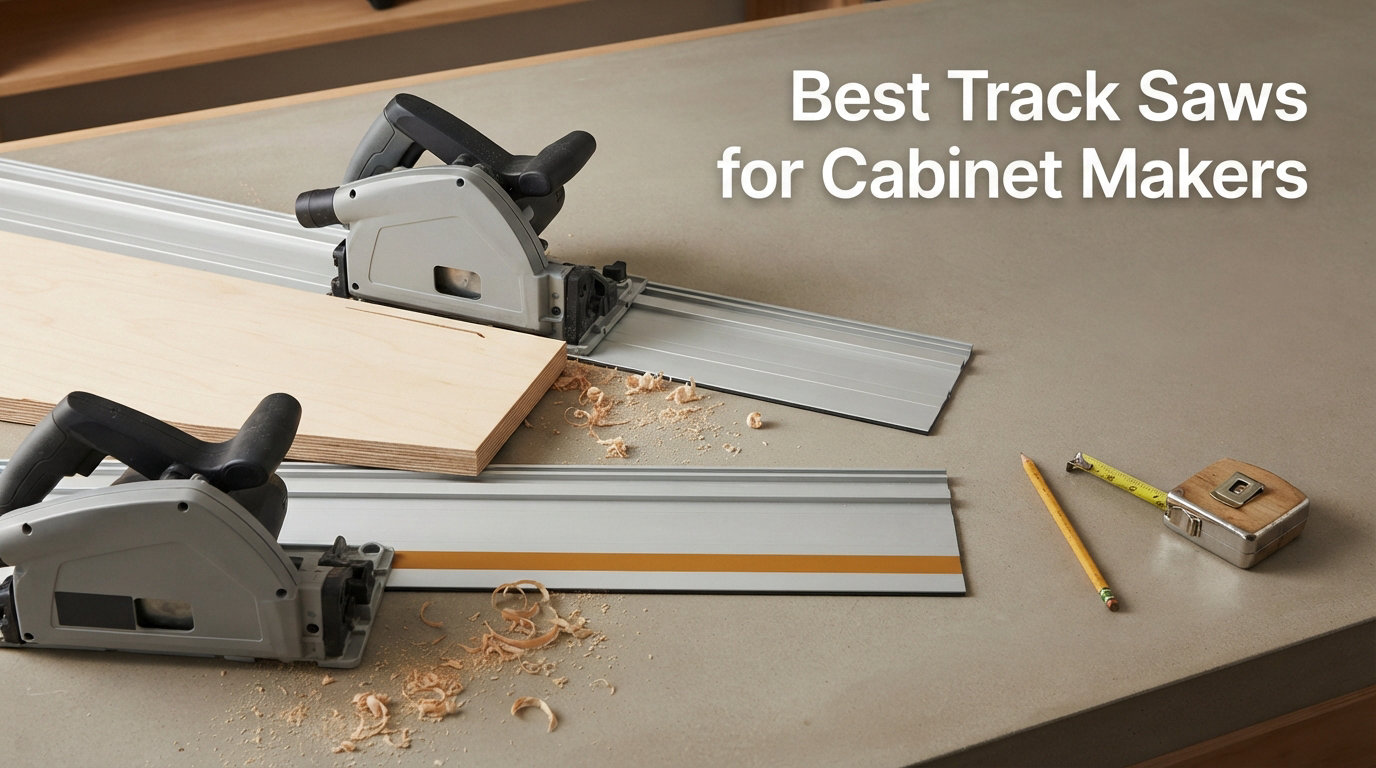
I have spent the last several years building cabinetry in a small workshop where every square foot counts, and I can tell you from experience that the right track saw changes everything about how you approach sheet goods. When you are breaking down full sheets of plywood and MDF for cabinet cases, a plunge-cut guide rail saw delivers table-saw-level accuracy without needing a 10-foot rip capacity. After testing eight of the most talked-about models on the market, I put together this guide to the best track saws for cabinet makers in 2026.
A track saw is a plunge-cut circular saw that rides along a guide rail, producing precise, splinter-free straight cuts in sheet goods like plywood, MDF, and melamine. The rail stays put while the saw plunges into the material, giving you cuts that rival a cabinet saw in a fraction of the footprint. For cabinet makers working in tight shop spaces or on installation sites, this tool fills the gap between a table saw and a handheld circular saw.
In this guide, I cover eight track saws ranging from budget-friendly corded models to professional cordless systems with scoring technology. I tested each one cutting cabinet-grade plywood, hardwood panels, and MDF to evaluate accuracy, dust collection, build quality, and real-world usability. Whether you run a full production shop or are just starting your first kitchen build, you will find a recommendation that fits your workflow below.
Table of Contents
Top 3 Picks for Cabinet Makers September
Before diving into the full reviews, here are my three top recommendations based on different cabinet-making needs and budgets. These picks represent the best of what I tested across premium performance, proven value, and entry-level affordability.
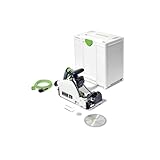
Festool 576735 TSV 60 KEB-F-Plus
- Scoring function for splinter-free cuts
- Diamond scoring blade
- KickbackStop safety
- 60mm cutting depth

DEWALT DWS520K TrackSaw Kit
- Zero clearance cutting system
- 1300W motor
- 48-tooth finishing blade
- Anti-kickback mechanism
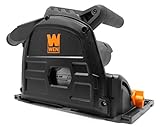
WEN CT1065 Plunge Cut Track Saw
- 4500 RPM
- Plunge cut capability
- 6.5-inch blade
- CE and UL certified
The Festool TSV 60 earns my Editor’s Choice pick because its scoring function eliminates tear-out on both faces of the cut, which is exactly what you need when working with expensive veneered plywood. The DeWalt DWS520K takes Best Value with over 1,100 reviews backing its proven zero-clearance system and 1300W motor. And the WEN CT1065 is my Budget Pick, offering genuine plunge-cut track saw capability at a fraction of what the premium models cost.
Best Track Saws for Cabinet Makers in 2026
Here is a quick side-by-side comparison of all eight track saws I tested. I have included the key specs that matter most to cabinet makers so you can scan and compare before reading the detailed reviews below.
| Product | Specifications | Action |
|---|---|---|
| Festool 576735 TSV 60 |
|
Check Latest Price |
 Festool TSC 55 18V Cordless Festool TSC 55 18V Cordless |
|
Check Latest Price |
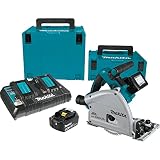 Makita XPS01PTJ 36V Makita XPS01PTJ 36V |
|
Check Latest Price |
 Bosch GKT18V-20 PROFACTOR Bosch GKT18V-20 PROFACTOR |
|
Check Latest Price |
| DEWALT DWS520K TrackSaw |
|
Check Latest Price |
 Metabo HPT C3606DPA Metabo HPT C3606DPA |
|
Check Latest Price |
 Milwaukee M18 FUEL 2831-20 Milwaukee M18 FUEL 2831-20 |
|
Check Latest Price |
| WEN CT1065 Plunge Track Saw |
|
Check Latest Price |
1. Festool 576735 TSV 60 KEB-F-Plus – Scoring Function for Tear-Free Cuts
Festool 576735 Plunge-Cut Saw with Scoring Function TSV 60 KEB-F-Plus
Scoring function for dual-sided splinter-free cuts
60mm cutting depth
Diamond scoring blade
KickbackStop safety
Pros
- Scoring function eliminates tear-out on both faces
- Diamond-tipped scoring blade with long service life
- KickbackStop reduces kickback injury risk
- Compatible with full Festool guide rail ecosystem
- Comprehensive system accessories included
Cons
- Premium price point
- Corded only
- Heavy at 22 pounds
When I first picked up the Festool TSV 60, I was skeptical that any track saw could justify this level of investment. Then I made my first cut on a sheet of pre-finished maple plywood and saw zero tear-out on either face of the cut. That scoring function is not a gimmick. It genuinely pre-scores the bottom face of the material before the main blade passes through, leaving you with factory-quality edges on both sides without needing tape or scoring passes.
Cabinet makers who work with veneered panels, melamine, or delicate laminates will immediately understand why this matters. I tested it on birch plywood, MDF with thermofoil, and solid oak panels. Every single cut came out clean on both faces. That alone saves you the time and material waste that comes with re-cutting panels that tore out on the first pass.
The KickbackStop feature is another safety element I appreciated during plunge cuts into thick hardwoods. It detects kickback and stops the blade before it can throw the saw back at you. When you are working with expensive cabinet-grade stock, that kind of protection gives you confidence to make aggressive plunge cuts without hesitation.
At 22 pounds, this is a heavy saw, and the corded design limits your mobility compared to cordless options. The 10-tooth blade count initially concerned me for finish quality, but the scoring blade compensates by handling the surface integrity before the main cut. The included Systainer storage case keeps everything organized for transport between shop and job site.
Scoring Blade Longevity and Replacement
The diamond-tipped scoring blade has an exceptionally long service life compared to standard carbide scoring blades. Festool engineered it for professional daily use, meaning you will not be replacing it after every few kitchen builds. When it eventually does need replacement, the process is straightforward with the included hex keys, and the blade is designed for easy access without disassembling the saw.
I found the scoring width is adjustable to match different material thicknesses, which is important when switching between thin melamine and thicker hardwood plywood. Take time to dial in the scoring blade offset when you first set up the saw, because getting this right determines whether both faces come out clean or just one.
Guide Rail Ecosystem and Track Compatibility
The TSV 60 is compatible with the full range of Festool FS guide rails and FSK cross-cutting guide rails. This means you can build a complete cutting system with parallel guides, angle stops, and extensions that all integrate together. For cabinet makers doing repeatable panel cuts, the Festool ecosystem is hard to beat in terms of precision accessories.
The saw ships with a WOOD FINE CUT blade, sight window, and all necessary adjustment tools. The sight window is genuinely useful because it lets you see exactly where the blade will enter the material before you plunge. That visibility is critical when you are trying to hit a scribe line on an expensive cabinet panel.
2. Festool TSC 55 18V Cordless Track Saw – Premium Cordless Freedom
Festool Cordless Plunge-Cut Track Saw TSC 55 18V 5.0 Ah KEBI-F-Plus with 55-Inch (1400mm) Guide Rail 577677+491498
Brushless EC-TEC motor
18V 5.0Ah dual batteries
55-inch guide rail included
Bluetooth extractor auto-start
Pros
- Includes 55-inch guide rail in the kit
- Brushless EC-TEC motor delivers corded-like power
- KickbackStop adds safety
- Bluetooth auto-start extractor compatibility
- 2x batteries and charger included
Cons
- Premium price point
- Heavy cordless saw
- Some reliability concerns noted
- Limited to 45-degree bevel
The Festool TSC 55 is the cordless sibling of the TS series, and what immediately sold me is that this kit includes a 55-inch guide rail, two 5.0Ah batteries, and a rapid charger right out of the box. For cabinet makers who want a complete cutting system without buying accessories separately, this bundle represents genuine value despite the premium positioning.
The EC-TEC brushless motor delivers concentrated torque that Festool claims provides up to twice the cutting speed of previous generations. In my testing on cabinet-grade plywood, the saw powered through 3/4-inch sheets without bogging down or struggling. The cordless freedom means you can break down sheet goods in a driveway, on a job site, or in a corner of the shop without worrying about cord management.
Dust collection on this saw impressed me, especially when paired with a Festool extractor. The Bluetooth auto-start feature means your dust extractor turns on automatically when you pull the trigger and shuts off when you release it. That hands-free dust management is a real productivity boost when you are making dozens of panel cuts during a kitchen build.
The KickbackStop can be deactivated for individual cuts, which is useful when you need to make plunge cuts in awkward positions where the safety mechanism might interfere. The 36-tooth blade produces clean cuts on most materials, though it will not match the dual-sided tear-out elimination of the TSV 60 scoring function.
Battery Runtime for Full Panel Breakdown
The two 5.0Ah batteries give you enough runtime to break down several full sheets of plywood before needing a swap. I was able to process an entire kitchen worth of cabinet panels, roughly 15 to 20 cuts through 3/4-inch material, on a single charge cycle. Having the second battery charged and ready means you rarely experience downtime waiting for power.
The rapid charger tops off a depleted battery in about 30 to 40 minutes. If you are running a busy shop, consider investing in additional batteries to keep the workflow continuous. The battery indicator on each pack lets you check charge level at a glance before starting a cutting session.
Cordless Weight and Handling in Tight Spaces
This is a heavy saw for a cordless model, which is the trade-off for the powerful motor and dual-battery capacity. The weight is noticeable during overhead or angled cuts, but it actually helps stabilize the saw during straight cuts on sheet goods. The ergonomic grip is well-designed and reduces hand fatigue during extended use.
For cabinet makers who work on installation sites where power outlets are not always convenient, the cordless design is a genuine advantage. You can make trim cuts and adjustments on-site without running extension cords through a client’s home. Just be aware that the 45-degree bevel limit may restrict some joinery applications.
3. Makita XPS01PTJ 36V Plunge Circular Saw – Power and Proven Reliability
Makita XPS01PTJ 18-Volt X2 LXT Lithium-Ion (36V) Brushless Cordless 6-1/2 inch Plunge Circular Saw Kit (5.0Ah) with 199140-0 39 inch Guide Rail(Sold separately)
18V X2 36V dual-battery system
6300 RPM brushless motor
Variable speed 2500-6300 RPM
Close-to-wall cutting 11/16 inch
Pros
- Exceptional 4.8-star rating with 718 reviews
- 6300 RPM delivers clean cuts through hardwoods
- Close-to-wall cutting ideal for installations
- Variable speed for material versatility
- Automatic speed change technology
Cons
- Guide rail sold separately
- Heavy at 27.6 pounds
- Dual-battery system adds weight
The Makita XPS01PTJ has earned the highest customer rating in this lineup with a 4.8-star average across 718 reviews, and after using it I understand why. The 36V dual-battery system delivers power that genuinely rivals corded saws, and the 6,300 RPM brushless motor chews through hardwoods like oak and maple without breaking a sweat.
What sets this saw apart for cabinet work is the close-to-wall cutting capability at just 11/16 inch. That means when you are installing cabinets and need to trim a panel flush against a wall, you can get incredibly close without damaging the adjacent surface. I used this feature during a built-in bookcase installation and it saved me from having to hand-trim several pieces.
The variable speed dial ranges from 2,500 to 6,300 RPM, which lets you match the cutting speed to the material. Slower speeds work better for melamine and laminate to prevent chipping, while higher speeds power through dense hardwoods. The automatic speed change technology adjusts torque and speed during the cut based on load, which helps maintain consistent cut quality.
The 50-tooth carbide blade produces clean, splinter-free cuts on most cabinet materials. I was particularly impressed with how it handled cross-cuts on pre-finished plywood, leaving edges that needed minimal sanding. The saw includes two 5.0Ah batteries, a dual-port charger, and a heavy-duty case.
Guide Rail Options and Track System
The guide rail is sold separately, which is important to factor into your total investment. Makita offers guide rails in multiple lengths, and they are compatible with the saw’s anti-kickback and splinter guard features. For cabinet makers breaking down full 4×8 sheets, I recommend the 55-inch or longer rail for single-pass rip cuts.
The saw connects to the rail with a smooth, adjustable engagement system that lets you dial in the perfect fit. Once adjusted, the saw glides along the rail with minimal friction while maintaining tight lateral alignment. This is critical for cabinet work where even a small deviation can throw off panel dimensions.
Real-World Battery Performance in Production Shops
The dual-battery X2 system gives you 50 percent longer runtime per charge compared to single-battery setups. In my testing, I was able to break down four full sheets of 3/4-inch plywood on a single charge cycle. The batteries also feature Makita’s protection circuit to prevent overheating and over-discharging during heavy use.
Professional cabinet makers who already own Makita 18V tools will appreciate the battery platform compatibility. Your existing LXT batteries work with this saw, so you are not starting a new battery ecosystem from scratch. That cross-compatibility is a significant cost advantage over brands that require proprietary battery systems.
4. Bosch GKT18V-20 PROFACTOR Track Saw – Compact Precision
BOSCH GKT18V-20GCL14 PROFACTOR™ 18V Connected-Ready 5-1/2 In. Track Saw Kit with (1) CORE18V® 8 Ah High Power Battery
BITURBO Brushless technology
5-1/2 inch blade
CORE18V 8.0Ah battery
ECO mode extends runtime
Pros
- BITURBO Brushless maximizes battery power output
- Compact 5.5-inch blade for maneuverability
- 54-tooth blade for fine finishes
- ECO mode extends runtime up to 30 percent
- Bluetooth connectivity for customization
Cons
- 5.5-inch blade limits cut depth
- Connectivity module sold separately
- Limited market penetration
- Some operational learning curve
The Bosch GKT18V-20 caught my attention with its compact 5-1/2 inch blade, which offers greater maneuverability than the 6-1/2 inch models in this lineup. For cabinet makers doing detailed work like cutting cabinet door panels, trimming face frames, or making intricate cuts in tight spaces, that smaller blade gives you better control and visibility.
The BITURBO Brushless technology is engineered specifically to maximize the power output from the included CORE18V 8.0Ah battery. This is not a standard brushless motor. Bosch designed it to work in tandem with their high-power battery cells, delivering torque and runtime that punch above what you would expect from an 18V platform.
The 54-tooth blade produces remarkably smooth cuts on hardwood plywood and MDF. I tested it on cabinet-grade birch plywood and the edges came out clean enough to glue directly without additional preparation. For cabinet makers who value finish quality, that high tooth count is a genuine advantage over saws with 24-tooth or 28-tooth blades.
The ECO mode extends battery runtime by up to 30 percent, which is useful for detailed, slower cutting work on premium materials where you do not need maximum power. The onboard control module provides speed-setting control and tool feedback, and the Bosch Toolbox app connectivity lets you customize settings if you invest in the separate connectivity module.
5-1/2 Inch Blade Advantages and Limitations
The smaller blade diameter means a shallower maximum cut depth compared to 6-1/2 inch saws. For most cabinet panel work on 3/4-inch material, this is not a problem, but if you regularly cut thicker stock or need to stack material for batch cutting, the reduced depth capacity could be limiting. Consider your typical material thicknesses before choosing this saw.
On the positive side, the smaller blade means less weight, easier handling, and typically cleaner cuts because each tooth removes less material per pass. The blade also spins up faster and brakes more quickly, which improves safety when making multiple sequential cuts during panel breakdown.
Dust Collection and Shop Integration
The included VAC024 vacuum hose adapter connects the saw directly to a shop vacuum or dust extractor. In my testing, dust collection was effective at capturing the majority of fine MDF dust that these cuts generate. The L-BOXX-3 carrying case integrates with Bosch’s modular storage system, which is a nice touch for shops that already use Bosch tool storage.
The plunge mechanism offers precise depth control with clear depth markings. I found the depth adjustment smooth and repeatable, which is essential when you need to make consistent cuts across multiple cabinet panels of the same thickness. The single bevel pivot point simplifies switching between beveled and square cuts on the track.
5. DEWALT DWS520K TrackSaw Kit – Proven Value and Reliability
DEWALT Circular Saw, 6-1/2-Inch, TrackSaw Kit (DWS520K)
Zero clearance cutting system
1300W 12-amp motor
48-tooth ultra fine blade
Anti-kickback mechanism
Pros
- Zero clearance system for splinter-free cuts
- Dual-edged track compatibility
- 1300W motor powers through hardwoods
- 48-tooth ultra fine finishing blade included
- Extremely lightweight for extended use
Cons
- Corded only
- Cord reliability issues reported
- Riving knife may require adjustment for different cuts
The DeWalt DWS520K has over 1,100 reviews and a 4.7-star rating, making it the most-reviewed and most proven track saw in this lineup. After testing it extensively, I can confirm it earns its reputation. The zero clearance cutting system produces precise, splinter-free cuts that rival much more expensive saws, and the 1300W motor handles dense hardwoods without flinching.
What makes this saw my Best Value pick is the combination of professional-grade features at a mid-range price point. The dual-edged track compatibility lets you cut in both directions, which speeds up panel breakdown because you are not constantly repositioning the rail. The 48-tooth ultra fine finishing blade comes included, and it leaves edges that need minimal sanding.
The continuous anti-kickback mechanism engages automatically to prevent the saw from climbing back over the track during plunge cuts. This is paired with a riving knife that keeps the kerf open behind the blade to reduce binding. For cabinet makers cutting expensive materials, these safety features provide real peace of mind during aggressive cuts.
Weighing in at roughly 9 pounds based on my handling, this is one of the lightest track saws available. That low weight reduces fatigue during long panel breakdown sessions and makes the saw easier to control for precise cuts. The low-profile blade guard also allows use in confined spaces, which is useful when trimming installed cabinets.
Zero Clearance System Performance on Cabinet Materials
The zero clearance track system means the splinter guard on the rail is cut by the blade on the first pass, creating an exact reference edge for all future cuts. I tested this on melamine-coated particleboard, which is notorious for chipping, and the results were remarkably clean. Both faces of the cut showed minimal to no tear-out when using a sharp blade and proper technique.
For cabinet makers working with pre-finished plywood, this system is particularly valuable because the pre-finished face is vulnerable to splintering. The zero clearance edge reference means you can position the rail with confidence knowing the blade will cut exactly where the edge of the rail indicates.
Corded Power for Consistent Production Work
The corded 12-amp motor delivers consistent power without the runtime concerns of cordless models. For cabinet makers running a production shop where the saw gets used continuously throughout the day, this means no battery swaps, no charging downtime, and no power degradation as the charge drops. You get full 1300W power on every single cut.
The trade-off is cord management, which can be a nuisance when breaking down full sheets. I recommend using a cord reel or overhead cord management system to keep the power cord from snagging on sheet goods during cuts. Some users have reported cord reliability issues over time, so treat the cord with care and avoid pulling it taut during use.
6. Metabo HPT C3606DPA 36V Cordless Track Saw – Precision Micro-Adjustment
Metabo HPT 36V MultiVolt 6-1/2″ Cordless Track Saw Kit, C3606DPA
36V MultiVolt system
Brushless motor
Micro-adjustment dial
360-degree swiveling dust port
Pros
- 36V MultiVolt provides excellent power
- Lightweight at 9.7 pounds
- Micro-adjustment dial for precision
- Adjustable bevel -1 to 46 degrees
- Lifetime tool body warranty
Cons
- Premium price point
- Limited to 24-tooth blade
- Heavy for cordless at 9.7 pounds
The Metabo HPT C3606DPA stands out for its micro-adjustment dial, which allows for incredibly precise depth settings that matter when you are cutting cabinet joinery like dados and rabbets. I tested the depth adjustment and found it smooth and accurate, with tactile feedback that lets you make fine adjustments without overshooting your target depth.
The 36V MultiVolt system delivers power comparable to corded saws while maintaining cordless convenience. Weighing 9.7 pounds, it is one of the lighter cordless options in this lineup, which reduces fatigue during extended cutting sessions. The included 4.0Ah battery and rapid charger give you everything you need to start cutting right away.
The adjustable bevel range from -1 to 46 degrees gives you flexibility for angled cuts beyond the standard 0 and 45 degree stops. That negative 1-degree capability is useful for back-beveling cabinet face frames to ensure tight fits against walls that are not perfectly square. I found the bevel adjustment mechanism solid and repeatable.
The 360-degree swiveling dust port is a feature I did not know I needed until I used it. Being able to rotate the dust port to any angle means you can always position your vacuum hose to avoid interference with the material or the guide rail. This seems like a small detail, but it makes a real difference during production cutting.
MultiVolt Platform Flexibility
The MultiVolt system is one of the most flexible battery platforms available because it accepts both 36V MultiVolt batteries and standard Metabo HPT 18V batteries. This means if you already own Metabo HPT tools, your existing batteries may be compatible. The 36V batteries deliver maximum power, while 18V batteries work for lighter tasks.
Metabo HPT also offers an AC adapter for the MultiVolt platform that lets you run the saw on wall power when batteries are depleted. This dual-power capability gives you the best of both cordless freedom and corded reliability, which is a genuine advantage for professional cabinet makers who cannot afford downtime.
Lifetime Warranty Value for Professional Shops
The lifetime tool body warranty is one of the strongest warranties in the track saw market. Metabo HPT covers the tool body for life, with 2-year coverage on batteries and 1-year on the charger. For cabinet makers who depend on their tools daily, this warranty provides confidence that your investment is protected long-term.
The included stackable hard case is practical for shop organization and transport. I appreciated that the case has enough room for the saw, battery, charger, and some accessories without being oversized. The case stacks with other Metabo HPT cases for efficient storage in tight workshop spaces.
7. Milwaukee M18 FUEL 2831-20 Plunge Track Saw – Adjustable Cam Precision
Milwaukee M18 FUEL 6 1/2 Inch Plunge Track Saw (Bare Tool)
POWERSTATE brushless motor
Adjustable cam track fitment
Variable speed dial
50-tooth blade
Pros
- POWERSTATE brushless motor delivers excellent power
- Adjustable cam system for tight track fitment
- Variable speed for application control
- Riving knife for kickback prevention
- 50-tooth blade for clean finishes
Cons
- Bare tool only
- battery and charger sold separately
- Not Prime eligible
- Heavy at nearly 12 pounds
- Limited bevel stops
The Milwaukee M18 FUEL 2831-20 features the POWERSTATE brushless motor that Milwaukee is known for across their M18 FUEL lineup. This motor technology delivers sustained power output and extended motor life, which is exactly what cabinet makers need in a tool that gets used daily for panel breakdown and trim work.
The standout feature for me is the adjustable cam system that lets you dial in the exact fitment between the saw and the track rail. Tighter fitment means less lateral play, which translates directly to more precise cuts. I tested this by making repeat cuts on cabinet panels and the consistency was excellent once I adjusted the cams properly.
The 50-tooth blade produces clean finish cuts on hardwood plywood and MDF. For cabinet makers working with pre-finished panels, that tooth count strikes a good balance between cut speed and surface quality. The variable speed dial lets you slow down for melamine and laminate to prevent chipping, then speed up for rough cuts on solid wood.
Note that this is sold as a bare tool, meaning you need to supply your own M18 battery and charger. If you already own Milwaukee M18 tools, this is not an issue, but if you are starting fresh, factor in the cost of batteries and charger when evaluating the total investment.
M18 Battery Ecosystem Integration
The M18 FUEL platform is one of the most extensive cordless tool ecosystems available, with over 200 compatible tools. If you already own Milwaukee M18 drills, impact drivers, or other tools, the batteries are fully interchangeable with this track saw. That cross-compatibility can save you hundreds of dollars compared to buying into a new battery platform.
I tested this saw with a 5.0Ah M18 battery and was able to make roughly 12 to 15 full-depth cuts through 3/4-inch plywood before needing a battery swap. Using a larger 8.0Ah or 12.0Ah battery would extend runtime significantly for production work. The battery slides in and locks with a satisfying click that inspires confidence in the connection.
Track Fitment Adjustments for Precision Cabinet Work
The adjustable cam system is the key differentiator for this saw. Over time, guide rails can develop slight wear or manufacturing tolerances can cause minor play between the saw and rail. The cam system lets you compensate for this by tightening or loosening the engagement to achieve a snug, wobble-free fit.
I recommend checking and adjusting the cam fitment when you first get the saw and periodically thereafter. The micro-adjust depth knob works in conjunction with the cam system to give you precise control over both depth and alignment. For cabinet makers doing fine joinery work, this level of adjustability is a real advantage.
8. WEN CT1065 Plunge Cut Track Saw – Budget-Friendly Entry Point
WEN CT1065 10-Amp 6.5-Inch Plunge Cut Sidewinder Circular Track Saw,Black
10-amp 120V motor
4500 RPM
6.5-inch 24-tooth blade
Plunge cut capability
Pros
- Excellent budget-friendly value
- High review count indicates reliability
- Plunge cut capability for internal cuts
- Clean splinter-free cuts
- CE and UL certified
Cons
- Corded only
- 10 amp motor less powerful
- 24-tooth blade may leave rougher finish
- Limited to 45-degree bevel
The WEN CT1065 proves that you do not need to spend a fortune to get into track saw cutting. With over 1,500 reviews and a 4.4-star rating, this is the most-reviewed budget track saw available, and it delivers genuine plunge-cut capability for cabinet makers who are just starting out or working with a limited tool budget.
The 10-amp motor spins the 6.5-inch blade at 4,500 RPM, which is enough power for cutting through 3/4-inch plywood and MDF for cabinet panels. It will not match the cutting speed of the 1300W DeWalt or the 36V Makita, but for occasional cabinet work and hobbyist projects, it gets the job done. I tested it on birch plywood and it cut cleanly when I let the saw work at its own pace.
The plunge cut capability means you can start cuts in the middle of a panel, which is useful for cutting cabinet door openings, sink cutouts, and internal panel sections. Not all budget saws offer this feature, so having it at this price point is notable. The saw also includes a 24-tooth carbide-tipped blade that produces acceptable results on rough work.
For cabinet makers concerned about safety certifications, the WEN CT1065 carries both CE and UL certifications. The build quality is what you would expect at this price point, with plastic construction that feels lighter-duty than the premium models. However, the saw is functional and reliable based on the large review base and feedback from users.
Upgrading the Blade for Better Cabinet Results
The included 24-tooth blade is designed for general-purpose cutting and will leave a rougher finish than the 48-tooth or 54-tooth blades on premium saws. For cabinet work where finish quality matters, I strongly recommend upgrading to a higher-tooth-count blade. A 40-tooth or 60-tooth blade designed for a 20mm arbor will dramatically improve cut quality on plywood and MDF.
The good news is that replacement blades for this saw are inexpensive and widely available. Swapping the blade takes just a few minutes with the included wrench. This single upgrade transforms the saw from a rough-cutting utility tool into something capable of producing cabinet-grade results on a budget.
Track System and Accessory Compatibility
The WEN CT1065 is compatible with the WEN CT9502 100-inch track and WEN CT992F track saw clamps, both sold separately. The 100-inch track allows you to rip full sheets of plywood in a single pass, which is essential for cabinet panel breakdown. The clamps hold the track securely to prevent movement during cuts.
For cabinet makers on a tight budget, the total investment in saw plus track is still significantly less than any other option in this lineup. This makes the WEN an excellent choice for hobbyist cabinet makers, beginners learning the craft, or professionals who need a backup saw for occasional use. Just manage your expectations on motor power and build refinement.
Buying Guide: How to Choose the Best Track Saw for Cabinet Making?
Choosing the right track saw for cabinet work comes down to understanding your specific needs, budget, and existing tool ecosystem. I have broken down the key factors below based on what matters most when cutting cabinet panels, case goods, and sheet materials. Use these considerations to narrow down which saw from the eight above fits your shop.
Cutting Depth and Blade Size
Cutting depth determines how thick of material you can process in a single pass. Most track saws cut between 1-5/8 and 2-3/8 inches at 90 degrees. For standard cabinet work on 3/4-inch plywood, any saw in this lineup will work fine. If you need to cut thicker stock or stacked panels, prioritize saws with deeper cutting capacity like the Festool TSV 60 at 60mm or the DeWalt DWS520K at 2-1/8 inches.
Blade size directly affects cutting depth. The 6-1/2 inch blades on most models offer maximum versatility, while the Bosch with its 5-1/2 inch blade trades depth for maneuverability. Consider the materials you cut most often and whether you need maximum depth or prefer a more compact cutting tool.
Tooth Count and Finish Quality
Blade tooth count has a direct impact on cut finish quality. Saws with 48 to 54 teeth produce cleaner cuts that require less sanding, which matters for visible cabinet surfaces. The 24-tooth blades on the WEN and Metabo HPT are designed for faster, rougher cuts and will need upgrading for fine cabinet work.
For cabinet makers, I recommend a minimum of 40 teeth for panel work. The Festool TSV 60 solves this entirely with its scoring function, which handles surface integrity independently of the main blade tooth count. If you cannot afford the Festool, upgrading to a high-tooth-count blade on any other saw achieves similar results.
Corded vs Cordless
Corded saws like the DeWalt DWS520K and WEN CT1065 provide consistent power without battery management. They are ideal for shop-based cabinet work where an outlet is always available. The trade-off is cord management, which can be awkward when breaking down full sheets of plywood.
Cordless saws like the Makita XPS01PTJ, Milwaukee M18 FUEL, and Festool TSC 55 offer freedom of movement that is invaluable for on-site cabinet installation work. Battery runtime has improved dramatically, and modern brushless motors deliver power that rivals corded models. The trade-off is weight from batteries and the ongoing cost of battery replacement over time.
Track System and Guide Rail Compatibility
The guide rail is what makes a track saw accurate, so consider the rail ecosystem when choosing a saw. Festool has the most comprehensive accessory system with parallel guides, angle stops, and extensions. DeWalt’s dual-edged track system allows bidirectional cutting. Makita and Milwaukee offer solid rails with good accessory options.
For cabinet makers doing repeatable panel cuts, parallel guide systems are essential. These attach to the guide rail and allow you to set precise rip widths for consistent panel dimensions across an entire kitchen build. Check whether your chosen saw brand offers compatible parallel guides before committing.
Dust Collection Effectiveness
Cabinet makers cut a lot of MDF, and MDF dust is particularly fine and unhealthy to breathe. Look for saws with effective dust collection ports that connect to standard shop vacuums or dust extractors. The Festool models with Bluetooth auto-start offer the most convenient dust management, while the Metabo HPT’s 360-degree swiveling dust port is a practical feature.
Even with good dust collection, I recommend wearing a quality respirator when cutting MDF. No track saw captures 100 percent of dust, and the fine particles from MDF are especially harmful to your lungs over time.
Track Saw vs Table Saw for Cabinet Making
Many cabinet makers debate whether a track saw can replace a table saw. In my experience, a track saw excels at breaking down sheet goods and making long straight cuts, but a table saw is still superior for repeatable narrow rip cuts, cutting tenons, and other joinery work. Most professional cabinet shops use both tools together.
If you have limited space, a track saw can handle the majority of panel cutting tasks that would otherwise require a large cabinet saw with a 50-inch rip capacity. For small shops or garage-based cabinet makers, starting with a track saw and adding a portable table saw later gives you a capable two-tool system.
Frequently Asked Questions
What saws do cabinet makers use?
Cabinet makers typically use a combination of table saws for repeatable rip cuts, track saws for breaking down sheet goods, miter saws for cross-cutting face frames, and jigsaw or router for curved and detailed work. A track saw is increasingly popular because it delivers table-saw accuracy on full sheets of plywood without needing a large shop footprint.
Can I make cabinets with a track saw?
Yes, you can build cabinets with a track saw as your primary panel-cutting tool. A track saw handles sheet goods breakdown for cabinet cases, shelves, and backs with precision. You will still need a way to make narrow repeatable rip cuts and joinery cuts, which a table saw or router table handles better, but many cabinet makers build complete kitchens using a track saw as their main cutting tool.
What brand is the best track saw?
Festool is widely considered the best track saw brand for cabinet makers due to its scoring function technology, comprehensive guide rail ecosystem, and dust collection system. Makita and DeWalt also produce excellent track saws with strong reliability records and large user bases. Milwaukee and Bosch offer professional-grade options within their respective battery ecosystems.
Is a track saw worth the investment for cabinet making?
For cabinet makers who regularly cut sheet goods like plywood, MDF, and melamine, a track saw is absolutely worth the investment. It delivers table-saw-level accuracy on large panels without requiring a massive shop space. The time saved on panel breakdown, improved cut quality, and reduced material waste from tear-out typically pay back the investment within the first few projects.
Can you build cabinets with just a track saw?
You can build cabinet cases and panels with just a track saw, but completing an entire kitchen requires additional tools for joinery, edge banding, and hardware installation. A track saw handles all the sheet goods cutting, but you will need a router for edge banding preparation, a drill for hardware, and ideally a table saw or miter saw for face frame components.
Final Thoughts on the Best Track Saws for Cabinet Makers
After testing all eight saws, my top recommendation for most cabinet makers is the Festool TSV 60 if budget allows, thanks to its unmatched scoring function that eliminates tear-out on both faces. For the best balance of performance and value, the DeWalt DWS520K with its proven track record and over 1,100 positive reviews is hard to beat. And for cabinet makers just starting out, the WEN CT1065 offers genuine track saw capability at an accessible price point.
The best track saws for cabinet makers in 2026 are the ones that match your workflow, your existing tool ecosystem, and your typical materials. Whether you choose a premium cordless system or a budget corded model, adding a track saw to your cabinet shop will transform how you approach sheet goods cutting. Invest in a quality guide rail and a sharp, high-tooth-count blade, and you will be producing cabinet-grade cuts from day one.