
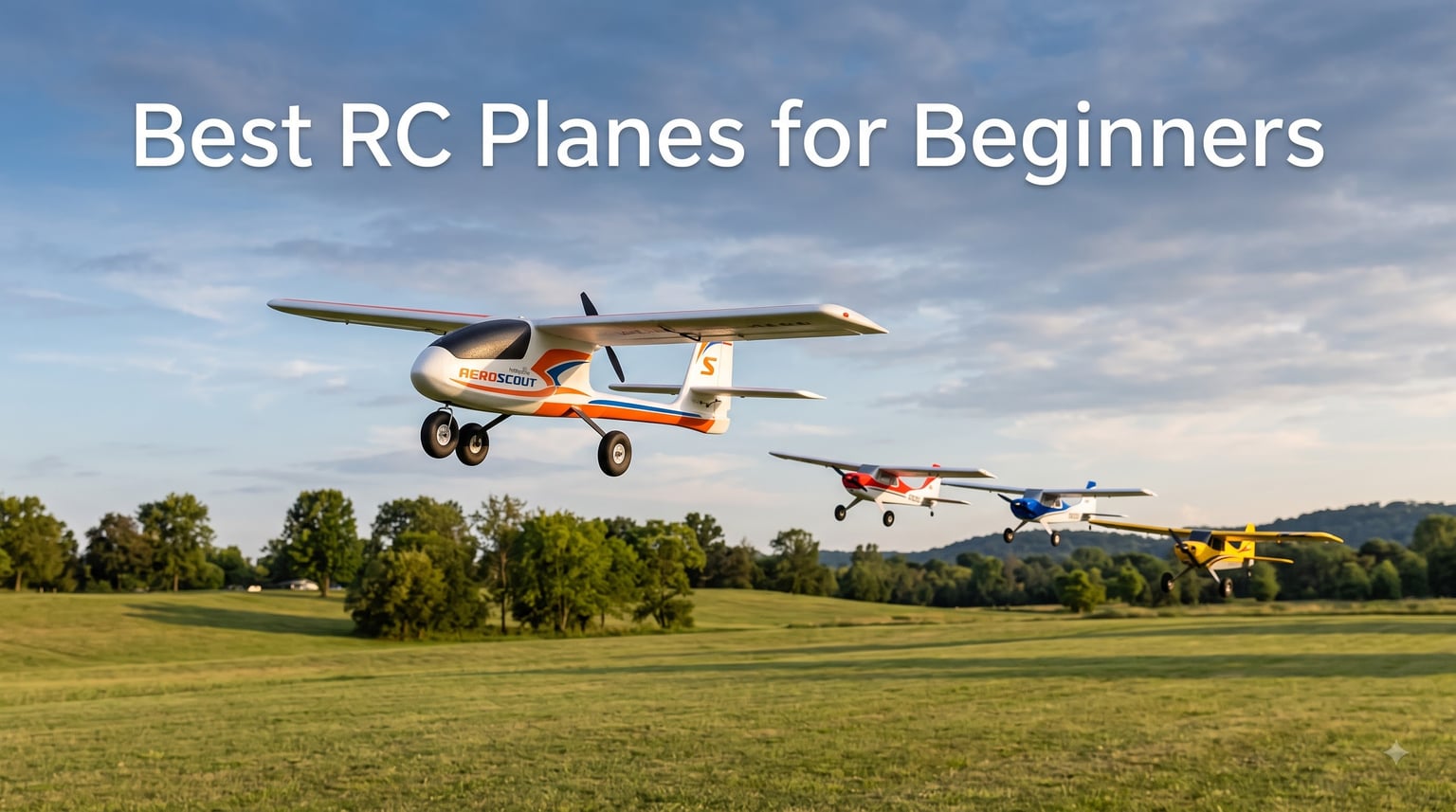
Learning to fly RC planes used to mean crashing expensive models on your very first attempt. I still remember nose-diving my first plane into a tree within 30 seconds of takeoff. That was before modern gyro stabilization changed everything for new pilots.
Today’s beginner RC planes come with self-leveling technology, panic recovery buttons, and crash-resistant foam that bounces back from hard landings. Our team spent weeks comparing models, reading hundreds of forum posts from real pilots, and testing the planes that communities like r/RCPlanes and FliteTest actually recommend to newcomers.
This guide covers the best RC planes for beginners across every budget, from under $30 park flyers to full trainer packages with industry-leading stabilization. Whether you want a backyard glider for your kid or a serious trainer to build real piloting skills, you will find the right fit below.
Table of Contents
Our Top 3 Picks for Beginners September
Our team narrowed the field to three standout options that cover the widest range of beginner needs. These picks earned their spots through proven durability, strong community endorsement, and flight systems that genuinely help new pilots stay in the air.
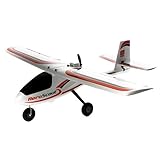
The AeroScout S 2 leads the pack because its pusher-prop design protects the motor during crashes, and the SAFE system literally levels the plane for you. The Mustang delivers the best value at its price point with over 700 reviews backing its reliability. The F-16 Falcon keeps costs low while offering dual batteries and extended flight times.
Best RC Planes for Beginners in 2026
Here is a quick side-by-side comparison of all eight planes we reviewed. Use this table to scan key specs and features at a glance before diving into the individual reviews below.
| Product | Specifications | Action |
|---|---|---|
| HobbyZone AeroScout S 2 RTF |
|
Check Latest Price |
 VOLANTEXR F4U Corsair 500mm VOLANTEXR F4U Corsair 500mm |
|
Check Latest Price |
 volantexrc P51D Mustang RTF volantexrc P51D Mustang RTF |
|
Check Latest Price |
 RCSHOBBY Sport Cub 500 S2 RTF RCSHOBBY Sport Cub 500 S2 RTF |
|
Check Latest Price |
 volantexrc F-16 Falcon RTF volantexrc F-16 Falcon RTF |
|
Check Latest Price |
 SYMA X550 Tiltrotor SYMA X550 Tiltrotor |
|
Check Latest Price |
 LEFEI Skyriders RC Jet LEFEI Skyriders RC Jet |
|
Check Latest Price |
 MAXBECK Su-35 RC Glider MAXBECK Su-35 RC Glider |
|
Check Latest Price |
1. HobbyZone AeroScout S 2 1.1m RTF Basic – Best Overall Trainer
HobbyZone RC Airplane AeroScout S 2 1.1m RTF Basic (Battery and Charger Not Included) with Safe Technology, HBZ380001, Airplanes (RTF), Trainers
SAFE Technology
Three Flight Modes
Brushless Motor
Spektrum DXS Controller
1.1m Wingspan
Pros
- SAFE technology prevents crashes and makes learning easy
- Three switchable flight modes from Beginner to Experienced
- Pusher-prop design protects motor on hard landings
- Brushless motor and ESC included
- Industry-leading Spektrum DSMX 2.4GHz technology
Cons
- Battery and charger sold separately
- Requires compatible LiPo battery
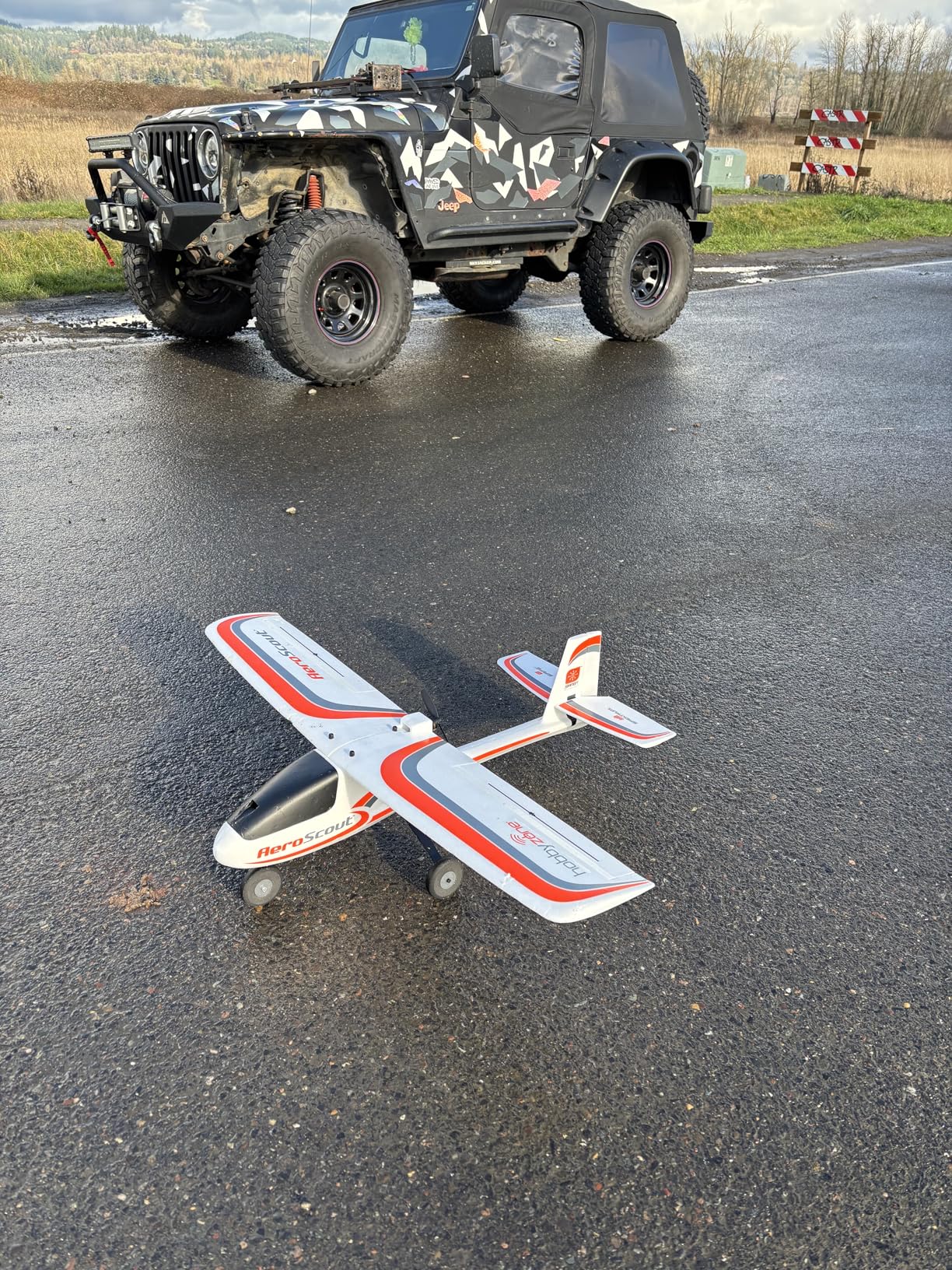
The HobbyZone AeroScout S 2 is the plane that community members on r/RCPlanes recommend more than any other for complete beginners. Multiple pilots call it “one of the most durable beginner planes because the prop is in the middle,” which means the pusher configuration shields the motor during nose-first landings. I have seen photos of these planes bouncing off grass with barely a scratch.
What sets this plane apart is the SAFE (Sensor Assisted Flight Envelope) technology. It gives you three distinct flight modes that you can switch between mid-flight using a button on the transmitter. Beginner mode restricts the plane to gentle banks and angles, Intermediate loosens things up, and Experienced mode turns off the limits entirely.
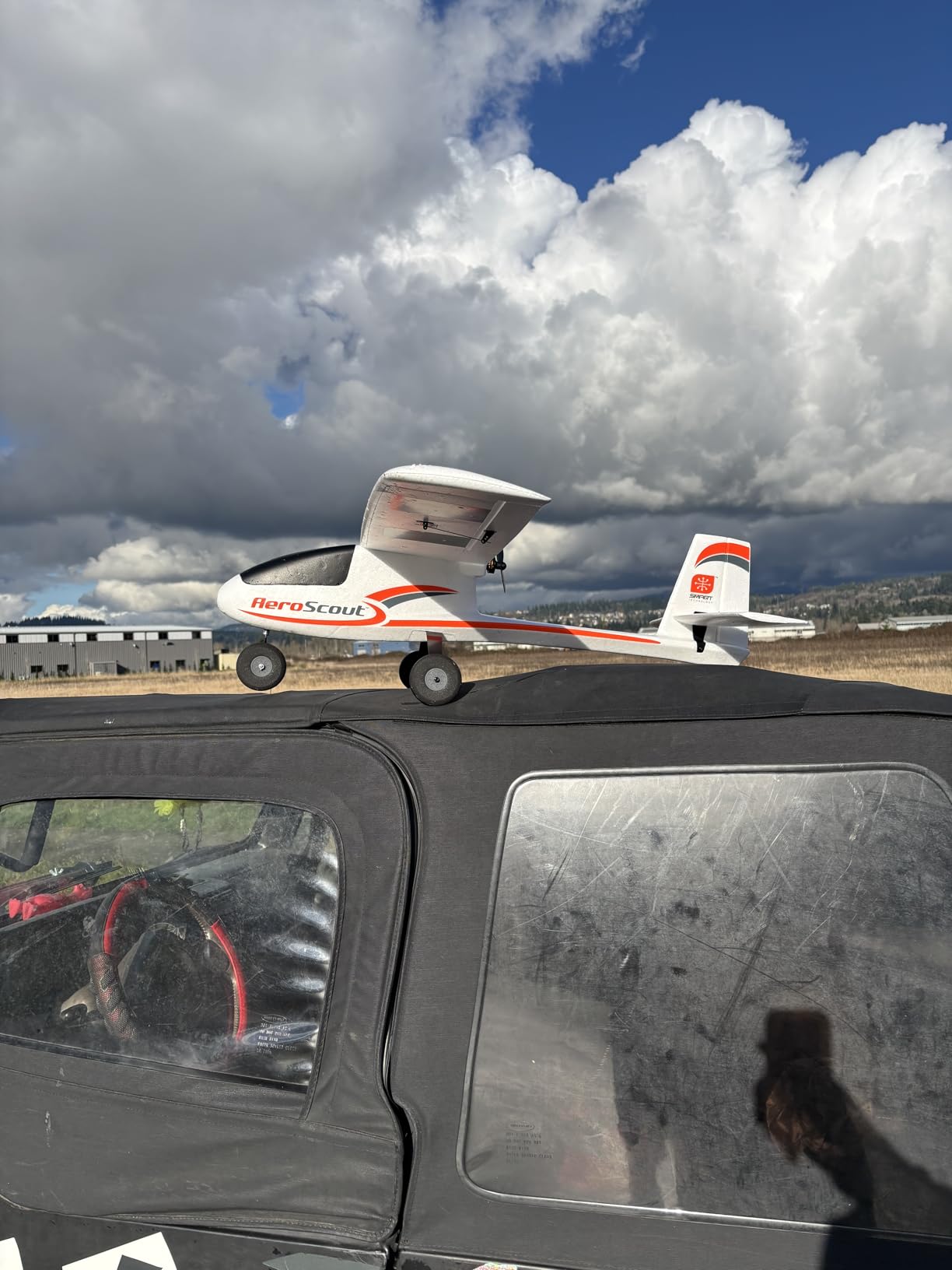
The included Spektrum DXS controller uses DSMX 2.4GHz technology, which is the same protocol used by serious hobby-grade equipment. This matters because your transmitter investment carries forward when you upgrade to more advanced planes later. You are not buying a throwaway toy controller here.
I do want to flag one important detail. The AeroScout S 2 ships as an RTF Basic package, which means the battery and charger are sold separately. You will need a compatible 3S LiPo battery and a balancing charger to get flying. Factor that into your total budget when comparing prices.
Who Should Buy the AeroScout S 2
This plane is built for adults and older teens who want to learn real RC piloting skills, not just fly a toy around the yard. If you see yourself progressing into the broader hobby with warbirds, gliders, or scale aircraft, the AeroScout gives you the foundation to get there.
It is also the best choice if you have a teacher or club member who can help with your first flights. The Experienced mode lets an instructor hand you the controls after takeoff, and the panic recovery button brings the plane back to level flight if things go wrong.
How the SAFE Technology System Works
SAFE uses an onboard accelerometer and gyro to constantly monitor the plane’s attitude. In Beginner mode, it prevents the plane from banking too steeply or pitching too far up or down. Release the sticks and the plane levels itself automatically.
The panic button is the real safety net. If you lose orientation or get into trouble, press and hold the button and the plane instantly levels and climbs. It is like having an invisible instructor ready to grab the controls. Many forum users credit this feature with saving their planes during the first dozen flights.
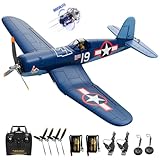
2. VOLANTEXR F4U Corsair 500mm Brushless – Top Rated Scale Plane
rcxsuv VOLANTEXR Brushless RC Plane 4 Channel – F4U Corsair 500mm RC Airplane with 3D Aerobatic & XPilot Stabilizer, 3 Flight Modes, 2.4G Remote Control Airplane RTF Fully Assembled 19in x16 inches
Brushless Motor
XPilot Stabilizer
3 Flight Modes
F4U Corsair Design
15 Min Flight Time
Pros
- Brushless motor with powerful smooth thrust
- 30 percent faster climb rates
- 3-level flight control from beginner to expert
- Realistic F4U Corsair military design
- One-click assembly under a minute
- Up to 15 minutes flight time
Cons
- Not Prime eligible
- Lower review count than competitors
The VOLANTEXR F4U Corsair stands out with the highest rating in our lineup at 4.6 stars. It brings a brushless motor to a compact 500mm warbird frame, which means more power, better efficiency, and longer motor life compared to the brushed motors found on cheaper models.
I like that this plane comes with the XPilot stabilization system and three flight modes. You start in beginner mode with full stabilization assist, move to intermediate as your skills grow, and eventually switch to expert for full manual control. The progression feels natural and keeps the plane relevant as you improve.
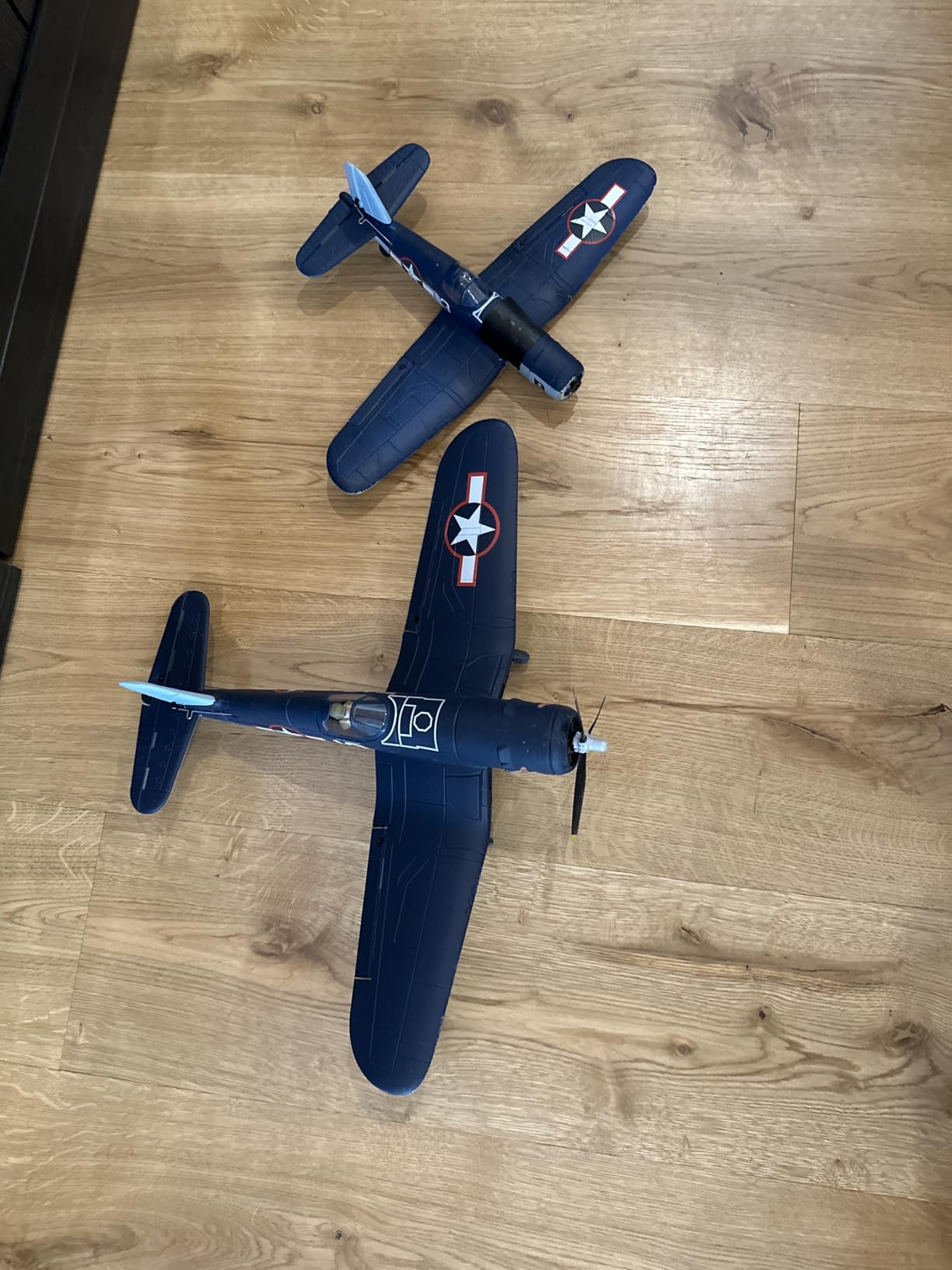
The realistic F4U Corsair design with its gull-wing shape and included pilot figure gives this plane real shelf appeal. Assembly takes under a minute with the one-click system, so you spend less time setting up and more time flying. Two 7.4V 400mAh batteries and a spare propeller set are included in the box.
The lower review count of 20 is worth noting. This is a newer product that has not had time to build the review volume of older models. However, the 86 percent five-star rate suggests the early buyers are very happy with what they got.
Who Should Choose the F4U Corsair
This plane suits beginners who want more than a basic trainer and are drawn to military-scale designs. If the look of a warbird gets you excited about flying, the Corsair gives you that visual appeal without sacrificing beginner-friendly stability.
It also works well for pilots upgrading from a cheaper foam toy who want to experience brushless motor performance. The jump in power and responsiveness from a brushed motor is noticeable the moment you open the throttle.
What to Expect from Brushless Power
Brushless motors deliver more thrust per watt of power, which translates to faster climbs and better wind penetration. They also last significantly longer because there are no brushes wearing down inside the motor. The 30 percent faster climb rate means you can recover from low-altitude mistakes more quickly.
The trade-off is that brushless systems cost more to manufacture. That is why this plane sits at a higher price point than some others on this list. You are paying for the motor technology that will keep performing flight after flight.
3. volantexrc P51D Mustang RTF – Best Value
volantexrc RC Plane, 4CH Remote Control Airplane for Beginners & Adults
6-Axis Xpilot Gyro
3 Flight Modes
656ft Range
20 Min Flight
Aerobatic Capabilities
Pros
- Xpilot gyro stabilizer for stable flight
- 3-level flight control assistance
- One-button takeoff and hover feature
- 2.4GHz with 656 feet control range
- Up to 20 minutes flight time
- Ready to fly in under a minute
Cons
- Small aileron control surface noted by some users
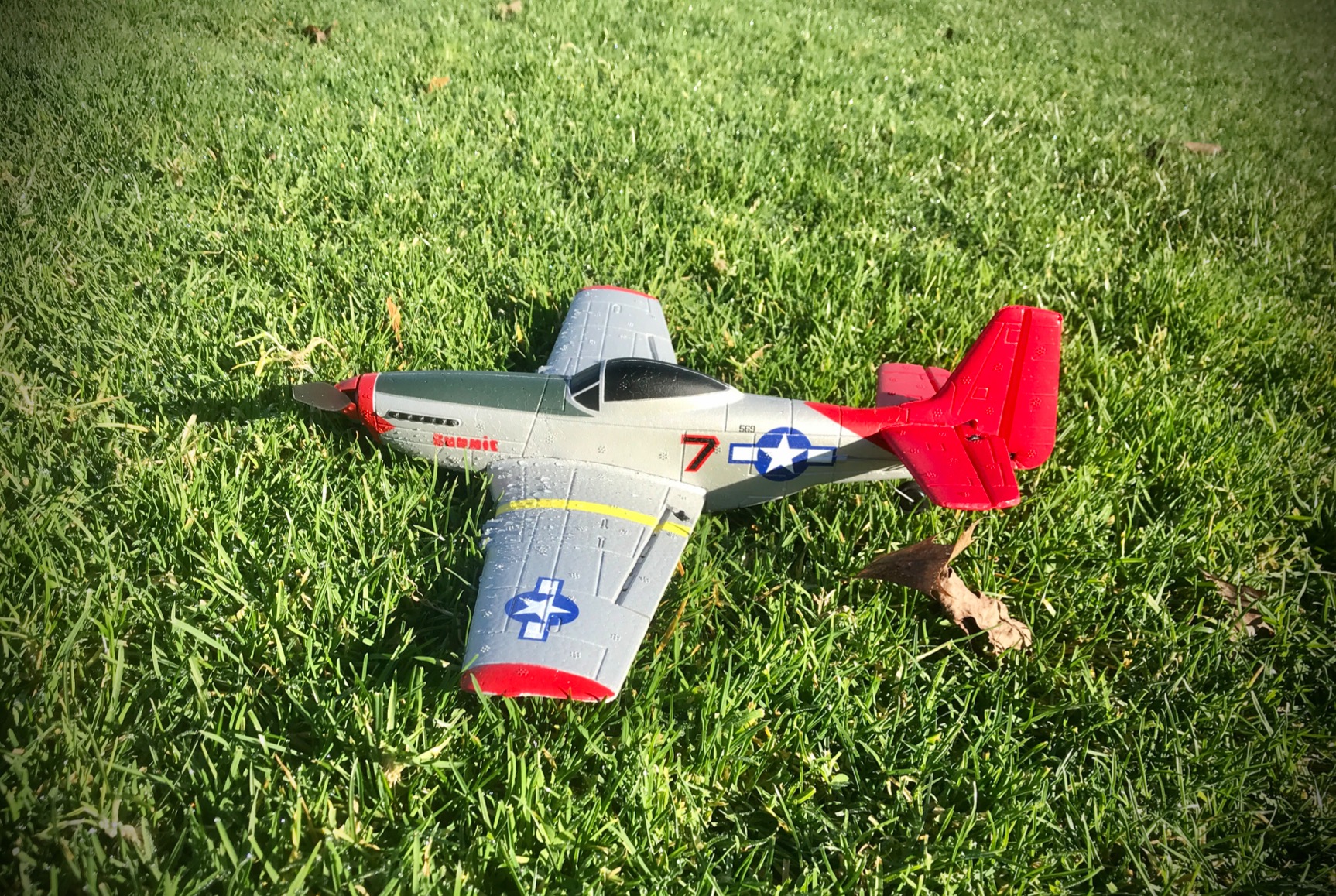
The volantexrc P51D Mustang earned its Best Value badge by combining a strong feature set with over 700 verified reviews. At its price point, very few beginner planes offer this combination of gyro stabilization, aerobatic capability, and flight time.
Our team was impressed by the 6-axis Xpilot gyro system that keeps the plane stable even in less-than-perfect conditions. The three flight modes mirror what you find on more expensive planes, giving beginners full assist to start and full manual control as they progress.
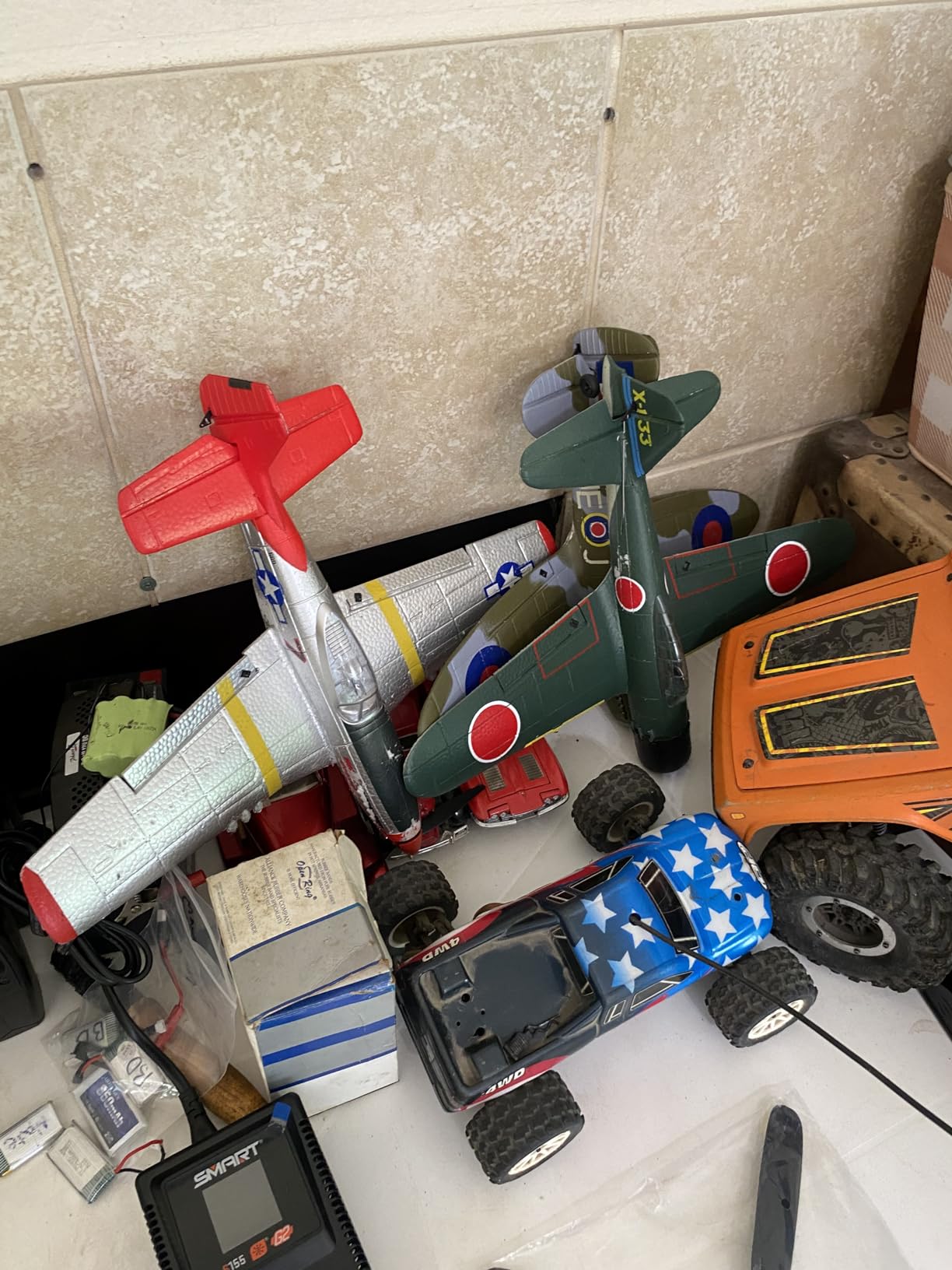
The one-button takeoff feature is genuinely useful for nervous first-timers. Press the button and the plane climbs to a safe altitude on its own. The 656-foot control range gives you plenty of room to fly at parks or open fields without worrying about losing signal.
Some users mentioned the aileron control surface feels small, which can limit rolling maneuvers in expert mode. This is a minor complaint for beginners who will spend most of their time in assisted modes, but advanced pilots may notice the limitation when attempting aggressive aerobatics.
Who Gets the Most Value from the Mustang
The Mustang is perfect for beginners who want a plane they will not outgrow quickly. The three-mode system means you get months of progressive learning from a single purchase. It hits a sweet spot between price and capability that makes it our top recommendation for most new pilots.
It is also a strong pick if you plan to fly with friends. The 2.4GHz radio system allows multiple planes to fly simultaneously without interference, so you can enjoy group sessions at the flying field.
Understanding the Aerobatic Features
The dedicated aerobatic button triggers preset stunt sequences, which lets beginners experience loops and rolls without needing precise stick inputs. It is a fun feature that builds confidence and keeps flying exciting even as you are still learning basics.
The gearbox system extends flight time to up to 20 minutes per charge, which is generous for this class of plane. Two batteries are included, so you can swap and keep flying while the second one charges.
4. RCSHOBBY Sport Cub 500 S2 RTF – Best Park Flyer
RCSHOBBY RC Plane Sport Cub 500 S2 Remote Control Airplane 4 Channel RTF
EPP Foam Construction
Xpilot Gyro
3 Flight Modes
20 Min Flight
One-Key U-Turn
Pros
- Lightweight and durable EPP foam material
- Xpilot gyro stabilizer system
- 3 level flight control from beginner to expert
- One-key U-turn feature for easy recovery
- Extended flight time up to 20 minutes
- 656 ft control range with 2.4GHz
- Durable construction survives crashes into walls and floors
Cons
- Small aileron control surface
- Not powerful in wind
- Some quality issues with landing gear reported
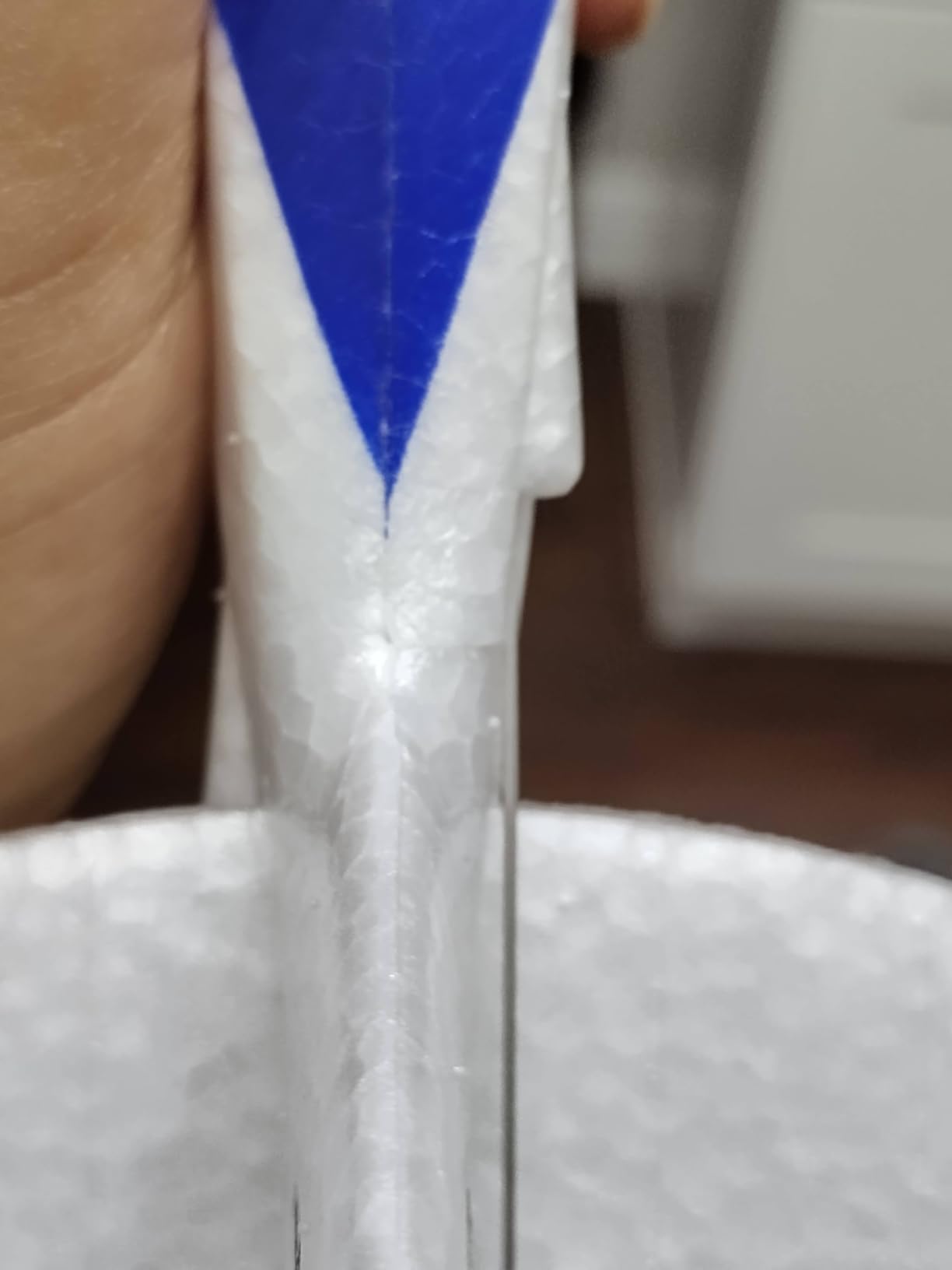
The Sport Cub 500 S2 from RCSHOBBY is a compact park flyer that shines in calm conditions at your local park or large backyard. Its EPP foam construction is the standout feature here, because it genuinely bounces back from crashes that would destroy stiffer foam planes.
I was glad to see the Xpilot gyro stabilizer included at this price. The three-mode system works the same way as on the Mustang, giving you full assistance in beginner mode and removing limits in expert mode. The one-key U-turn is a clever safety feature that brings the plane back toward you with a single button press.
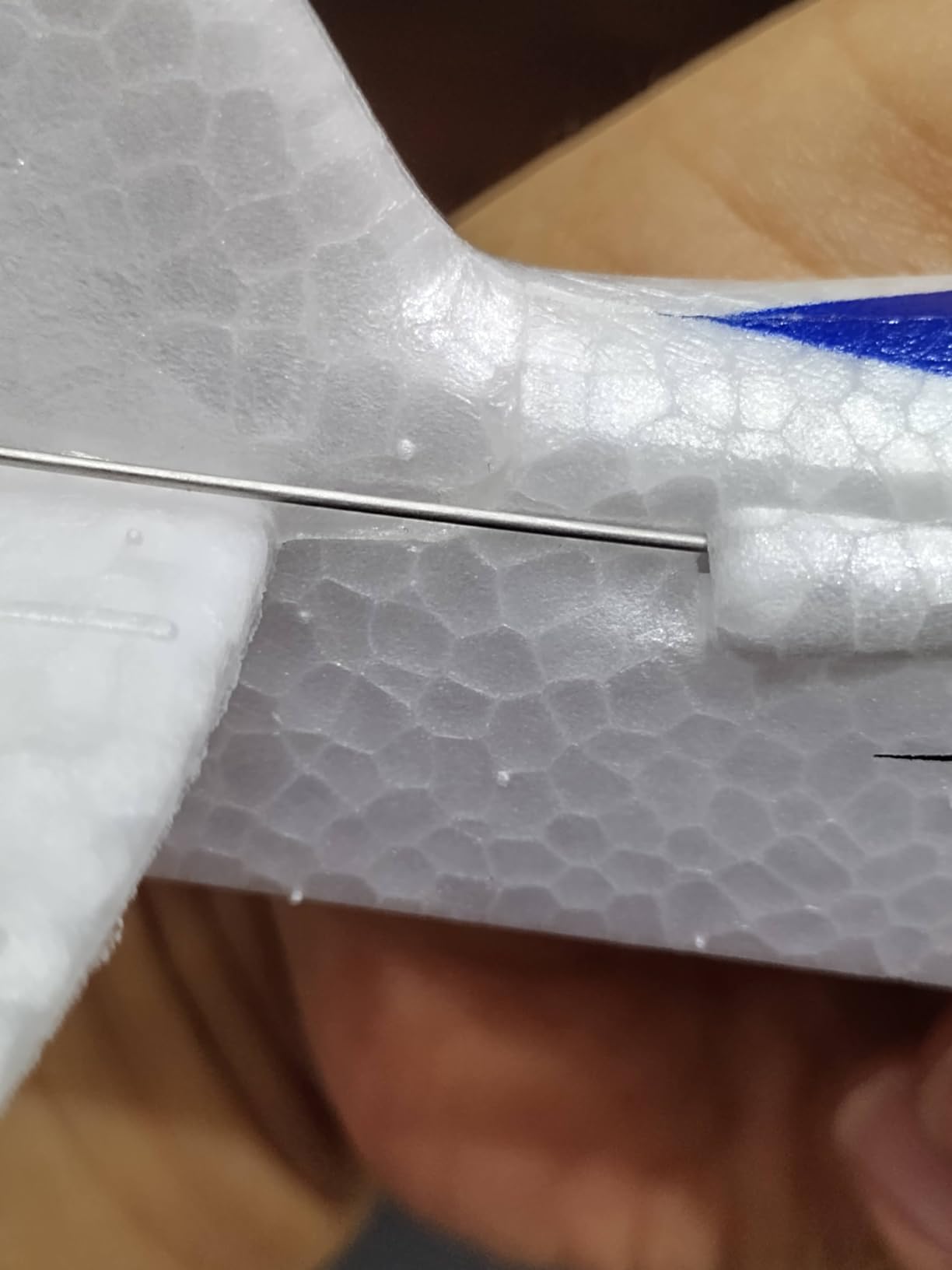
Multiple users reported this plane surviving crashes into walls, floors, and fences with minimal damage. That kind of durability is exactly what a beginner needs during those first tentative flights when mistakes happen constantly.
The main weakness is wind. Several reviewers noted the plane struggles in anything above a light breeze because of its light weight and modest power. Plan your flying sessions for calm mornings or evenings for the best experience.
Who Will Love the Sport Cub 500 S2
This plane is ideal for pilots who have access to a local park, school yard, or other open grassy space and want something durable enough to crash without heartbreak. If your flying area is limited to small spaces, this compact design fits the bill.
It also works well for families. The crash resistance means kids can learn without constant anxiety about breaking the plane, and the lightweight construction keeps things safe for everyone nearby.
What to Consider About Wind Performance
Light foam planes like the Sport Cub 500 S2 simply do not have the mass or power to fight wind effectively. Even a 5 to 8 mph breeze can push the plane around and make controlled flight difficult for a beginner.
Check your local wind forecast before heading out. Early morning and late evening typically offer the calmest conditions. If you live in a consistently windy area, consider a heavier plane like the AeroScout instead.
5. volantexrc F-16 Falcon RTF – Best Budget Pick
volantexrc RC Plane, 3 Channel Remote Control Plane for Beginners & Adults
6-Axis Gyro
3-Channel Control
Dual Motors
40 Min Flight Time
EPP Foam
Pros
- 6-axis gyro stabilization for effortless control
- Durable EPP foam material withstands crashes
- Two takeoff modes including one-touch and throw launch
- Dual built-in motors with two rechargeable batteries
- Up to 40 minutes total flight time
- 2.4GHz allows multiple planes simultaneously
- Very forgiving flight characteristics for beginners
Cons
- Very light and affected by wind even at 5 to 10 mph
- Motor in back offers less protection for nose dives
- Some quality control reports including wiring concerns
- Battery capacity decreases over time
The volantexrc F-16 Falcon is one of the most reviewed beginner planes on the market with 691 ratings. It proves that you do not need to spend a fortune to get a plane with real stabilization technology and respectable flight times.
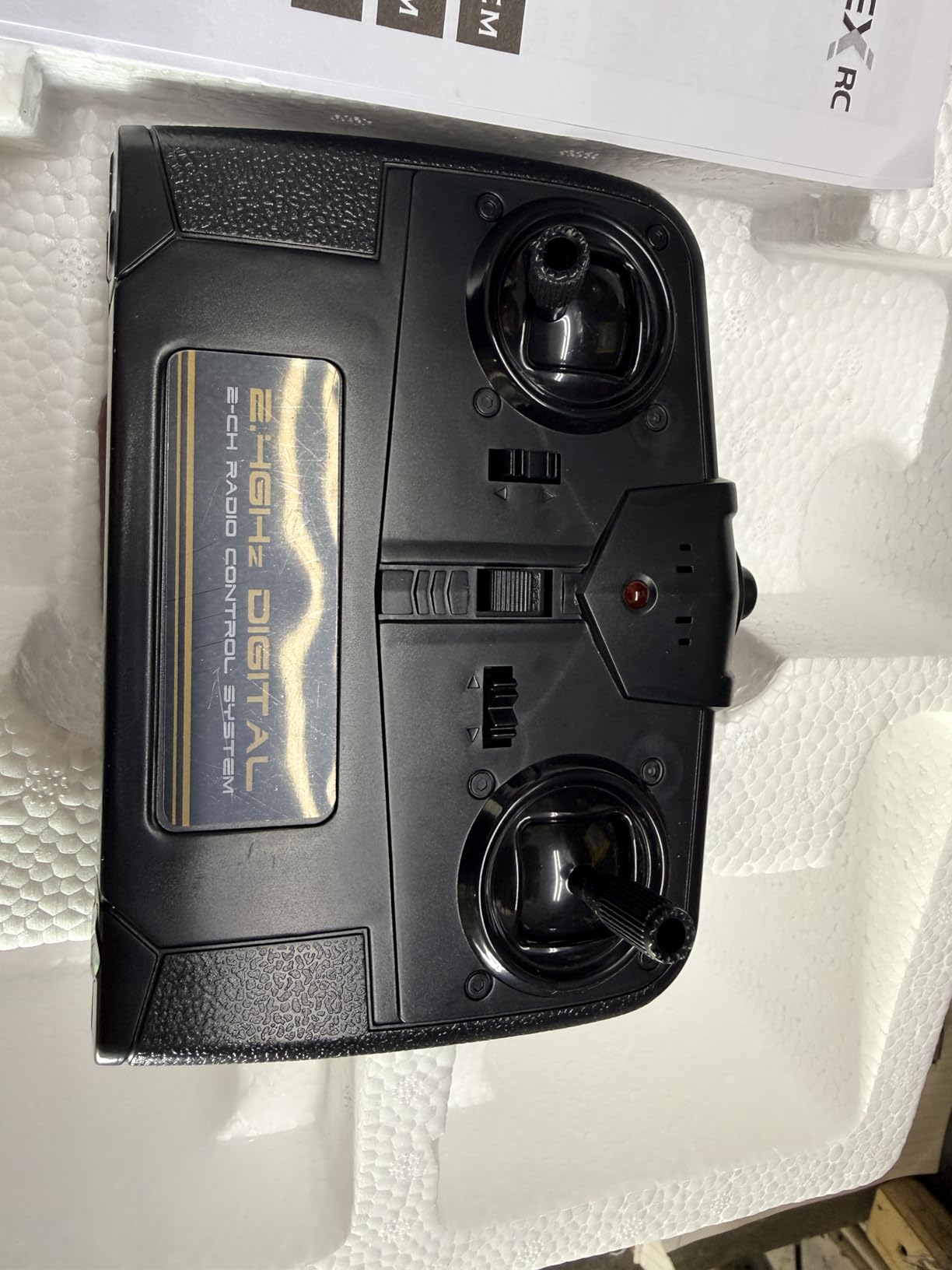
The 6-axis gyro system does an impressive job keeping this plane stable for new pilots. Two takeoff modes give you options. Use the one-touch takeoff for an easy climb, or throw-launch the plane by hand for a more traditional start.
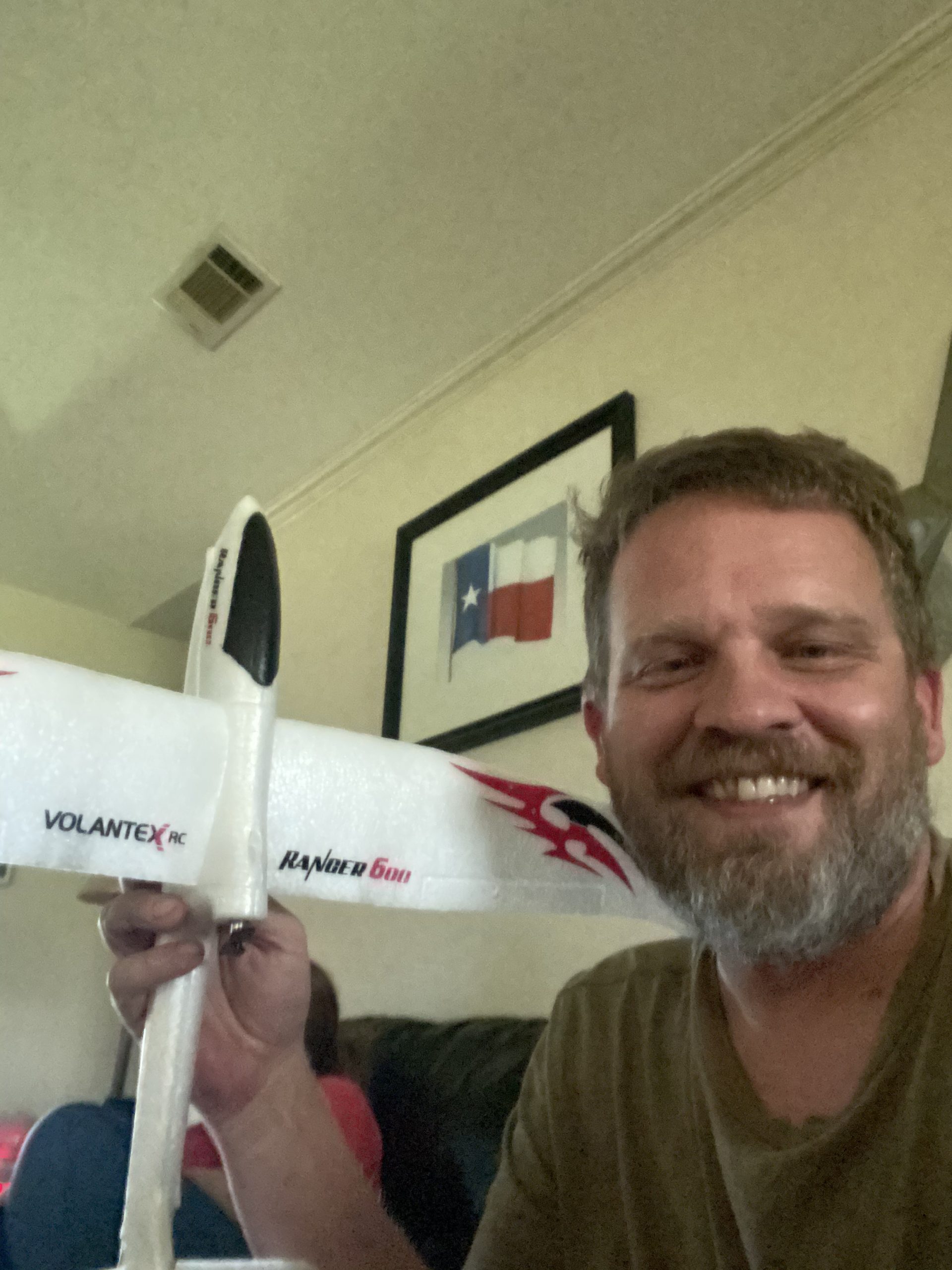
The dual motor setup and two included batteries deliver up to 40 minutes of total flying time. That is exceptional at this price point and means you can spend a full afternoon at the park instead of waiting between short flights.
I do need to mention the safety concerns some users reported. A small number of reviewers mentioned wiring issues, and the rear-mounted motor has less protection during nose dives. The plane is also very light, which means wind is a real factor even at low speeds.
Who Should Start with the F-16 Falcon
This is the plane I would recommend for someone who wants to test the RC flying hobby without a big upfront investment. If you are not sure whether you will enjoy flying and want to find out before committing more money, the F-16 gives you a genuine experience at a fraction of the cost.
It also makes a great first plane for older kids and teens who are responsible enough to follow basic safety guidelines. The forgiving flight characteristics and durable foam keep frustration levels low.
What to Know About Flying in Wind
The F-16 Falcon weighs only about half a kilogram, which means even light wind will push it around. Many beginners blame their flying skills when the real culprit is a breeze they barely noticed on the ground.
Stick to calm days and open areas for the best results. The 2.4GHz radio lets friends fly their planes alongside yours without signal conflicts, so it works well for group outings at the park on still days.
6. SYMA X550 Tiltrotor – Best for Stunt Flying
SYMA X550 RC Plane, 4CH Tiltrotor for Kids & Beginners, Stunt Flight
Tiltrotor Design
6 Stunt Moves
2 Speed Modes
One-Key Takeoff
4-Channel Control
Pros
- Military-inspired authentic design with display-ready finish
- Multiple stunt flight modes including 360 degree spins and circular routes
- Two speed settings for training and thrills
- One-key takeoff and landing for beginners
- Beginner-friendly 4-channel control layout
- Certified Climate-Friendly Toy designation
Cons
- Batteries not included
- Requires learning curve for optimal stunt control
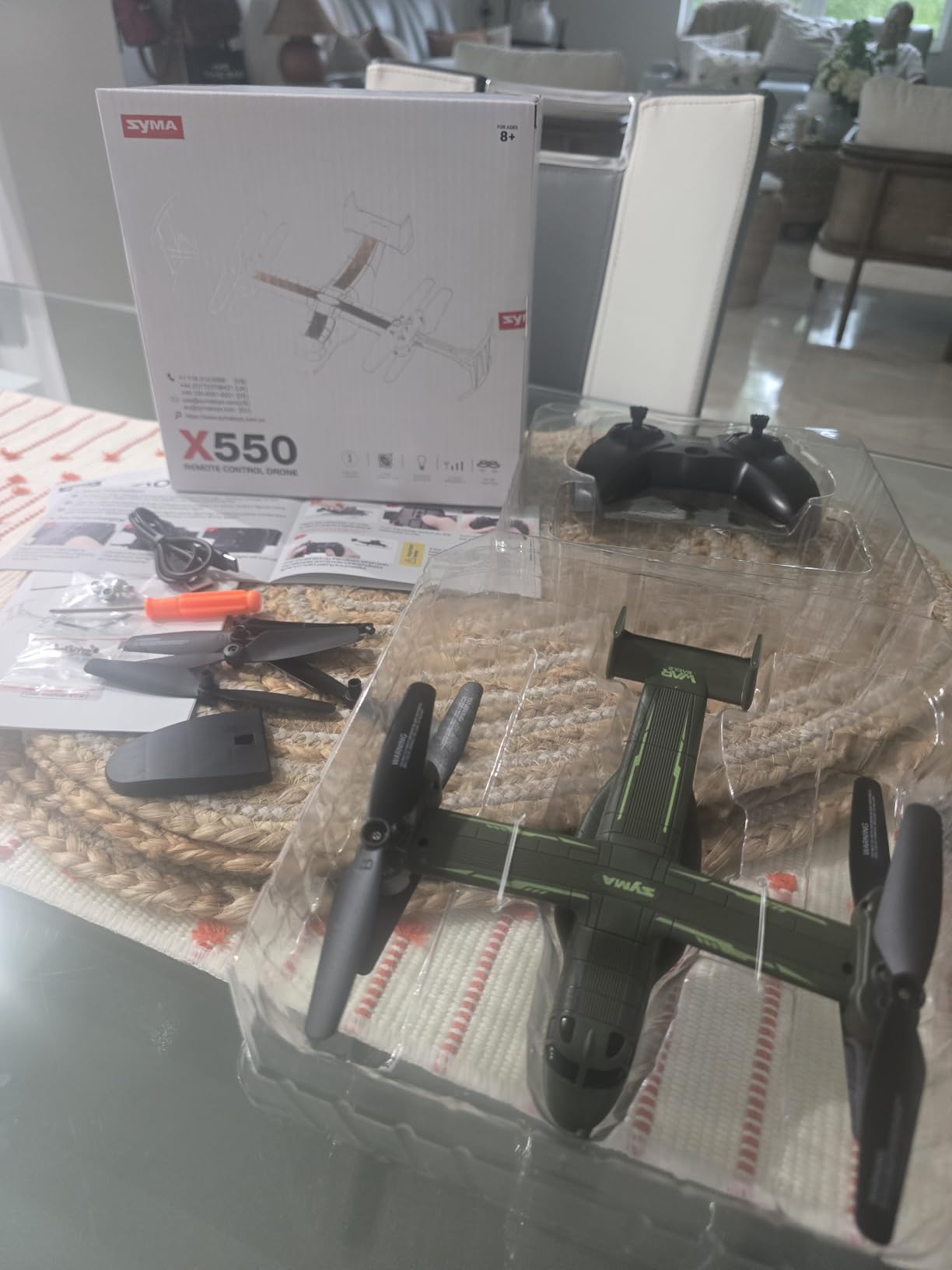
The SYMA X550 brings something different to the table with its tiltrotor design and focus on stunt flying. It earns a strong 4.5-star rating from 210 reviewers, many of whom love the authentic military look and the range of aerial tricks it can perform.
The two-speed mode is a thoughtful feature for beginners. Start in low speed mode to get comfortable with the controls, then switch to high speed once you feel confident. The one-key takeoff and landing removes the two hardest parts of flying for newcomers.
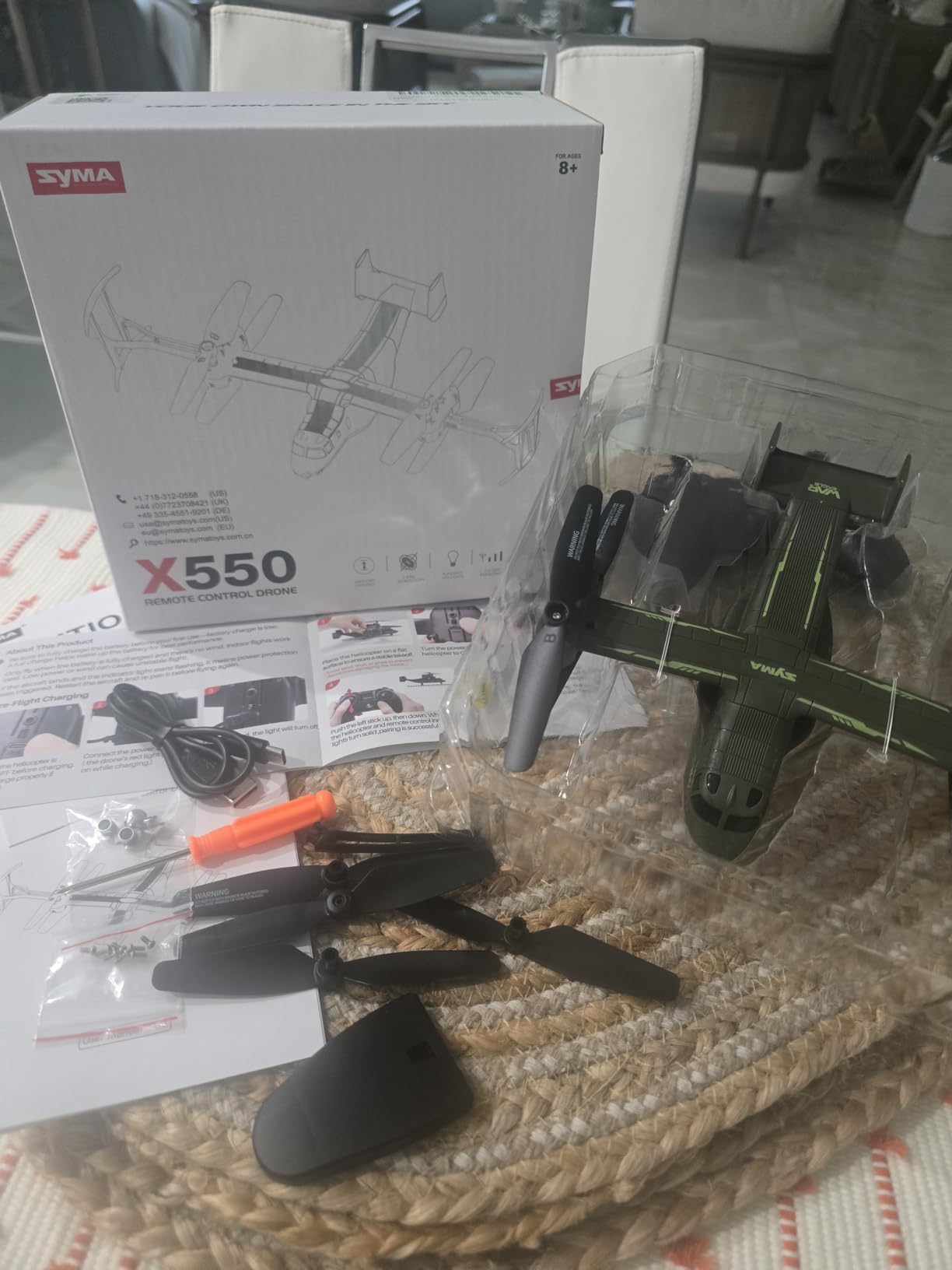
Six stunt moves include 360-degree spins, circular routes, climbing spins, circles, and jumps. These preset stunts let even new pilots perform impressive aerial displays without needing advanced stick skills. It is genuinely fun to watch and even more fun to fly.
The military-inspired design with its green finish looks great on display when you are not flying. SYMA even earned a Certified Climate-Friendly Toy designation for this model, which some environmentally conscious buyers appreciate.
Who Will Enjoy the SYMA X550
This plane suits beginners who are drawn to the fun and spectacle of stunt flying rather than pure training. If you want a plane that does tricks and looks cool in the air, the X550 delivers that experience without requiring advanced piloting skills.
It also works well for kids who might lose interest in a basic trainer. The stunt modes keep things entertaining and give kids something to show off to their friends.
What Makes the Tiltrotor Design Different
The tiltrotor concept combines elements of a quadcopter and a traditional plane. This hybrid design gives you more control authority in certain maneuvers and allows some flight characteristics that a fixed-wing plane cannot match.
The trade-off is that the controls feel different from a conventional RC plane. If your long-term goal is to fly traditional fixed-wing aircraft, the learning from this plane will not transfer perfectly. But for fun, accessible flying it works great.
7. LEFEI Skyriders RC Jet – Best for Kids 8-12
LEFEI Rc Plane, Remote Control Airplane for Boys Kids 8-12 Adults Toy Flying Airplane Skyriders Rc Jet Easy to Fly Outdoor Glider for Kids & Beginners (White)
6-Axis Gyroscope
2.4GHz Radio
4-Direction Control
3 Batteries Included
42 Min Flight
Pros
- Easy to fly with 6-axis gyroscope automatic stabilization
- Durable MPP material construction
- 2.4GHz radio control with no frequency management needed
- Includes 3 batteries for up to 42 minutes total flight time
- Small size ideal for yards parks and open spaces
- Lightweight and safe for young pilots
Cons
- Light and underpowered in wind
- Controller may be too small for adult hands
- Foam construction shows wear over time
- Battery charging issues reported by some users
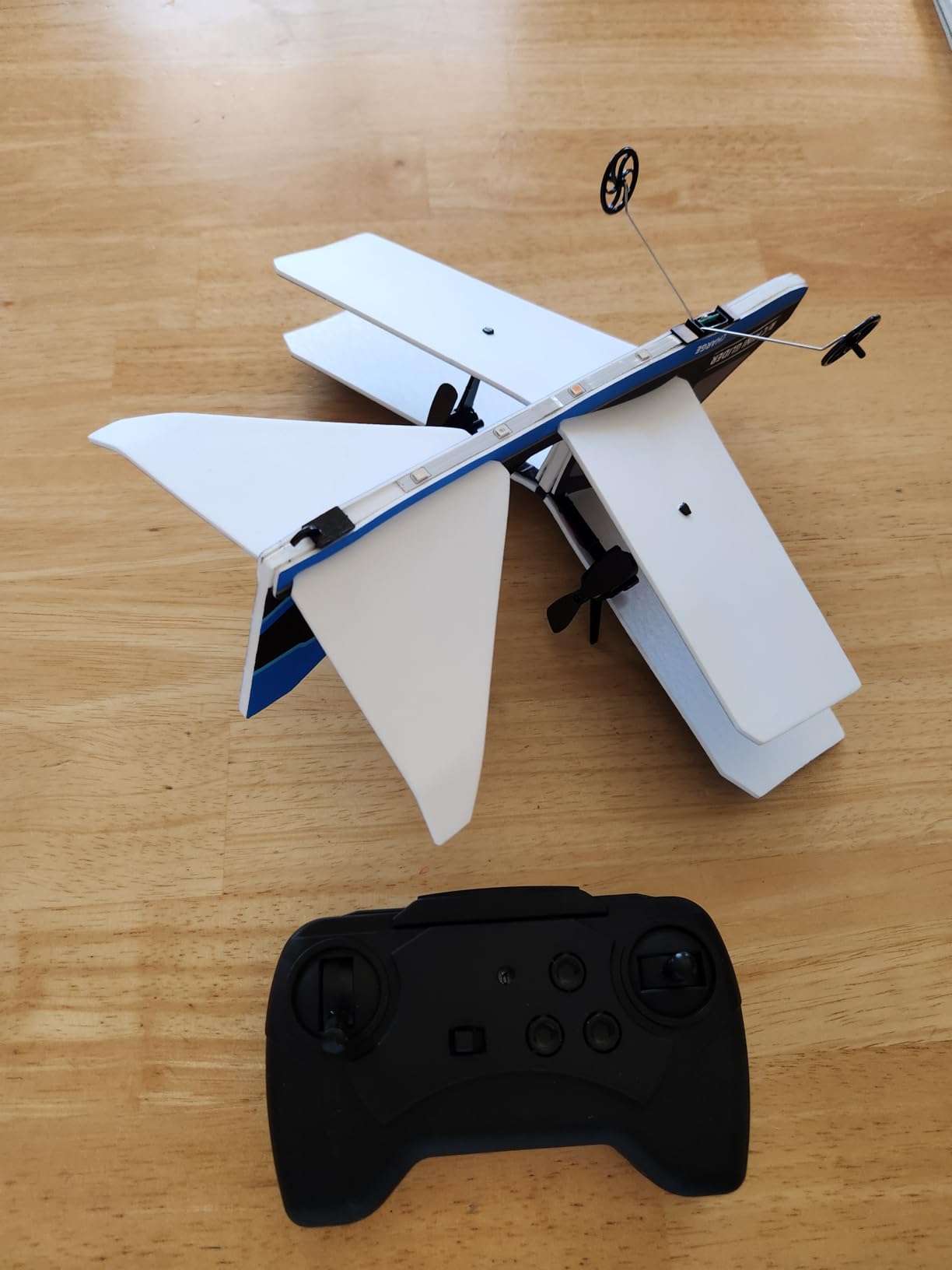
The LEFEI Skyriders RC Jet is the smallest and most affordable plane in our lineup. It is designed specifically with younger pilots in mind, offering simple 4-direction control and automatic stabilization that makes flying approachable for kids aged 8 to 12.
Three included batteries give you up to 42 minutes of total flight time, which is remarkable for a plane at this price. You can swap batteries between flights and keep the fun going without long charging breaks.
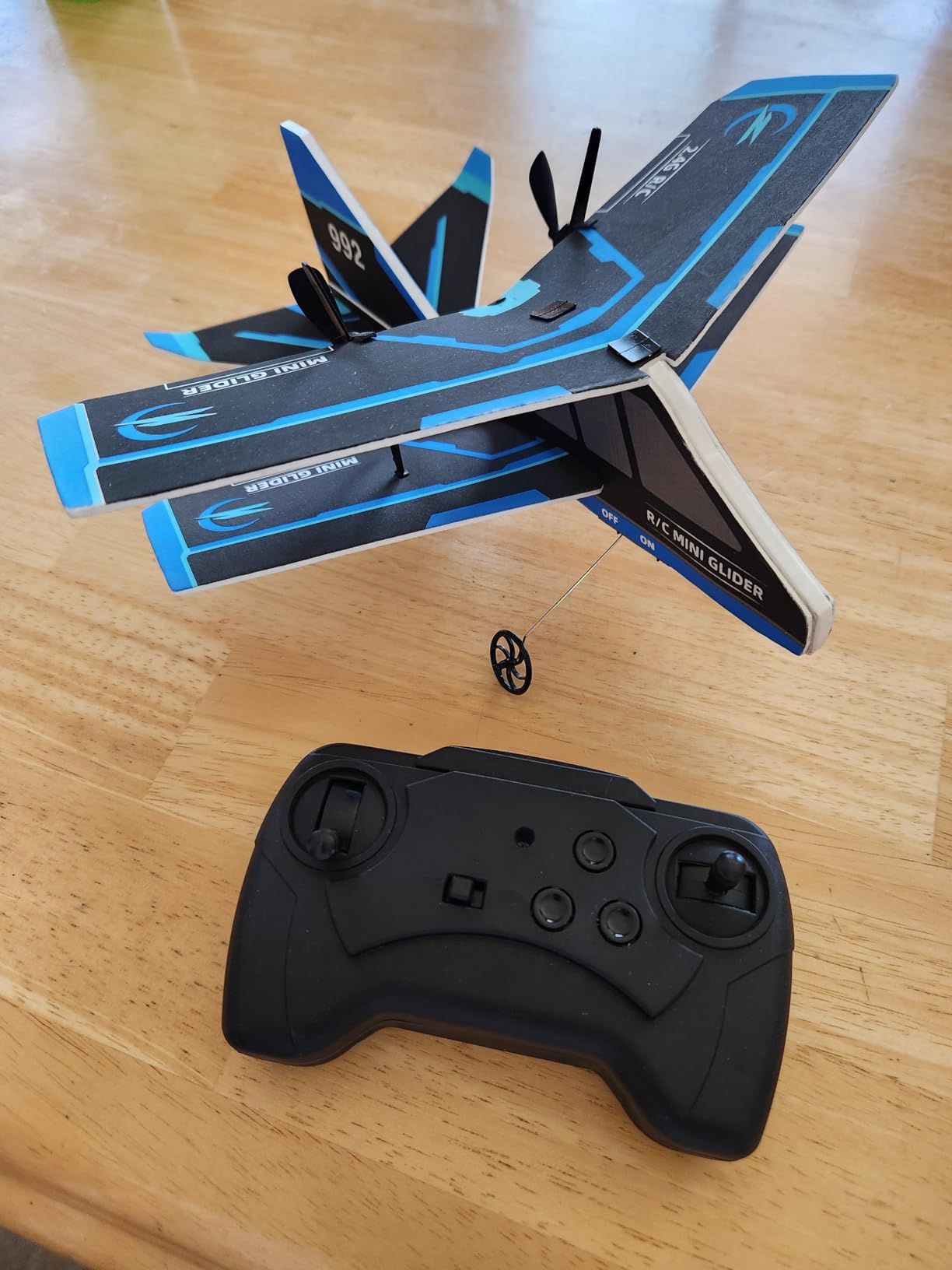
The 6-axis gyroscope handles the stabilization work, so kids can focus on steering rather than fighting to keep the plane level. At just 9.6 ounces and 10 inches across, it is small enough to fly in a backyard or park without needing a large open field.
The main limitation is power. This plane is very light and will struggle in anything beyond dead calm conditions. The controller is also sized for smaller hands, so adults may find it cramped.
Who Is the LEFEI Skyriders Best For
This plane is purpose-built for kids who want their first taste of RC flying. The simple controls, durable foam, and included batteries make it a complete package that a child can open and fly the same day.
It also works as a low-risk gift option. If the child loses interest, you have not invested heavily. And if they catch the flying bug, the Skyriders gives them enough experience to justify upgrading to something more capable later.
What to Know About Controller Size
The compact controller is great for kids but can feel uncomfortable for adults with larger hands. If a parent wants to fly alongside their child, they may prefer a plane with a full-size transmitter.
The 2.4GHz system means no frequency management is needed. Multiple planes can fly at once, so siblings or friends can all be in the air simultaneously without signal conflicts.
8. MAXBECK Su-35 RC Glider – Best Budget Night Flyer
MAXBECK Remote Control Wireless Airplane Toy with Lights, Su-35 Rc Glider 2 Channel 2.4 GHZ Remote Control Planes, Outdoor Foam Rc Aircraft for Hobby Rc Airplanes
Hybrid Quadcopter-Glider
2-Channel Control
LED Night Lights
Foam Floats on Water
2.4GHz Signal
Pros
- Hybrid quadcopter and glider design for versatile flight
- Easy to fly with 2.4G stable signal
- 2-channel automatic balance control
- LED lights for night flying visibility
- Lightweight foam floats on water
- Multiple planes can fly together without interference
Cons
- Batteries not included
- Requires 65 to 100 feet runway for takeoff
- Light material affected by wind
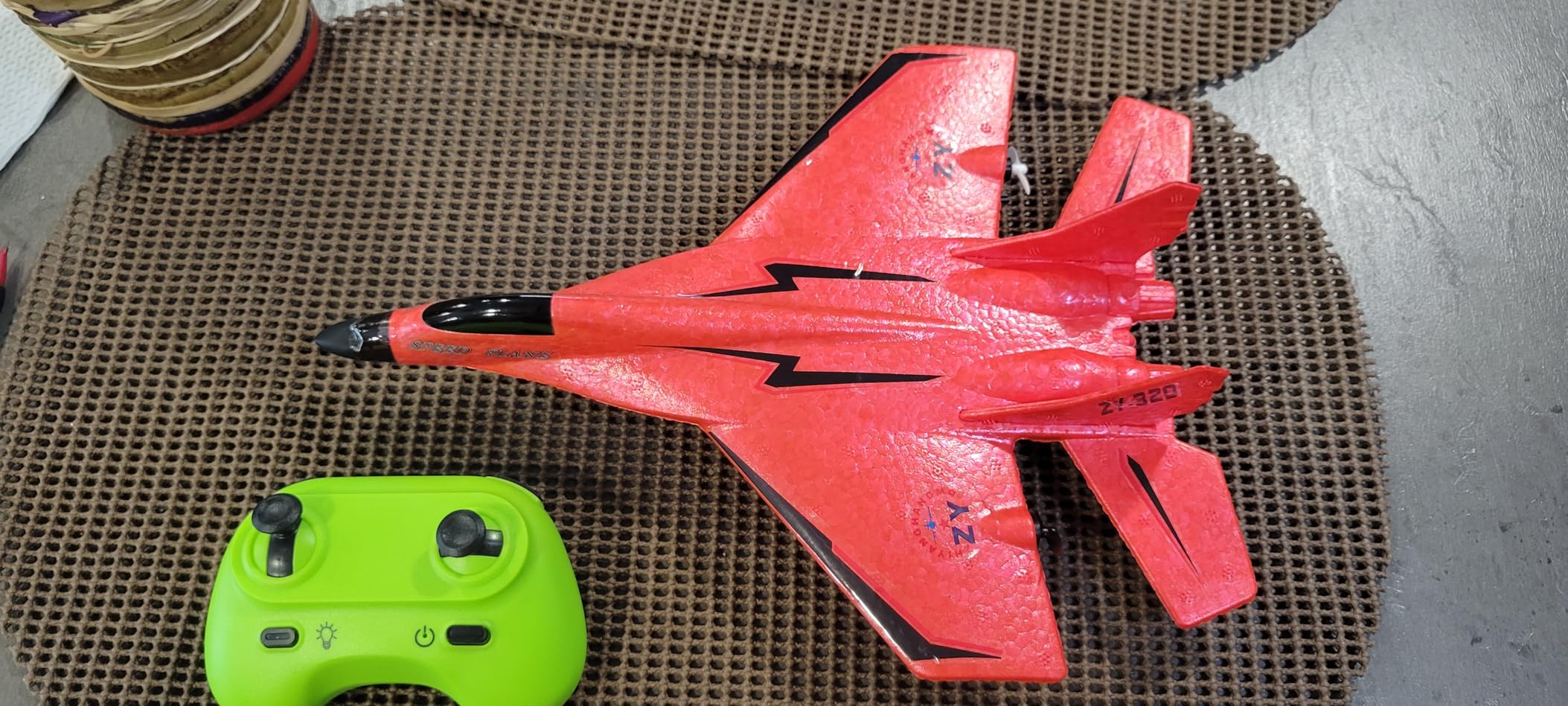
The MAXBECK Su-35 RC Glider offers a unique hybrid design that combines quadcopter stability with glider efficiency. At under $30, it ranks number 5 in the Hobby RC Airplanes category on Amazon, which tells you it is a popular choice among budget-conscious buyers.
The standout feature is the LED light system that makes night flying possible and visually striking. Few planes at any price point offer this, and it adds a whole new dimension to the flying experience.
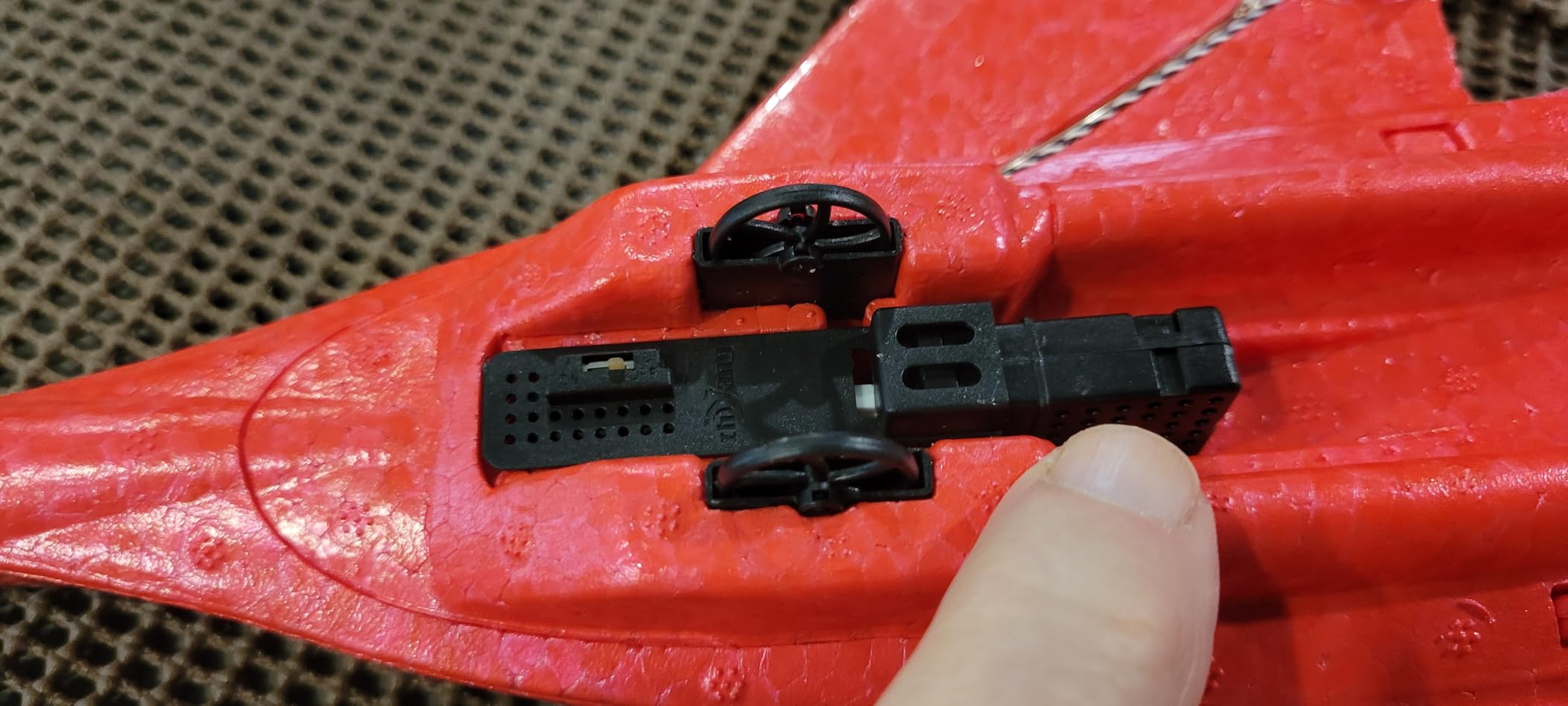
The 2-channel control with automatic balance keeps things simple for beginners. Up, down, left, and right are all you need to manage. The hybrid design gives the plane more stability than a pure fixed-wing glider at this size.
One unusual feature is that the foam construction is light enough to float on water. This opens up possibilities for flying over calm ponds or lakes, though you should always be cautious about water and electronics.
Who Will Have Fun with the Su-35 Glider
This plane appeals to beginners who want something visually exciting and different from the standard trainer look. The Su-35 fighter design and LED lights make it a conversation starter at the flying field.
It is also a good choice for casual flyers who want a low-cost option for occasional fun. If you are not looking to develop serious piloting skills and just want an enjoyable plane to fly on weekends, the Su-35 fits that role well.
Understanding the Runway Requirement
This plane needs 65 to 100 feet of clear space for takeoff, which is more than some other beginner planes. You cannot hand-launch it easily, so you need a smooth surface like a paved path, quiet road, or mown grass strip.
Plan your flying location accordingly. A local park with a long paved path or an empty parking lot works well. Without adequate runway space, getting airborne becomes frustrating.
How to Choose Your First RC Plane?
Choosing the right beginner RC plane comes down to understanding a few key concepts. Once you know what the terminology means and how different features affect the flying experience, the decision becomes much simpler.
Here are the factors our team considers most important when recommending planes to new pilots.
RTF vs BNF vs PNP Explained
RTF stands for Ready-to-Fly, and it means the plane comes with everything you need except batteries for the transmitter. This is the best choice for complete beginners because there is no guesswork about compatibility.
BNF means Bind-N-Fly. The plane includes the receiver but not the transmitter, so you need to already own a compatible controller. This option saves money if you already fly other RC models and have a transmitter.
PNP stands for Plug-N-Play. These planes come without a transmitter, receiver, or battery. You get the airframe, motor, ESC, and servos. This is for experienced hobbyists who have a full parts bin already.
Why Stabilization Technology Matters
Gyro stabilization is the single most important feature for a beginner plane. Systems like SAFE, AS3X, XPilot, and Reflex all use onboard sensors to detect the plane’s attitude and make automatic corrections.
In beginner mode, these systems limit how far the plane can bank or pitch, preventing the spiral dives and stalls that destroy so many first flights. The panic recovery feature found on some systems instantly levels the plane when you get into trouble.
Forum data backs this up. On r/RCPlanes, pilots with stabilization-equipped planes report dramatically fewer crashes during their first month of flying compared to those using unstabilized models.
Pusher vs Tractor Prop Configuration
A tractor prop sits at the front of the plane and pulls it through the air. This is the traditional configuration and works well, but the propeller takes the full impact in a nose-first crash.
A pusher prop sits behind the wing and pushes the plane forward. In a crash, the foam nose hits first and the prop stays protected. This is why the HobbyZone AeroScout, which uses a pusher configuration, earns such strong durability ratings from the community.
Size and Flying Space Requirements
Smaller planes under 500mm wingspan work well in parks and large backyards. They are easier to transport and less intimidating, but they are more affected by wind.
Larger planes over 800mm offer better wind resistance and are easier to see at a distance, but they need more space and are harder to transport. Most beginners do well with something in the 500mm to 1.1m range.
Budget Guidance by Price Tier
Under $60 gets you a basic foam plane with gyro stabilization and limited features. These are great for testing the hobby or flying with kids.
The $60 to $130 range adds better build quality, longer flight times, and more capable stabilization systems. Most adult beginners will be happiest in this tier.
Above $200 you enter hobby-grade territory with brushless motors, advanced SAFE technology, and equipment that carries forward to future planes. The AeroScout S 2 lives here and is worth every penny if you are serious about the hobby.
Should You Use a Flight Simulator First?
Many forum regulars recommend spending time on an RC flight simulator before flying a real plane. Simulators let you practice without crash costs and build muscle memory for stick inputs.
You do not strictly need a simulator if your plane has good stabilization. But if you are nervous about your first flight, even a few hours of simulator practice can make a real difference in confidence.
Frequently Asked Questions
What makes a good beginner RC plane?
A good beginner RC plane has three key features: gyro stabilization that automatically levels the aircraft, durable foam construction that survives crashes, and multiple flight modes that let you progress from full assistance to manual control. Pusher-prop designs like the AeroScout offer extra crash protection by keeping the motor behind the wing.
What is the easiest RC plane to fly?
The HobbyZone AeroScout S 2 is widely considered the easiest RC plane to fly thanks to its SAFE technology with three flight modes and a panic recovery button. Among budget options, the volantexrc F-16 Falcon with its 6-axis gyro and one-touch takeoff is very forgiving for complete beginners.
What is the best brand for RC planes?
HobbyZone is the top brand for beginners due to its SAFE technology system and pusher-prop trainer designs. Volantexrc offers excellent value with XPilot gyro stabilization across its lineup. E-flite targets the upper end with advanced AS3X technology, while FMS is known for realistic scale detail and Reflex stabilization.
How much does a beginner RC plane cost?
Beginner RC planes range from about $30 for basic foam models to $270 for hobby-grade trainers with brushless motors and advanced stabilization. Most beginners will find a quality plane between $60 and $130 that offers good stability, decent flight time, and durability without a large investment.
Are RC planes hard to learn?
RC planes are much easier to learn now than they were a decade ago thanks to gyro stabilization technology. Planes with beginner modes and panic recovery buttons can be flown successfully on the first attempt. Most new pilots can fly confidently within a few sessions when using a stabilized trainer plane.
Final Thoughts on the Best RC Planes for Beginners
Finding the best RC planes for beginners in 2026 comes down to matching the plane to your goals and budget. The HobbyZone AeroScout S 2 remains our top pick for serious beginners because its SAFE technology and pusher-prop durability give you the best chance of a successful first flight and many more after it.
If you want strong value without compromise, the volantexrc P51D Mustang delivers proven performance backed by over 700 reviews. And for anyone testing the waters on a budget, the volantexrc F-16 Falcon or MAXBECK Su-35 Glider offer genuine flying fun at under $60.
Whatever you choose, fly on calm days, start in beginner mode, and remember that every experienced RC pilot crashed their first plane too. The right trainer plane just makes those early crashes survivable and far less expensive.