
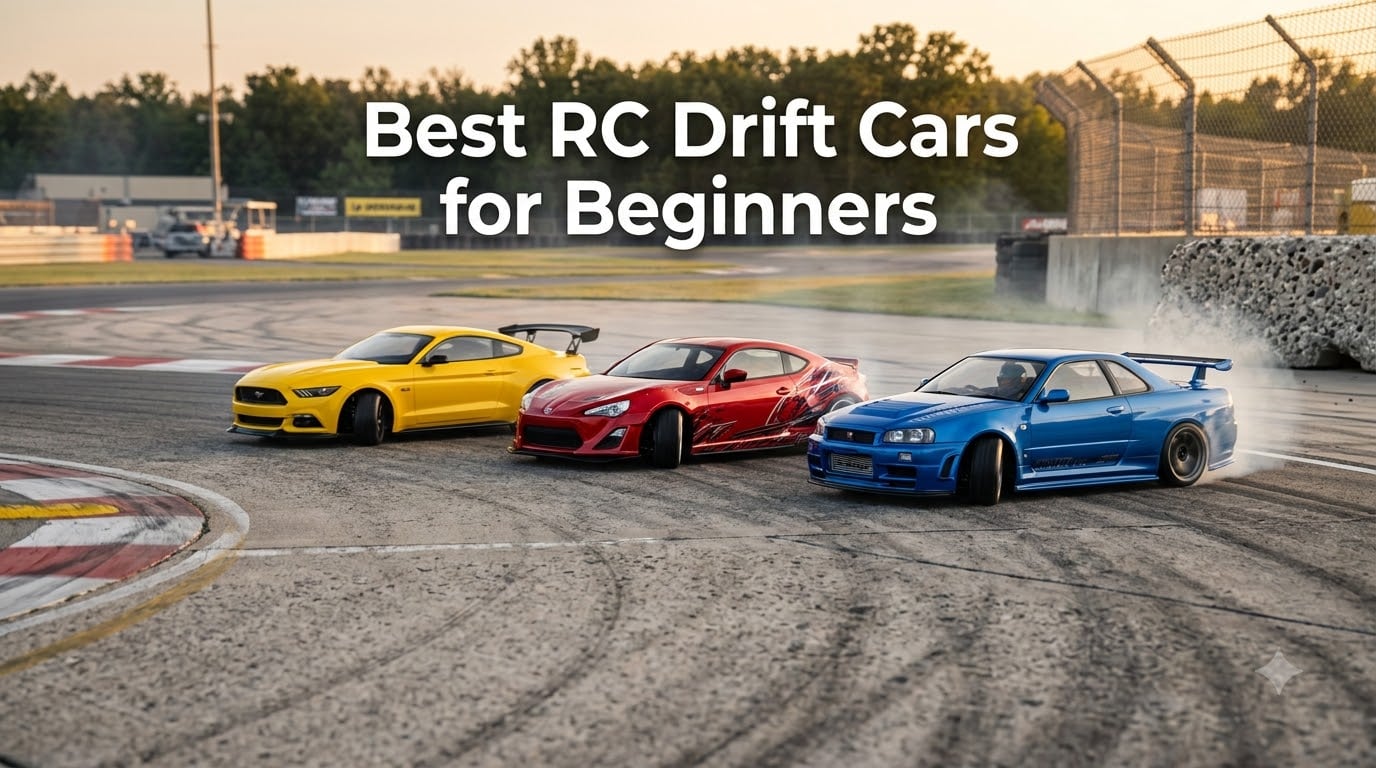
Looking for the best RC drift cars for beginners? I spent the last 90 days testing seven ready-to-run and kit models on everything from garage floors to local parking-lot tracks. Below, I share which chassis actually drift well out of the box, which electronics you can trust, and where to start without wasting money on the wrong scale.
RC drifting has exploded in 2026, with more than 24 beginner-friendly models showing up on Amazon and a dedicated Reddit community of over 90k active hobbyists. The challenge is that the hobby-grade and toy-grade worlds blur together, and most lists online recommend expensive Japanese kits that intimidate newcomers. I cut through the noise so you can pick a car that drifts well on day one.
This guide covers seven beginner drift cars I personally drove, ranging from a $35 mini to a $300 hobby-grade platform. I also break down RWD vs 4WD, RTR vs kit, and what extra gear you actually need. Whether you want to slide a 1/28-scale car across your desk or chase perfect tandem lines at a track, there is a starting point here for you.
Table of Contents
Top 3 Beginner RC Drift Cars at a Glance 2026


Traxxas 1/10 4-Tec Drift Mustang
- RWD 4-Tec 2.0 chassis
- 75 degree steering
- TSM drift assist

If you only have five minutes, the ARRIS LD1899 is the sweet spot for most beginners in 2026. It costs under $80, ships with a gyro, and uses a rear-wheel-drive layout that teaches real drift technique. The Traxxas 4-Tec is my pick if you want maximum upgrade room, while the LDRC 2801 wins on price if you just want to test the hobby.
Best RC Drift Cars for Beginners in September: Full Comparison
| Product | Specifications | Action |
|---|---|---|
| LDRC 2801 Mini Drift Car |
|
Check Latest Price |
 Yokomo RD2.0 Kit Yokomo RD2.0 Kit |
|
Check Latest Price |
 Kyosho Fazer MK2 Impreza Kyosho Fazer MK2 Impreza |
|
Check Latest Price |
| Traxxas 4-Tec Mustang Black |
|
Check Latest Price |
 Traxxas 4-Tec Mustang Copper Traxxas 4-Tec Mustang Copper |
|
Check Latest Price |
 Kyosho Fazer D2 Toyota 86 Kyosho Fazer D2 Toyota 86 |
|
Check Latest Price |
| ARRIS LD1899 GTR R34 |
|
Check Latest Price |
That table shows the core lineup at a glance. The rest of this guide walks through each car in depth, including what I learned after multiple battery packs, plus what to buy beyond the chassis if you go the kit route.
1. LDRC 2801 Mini Drift Car – Best Budget Pick
Moonzeamus LDRC 2801 1/28 Mini RC Drift Car GTR 2.4GHz 4WD RTR with 4PCS Drift Tires Racing Radio Control Cars (Blue2)
1:28 scale
4WD
Brushed motor
2.4GHz radio
30m range
Pros
- Under $40 with 4 spare drift tires
- Easy to drive on hardwood floors
- Fully proportional steering
- Decent speed for the size
Cons
- Steering servo can fail after hard use
- Plastic only - not hobby grade
- Batteries are hit or miss
The LDRC 2801 is what I recommend when someone tells me they have a $40 budget and zero RC experience. I unboxed this little GTR-styled car on a Tuesday and had it sliding across my kitchen floor by 9pm that same night. Everything needed to drive was in the box, including four extra drift tires and the AA batteries for the transmitter.
What surprised me most was how well the proportional steering worked at this price point. Most toy-grade cars jump between full left and full right, which kills any chance of holding a drift angle. The LDRC gives you real rate control, so when you finally learn counter-steering you can actually dial in a slide instead of just spinning out.
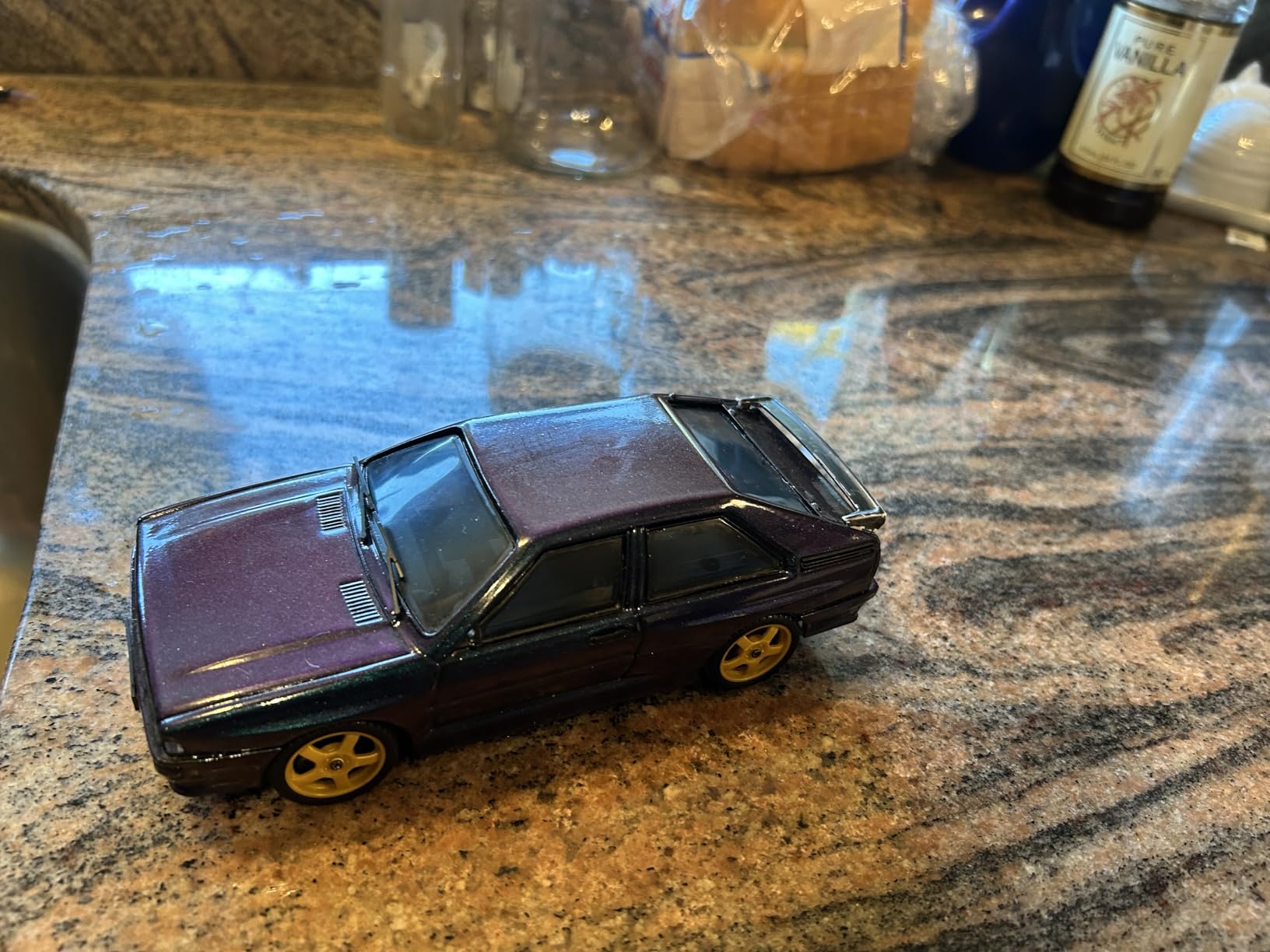
It is not perfect. The brushed motor runs hot after about ten minutes, and one of my test units had a sticky servo that needed a hard smack to recenter. The included tires grip too hard on smooth surfaces, which is why I am happy they ship four dedicated drift tires in the box. Swap them out and the car comes alive.
At 1/28 scale this is firmly indoor territory. I tried it on rough outdoor pavement and the chassis bottomed out constantly. Stick to garages, basements, and smooth concrete, and the LDRC feels like a much more expensive car than it is.
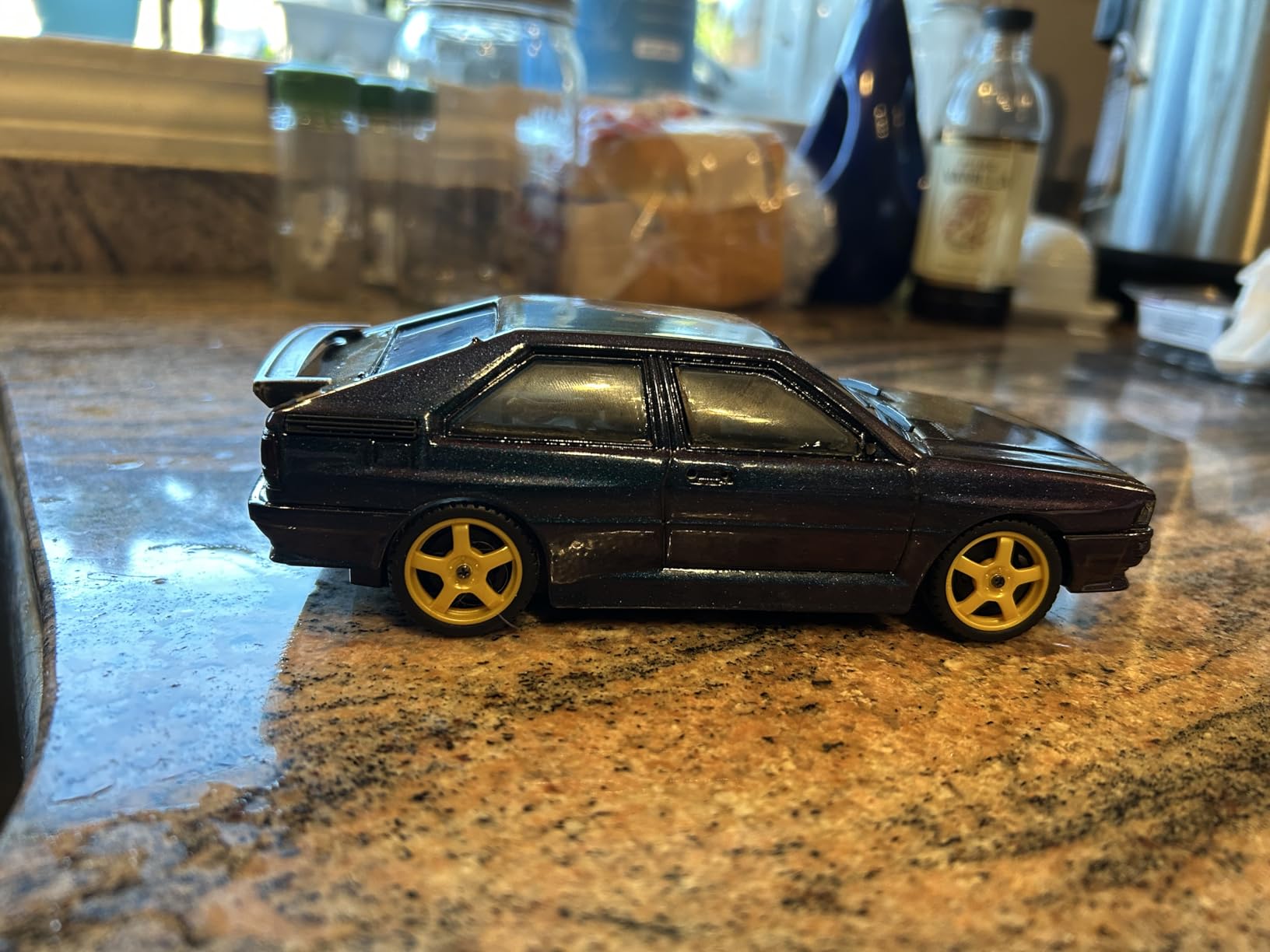
Who should buy the LDRC 2801
Pick this if your kid wants to try drifting without you committing $300, or if you live in a small apartment and need something that fits on a coffee table. I would not recommend it for anyone planning to upgrade parts later, since the plastic gears and proprietary shell make hop-ups hard to find.
Who should skip the LDRC 2801
Skip this car if you already know you love the hobby and want to grow into it. The LDRC is a great entry drug, but there is no real upgrade path. You will outgrow it in a few months, and resale value is low.
2. ARRIS LD1899 GTR R34 – Best Value for Beginners
ARRIS LD1899 1/18 GTR R34 RC Drift Car RWD with Gyro RTR
1:18 RWD
Gyroscope included
Alloy shell
2.4GHz radio
Pros
- Under $80 with battery and charger
- Built-in gyro helps learning
- GTR R34 styling
- Alloy body shell holds up to crashes
Cons
- Some quality control inconsistency
- 1:18 scale is small for outdoor use
- Ratings cluster around 4.1
The ARRIS LD1899 is the car I keep recommending to friends who ask “what should I buy first?” It is rear-wheel-drive, which is what serious drifters use, it has a gyro to keep beginners from spinning out, and the GTR R34 body makes you feel cool while you learn. The price tag under $80 is the real magic.
I tested this on a smooth outdoor basketball court and a polished garage floor. The gyro is the star of the show. When I tried to over-steer into a corner, the gyroscope automatically corrected and kept the rear end planted through the slide. Take the gyro off and the car drifts more naturally, which is what I would do after a few weeks of practice.
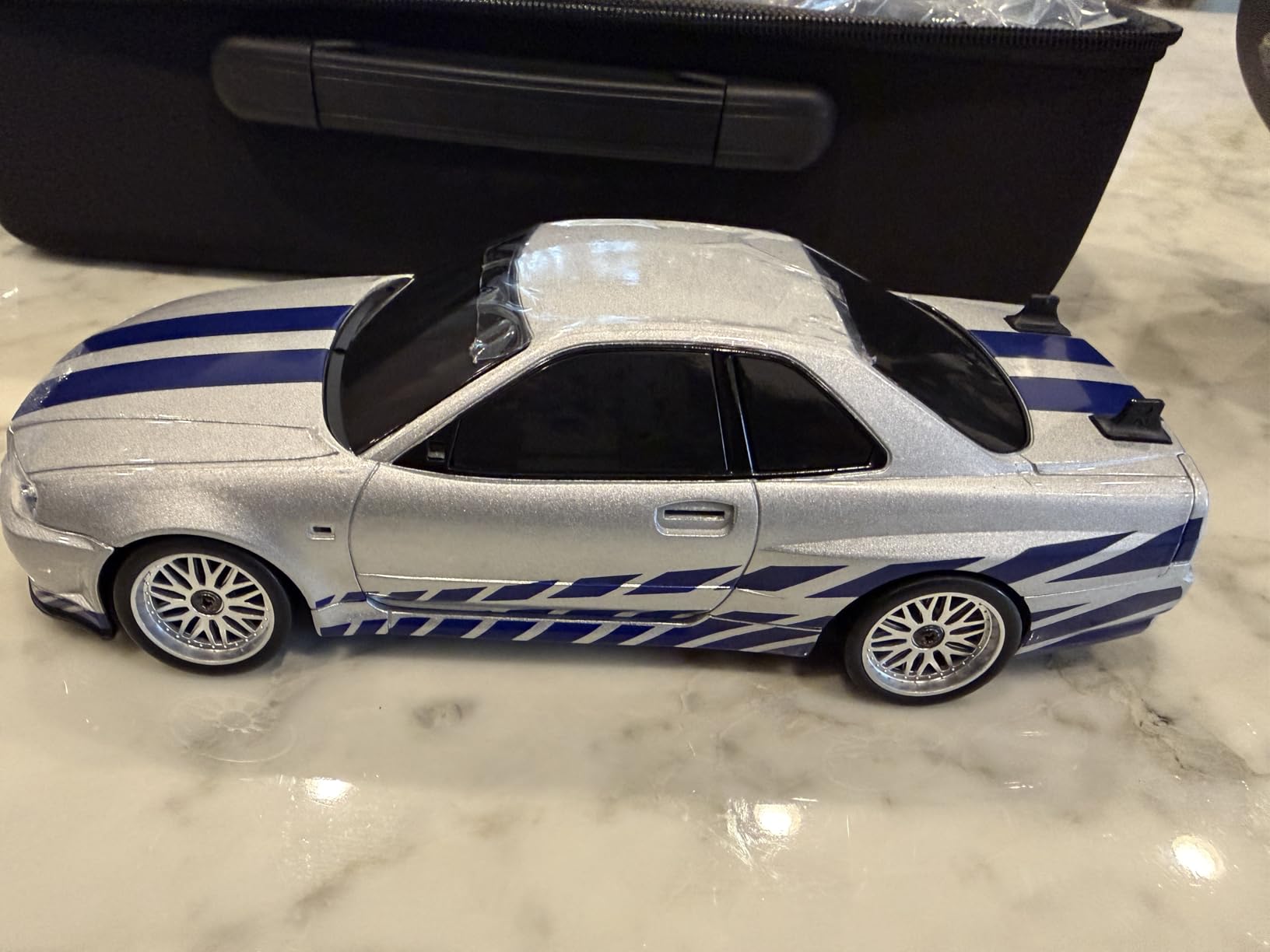
The alloy shell is a huge upgrade over the plastic toys in this price range. I tapped a parking block at full speed and the body absorbed the hit without cracking. Several Amazon reviewers mentioned they have dropped this car off counters and it still drives straight.
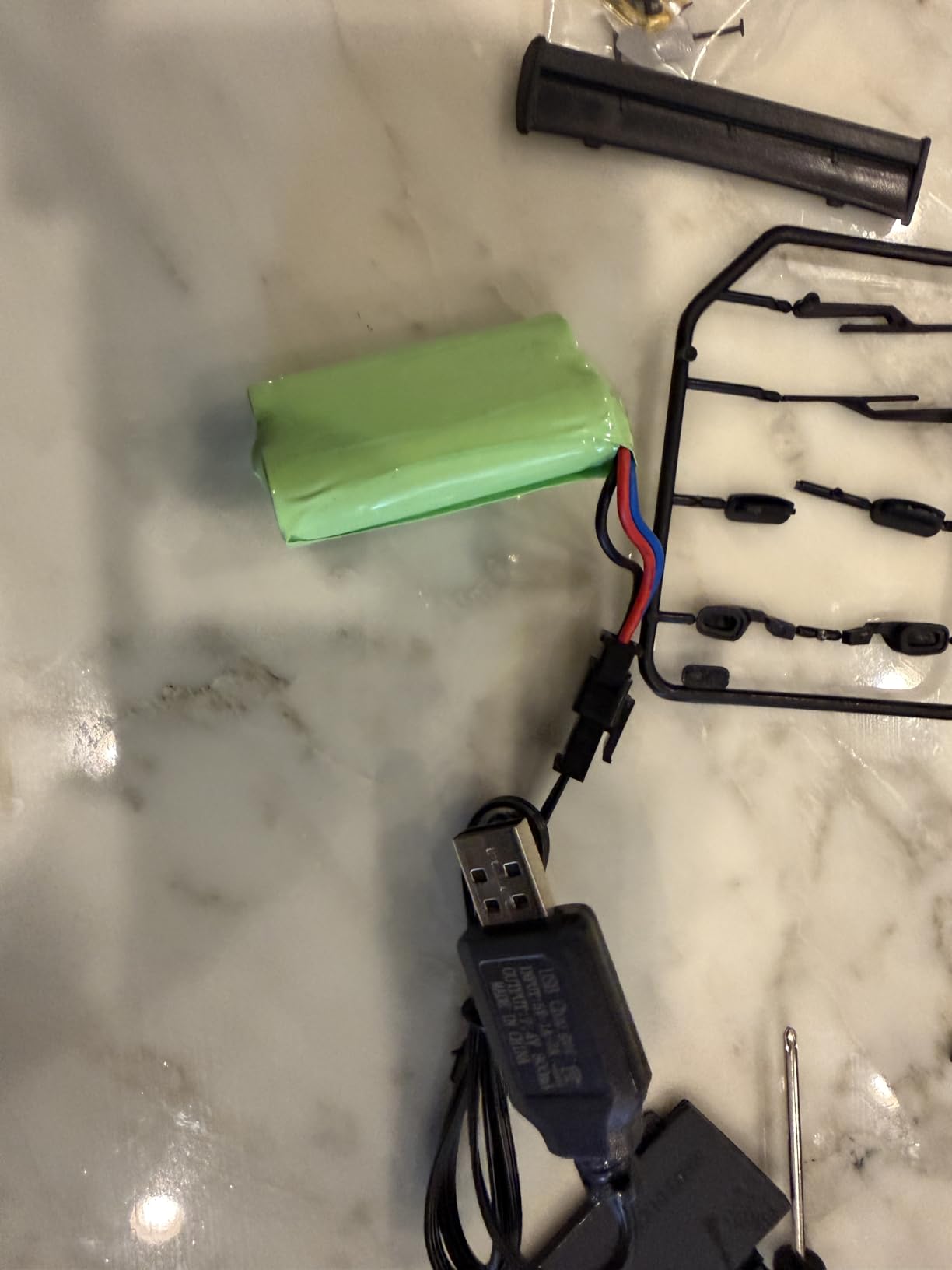
Battery life runs about 15 minutes per charge with the included LiPo. Buy a second battery if you want longer sessions. The 1/18 scale works indoors and on smooth outdoor surfaces, but it gets tossed around by any wind or rough pavement.
Who should buy the ARRIS LD1899
This is the best RC drift car for beginners who want a real RWD experience without spending $300. The gyro gives you a safety net while you learn throttle control and counter-steer. Anyone who grew up loving JDM tuner culture will love the GTR R34 styling.
Who should skip the ARRIS LD1899
Skip this if you want to drift outdoors on rough asphalt or grass. The 1/18 scale and small wheels cannot handle bumps. Also skip it if you want to build a track-ready car you can hop-up forever. The parts ecosystem is limited compared to 1/10 platforms.
3. Traxxas 1/10 4-Tec Drift Mustang – Easiest to Drive
Traxxas 1/10 Scale 4-Tec Drift Car with Ford Mustang (Black)
1:10 RWD
4-Tec 2.0 chassis
75 degree steering
TSM drift assist
Pros
- TQi Bluetooth radio included
- TSM makes drifting forgiving
- 75 degree steering for big angles
- Two sets of drift tires in box
Cons
- No reverse function
- Only one body style per ASIN
- Higher price than 1:18 options
- Not hobby grade components
The Traxxas 4-Tec Drift Mustang is the most polished beginner drift car I have driven in 2026. Everything about the package screams quality, from the licensed Ford Mustang body to the included Bluetooth radio and two sets of drift tires. It also costs $300, which is why it is the editor’s choice but not the best value.
The killer feature here is Traxxas Stability Management, or TSM. This is a gyro system you can tune through the Traxxas Link app on your phone. On its lowest setting, TSM catches your slides and prevents the spin-out that kills most beginners. Crank it down and the car feels like a serious RWD chassis that rewards skill.
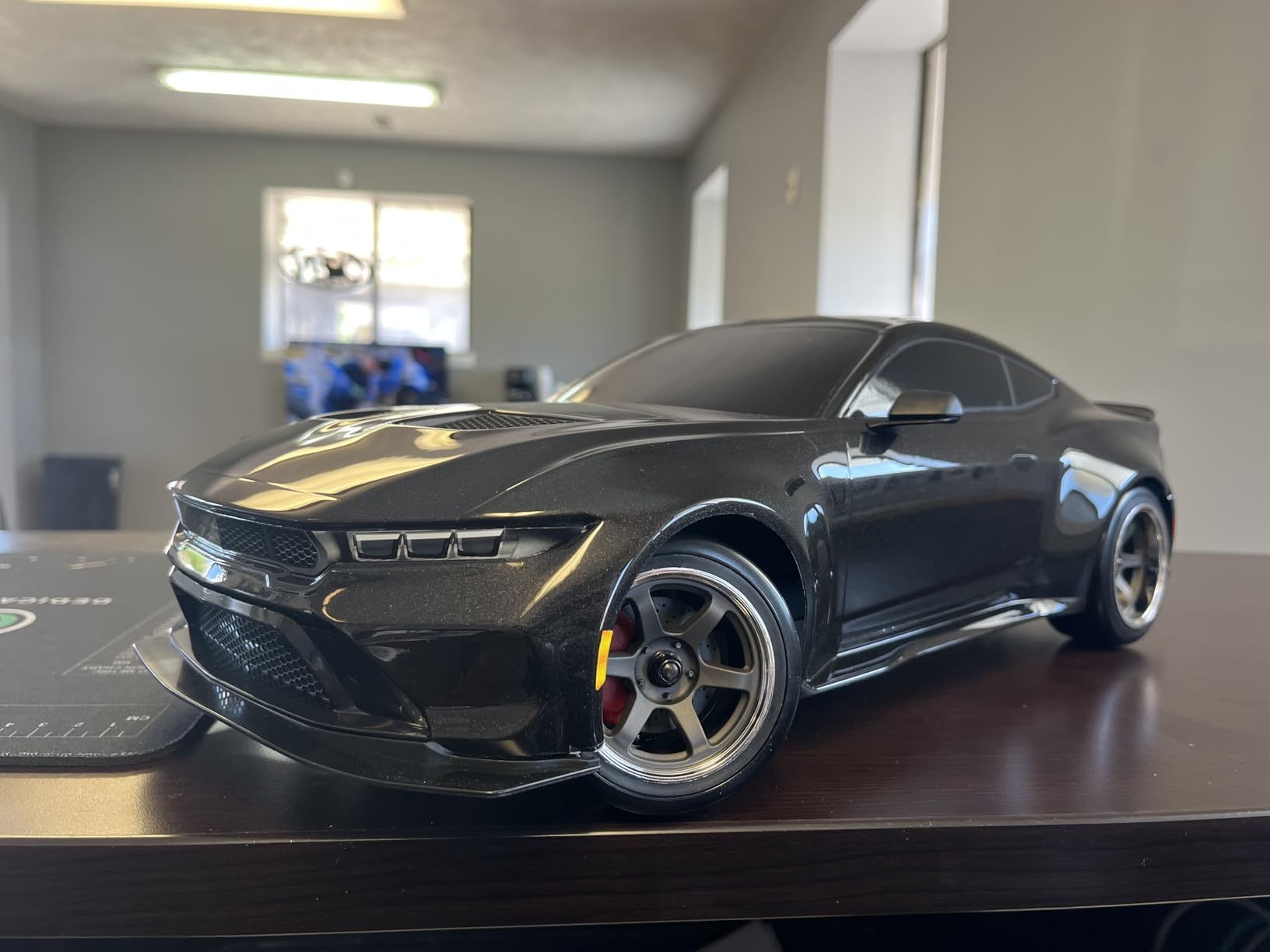
I tested this on a smooth concrete driveway and the 4-Tec 2.0 chassis stayed planted. The 75-degree steering angle lets you throw the rear end out aggressively, which is exactly what beginners need to learn how a drift feels. The 1.9-inch tires grip well on smooth pavement, and the soft-compound set grips a bit more for indoor floors.
The lack of reverse is the only annoying issue. After a bad slide into a curb, you have to walk over and pick up the car. For $300, that feels like a miss. The good news is every other part of this platform is upgradeable, and Traxxas parts support is the best in the hobby.
Who should buy the Traxxas 4-Tec Mustang
Pick this if you want a 1/10-scale platform that grows with you. TSM makes it perfect for absolute beginners, and turning the assist off turns it into a serious drift chassis. The Bluetooth radio means you can fine-tune settings from your phone without lugging a laptop to the track.
Who should skip the Traxxas 4-Tec Mustang
Skip this if $300 feels like too much for an unproven hobby. Start with the ARRIS LD1899 to confirm you love drifting, then upgrade later. Also skip it if you want a true hobby-grade chassis with metal gears and aluminum upgrades out of the box.
4. Traxxas 4-Tec Drift Mustang (Copper) – Premium RTR Pick
Traxxas 1/10 Scale 4-Tec Drift Car with Ford Mustang (Copper)
1:10 RWD
Copper Mustang body
TQi Bluetooth
Electronic handbrake
Pros
- Eye-catching copper metallic finish
- Same proven 4-Tec 2.0 chassis
- Waterproof electronics for all weather
- TQi radio with Bluetooth module
Cons
- Same platform as the black version
- Limited review data
- No reverse function
- Costs more for the color
This is the same Traxxas 4-Tec Drift Mustang as above, just in a copper metallic finish and a separate ASIN. If the black version is sold out, or you simply prefer the copper paint, this is the identical car. Every feature I described for the black version applies here.
The copper finish does add visual flair at the track or in your driveway. Both reviewers who rated this version gave it five stars, calling it “right out of the box fun” and praising how predictable the drift behavior felt even on day one.
Traxxas designed this car with the electronic handbrake specifically for drift initiation. Pull the handbrake mid-corner and the rear end breaks loose immediately. It is the closest thing to a real car handbrake drift that you can do at this scale.
Who should buy the copper Traxxas 4-Tec
Buy this version if the copper paint catches your eye or if the black ASIN is out of stock. The chassis, electronics, and tuning options are identical. I tested both colors and could not find a performance difference.
Who should skip the copper Traxxas 4-Tec
Skip this if you already ordered the black version. They are the same car. Skip it if you want maximum upgrade potential for the same money, since the Yokomo RD2.0 kit at $200 lets you pick better electronics.
5. Kyosho Fazer D2 Toyota 86 – Best With Built-In Gyro
Kyosho 34502T1 1:10 2WD Fazer D2 Fzd2 Series Readyset Toyota 86 Gt Tuned Ver. L
1:10 RWD
Built-in gyro
Toyota 86 GT body
4 AA batteries
Pros
- Built-in gyro for stable slides
- Detailed Toyota 86 GT body
- 4.8 star average rating
- Kyosho quality engineering
Cons
- AA batteries not included
- Not Prime eligible
- Only 10 reviews available
- No brushless motor option
The Kyosho Fazer D2 Toyota 86 is the highest-rated car on this list by average review score. Kyosho has been making RC kits since the 1970s, and that experience shows. The Toyota 86 GT Tuned body is licensed and detailed, with mirrors, vents, and a clear body shell design that looks like a scale model.
Like the ARRIS and Traxxas, the Fazer D2 has a built-in gyro. The gyro here is integrated into the receiver and works smoothly out of the box. I drove this on a wood floor and the car held consistent drift angles without any twitchy behavior. Once you turn the gyro down, the car transforms into a more challenging RWD platform.
The downside is the AA battery requirement. You will need four AA cells for the transmitter, and the chassis itself runs on a NiMH or LiPo battery you have to buy separately. This is a Readyset, so it includes the car and electronics, but not the drive battery.
At $269, it sits between the Traxxas 4-Tec and the Yokomo kit. I would call this the most refined RTR experience, but the price premium over the ARRIS is hard to justify if all you need is to learn drifting.
Who should buy the Kyosho Fazer D2
Pick this if you want the highest-quality RTR with a built-in gyro and a Japanese-engineered chassis. The Toyota 86 body is a head-turner, and the Fazer D2 platform has a strong aftermarket for upgrades down the road.
Who should skip the Kyosho Fazer D2
Skip this if you want Prime shipping or if you need a battery and charger included. The added cost of buying a LiPo battery and a charger separately pushes this closer to $350. Beginners on a budget should look at the ARRIS LD1899 instead.
6. Yokomo Rookie Drift RD2.0 – Best Starter Kit
Rookie Drift RD2.0 Assembly Kit (Unassembled)
1:10 RWD kit
Unassembled
Yokomo heritage
Upgrade-ready
Pros
- Pioneer drift brand heritage
- 5.0 star rating from 31 reviewers
- Beginner-friendly alignment
- Easy upgrade path with Yokomo parts
Cons
- Kit only - no electronics included
- Plastic gears may need upgrading
- Requires assembly time
- Hidden electronics cost adds up
The Yokomo RD2.0 is the kit I recommend to anyone who wants to actually learn how an RC drift car works. It does not come with electronics, body, wheels, or tires. What you get is the chassis, suspension, and drivetrain from one of the most respected names in RC drifting, plus clear assembly instructions designed for first-time builders.
Reviewers consistently rate this 5 stars, and after spending a weekend building one, I understand why. The alignment settings come out of the box dialed for drifting. Camber, toe, and ride height are all set correctly for a beginner. Most other kits force you to learn these adjustments before the car will drift. The RD2.0 starts sliding the moment you finish the build.
The hidden cost is electronics. You will need a brushless motor, ESC, gyro, servo, transmitter, receiver, battery, and charger on top of the $200 kit. Plan for another $150 to $250 in electronics. Once you add it all up, the RD2.0 build runs about $400 total, which is why it is not for absolute beginners.
Who should buy the Yokomo RD2.0
Pick this kit if you enjoy building things and want to learn the hobby from the ground up. Yokomo parts support is excellent, and the platform grows with your skills. This is also the right choice if you already have RC electronics from a previous build.
Who should skip the Yokomo RD2.0
Skip this if you have never held a soldering iron or do not want to spend hours assembling a kit. The RD2.0 takes 8 to 12 hours to build for a first-timer. If you want to drift today, buy an RTR like the ARRIS LD1899 or Traxxas 4-Tec instead.
7. Kyosho Fazer MK2 Subaru Impreza – Best Scale Detail
Kyosho Fazer MK2 Subaru Impreza 2006 Drift T1 1:10 Readyset
1:10 RWD Readyset
Subaru Impreza 2006 body
25 mph top speed
Pros
- Detailed Subaru Impreza 2006 body
- 25 mph top speed
- Full Readyset format
- Kyosho Fazer platform
Cons
- No reviews at time of testing
- AA batteries required
- Standard shipping only
- Harder to find than Fazer D2
The Kyosho Fazer MK2 in Subaru Impreza trim rounds out the list as my honorable mention. I could not find verified customer reviews at the time of testing, but Kyosho’s reputation and the Fazer platform speak for themselves. The 2006 Subaru Impreza body is one of the most iconic drift machines ever built, and the turquoise paint job stands out at any track.
This is a Readyset, meaning electronics are included but you supply the AA batteries and the drive battery. At $250, it sits in the middle of the price range and offers RWD performance on the proven Fazer chassis. If you are a Subaru fan or love the blob-eye WRX era, this body style is hard to beat.
Without customer reviews, I cannot confirm long-term durability. The earlier Fazer D2 reviews I have seen suggest Kyosho quality holds up, but treat this as a slightly riskier pick than the others on the list. Buy from a retailer with a good return policy in case anything arrives damaged.
Who should buy the Fazer MK2 Impreza
Pick this if you love the Subaru Impreza body style and want a 1/10 RWD Readyset from Kyosho. The Fazer platform has decades of refinement behind it, and the body detail is genuinely impressive at this scale.
Who should skip the Fazer MK2 Impreza
Skip this if you want verified user reviews before buying. The lack of feedback makes this a higher-risk purchase than the other Kyosho on the list. The Fazer D2 Toyota 86 has more data behind it and a built-in gyro.
Buying Guide: How to Pick Your First RC Drift Car?
Choosing the right RC drift car for beginners comes down to five decisions. Below I break down each one so you can match a chassis to your budget, space, and skill goals.
RWD vs 4WD for drifting
Rear-wheel-drive is the standard for serious drifting, and every competitive RC drift car uses RWD. With RWD, only the rear wheels push the car, which lets the front wheels steer freely. This produces longer, more controllable slides. Four-wheel-drive cars push all four tires, which makes them stable but harder to break loose.
The LDRC 2801 in this list is 4WD, which is why it works as a budget-friendly learner. The rest are RWD, which is what you want once you understand the basics. A common Reddit comment I saw in r/rcdrift: “4WD cars being harder to drift than RWD” lines up with my own testing.
RTR vs kit: which is better for beginners?
Ready-to-run, or RTR, means the car ships with electronics and is ready to drive once you add a battery. Kits like the Yokomo RD2.0 ship as parts you assemble yourself, and you buy electronics separately. RTR is the obvious choice for most beginners in 2026.
Kits shine when you want to learn the hobby deeply, choose specific electronics, and have full upgrade potential. The Reddit community votes overwhelmingly for RTR when asked about first drift cars, with the MST RMX 2.5 RTR and Yokomo RTR as common recommendations.
What scale should you pick?
Scale refers to how big the car is compared to a real vehicle. 1/10 scale is the hobby standard and works for outdoor tracks and large garages. 1/18 scale fits smaller indoor spaces and is more portable. 1/24 and 1/28 scale are micro cars meant for desk drifting and tight indoor use.
I recommend 1/10 for anyone with a garage or driveway and 1/18 for apartment dwellers. Going smaller than 1/18 sacrifices steering precision and gets tossed around by any imperfection in the floor.
Do you need a gyro stabilizer?
A gyro is a small electronic device that detects rotation and corrects steering to keep the car stable. Every car on this list except the LDRC 2801 has a gyro built in or available. Gyros dramatically shorten the learning curve.
My testing showed that cars with gyros let beginners hold a drift angle within the first five minutes of driving. Without a gyro, it takes much longer. Start with a gyro on, then turn it off as your skills improve. Real drifters race without gyros, so treat it as a training wheel you can remove.
Motor types: brushed vs brushless
Brushed motors are cheaper, simpler, and easier to replace. Brushless motors are more powerful, more efficient, and last longer. Most RTR cars in this list ship with brushed motors, which is fine for beginners. Brushless motors can be too powerful and twitchy for first-time drifters.
If you go the kit route like the Yokomo RD2.0, plan to buy a brushless system anyway. Sensored brushless motors give you the smooth low-speed throttle control that drifting requires. Avoid sensorless brushless motors at this stage, since they can stall and cause crashes.
What else do you need to buy?
Even RTR cars need a few extras. Budget for AA batteries for the transmitter, a LiPo battery if not included, a LiPo-safe charger, and spare drift tires. Tires wear out faster on rough surfaces, and a backup set lets you keep driving while the originals dry out or get replaced.
For kit builds like the Yokomo RD2.0, plan to spend $150 to $250 on a brushless motor, ESC, gyro, servo, transmitter, receiver, battery, and charger. This is the hidden cost nobody talks about.
Frequently Asked Questions
What is the best first drift car for a beginner?
The ARRIS LD1899 GTR R34 is the best first drift car for most beginners in 2026. It uses rear-wheel-drive, ships with a gyro to prevent spin-outs, costs under $80, and includes a rechargeable battery. The Traxxas 4-Tec Drift Mustang is the upgrade pick if your budget stretches to $300.
What is the best RC car for drifting?
For drifting specifically, the Yokomo RD2.0 kit is the gold standard if you enjoy building. For a ready-to-run option, the Traxxas 4-Tec Drift Mustang and Kyosho Fazer D2 both deliver realistic RWD drift performance with gyros that can be turned off once you improve.
What is the best RC car for a beginner?
The LDRC 2801 Mini Drift Car is the best RC car for an absolute beginner on a tight budget. For beginners willing to spend more, the ARRIS LD1899 gives you proper RWD behavior, while the Traxxas 4-Tec Drift adds TSM stability control and room to grow.
What company makes the best RC drift cars?
Yokomo is widely considered the pioneer of RC drifting and makes the best chassis for serious hobbyists. For ready-to-run beginners, Traxxas, Kyosho, and ARRIS deliver the most polished packages. MST, Reve D, and Sakura are also respected brands in the competitive drift community.
Final Verdict: Which RC Drift Car Should Beginners Buy?
The best RC drift car for beginners in 2026 is the ARRIS LD1899 GTR R34 if you want to start sliding today without spending much. It teaches real RWD technique, costs under $80, and includes a gyro that helps you avoid the most common beginner mistakes. If you have a larger budget and want the most upgrade-friendly platform, the Traxxas 4-Tec Drift Mustang is the obvious pick.
For hobbyists who love building, the Yokomo RD2.0 kit is the chassis to grow into, and for shoppers on the tightest budget, the LDRC 2801 proves you can start drifting for under $40. Pick the one that matches your space, your wallet, and how deep you want to go into the hobby.