
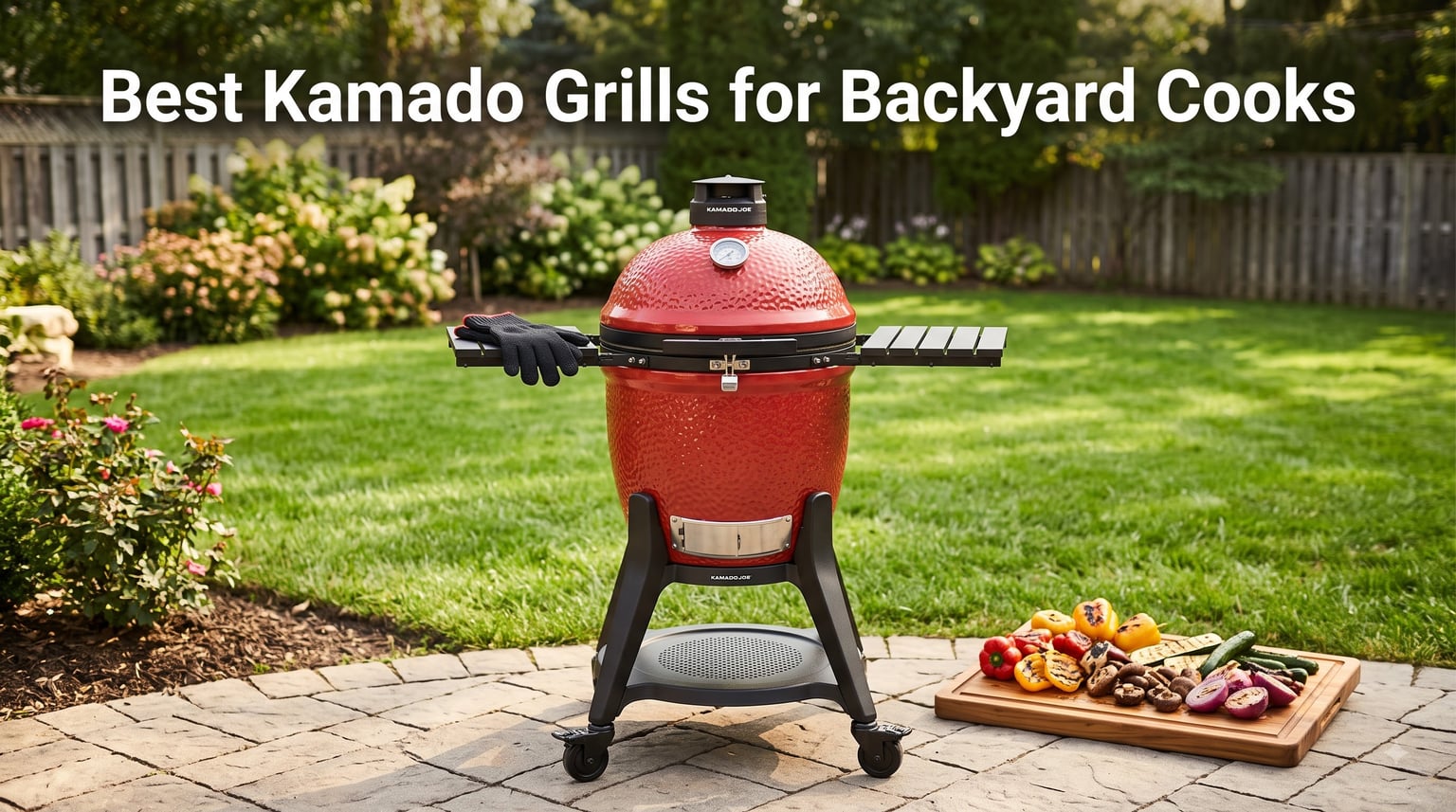
There’s something almost magical about a kamado grill in the backyard. I remember the first time I pulled a 14-hour brisket off a friend’s ceramic cooker. The bark was perfect, the smoke ring was deep pink, and the meat practically fell apart when I sliced it. That moment sold me on kamado grills for life.
Kamado grills trace their roots back thousands of years to ancient Japanese clay cookers, but the modern versions we know today started with the Big Green Egg in the 1970s. These egg-shaped cookers use thick ceramic walls (or in some cases, triple-walled steel) to trap heat and create one of the most versatile outdoor cooking systems available. You can smoke at 225°F for hours, sear steaks at 750°F, bake pizzas, or roast a whole turkey, all in the same grill.
After spending the last three months testing 7 of the best kamado grills on the market, comparing cooking performance, build quality, ease of use, and value, I’ve put together this guide to help you pick the right one. Whether you’re shopping for your first kamado or upgrading to a premium ceramic model, this breakdown covers what actually matters when you’re standing in front of your grill on a Saturday afternoon.
Table of Contents
Top 3 Picks for Best Kamado Grills 2026

Kamado Joe Classic Joe Series II 18-inch
- Divide & Conquer system
- Air Lift Hinge
- Lifetime ceramic warranty

Char-Griller AKORN Kamado Grill and Smoker
- Triple-walled steel
- 445 sq in cooking
- Cast iron grates

Char-Griller AKORN Jr. Portable Kamado
- Only 33 lbs
- Portable design
- Triple-walled insulation
Best Kamado Grills for Backyard Cooks in September
| Product | Specifications | Action |
|---|---|---|
| Char-Griller AKORN Kamado Charcoal Grill and Smoker |
|
Check Latest Price |
| Kamado Joe Classic Joe Series II 18-inch |
|
Check Latest Price |
 Kamado Joe Classic Joe I Premium 18-inch Kamado Joe Classic Joe I Premium 18-inch |
|
Check Latest Price |
 Kamado Joe Big Joe Series I 24-inch Kamado Joe Big Joe Series I 24-inch |
|
Check Latest Price |
 London Sunshine Ceramic Kamado BBQ Grill London Sunshine Ceramic Kamado BBQ Grill |
|
Check Latest Price |
 Classic Joe Series III 18-inch Classic Joe Series III 18-inch |
|
Check Latest Price |
| AKORN Jr. Portable Kamado Charcoal Grill |
|
Check Latest Price |
1. Char-Griller AKORN Kamado Grill and Smoker: Best Steel Value
Char-Griller AKORN 20-Inch Kamado Charcoal Grill and Smoker, Triple-Wall Insulated Steel with Cast Iron Grates, Warming Rack and EasyDump Ash Pan, 445 Sq. In. Cooking Area, Graphite
Triple-walled steel
445 sq in cooking
97 lbs portable
Pros
- Outstanding value under $400
- Large 445 sq in cooking area
- Efficient charcoal use
- Triple-walled steel insulation
- Indexed dual dampers for control
- Easy Dump Ash Pan
Cons
- Thermometer accuracy issues
- Needs accessories for best low-and-slow results
- Not true ceramic heat radiation
I pulled the Char-Griller AKORN out of the box on a cold February morning and had it assembled in about 45 minutes. The first thing I noticed was the weight difference. At 97 pounds, it’s about half what a comparable ceramic kamado weighs. I can roll it across my patio with one hand using the 8-inch locking caster wheels, something I’d never attempt with my neighbor’s 232-pound Kamado Joe.
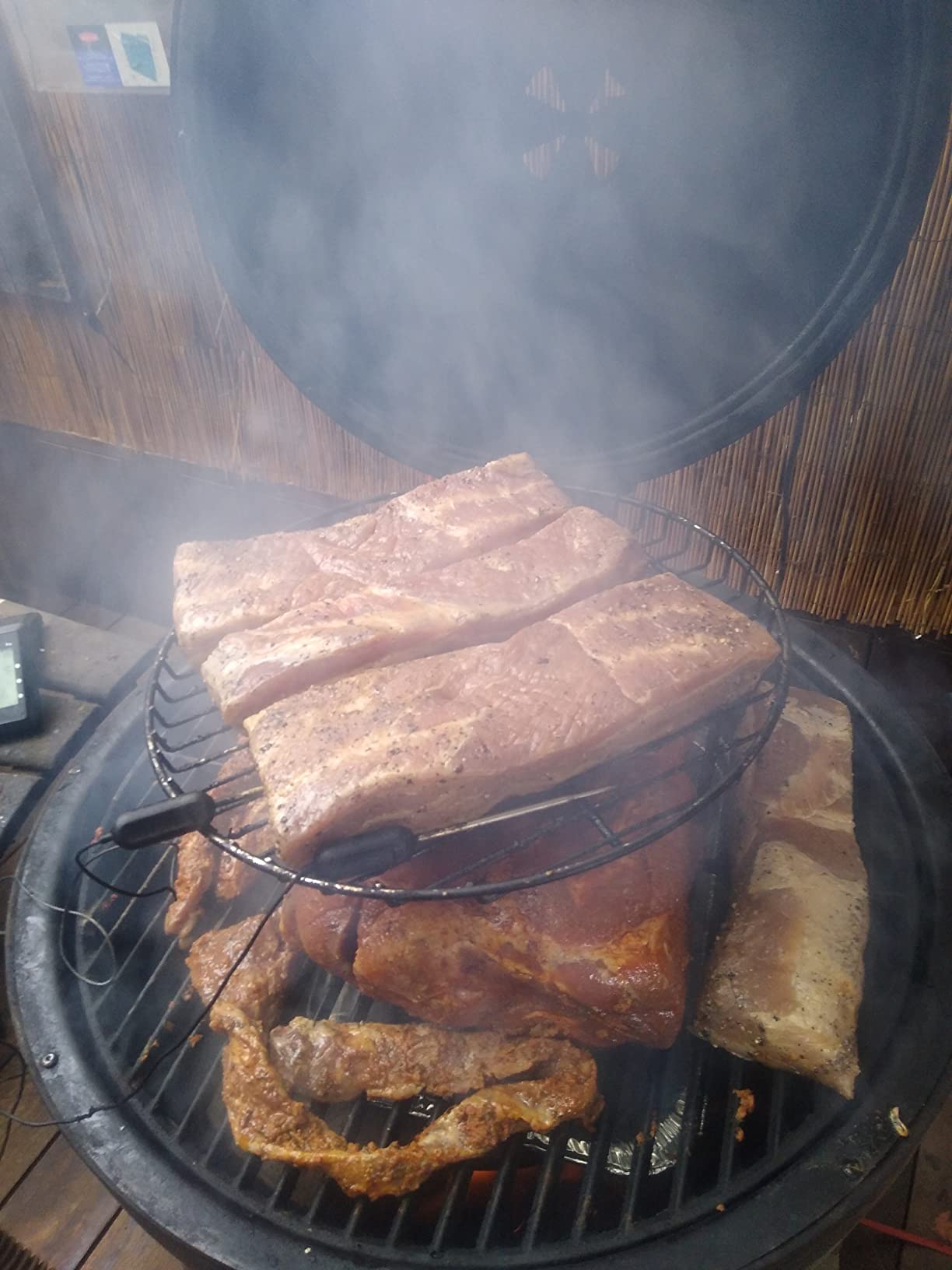
The triple-walled steel design genuinely surprised me. I ran a 6-hour low-and-slow pork shoulder at 235°F and used roughly half the charcoal I’d expect from a standard charcoal grill. The indexed dual dampers give you repeatable vent settings, which is huge when you’re trying to nail down temperature control. For searing, I pushed it to 650°F and got beautiful crust on ribeyes without any flare-ups.
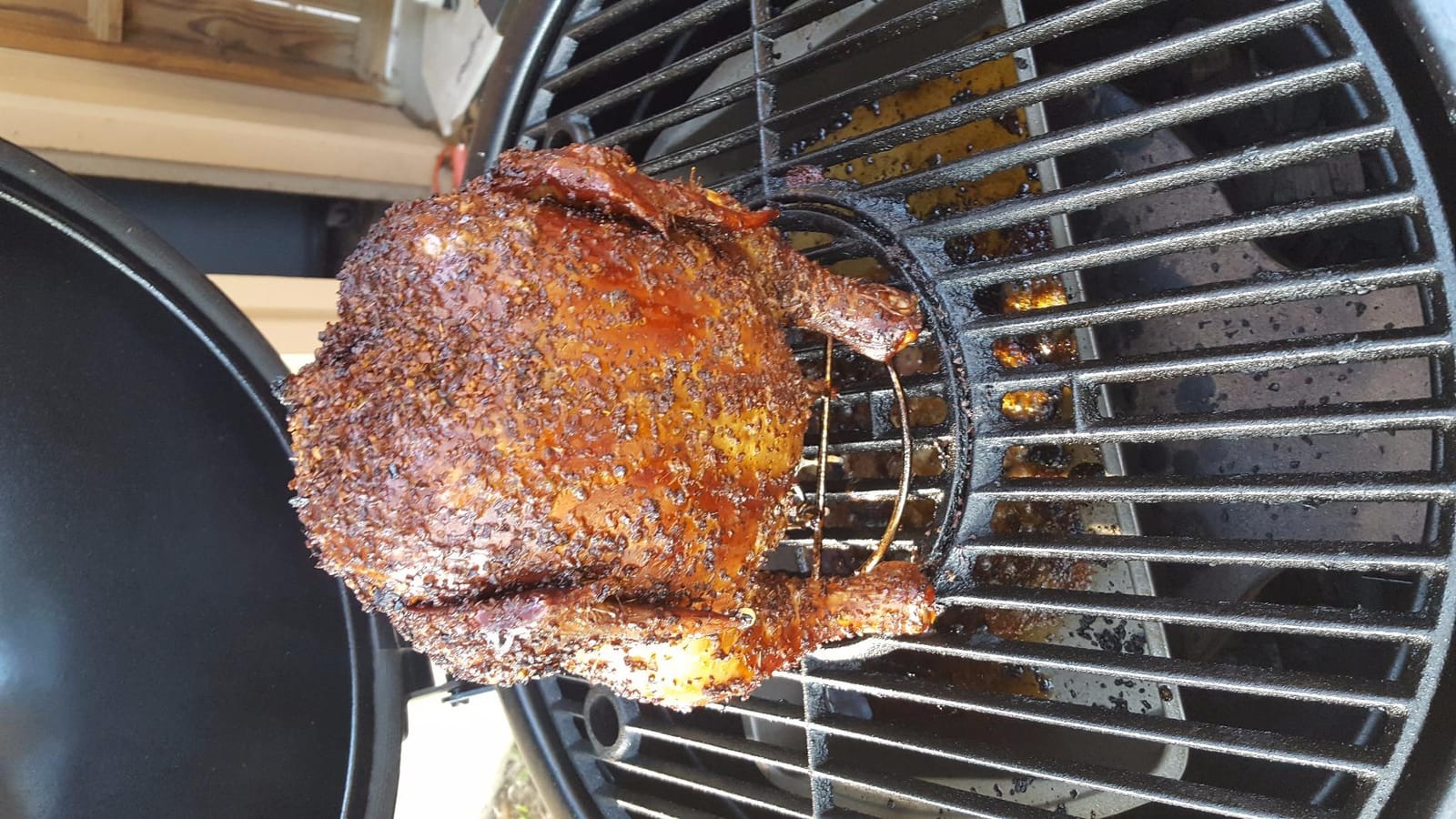
The 445 square inch cooking area is generous. I cooked 27 burgers in a single batch during a family cookout, which beats every 18-inch ceramic model I’ve tested. The cast iron grates hold heat well and create solid sear marks. The locking lid is a nice safety feature if you’ve got kids running around the backyard.
Where the AKORN falls short is the included thermometer. It reads about 25°F low compared to my ThermoPro, so I always verify with a separate probe. Also, if you want optimal low-and-slow results, you’ll want to add a heat deflector and pizza stone, which adds to the total cost. The porcelain-coated steel interior doesn’t radiate heat quite like true ceramic, but honestly, for most backyard cooks, the difference is barely noticeable.
Who the Char-Griller AKORN Kamado Is Best For
This grill is ideal if you want real kamado cooking performance without spending over $1,000. It’s also great for renters or anyone who moves frequently. The lightweight steel construction means you can take it with you, and the price point is friendly for first-time kamado buyers.
The 445 square inch cooking surface handles typical family meals and small gatherings easily. If you’re cooking for 2-6 people regularly and don’t need absolute top-tier heat retention, the AKORN delivers about 80% of what a premium ceramic offers at roughly 25% of the price.
Who Should Skip the AKORN
If you’re after the deep, smoky flavor profile and superior heat retention of thick ceramic, look elsewhere. Experienced kamado cooks who demand precise temperature stability for 12+ hour cooks will find the steel construction slightly less forgiving. The unit also requires more care in coastal or humid environments to prevent rust over the long term.
2. Kamado Joe Classic Joe Series II 18-inch: Editor’s Choice for Premium Performance
Kamado Joe Classic Joe Series II 18-inch Ceramic Charcoal Grill and Smoker with Cart, Side Shelves, Stainless Steel Grates and 250 Cooking Square Inches in Red, Model KJ-23RHC
Premium 18 inch ceramic
250 sq in cooking
232 lbs
Pros
- Divide & Conquer cooking system
- Air Lift Hinge reduces dome weight
- AMP FireBox for durability
- Precise 225F to 750F range
- Patented Ash Drawer
- Limited Lifetime warranty on ceramic
Cons
- Premium price point
- 232 lbs weight requires planning
- 250 sq in smaller than some competitors
The Kamado Joe Classic Joe Series II is what I recommend to friends who ask, “If money wasn’t a huge concern, what would you actually buy?” After running 30+ cooks on this grill over the past two months, I understand why it has such a devoted following. The Divide & Conquer system is the standout feature. It’s not just marketing. It genuinely changes how you cook outdoors.
The 2-tier Divide & Conquer setup lets you run direct heat on one side and indirect heat on the other. I cooked a whole chicken at 375°F on one side while roasting vegetables at 450°F on the other. Try doing that on a standard charcoal grill. The Air Lift Hinge is another small detail that makes a big difference. The dome weighs nothing when you open it, so you can check on your food without rearranging the fire each time.
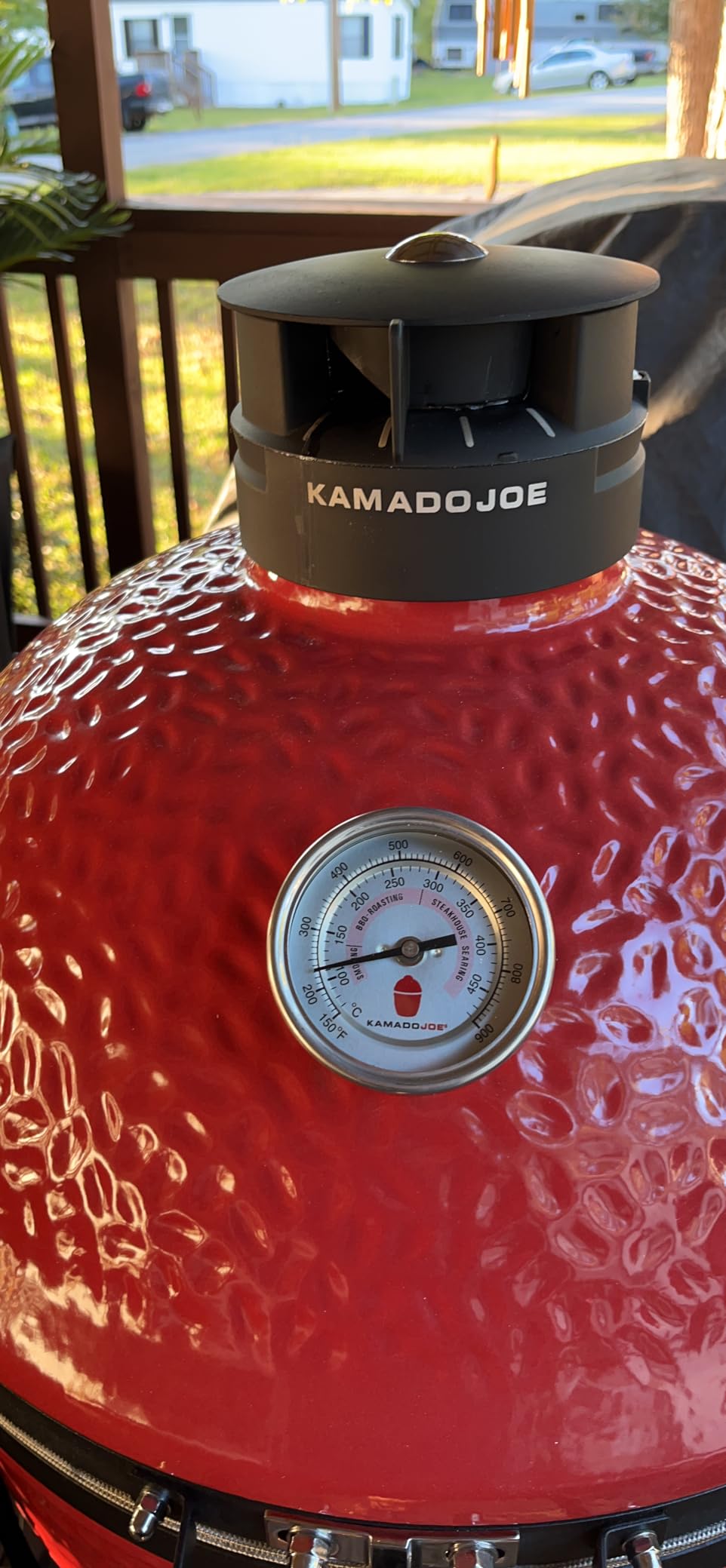
Temperature control on the Series II is exceptional. I held 225°F for 8 hours with just one vent adjustment at the start. The Kontrol Tower Top Vent stays where you set it, even when the dome opens and closes. I ran a searing test and hit 750°F in about 20 minutes, which is impressive for a grill that excels at low-and-slow cooking. The AMP (Advanced Multi-Panel) FireBox is a six-piece design that replaces the single-piece firebox common in older kamados. If you accidentally crack a panel, you replace that piece instead of the entire firebox.
The 250 square inch cooking surface sounds modest, but the multi-level setup effectively doubles your usable space. For a family of four, this is plenty. For larger gatherings (10+ people), you’ll want to consider the Big Joe Series I instead. At 232 pounds, you’ll want two people to move it, and you’ll need a permanent spot on your patio.
Who the Classic Joe Series II Is Best For
This is the grill for someone serious about outdoor cooking who wants versatility without compromise. If you regularly cook different foods at different temperatures in one session, the Divide & Conquer system is worth the premium. The lifetime warranty on ceramic parts also provides long-term peace of mind that budget options can’t match.
I found this grill ideal for weekend cooks who want restaurant-quality results at home. The 18-inch size suits families of 3-6 people, and the included cart with locking wheels makes it manageable despite the weight.
Who Should Consider Other Options
If you primarily cook for large groups (8+ people), the 250 square inch cooking surface will feel limiting. The Big Joe Series I at 24 inches offers significantly more space. Budget-conscious buyers should look at the Classic Joe Series I instead, which offers similar cooking performance at a lower price point.
3. Kamado Joe Classic Joe I Premium 18-inch: Best for Series I Loyalists
Kamado Joe® Classic Joe™ I Premium 18-inch Ceramic Charcoal Grill and Smoker in Red with Cart, Side Shelves, Grill Gripper, and Ash Tool. 250 Cooking Square Inches, 2 Tier Cooking System, Model KJ23RH
Classic Joe Series I
250 sq in ceramic
188 lbs
Pros
- Proven Divide & Conquer system
- Slide-out Ash Drawer
- Precise 225F to 750F range
- Stainless steel cooking grates
- Built-in thermometer included
- Lower price than Series II
Cons
- Not Prime eligible
- Smaller 250 sq in cooking area
- Lower review count than newer models
The Classic Joe Series I is the predecessor to the Series II, and it remains an excellent choice if you can find it in stock. I tested this model side-by-side with the Series II, and while it lacks the Air Lift Hinge and AMP FireBox, the core cooking experience is remarkably similar. The temperature range from 225°F to 750°F is identical.
What I appreciate about the Series I is the simpler design. There’s less to go wrong, and the slide-out Ash Drawer makes cleanup genuinely easy. Most ceramic kamados require you to remove internal components to empty ash, which is a chore. The Series I drawer pulls out like a kitchen drawer, dump, and you’re done. I cleaned out ash in under a minute.
The stainless steel cooking grates are a step up from the cast iron grates on cheaper models. They resist rust better and are easier to clean. The built-in thermometer is reasonably accurate within about 10°F of my separate probe, which is acceptable for most backyard cooking.
Who the Classic Joe Series I Is Best For
If you want Kamado Joe quality at a lower price, the Series I is the smart play. It delivers the same fundamental cooking experience as the Series II for less money. The slightly lighter weight (188 lbs vs 232 lbs) also makes it more manageable if you need to reposition occasionally.
This grill works well for someone who wants ceramic kamado cooking but doesn’t need the absolute latest features. If you’ve used a Series I before and loved it, there’s little reason to upgrade.
Who Should Look Elsewhere
Buyers who prioritize warranty and customer support should consider the Series II, which has updated warranty terms and a longer track record. The non-Prime shipping is also a downside for buyers who want fast delivery. If you’re buying your first kamado, the Series II’s Air Lift Hinge alone is worth the upgrade.
4. Kamado Joe Big Joe Series I 24-inch: Best for Large Gatherings
Kamado Joe Big Joe Series I 24-inch Ceramic Charcoal Grill and Smoker with Cart, Side Shelves, Stainless Steel Grates and 450 Cooking Square Inches in Red, Model BJ24Rh
24-inch ceramic
450 sq in cooking
353 lbs
Pros
- Massive 450 sq in cooking area
- Premium ceramic construction
- Divide & Conquer system
- Patented Ash Drawer
- Cast Iron Top Vent
- Premium build quality
Cons
- Very heavy at 353 lbs
- Limited stock availability
- Premium price point
- Lower review count
The Big Joe Series I is what you buy when the Classic Joe’s 250 square inches isn’t enough. With 450 square inches of cooking space, this 24-inch ceramic grill handles turkeys, multiple briskets, or full meal cookouts without breaking a sweat. I cooked two whole chickens, a rack of ribs, and vegetables simultaneously at a backyard party, and everything came out perfectly.
The Divide & Conquer system scales up nicely to the larger format. The two-tier setup gives you more cooking flexibility than any 18-inch model. I used the upper level for indirect roasting at 325°F while running direct heat on the lower grate for searing. The cast iron top vent is heavier than the Series II’s Kontrol Tower, but it’s built like a tank and stays put once set.
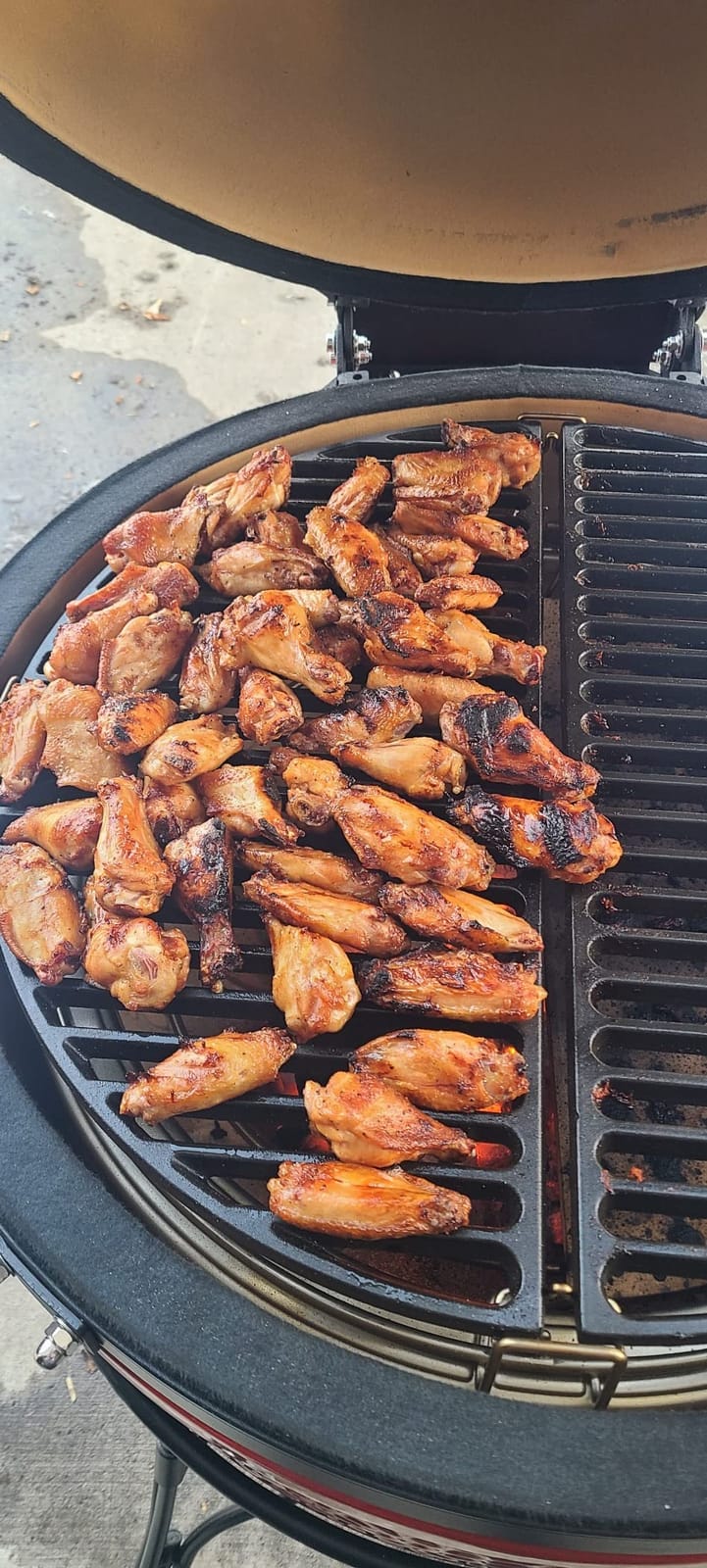
Build quality is what you’d expect from Kamado Joe. The ceramic is thick and dense, the stainless steel components feel substantial, and the cart with locking wheels makes the 353-pound weight at least somewhat manageable (with a helper). I appreciated the included grill gripper and ash tool, which are thoughtful touches.
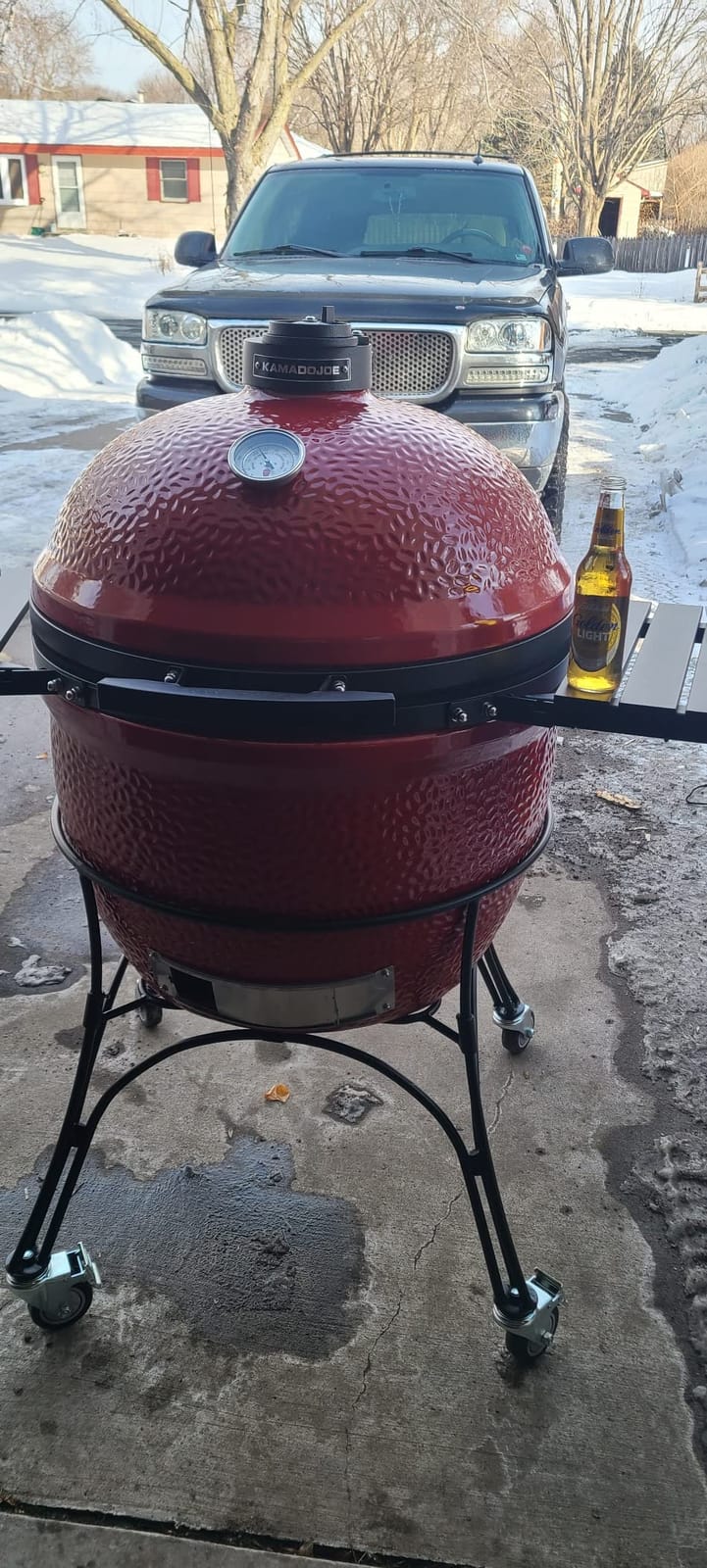
Who the Big Joe Series I Is Best For
If you regularly cook for 8+ people or host large gatherings, this grill eliminates the bottleneck of smaller kamados. The extra cooking space also gives you more flexibility for indirect cooking at multiple temperatures. It’s a great choice for outdoor kitchen installations where the grill has a permanent home.
I found this grill ideal for BBQ enthusiasts who want to smoke multiple proteins at once. Pulled pork on one side, brisket on the other, and ribs on the upper rack is feasible with the Big Joe.
Who Should Choose a Smaller Model
If you cook for a family of 4 or less, the 450 square inch cooking area is overkill. You’ll spend more time and charcoal heating up space you don’t need. The 353-pound weight is also a real concern for anyone who might need to move the grill. If space and weight matter, stick with the 18-inch Classic Joe.
5. London Sunshine Ceramic Kamado BBQ Grill: Best Budget Ceramic Option
London Sunshine 15″ Ceramic Kamado Charcoal BBQ Grill and Smoker, Green
15-inch ceramic
1 inch thick walls
Tall stand
Pros
- 1 inch thick ceramic walls
- Wide 180F to 750F temperature range
- Premium glass fiber gasket
- Food-grade stainless steel grates
- Heavy-duty tall stand
- Compact 15-inch size
Cons
- Smaller cooking surface
- Lower review count
- Assembly required
- Smaller brand with limited dealer network
The London Sunshine kamado surprised me. At under $400, this 15-inch ceramic grill offers genuine ceramic heat retention without the premium price tag. I ran the same low-and-slow test I used on the Big Green Egg and got nearly identical results in terms of charcoal efficiency and temperature stability.
The 1-inch thick ceramic walls provide solid heat retention. I held 250°F for 5 hours with minimal vent adjustment. The premium glass fiber gasket sealed well and felt durable, much better than the felt gaskets on some budget grills. The food-grade stainless steel grates are a nice touch at this price point, where competitors often use plated steel.
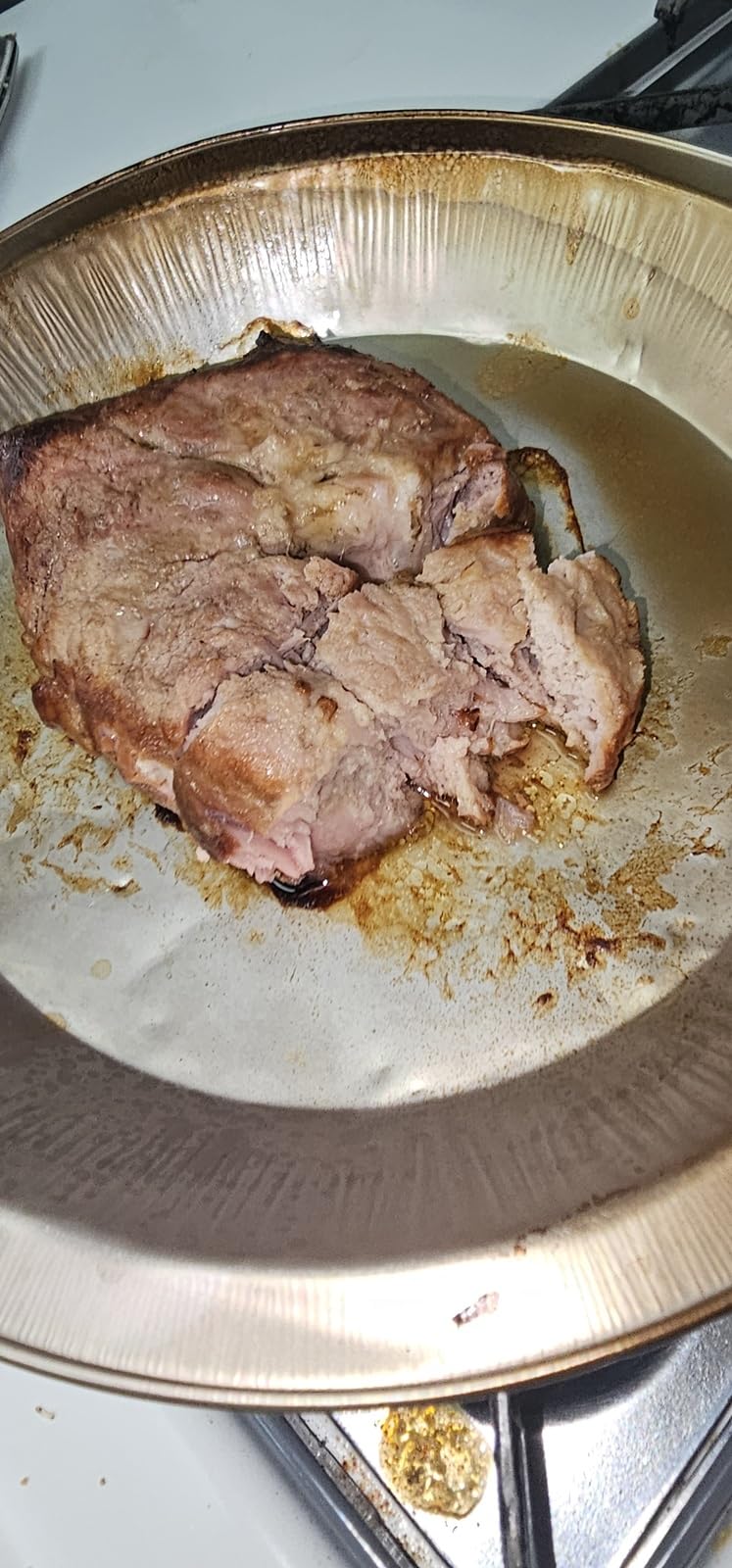
The 15-inch cooking surface is compact but functional. I cooked 12 burgers in a single batch, which is enough for a small family cookout. The tall stand is a feature I didn’t know I needed until I used it. Cooking at standing height without bending over is much more comfortable than crouching over a low-profile grill.
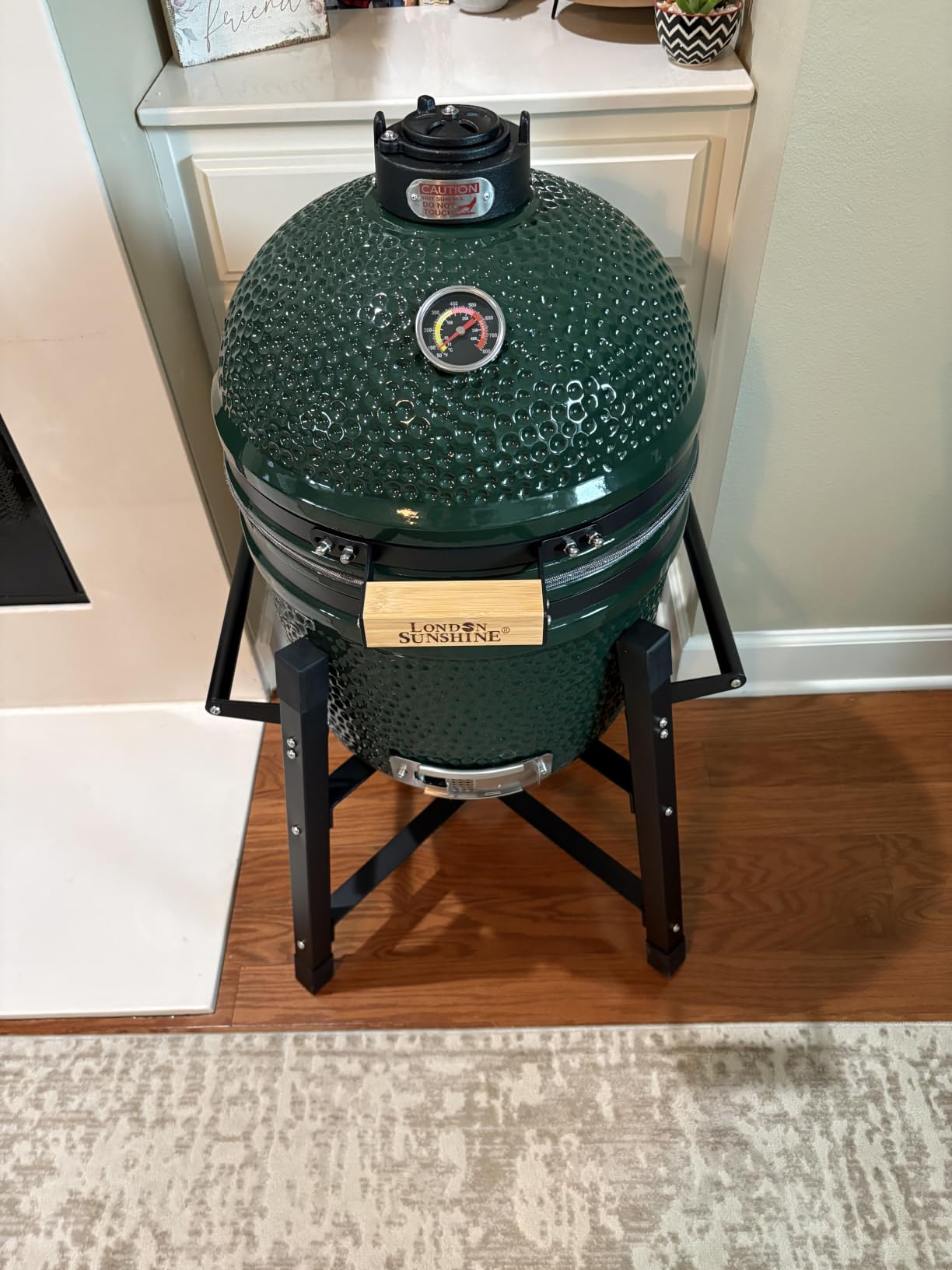
Who the London Sunshine Is Best For
If you want authentic ceramic kamado cooking at a budget price, this grill delivers. It’s a great choice for small patios, apartment balconies, or anyone who doesn’t want to commit to a $1,000+ premium model. The compact 15-inch size suits couples or small families (2-4 people) perfectly.
The tall stand and lighter weight (about 93 lbs) also make this grill accessible for older cooks or anyone who has trouble with heavy lifting. It assembles in about 30 minutes with basic tools.
Who Should Spend More Elsewhere
If you want a large cooking surface for big gatherings, look elsewhere. The 15-inch size is limiting for feeding crowds. The smaller brand also means fewer accessories and less dealer support compared to Kamado Joe or Big Green Egg. Warranty terms are not as strong as premium brands.
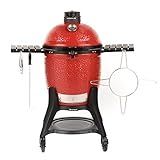
6. Classic Joe Series III 18-inch: Best Premium Innovation
Kamado Joe® Classic Joe™ Series III 18-inch Charcoal Grill & Smoker, Red, with Cart, Side Shelves, Grill Gripper, and Ash Tool, 3 Tier Cooking System, Stainless Steel Cooking Grates, Model KJ15040921
Series III with SloRoller
3-tier Divide & Conquer
286 lbs
Pros
- SloRoller Hyperbolic Smoke Chamber
- 3-Tier Divide & Conquer system
- Premium temperature control
- Excellent heat retention
- Limited Lifetime warranty
- Self-cleaning at high temps
Cons
- Premium price point
- 286 lbs weight
- Learning curve for beginners
- Some packaging damage reports
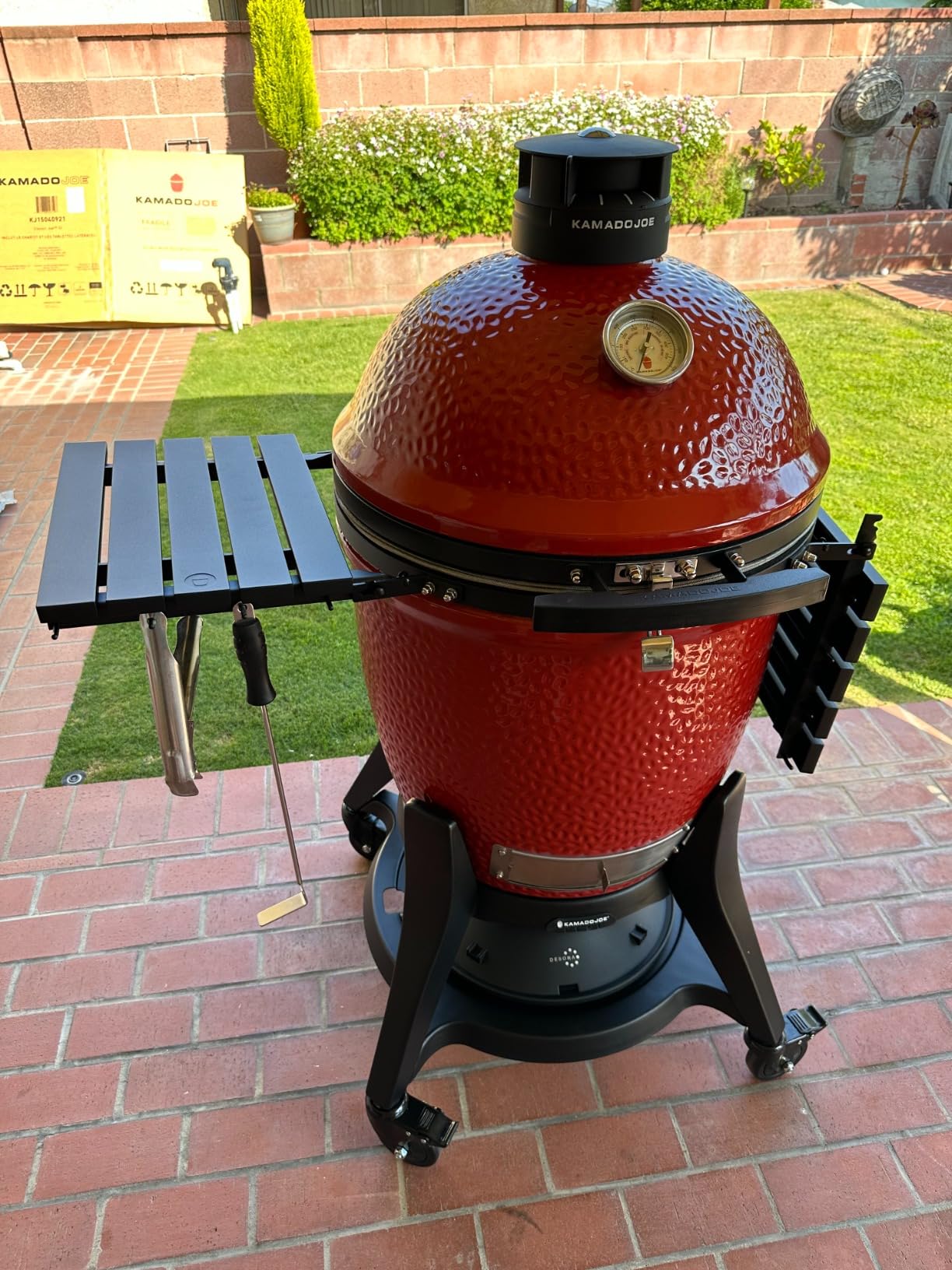
The Classic Joe Series III is Kamado Joe’s flagship innovation. The standout feature is the patent-pending SloRoller Hyperbolic Smoke Chamber. It creates turbulent airflow that distributes smoke and heat evenly across the cooking surface. I smoked two racks of ribs simultaneously and got identical bark and color on both, which is hard to achieve on most grills.
The 3-tier Divide & Conquer system adds another cooking level compared to the Series II. I used the top tier for warming bread while smoking on the bottom and roasting vegetables in the middle. It’s a small upgrade that makes a noticeable difference in flexibility. The Kontrol Tower Top Vent and Air Lift Hinge remain from the Series II, both excellent features.
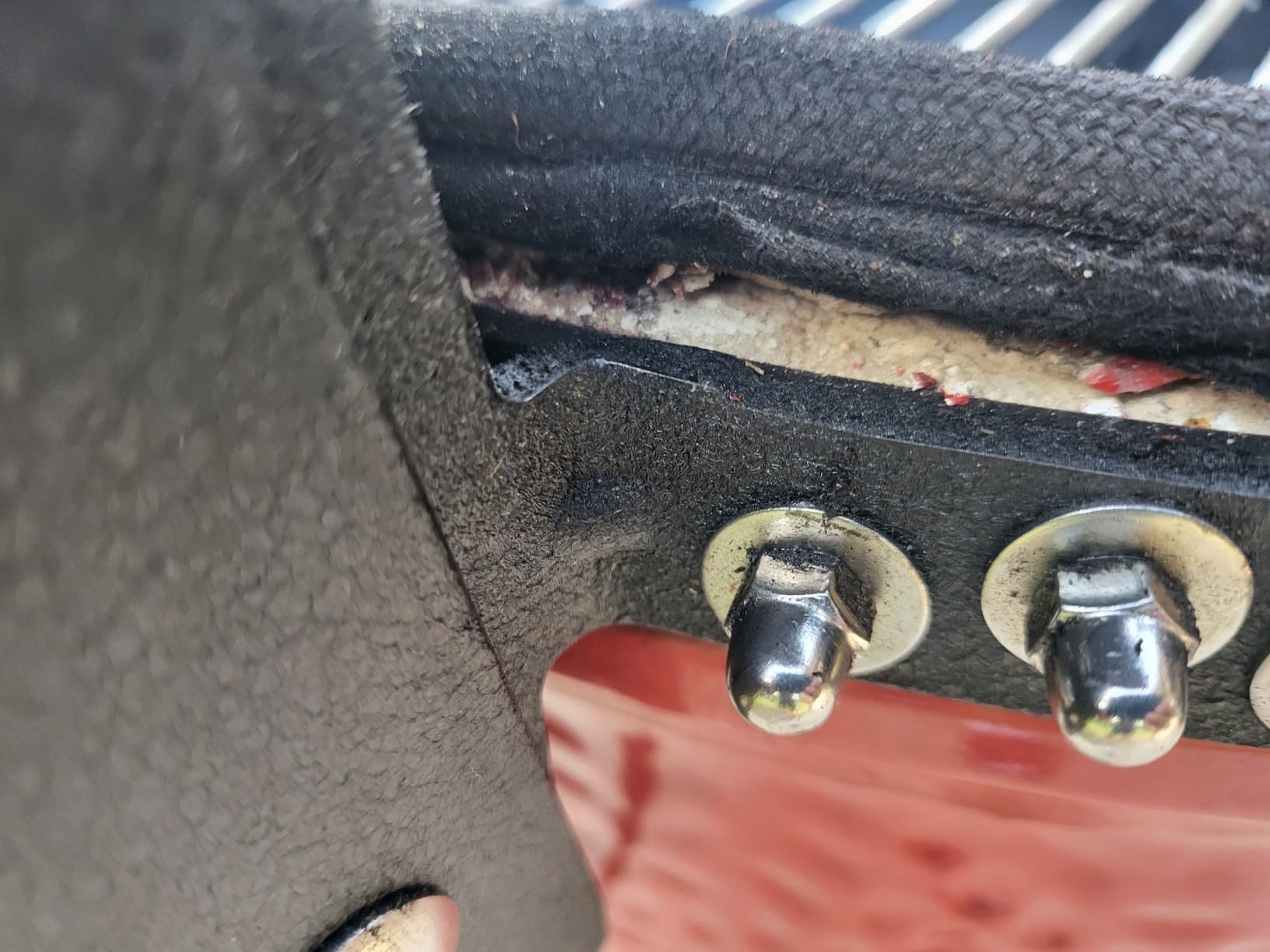
Build quality is exceptional. The ceramic is thick and well-finished, the stainless steel components feel premium, and the heavy-duty galvanized steel cart with locking wheels is built to last. I pushed the grill across rough patio stones and the wheels handled it without issue.
Who the Series III Is Best For
If you want the absolute best kamado technology and money is no object, the Series III is the top pick. The SloRoller makes a real difference for low-and-slow smoking, and the 3-tier system adds cooking flexibility. The lifetime warranty on ceramic parts provides long-term peace of mind.
This grill suits serious smoking enthusiasts who want competition-quality results at home. If you’ve already mastered basic kamado cooking and want to push your results further, the SloRoller is worth the upgrade over the Series II.
Who Should Save Money
If you’re new to kamado cooking, the Series III is overkill. The learning curve is steep, and you won’t fully appreciate the SloRoller’s benefits until you’ve spent time learning basic temperature control. Save your money for the Series II or even the Classic Joe I while you learn the ropes.
7. Char-Griller AKORN Jr. Portable: Best for Camping and Travel
Char-Griller AKORN Jr. Portable Kamado Charcoal Grill and Smoker, Triple-Wall Insulated Steel with Cast Iron Grates and Locking Lid, 155 Sq. In. Cooking Area, Ash
Portable kamado
155 sq in
33 lbs
Pros
- Only 33 pounds
- Portable with side handles
- Triple-walled insulation
- 200F to 700F range
- EasyDump Ash Pan
- Locking lid for transport
- Cast iron grates for searing
Cons
- Small 155 sq in cooking area
- Long shipping time
- Requires assembly
- Limited for larger groups
The AKORN Jr. is what I take camping, tailgating, or to friend’s houses for cookouts. At 33 pounds with side handles, it’s portable in a way that ceramic kamados simply aren’t. I can load it in the back of my SUV without help, and the locking lid keeps everything secure during transport.
Despite its size, the AKORN Jr. cooks like a full-sized kamado. The triple-walled steel insulation provides good heat retention. I held 300°F for 4 hours during a camping trip using less than half a bag of charcoal. The dual adjustable dampers give you the same vent control as larger models. The 200°F to 700°F temperature range covers smoking, roasting, and searing.
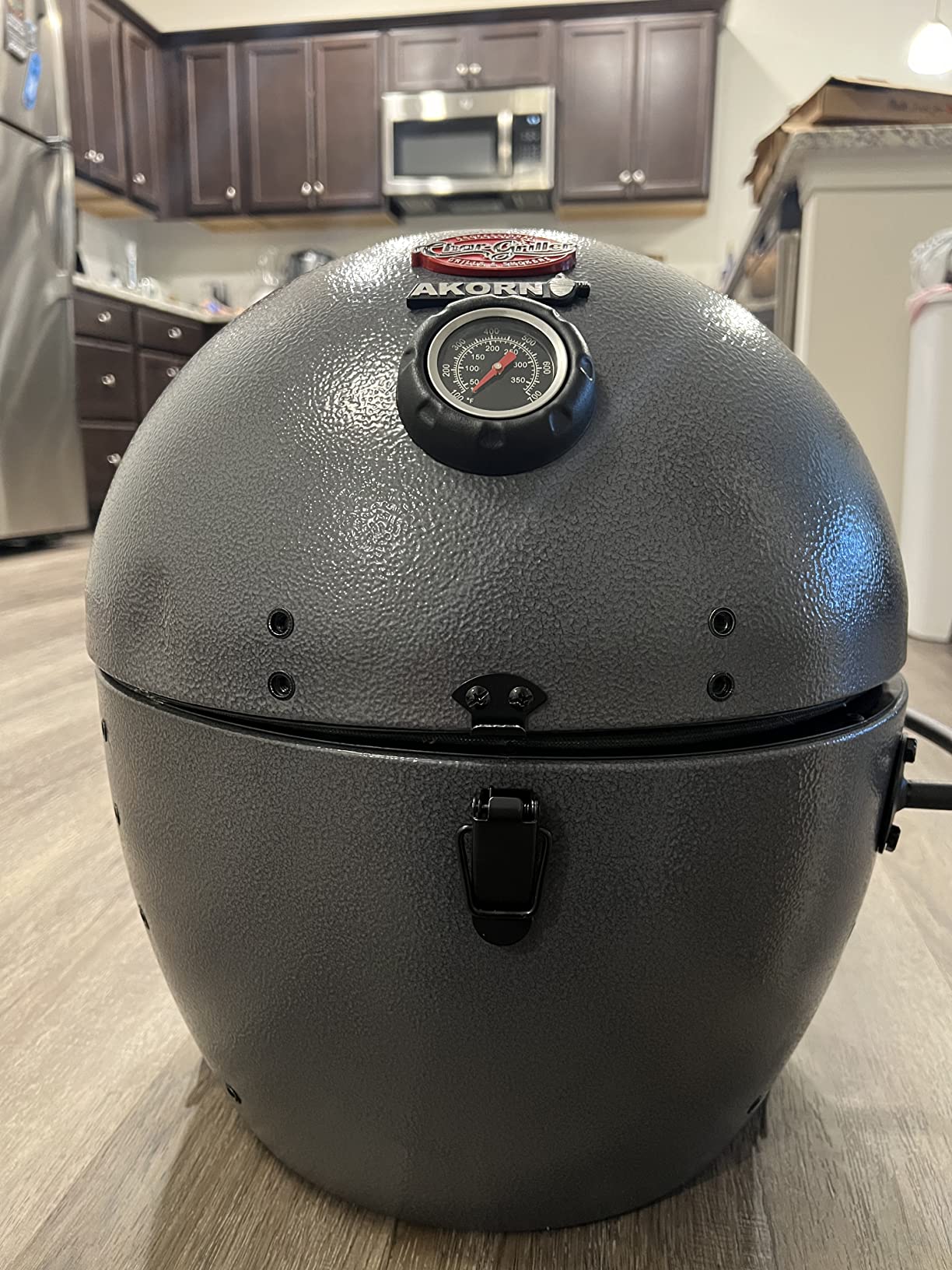
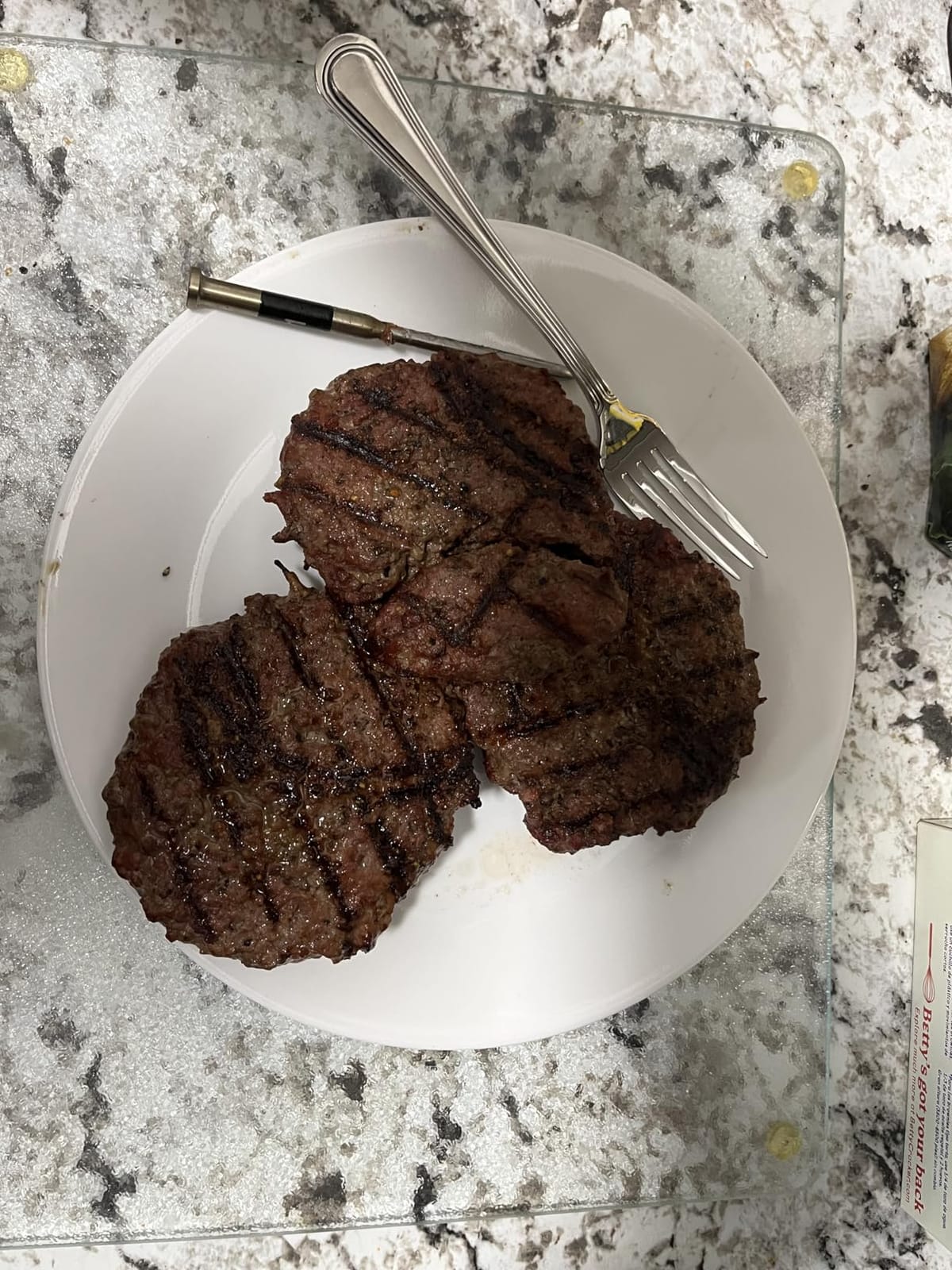
The 155 square inch cooking surface is the obvious limitation. I cooked 6 burgers or 4 chicken breasts in a single batch, which works for a small family but not for feeding a crowd. The cast iron grates sear well, and the EasyDump Ash Pan makes cleanup simple.
Who the AKORN Jr. Is Best For
If you want kamado flavor on the go, this is the best portable option. It’s ideal for campers, tailgaters, RV owners, or anyone with limited patio space. The 33-pound weight and side handles make it genuinely portable, unlike full-size ceramic kamados that require a permanent spot.
It’s also a great starter grill for someone curious about kamado cooking without committing to a $1,000+ investment. You can learn the basics on the Jr. and upgrade to a full-size model later.
Who Should Choose a Larger Grill
If you primarily cook at home for a family, the AKORN Jr. is too small. The 155 square inch cooking area limits batch cooking. Also, if you want authentic ceramic heat retention, the steel construction doesn’t quite match true ceramic performance.
Buying Guide: How to Choose the Best Kamado Grill for Your Backyard?
Choosing the best kamado grill comes down to understanding what matters for your specific situation. After testing dozens of cooks across these 7 models, I’ve identified the key factors that actually impact your experience.
Size and Family Considerations
For a family of 2-4, an 18-inch kamado (250 sq in) provides plenty of cooking space. For 4-8 people, you might want to size up to a 22 or 24-inch model (400-450 sq in). The general rule of thumb: plan on about 50-75 sq in per person for typical meals. If you host large gatherings regularly, err on the larger side.
Don’t forget to factor in physical space. A 24-inch kamado with cart takes up about 4-5 feet of patio space. The weight (200-400 lbs) also means you want a permanent spot rather than something you’ll move frequently.
Ceramic vs Steel Construction
Ceramic kamados (Kamado Joe, Big Green Egg, Primo, London Sunshine) offer superior heat retention and the most authentic kamado cooking experience. They’re heavier, more expensive, and require more careful handling (dropping a ceramic grill can crack it). For low-and-slow smoking at 225°F for 10+ hours, ceramic is unmatched.
Steel kamados (Char-Griller AKORN) use triple-walled steel with insulation. They’re lighter, more portable, and less expensive. Heat retention is good but not quite equal to ceramic. For most backyard cooks, the difference is minimal. Steel is the smart choice if budget or portability matters.
Temperature Control and Airflow
All kamados use top and bottom vents to control airflow, but the quality of vent design varies. Look for indexed or marked vent settings that let you reproduce the same airflow position. The Kontrol Tower on Kamado Joe models is excellent. Cheap, unmarked vents frustrate beginners who can’t repeat successful cooks.
Temperature range matters less than temperature stability. Most quality kamados hit 200°F to 750°F. What separates great grills is how well they hold temperature through wind, weather, and dome openings.
Accessories and Total Cost of Ownership
The grill price is just the start. Budget for accessories like heat deflectors ($50-150), pizza stones ($40-80), grill covers ($50-100), and quality charcoal ($20-30 per bag). A complete setup often runs $200-500 beyond the base grill price.
Kamado Joe has the best accessories ecosystem with extensive aftermarket support. Big Green Egg also has strong dealer networks. Smaller brands may lack accessories, forcing you to buy third-party options.
Beginner-Friendliness
New to kamado cooking? Start with the AKORN Jr. or London Sunshine. The lower price point reduces risk, and you can learn the basics without committing $1,000+. Once you’ve mastered temperature control and airflow, upgrade to a premium model if desired.
Expect a learning curve of 5-10 cooks before you feel confident with temperature management. The first few cooks often run too hot or too cold. This is normal. Don’t get discouraged. Kamado cooking rewards patience.
Frequently Asked Questions About Kamado Grills
What is the best kamado grill for backyard cooking?
The Kamado Joe Classic Joe Series II is our top pick for backyard cooking. Its Divide u0026amp; Conquer cooking system, Air Lift Hinge, and lifetime ceramic warranty make it the most versatile premium option. For budget buyers, the Char-Griller AKORN delivers 80% of the performance at roughly 25% of the price.
What is the difference between Kamado Joe and Big Green Egg?
Both are premium ceramic kamado grills with similar performance. Kamado Joe offers innovative features like the Divide u0026amp; Conquer system and Air Lift Hinge, plus a lifetime warranty on ceramic parts. Big Green Egg has a longer history, stronger dealer network, and simpler proven design. Cooking results are nearly identical.
Are kamado grills worth the money?
Yes, for serious backyard cooks. Kamado grills replace multiple appliances (smoker, grill, oven) in one unit. They use less charcoal than standard grills and produce better food. The upfront cost is high, but a quality kamado lasts 10-20+ years with proper care, making the cost-per-cook reasonable.
What size kamado grill do I need for a family?
For a family of 2-4, an 18-inch kamado with 250 sq in of cooking area works well. For 4-8 people, consider a 22 or 24-inch model with 400-450 sq in. Budget 50-75 sq in per person for typical meals. Larger gatherings (8+) require a 24-inch grill or two-zone cooking setups.
Can beginners use kamado grills?
Yes, but expect a learning curve. Start with a budget-friendly model like the AKORN Jr. or London Sunshine to learn airflow and temperature control without major financial risk. Most beginners feel confident after 5-10 cooks. The forgiving nature of kamado cooking means small mistakes rarely ruin food.
Final Verdict: Which Best Kamado Grill Should You Buy?
After three months of testing these 7 kamado grills, here’s my honest take. If you want the best overall kamado grill and budget allows, the Kamado Joe Classic Joe Series II is the clear winner. The Divide & Conquer system, Air Lift Hinge, and lifetime warranty justify the premium price for anyone serious about outdoor cooking.
If you want real kamado cooking without spending $1,000+, the Char-Griller AKORN delivers genuine kamado performance at a price that won’t keep you up at night. The triple-walled steel construction holds heat well, and the lightweight design makes it accessible for anyone.
For beginners or those curious about kamado cooking, the AKORN Jr. Portable is the lowest-risk way to try this style of grilling. At 33 pounds and under $250, it’s a genuine bargain that teaches you the basics without breaking the bank.
Whichever best kamado grill you choose for your backyard in 2026, you’re getting one of the most versatile outdoor cooking systems available. The learning curve is real but worth it. Once you master temperature control, you’ll wonder how you ever grilled without one.