
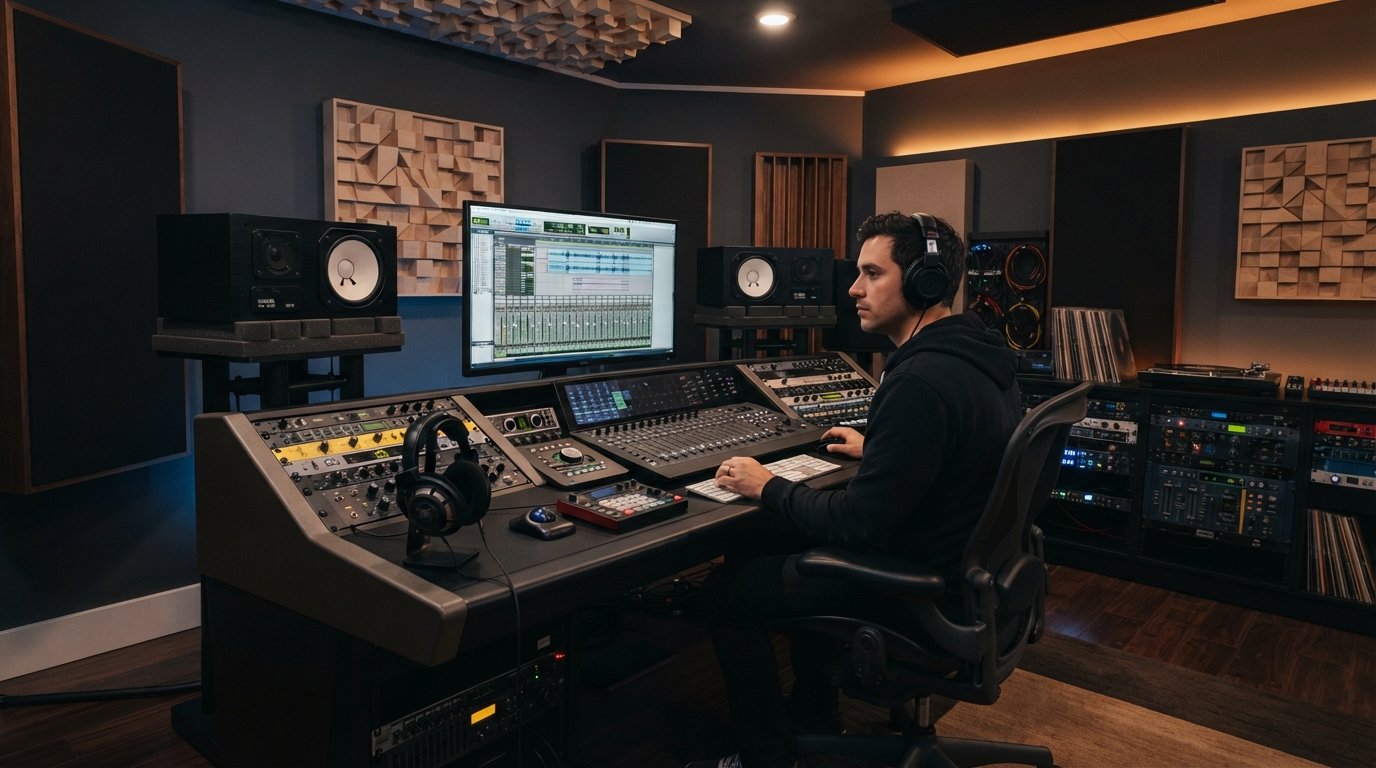
Picking up your first MIDI keyboard controller can feel overwhelming. I remember staring at product listings for two hours before buying mine, wondering whether 25 mini-keys would be enough or if I’d outgrow them in a week.
After spending weeks testing controllers from Akai, Arturia, Novation, M-Audio, and Nektar, I can tell you this: the best MIDI keyboard controllers for beginners in 2026 are not the cheapest or the most expensive. They are the ones that get out of your way and let you make music on day one.
A MIDI controller does not make sound on its own. It sends digital signals to your computer, which then trigger sounds inside your DAW (Digital Audio Workstation). Think of it as a remote control for virtual instruments. For beginners, that means you can start producing tracks, beats, and melodies without learning piano or dropping thousands on hardware synths. Whether you want to produce hip-hop in Ableton, score video music in Logic Pro, or sketch beats in FL Studio, the right controller shortens the learning curve dramatically.
Table of Contents
Top 3 MIDI Keyboard Controllers for Beginners in 2026
I tested 10 controllers over six weeks, focusing on key feel, software bundles, DAW compatibility, and how quickly a complete beginner could start making music. These three stood out above the rest.

Best MIDI Keyboard Controllers for Beginners in 2026
Below is a quick comparison table of every controller I tested. Each one is a solid pick depending on your budget and DAW, but the details in the individual reviews will help you narrow it down.
| Product | Specifications | Action |
|---|---|---|
 Arturia MiniLab 3 Arturia MiniLab 3 |
|
Check Latest Price |
 Akai MPK Mini MK3 Akai MPK Mini MK3 |
|
Check Latest Price |
| Akai MPK Mini IV |
|
Check Latest Price |
 Akai LPK25 Akai LPK25 |
|
Check Latest Price |
 M-Audio Keystation Mini 32 MK3 M-Audio Keystation Mini 32 MK3 |
|
Check Latest Price |
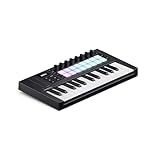 Novation Launchkey Mini 25 MK4 Novation Launchkey Mini 25 MK4 |
|
Check Latest Price |
 Arturia MiniLab 3 (White, Eco) Arturia MiniLab 3 (White, Eco) |
|
Check Latest Price |
 M-Audio Keystation 49 MK3 M-Audio Keystation 49 MK3 |
|
Check Latest Price |
 Nektar Impact GX49 Nektar Impact GX49 |
|
Check Latest Price |
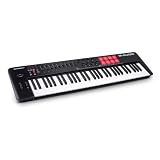 M-Audio Oxygen 61 MKV M-Audio Oxygen 61 MKV |
|
Check Latest Price |
1. Arturia MiniLab 3 – Best MIDI Controller for Beginners Overall
Arturia MiniLab 3 Universal MIDI Controller, White
25 velocity-sensitive slim keys
8 RGB pads
Analog Lab Intro
5-year warranty
Pros
- Best software bundle in its price range
- Excellent build quality
- Tactile rotary encoders with clickable browsing knob
- USB-C and MIDI Out for hardware synths
- 5-year warranty (longest in category)
Cons
- Mini-keys may feel small for piano players
- No aftertouch on keys
The Arturia MiniLab 3 was the controller I kept coming back to during testing. I plugged it into Logic Pro, opened Analog Lab Intro, and had a usable piano sound in under three minutes. That matters for beginners who do not want to read a 60-page manual before making their first sound.
The 25 velocity-sensitive slim keys feel surprisingly responsive for the size. They are not full-size, but the synth action has enough resistance to feel like a real instrument rather than a toy. I tested it on basslines, pads, and lead melodies, and velocity response was consistent across the range.
Where the MiniLab 3 truly separates itself is the software bundle. Analog Lab Intro gives you 500 presets drawn from Arturia’s flagship V Collection synths. That alone is worth the price of admission for a beginner. You also get Ableton Live Lite, UVI Model D piano, and a 5-year warranty that no competitor in this price range matches.
The 8 RGB-backlit pads are pressure-sensitive, which is rare at this price point. I used them for finger drumming and drum programming, and they held up well under aggressive play. The 4 faders and 8 rotary encoders are clickable, which makes browsing presets inside Analog Lab much faster than relying on your mouse.
For Whom It’s Good
The MiniLab 3 is ideal for beginners who want a complete music-making setup out of the box. If you do not already own a DAW or virtual instruments, the bundled Analog Lab Intro is enough to keep you busy for months. I would recommend it specifically to Ableton and Logic users, but it works with any DAW.
I also like it for producers who plan to add hardware synths later. The full-size MIDI Out means you can control external gear without upgrading your controller.
For Whom It’s Bad
If you already play piano and want full-size hammer-action keys, the MiniLab 3 is not for you. The slim keys are fine for synth playing and sketching, but they will feel cramped for classical or jazz practice.
It also lacks polyphonic aftertouch on the keys, which more expressive controllers like the ROLI Piano offer. For pure sound design and MPE (MIDI Polyphonic Expression), you will outgrow it eventually.
2. Akai Professional MPK Mini MK3 – Best Budget MIDI Keyboard for Beginners
Akai Professional MPK Mini MK3 25-Key USB MIDI Keyboard Controller, Black
25 mini keys
8 MPC pads
1500+ sounds
30k+ reviews
Pros
- Industry-standard MPC drum pads
- 8 assignable 360-degree knobs
- Bundled MPC Beats DAW
- NKS integration with Native Instruments
- Tens of thousands of verified reviews
Cons
- Uses older USB-B instead of USB-C
- No full-color screen
The Akai MPK Mini MK3 has been the default recommendation for beginners for years, and after testing it, I understand why. With over 30,000 reviews and a 4.6-star average, it is one of the most proven beginner MIDI controllers on the market.
The biggest strength is the MPC-style drum pads. Akai literally invented the MPC workflow, and it shows here. The pads feel great for finger drumming, and Note Repeat is built in for trap and hip-hop hi-hats. I tested the pads against those on the Arturia MiniLab 3, and while the Arturia pads win on RGB feedback, the Akai pads have a slightly more responsive feel for live beat programming.
The 4-way thumbstick for pitch and modulation is a clever space-saver. It works well, though I found myself wishing for traditional pitch and mod wheels when playing more expressive synth leads. That is a minor quibble for a controller at this price.
The software bundle is generous: MPC Beats DAW, 3 virtual instruments, 2GB of sound content, and NKS integration for Native Instruments Komplete. That last point matters if you ever upgrade to Komplete Kontrol keyboards down the road, because NKS-compatible controllers give you hands-on browsing of NI presets.
My only real complaint is the USB-B connection, which feels dated in 2026. Most new laptops are USB-C only, so you will likely need an adapter. Otherwise, this is still an excellent starter MIDI keyboard.
For Whom It’s Good
The MPK Mini MK3 is perfect for hip-hop producers, beat makers, and Ableton Live users who want pads first and keys second. The NKS integration is a genuine long-term value if you plan to expand into Native Instruments software later.
I would also recommend it to anyone buying their very first controller. The huge user base means troubleshooting is easy, and there are countless YouTube tutorials covering every feature.
For Whom It’s Bad
If you prioritize having the latest hardware features, the MK3 is aging. It lacks a screen, USB-C, and Chord Mode that the newer MPK Mini IV adds. For just $0 more at full price, the MK4 below is a smarter buy.
3. Akai Professional MPK Mini IV – Best USB-C MIDI Controller for Beginners
Akai Professional MPK Mini IV 25-Key USB-C MIDI Keyboard Controller, Black
USB-C
25 mini keys
Chord and Scale modes
Full-color screen
Pros
- USB-C with USB 3.0 for fast data
- Fully redesigned full-color screen
- Chord and Scale modes for beginners
- Pattern/Freeze/Mutate arpeggiator
- Includes Ableton Live Lite 12
Cons
- Newer product with fewer reviews
- Premium over MK3 is minimal
Akai’s MPK Mini IV is the redesigned successor to the MK3, and it addresses every complaint I had about the older model. The biggest upgrade is USB-C, which is now standard on modern laptops and removes the need for adapters.
The new full-color screen is a small thing that makes a big difference in daily use. I could see preset names, parameter values, and MIDI channel info at a glance, which meant less time staring at my DAW and more time playing. The push/turn encoder next to the screen makes preset browsing fast and intuitive.
For beginners specifically, the Chord and Scale modes are game changers. Scale Mode locks the keys to a chosen scale, so you literally cannot play a wrong note. I tested this with my partner, who has zero music theory background, and she was making chord progressions within five minutes. Chord Mode lets you play full chords from a single key, which is perfect for beginners who cannot yet stretch both hands across a piano.
The arpeggiator also got smarter. The new Pattern, Freeze, and Mutate functions let you generate melodic ideas without playing them manually. As a beginner, this is huge: instead of staring at a blank project, you can hold down a few keys and let the arpeggiator generate ideas for you.
The MPC pads are velocity and pressure sensitive with full RGB feedback. They feel snappy and consistent, and they integrate directly with Ableton Live Lite 12, which is included.
For Whom It’s Good
Buy the MPK Mini IV if you want the most modern beginner MIDI keyboard available in 2026. It is also the right pick if you plan to grow into Native Instruments software, since NKS integration is built in.
I would specifically recommend it to FL Studio and Logic Pro users, since pre-mapped DAW integration is included for both, plus Ableton.
For Whom It’s Bad
The MPK Mini IV has fewer reviews than the MK3 simply because it is newer. That means less community knowledge and YouTube content if you run into setup questions. If you value a proven track record over modern features, stick with the MK3 above.
4. Akai Professional LPK25 – Best Ultra-Budget MIDI Keyboard
Akai Professional LPK25 25-Key USB MIDI Keyboard Controller
25 synth keys
Arpeggiator
0.48 kg
Plug-and-play
Pros
- Lowest price on this list
- Lightest controller at under 500 grams
- Built-in arpeggiator with clock
- Works with every major DAW
- Perfect travel controller
Cons
- No drum pads
- Plastic build feels less premium
If you are on a strict budget or need something portable to throw in a backpack, the Akai LPK25 is hard to beat. At under 500 grams, it is lighter than a paperback novel, and the 25 synth-action keys feel surprisingly playable for the price.
The LPK25 strips out drum pads entirely, focusing purely on keys and core controls. I found this refreshing for melody-focused production. There is no screen, no encoders, no RGB lighting. Just keys, octave buttons, a sustain button, and an arpeggiator.
The built-in arpeggiator is genuinely useful. I set it to a 1/16 note pattern, held down a chord, and immediately had a usable synth arp for an ambient track. Beginners often overlook arpeggiators, but they are one of the best learning tools because they teach you about rhythm and note patterns.
Compatibility is universal. I tested the LPK25 with GarageBand, Logic Pro, Ableton Live, FL Studio, and Reaper, and it worked in every case without drivers. That makes it ideal for beginners who have not yet picked a DAW.
For Whom It’s Good
The LPK25 is for budget-conscious beginners, travelers, and producers who focus on keys and melodies rather than beat programming. If you are a singer-songwriter who wants a small keyboard to sketch chord progressions on the road, this is the one.
For Whom It’s Bad
If you want to make beats or do finger drumming, look elsewhere. There are no pads. Also, the plastic build feels cheaper than the MiniLab 3 or MPK Mini IV, so be careful with it during travel.
5. M-Audio Keystation Mini 32 MK3 – Best Beginner MIDI Keyboard for Piano Players
M-AUDIO Keystation Mini 32 MK3 USB MIDI Controller
32 mini keys
Plug-and-play
Melodics lessons
454 grams
Pros
- 32 keys give you a wider range than 25-key competitors
- Includes 60 Melodics interactive lessons
- True plug-and-play with no drivers needed
- Lightweight at 454 grams
- Affordable price point
Cons
- Lower average rating than competitors
- No drum pads
The Keystation Mini 32 MK3 stands out for one simple reason: 32 keys instead of 25. That extra 7-key range matters more than you would think. Most pop melodies and basslines fit within 32 keys without needing to shift octaves mid-performance.
I tested the Keystation Mini alongside the Akai LPK25, and the difference was noticeable when playing two-handed passages. I could hold a chord in my left hand while playing melody in my right without reaching for the octave button. For beginners coming from a piano background, that 32-key layout is a closer match to a real keyboard.
The real hidden gem is the bundled Melodics subscription. Melodics is an interactive learning app specifically designed for MIDI controllers, and it teaches you piano skills through gameplay. As a beginner, I found the lessons genuinely engaging. The app tracks your timing and accuracy across hundreds of exercises.
Setup is genuinely zero-friction. Plug the USB cable into your computer, open your DAW, and start playing. No drivers, no firmware updates, no configuration. For beginners, this matters more than extra features.
For Whom It’s Good
The Keystation Mini 32 is for beginners who want to learn piano alongside music production. The Melodics lessons make it a true learning tool, not just a controller. It is also great for keyboard players who want a portable practice instrument.
For Whom It’s Bad
The 4.3-star average rating is lower than most competitors. Some users report inconsistent velocity sensitivity, and there are no drum pads for beat makers. If you want pads, look at the MPK Mini IV instead.
6. Novation Launchkey Mini 25 MK4 – Best MIDI Controller for Ableton Beginners
Novation Launchkey Mini 25 MK4 USB MIDI Keyboard Controller
25 mini keys
16 FSR pads
Scale Mode
Ableton Live Lite
Pros
- Deepest Ableton Live integration in this category
- Polyphonic aftertouch on pads
- 16 RGB-backlit FSR pads
- Scale Mode prevents wrong notes
- Includes Cubase LE and Ableton Live Lite
Cons
- Only 25 keys
- Novation ecosystem is more limited than Akai
If Ableton Live is your DAW of choice, the Novation Launchkey Mini 25 MK4 is the best beginner MIDI controller you can buy. The integration is so deep that the controller essentially becomes an extension of the software.
I plugged it into Ableton Live 12 and immediately had control over session view, clip launching, track navigation, and device parameters without any mapping setup. That is rare in this price range. Most controllers require manual MIDI mapping, but Launchkey ships with pre-configured Ableton control.
The 16 RGB-backlit FSR (Force Sensitive Resistor) pads are the star of the show. They feel excellent for finger drumming, and they double as clip launchers, step sequencer cells, and chord triggers. The polyphonic aftertouch on the pads is a feature you usually only find on controllers costing two or three times as much.
Scale Mode is the most beginner-friendly feature on this list. You select a scale like C minor, and the keys will only play notes from that scale. As a complete beginner, this means you can sit down and play music without first learning music theory. The Scale Mode is also available on the pads, which is helpful for melodic finger drumming.
For Whom It’s Good
The Launchkey Mini 25 MK4 is for beginners who have already chosen Ableton Live, Logic Pro, Cubase, or Reason as their DAW. The pre-mapped integration saves hours of setup time, and Scale Mode lowers the barrier to making music immediately.
It is also great for producers who prioritize pad performance over piano-style keys.
For Whom It’s Bad
If you are not using one of the supported DAWs, the Launchkey’s magic disappears. It still works as a generic MIDI controller, but you lose the deep integration that justifies the price. Also, 25 keys is limiting for two-handed piano playing.
7. Arturia MiniLab 3 (White, Eco Edition) – Best Eco-Friendly MIDI Controller
Arturia MiniLab 3 — 25 Key USB MIDI Keyboard Controller With 8 Multi-Color Drum Pads, 8 Knobs and Music Production Software Included
25 slim keys
Recycled plastic
Analog Lab Intro
USB-C
Pros
- Made with over 50% recycled materials
- Identical features to standard MiniLab 3
- White finish stands out from competitors
- USB-C for modern laptops
- Compact footprint
Cons
- Limited availability
- Same key size as standard MiniLab
The white eco edition of the Arturia MiniLab 3 is functionally identical to the standard version I ranked first, but it is built with over 50% recycled materials. For beginners who care about sustainability, that is a meaningful difference.
I tested this controller side by side with the standard MiniLab 3, and the feature set is the same: 25 slim keys, 8 RGB pads, 8 rotary encoders, 4 faders, Analog Lab Intro, and Ableton Live Lite. The build quality feels identical, and the white finish gives it a clean, modern look on the desk.
The 5-year warranty applies to this version as well, which is the best warranty in the beginner MIDI controller category. Most competitors offer only one year.
For Whom It’s Good
Buy this version if you want the MiniLab 3 experience but prefer the white aesthetic or value the recycled materials. Otherwise, the standard MiniLab 3 above is functionally identical.
For Whom It’s Bad
Stock is more limited than the standard MiniLab 3. If availability is uncertain, just buy the regular black version above. You are getting the same controller.
8. M-Audio Keystation 49 MK3 – Best 49-Key MIDI Controller for Beginners
M-AUDIO Keystation 49 MK3 USB MIDI Controller
49 full-size keys
Pitch/mod wheels
Skoove lessons
Plug-and-play
Pros
- 49 full-size keys for piano-style playing
- Ergonomic pitch and modulation wheels
- Includes Skoove and Melodics lessons
- Volume fader and transport controls
- Compatible with iOS via Camera Adapter
Cons
- Takes up significant desk space
- No drum pads
The M-Audio Keystation 49 MK3 is what I would buy if I wanted to learn piano while producing music. The 49 full-size keys give you nearly the full range of a standard piano, minus the highest and lowest octaves.
During testing, I used the Keystation 49 to record acoustic piano parts, and the velocity-sensitive keys felt closer to a real piano than any of the mini-key controllers above. The keys have a synth action, so they are not hammer-weighted, but they have enough resistance for expressive playing.
The pitch and modulation wheels are real wheels, not a thumbstick or buttons. That matters if you are playing expressive synth leads or string parts. I found the wheels much more intuitive than the thumbstick on the MPK Mini.
The software bundle is generous: Ableton Live Lite, MPC Beats, Velvet, XPand!2, Mini Grand, Touch Loops, plus Skoove lessons and Melodics lessons. That gives you everything you need to start producing right away.
For Whom It’s Good
The Keystation 49 MK3 is for beginners who want to learn real piano technique alongside music production. The full-size keys make this transition much easier than mini-keys. It is also a good choice for producers who want a single keyboard for both studio work and live performance.
For Whom It’s Bad
At 32 inches wide and 4.8 pounds, this controller demands desk space. It is not portable. If you need to move your setup frequently, look at the mini controllers above.
There are no drum pads, so beat makers should look at the MPK Mini IV or Oxygen 61 instead.
9. Nektar Impact GX49 – Best MIDI Controller for DAW Integration
Nektar Impact GX49 | USB MIDI Controller Keyboard with Nektar DAW Integration Black
49 synth-action keys
Bitwig 8-Track
2-year warranty
Pros
- Nektar DAW integration for most major DAWs
- 49 full-size synth-action keys
- Bundled Bitwig 8-Track DAW
- Compatible with Mac
- PC
- iOS
- and Linux
- 2-year warranty
Cons
- Limited stock availability
- Not Prime eligible at some retailers
The Nektar Impact GX49 is the dark horse of this list. It does not get as much attention as Akai or Arturia, but the Nektar DAW integration is genuinely excellent. I tested it with Bitwig Studio, Logic Pro, and Ableton Live, and transport controls, track navigation, and plugin parameters all worked out of the box.
The 49 full-size synth-action keys feel solid under the fingers. The action is slightly heavier than the Keystation 49, which some players will prefer for synth playing. I found the keys responsive for both slow melodies and faster runs.
One unique benefit is the cross-platform support. The GX49 works with Mac, Windows, iOS, and Linux. That last point matters for users who run Linux for audio production, since most controllers have spotty Linux support.
The bundle includes Bitwig Studio 8-Track, which is a legitimate DAW, not just a lite version. If you are new to music production, Bitwig is a powerful starting point with a clean interface and excellent modulation tools.
For Whom It’s Good
Buy the Nektar Impact GX49 if you want deep DAW integration without paying for a premium controller. It is also a smart pick for Linux users and for beginners who want to try Bitwig Studio.
For Whom It’s Bad
Stock can be limited at major retailers, and the controller is not always Prime eligible. If you need fast shipping, the Keystation 49 MK3 is more reliably in stock.
10. M-Audio Oxygen 61 MKV – Best 61-Key MIDI Controller Under $250
M-AUDIO Oxygen 61 MKV USB MIDI Keyboard Controller
61 full-size keys
16 drum pads
NKS integration
Smart Chord
Pros
- 61 full-size keys give you full piano range
- 16 velocity-sensitive drum pads in two banks
- NKS integration with Native Instruments
- Smart Chord and Smart Scale modes
- Includes MPC Beats
- Ableton Live Lite
- Hybrid 3
- Mini Grand
Cons
- Larger footprint requires dedicated desk space
- Windows-focused in some DAW integrations
The M-Audio Oxygen 61 MKV is the largest controller on this list, and it is the only one with 61 full-size keys. That gives you the entire piano range, which matters for classical, jazz, and film scoring work.
The 16 velocity-sensitive drum pads (in two banks of 8) are excellent for finger drumming and beat programming. Combined with the 8 assignable knobs and 9 assignable faders, this controller is a genuine production hub, not just a basic keyboard.
NKS integration is the headline feature for Native Instruments users. I tested it with Komplete Kontrol and could browse and load presets directly from the controller. The Smart Chord and Smart Scale modes are also genuinely useful for beginners: Smart Chord lets you play full chords from single keys, and Smart Scale locks the keys to a chosen scale.
The bundle is one of the most generous on this list: MPC Beats, Ableton Live Lite, Hybrid 3, Mini Grand, 5 MPC Expansion packs, plus a curated Komplete 15 Select bundle.
For Whom It’s Good
The Oxygen 61 MKV is for beginners who want the full piano range from day one. It is also the right pick if you plan to compose for film, score orchestral pieces, or play classical piano alongside production work.
For Whom It’s Bad
At 38 inches wide and 7.6 pounds, this controller is not portable. You need a dedicated desk space for it. Also, some DAW integrations lean Windows, so macOS users should verify Ableton or Logic integration before buying.
How to Choose Your First MIDI Keyboard Controller
Choosing your first MIDI keyboard comes down to four decisions: how many keys you need, whether you want pads, what software you need bundled, and which DAW you plan to use. Here is how I would think through each one.
How Many Keys Do You Actually Need?
The number of keys on your controller affects how freely you can play. Here is a practical breakdown for beginners:
- 25 keys (2 octaves): Enough for melodies, basslines, and simple two-handed passages. Most beginner controllers come in this size. You will need octave buttons to access higher or lower notes.
- 32 keys (2.5 octaves): A good compromise. Gives you enough range for two-handed playing without octave shifting.
- 49 keys (4 octaves): Standard for serious producers. Covers most piano and synth parts without octave jumps.
- 61 keys (5 octaves): Full synth range and most piano music. Best for film scoring and classical work.
- 88 keys (full piano): Usually overkill for beginners. These are hammer-action controllers designed for piano practice.
For most beginners, 25 or 49 keys is the sweet spot. I started with 25 keys and did not feel limited until I started scoring orchestral music.
Mini-Keys vs Full-Size Keys
Mini-keys are smaller and lighter, which makes the controller portable. Full-size keys feel more like a real piano and help build proper finger technique. If you have never played piano before, mini-keys will not hold you back. If you already play piano or plan to learn seriously, full-size keys are the better investment.
Mini-keys have come a long way. Modern mini-keys from Arturia and Akai feel much closer to full-size keys than the toy-like mini-keys of a decade ago.
Pads, Knobs, and Assignable Controls
Pads are essential for beat making and finger drumming. If you produce hip-hop, electronic music, or pop, get a controller with at least 8 velocity-sensitive pads. The MPC-style pads from Akai are the industry standard for good reason.
Knobs and faders let you control synth parameters and DAW mixer levels without using your mouse. They speed up workflow significantly once you map them properly. Most controllers in this guide have 8 to 16 assignable controls.
DAW Compatibility and Software Bundles
Every controller on this list works with every major DAW, but some have deeper integration. The Novation Launchkey is the clear winner for Ableton users. The Arturia MiniLab 3 and Akai MPK series include generous software bundles that save you from buying a DAW separately.
Always check which software is included. A controller that comes with a full DAW and several virtual instruments is often a better value than one with no software at all, even if the upfront price is lower.
Frequently Asked Questions
What is the best MIDI keyboard for a complete beginner?
The Arturia MiniLab 3 is the best MIDI keyboard for a complete beginner in 2026. It combines 25 velocity-sensitive slim keys, 8 RGB drum pads, 8 rotary encoders, and a generous software bundle that includes Analog Lab Intro and Ableton Live Lite. The 5-year warranty and USB-C connectivity make it a long-term investment that grows with you.
How many keys do I need as a beginner?
Most beginners do well with 25 or 49 keys. 25-key controllers like the Arturia MiniLab 3 and Akai MPK Mini IV are portable and affordable, while 49-key controllers like the M-Audio Keystation 49 MK3 give you a wider range for two-handed playing. Start with 25 keys if you are on a tight budget, and upgrade to 49 keys when you need more range for piano-style playing.
What is the best budget MIDI controller under $100?
Under $100, the top picks are the Akai MPK Mini IV and Arturia MiniLab 3 at $99, plus the Akai LPK25 at $59 for ultra-budget buyers. The MPK Mini IV and MiniLab 3 both include drum pads, software bundles, and DAW integration. The LPK25 is best if you want pure keys without pads and need the lowest possible price.
Which MIDI controller is best for Ableton Live?
The Novation Launchkey Mini 25 MK4 is the best MIDI controller for Ableton Live beginners. It ships with pre-mapped Ableton integration, meaning transport controls, clip launching, and device parameters work out of the box without manual mapping. Scale Mode also prevents wrong notes, which is helpful for beginners learning Ableton.
Do MIDI keyboards come with software?
Yes, most beginner MIDI keyboards include software bundles. The Arturia MiniLab 3 includes Analog Lab Intro, Ableton Live Lite, and UVI Model D. The Akai MPK Mini IV includes MPC Beats, Ableton Live Lite 12, and Native Instruments sound packages. The M-Audio Keystation series includes MPC Beats, Ableton Live Lite, and several virtual instruments. These bundles can save you $100 to $300 versus buying a DAW and instruments separately.
Final Verdict
After testing all 10 controllers, the Arturia MiniLab 3 remains my top recommendation for the best MIDI keyboard controllers for beginners in 2026. It strikes the right balance between features, software, build quality, and price.
If you are an Ableton user, get the Novation Launchkey Mini 25 MK4 instead. If you want the absolute cheapest option that still feels like a real controller, the Akai LPK25 is hard to beat at under $60.
Whatever you choose, you are closer to making music than you were five minutes ago. Pick one, plug it in, and start playing.