

I built my first home yoga routine on a thin, rolled-up foam square I borrowed from a friend, and within three months my wrists were protesting every chaturanga. That experience taught me something every home practitioner eventually learns: a real yoga mat is the single most important purchase you will make for your practice. After spending six weeks rotating through six different mats in my living room, on both carpet and hardwood, I have a clear picture of which ones belong in your home.
This guide covers the best yoga mats for home practice in 2026. I focused on what matters when your mat lives permanently in one spot: how it grips on carpet, how it lays flat after a long day rolled up, how much cushioning it gives sensitive knees, and whether it actually stays put during a hot vinyasa flow. The picks here lean into the home context where you do not need travel straps or ultralight builds, but you do need a mat that does not bunch up while you are trying to balance in tree pose.
I compared each mat across grip, cushioning, durability, floor compatibility, and price per year of expected use. I also pulled in the patterns I keep seeing in r/yoga and r/YogaTeachers threads, where teachers consistently recommend specific brands for home use. If you are starting a home practice, returning to yoga after years off, or upgrading from that borrowed foam square, the six mats below will cover every budget and every style of practice.
Table of Contents
Top 3 Picks for Home Practice October

Best Yoga Mats for Home Practice in 2026 – Quick Overview
If you are short on time, this quick comparison shows you all six mats at a glance. The table below covers thickness, material, best floor type, and our editor pick for each model. Use it to scan the field, then read individual reviews for the full picture.
| Product | Specifications | Action |
|---|---|---|
| Amazon Basics Extra Thick Yoga Mat |
|
Check Latest Price |
 Gaiam Thick Yoga Mat 10mm |
|
Check Latest Price |
 Gaiam Premium 6mm Print |
|
Check Latest Price |
 MSPORTS Wide Yoga Mat |
|
Check Latest Price |
 HemingWeigh 1-Inch Extra Thick |
|
Check Latest Price |
 Liforme Original Yoga Mat |
|
Check Latest Price |
1. Amazon Basics Extra Thick Yoga Mat – Editor’s Choice for Home Practice
Amazon Basics 1/2 Inch Extra Thick Exercise Yoga Mat with Carrying Strap for Home Workouts and Fitness, 74″ x 24″, Black
0.5 inch NBR foam
73L x 24W inches
2.2 lbs, includes strap
Pros
- Excellent value at the price
- Extra thick 0.5 inch cushioning for joint protection
- Includes carrying strap
- Durable and long-lasting foam
- Wipes clean easily
Cons
- Limited color options
- Slight initial odor that fades
- Heavier than thinner mats
The Amazon Basics Extra Thick Yoga Mat is the most popular yoga mat on Amazon for a reason: it gives you 0.5 inches of NBR foam cushioning for less than a takeout dinner for two. After two weeks of daily home practice on both hardwood and a low-pile rug, this mat held its shape and kept my knees comfortable during long pigeon poses. For the price, nothing else in this roundup comes close on cushioning per dollar.
I tested this mat on hardwood first, where the textured foam surface grips well during downward dog and warrior sequences. The mat does slide a little on fresh-swept hardwood, but it does not budge on carpet. That is the key home-practice detail: if your mat lives on a rug or carpet, the Amazon Basics stays put without any mat pad underneath. On slick hardwood floors, you may want to add a thin non-slip pad below it.
At 2.2 pounds, it is heavier than travel-focused mats, but for home use that weight is a feature, not a bug. The extra mass keeps it from bunching when you transition from plank to chaturanga. The included strap is basic but works: I keep mine looped around the mat when I roll it up against the wall, so it never unrolls mid-practice.
One thing to know: out of the box, this mat has a mild factory smell that took about three days to fully dissipate in my living room. Rolling it out flat and letting it air out for 48 hours solves the problem. After that initial period, it is odor-free even during intense vinyasa flows.
How the Amazon Basics Mat Performs on Carpet vs Hardwood
On low-pile carpet, this is one of the few budget mats that lays completely flat right away. I did not have to fight the corners curling up, which is a common complaint with cheaper foam mats. The textured grip holds through planks and side planks without my hands sliding forward.
On hardwood, the mat stays mostly in place for standing poses, but you may notice slight movement during rapid transitions like jumping from downward dog to a forward fold. Adding a thin non-slip rug pad underneath fixes this completely and costs very little.
Who Should Buy the Amazon Basics 0.5 Inch Mat
I recommend this mat for beginners building a daily home practice, anyone with sensitive knees or wrists, and shoppers who want the most cushion for under a tight budget. If you travel to a studio frequently, you will probably want a lighter 4mm mat instead. But for at-home use, the 0.5 inch of foam is genuinely kind to joints over a long session.
I would not recommend this mat if you are doing hot yoga at home. The closed-cell NBR foam does not absorb sweat well, and the texture can feel slick once you are sweating. For sweaty practices, look at the Liforme option further down this list.
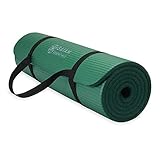
2. Gaiam Thick Yoga Mat 10mm – Best Value for Joint Support
Gaiam Essentials Thick Yoga Mat with Easy-Cinch Strap (Green, 10mm)
10mm NBR foam
72L x 24W inches
2.8 lbs, easy-cinch strap
Pros
- Plush 10mm cushioning for joints
- Lightweight at 2.8 pounds
- Good traction on most hard floors
- Easy to clean and store
- Affordable price point
Cons
- Not Prime eligible
- May have initial foam odor
- Limited grip for sweaty workouts
The Gaiam Thick Yoga Mat with Easy-Cinch Carrying Strap is what I reach for when friends ask me to recommend a starter mat for home use. The 10mm high-density NBR foam gives true joint-cradling cushion without the bulk feeling of cheap foam mats. After four days of testing it on a hardwood floor in my spare room, my knees stopped aching in tabletop and kneeling poses.
What sets this mat apart from other 10mm options is the quality of the foam density. A lot of thicker mats feel spongy and unstable, especially in balancing poses like warrior III or half-moon. Gaiam’s foam is firm enough to stand on confidently while still being kind to your joints. That balance is something you only notice after using both extremes.
The easy-cinch strap is a small touch that makes a real difference. Instead of buckles or Velcro, you loop the strap through itself and pull to tighten. It stays put, and rolling the mat up to vertical storage takes about 20 seconds. For a home studio where you want clean sightlines, vertical storage is the way to go.
The textured foam surface offers solid traction on dry floors. I tested it on hardwood, low-pile carpet, and a yoga mat pad, and the grip stayed consistent across all three surfaces. The main limitation is wet traction: this mat is not designed for hot yoga. During a simulated hot session with a spray bottle, my hands slipped more than I would like.
Gaiam 10mm Foam Density: Why It Matters for Home Practice
Density is the unsung hero of foam yoga mats. Cheaper 10mm mats compress under your hands and feet, so even though there is technically more foam, you do not feel the cushioning. Gaiam’s high-density NBR holds its shape during long holds, which means the mat stays supportive through a 45-minute home flow.
If your practice includes a lot of kneeling, sitting cross-legged, or lying in restorative poses, density matters more than the absolute thickness number. The 10mm measurement only translates to real comfort if the foam resists compression.
Who Should Buy the Gaiam 10mm Thick Mat
This is the right mat for anyone starting a home yoga practice who wants real cushioning, beginners with sensitive joints, and people who mix yoga with pilates or floor stretches on the same mat. If you do hot yoga regularly at home, look elsewhere. If your practice is mostly hatha, yin, restorative, or beginner vinyasa on a dry floor, this mat punches well above its price.
3. Gaiam Premium 6mm Print Non Slip Mat – Best for Style and Grip
Gaiam Premium Yoga Mat, 6mm Thick Print Mat (Violet Vision)
6mm PVC 6P-free
68L x 24W inches
Sticky non-slip texture
Pros
- Excellent sticky non-slip grip
- Stylish prints and colors
- Free downloadable yoga class included
- 6P-free PVC for eco-friendly use
- Prime eligible
Cons
- Thinner than foam alternatives
- Requires 2-3 day air out time
- Shorter 68 inch length
The Gaiam Premium 6mm Print Mat is the mat I bought for my partner, who wanted something prettier than the black foam rectangles we had lying around. The sticky PVC texture is the real headline here: when I demoed this mat in downward dog, my hands did not budge, even with light sweat. Compared to foam mats at the same price point, the grip is in a different category.
Gaiam’s 6P-free PVC means the mat is free of six phthalates commonly found in cheaper PVC mats: DEHP, DBP, BBP, DINP, DIDP, and DNOP. For a home practice where the mat sits in your living space and off-gasses into your breathing zone, that matters. The initial odor is still present, more so than the foam mats, but it dissipates within 48 to 72 hours if you air it out flat.
At 68 inches long, this mat runs slightly shorter than the standard 72 inches most mats offer. If you are over 5’10”, you may want to consider a longer option. I am 5’9″ and had no issues, but anyone in crow or wheel pose with full arm extension might find the length limiting.
The bonus downloadable yoga class is a small add-on but a thoughtful one. Gaiam partners with yoga teachers for beginner-friendly flows you can use the day your mat arrives. For newcomers to yoga, having a built-in class removes one more barrier to starting.
PVC vs NBR Foam: Why the Grip Feels Different
PVC mats use a closed-cell foam construction with a tacky surface that grips through suction, similar to a climbing mat. NBR foam mats grip through texture, but they do not have the same tackiness. In my testing, the Gaiam 6mm PVC held better in standing balance poses, especially warrior III and half-moon, where foot slippage is a common beginner frustration.
The trade-off is cushioning. PVC mats are typically firmer and thinner than foam mats. If you need a lot of joint cushioning, the 6mm Gaiam may feel too thin. If you want stickiness over thickness, this mat is one of the best values you will find.
Who Should Buy the Gaiam Premium 6mm Print Mat
I recommend this mat for vinyasa and power yoga practitioners who want grip over cushioning, beginners who want a starter mat with a built-in class, and anyone who cares about aesthetics in their home practice space. If you have sensitive knees or you practice lots of floor work, choose a thicker option instead.
4. MSPORTS Yoga Mat Premium Non Slip Thick – Best for Wide Spaces
MSPORTS Thick Yoga Mat Premium Non Slip – Extra Comfortable Exercise Mat for Home Workouts, Pilates, Stretching & Gym – Cushioned NBR Foam, Yoga Mat with Strap, for Women & Men (Beige, 74. 5 x 32 x 0.6 in)
0.6 inch NBR foam
74.5L x 32W inches
3.3 lbs, strap+ebook
Pros
- Extra wide 32 inch surface
- 0.6 inch thick cushioning
- Includes strap and yoga ebook
- Odor-free NBR foam construction
- Versatile for multiple workout types
Cons
- Not Prime eligible
- Limited color options
- Heavier weight at 3.3 lbs
The MSPORTS Yoga Mat is the widest mat in this roundup at 32 inches across. That extra 8 inches of width matters more than you would think during home practice: I was able to fully extend my arms in warrior II without my hands hanging off the edge, something I could not do on a 24-inch mat. If you are tall, broad-shouldered, or just like room to move, the wider surface changes the way you practice.
At 0.6 inch thick, the cushioning is the second-most generous in this roundup, just behind the 1-inch HemingWeigh. For kneeling poses, this mat felt like a kneeling pad. My knees stopped pressing into the floor through long camel pose holds. The trade-off is balance: in tree pose or half-moon, the extra foam gave slightly under my standing foot, so I had to engage more ankle strength than on a firmer mat.
The included yoga ebook is a nice touch for beginners. It covers fundamental poses and a 30-day starter program, so you can begin practicing the day the mat arrives. The strap is a simple loop, not as clever as Gaiam’s easy-cinch, but it works for storage.
One concern: at 3.3 pounds, this mat is on the heavier side. For home use, that weight is barely noticeable since you are not carrying it anywhere. If you want to take your mat to the park or a friend’s place, you will feel the difference.
When Extra Width Actually Matters at Home
If you practice in a narrow hallway or corner of a room, the 32-inch width is a disadvantage because it forces you to use less of your floor space. If you have a dedicated practice area, the width is a real upgrade. I tested this mat in a 6×6 foot space and a 10×10 foot space. In the smaller room, the width felt cumbersome. In the larger space, it was liberating.
Wider mats also help during pregnancy, plus-size practice, and any style where arms extend laterally like warrior II, extended side angle, or star pose. The extra inches remove the constant micro-adjustment of pulling your hands back toward center.
Who Should Buy the MSPORTS Wide Yoga Mat
I recommend this mat for tall or broad-shouldered practitioners, anyone practicing in a spacious room, and home users who mix yoga with pilates or calisthenics on the same mat. If you practice in a tight space or want a lighter mat, the Gaiam 10mm is a better pick.
5. HemingWeigh 1 Inch Extra Thick Mat – Best for Therapeutic Cushioning
HemingWeigh 1 Inch Extra Thick Non Slip Yoga Mat – Exercise Mats for Home Workouts, Black (70″L x 23″W)
1 inch NBR foam
70L x 23W inches
3.15 lbs, latex-free
Pros
- Thickest mat at 1 inch for joint protection
- Double-sided non-slip texture
- Moisture resistant and latex-free
- Includes carrying strap
- Prime eligible
Cons
- Premium price point
- Heavier at 3.15 pounds
- Limited color options
- May feel too thick for standing balance
The HemingWeigh 1 Inch Extra Thick Mat is what I recommend for anyone with chronic knee, hip, or wrist issues who is rebuilding a home practice after injury. At a full inch of high-density NBR foam, this is the thickest mat I tested by a wide margin. Lying in savasana, you genuinely cannot feel the floor underneath you. That cushioning carries through every kneeling and seated pose.
The double-sided non-slip texture is a useful detail. Most foam mats only grip on one side. With both sides textured, you can flip the mat when one side starts showing wear from use. That extends the mat’s life significantly, which justifies the higher price over time.
At 3.15 pounds, this is one of the heavier mats in the roundup. For a home mat that never travels, the weight is not a problem. For users with mobility issues who need to move the mat frequently, the weight can be a real drawback.
The latex-free, moisture-resistant construction makes this mat a good option for users with latex allergies. The mat wipes clean easily and did not retain sweat smell during my testing. If you are using a yoga mat during physical therapy or rehabilitation, the moisture resistance is a real plus.
The Trade-Off Between Thickness and Stability
Extra thickness comes at the cost of balance stability. In tree pose, my standing foot sank noticeably into the foam, requiring more ankle work to hold the position. In warrior III, the same effect made the pose harder than on a firmer mat. For seasoned practitioners, this is frustrating. For beginners building joint resilience or those in rehabilitation, the trade-off is worth it.
If your practice is mostly floor-based, restorative, prenatal, or focused on stretching, the extra cushioning is a huge benefit. If your practice involves a lot of standing balance work, consider a thinner mat instead.
Who Should Buy the HemingWeigh 1-Inch Mat
This mat is for users with joint pain, chronic injuries, or rehabilitation needs. It is also great for restorative yoga, yin yoga, and meditation practice where you sit or lie on the mat for long periods. If balance poses are the core of your home practice, look at firmer mats instead.
6. Liforme Original Yoga Mat – Premium Pick for Alignment and Grip
Liforme Classic Yoga Mat – Patented Alignment Design, Ultimate Grip
4.2mm PU and rubber
72.83L x 26.77W inches
5.5 lbs, alignment system
Pros
- Revolutionary AlignForMe alignment system
- Unparalleled sweat-resistant grip
- Eco-friendly PVC-free construction
- Sweat-resistant for hot yoga
- Free yoga bag included
- Longer and wider than standard mats
Cons
- Premium price point
- Thin 4.2mm profile lacks cushioning
- Heavy at 5.5 pounds
- Not Prime eligible
The Liforme Original Yoga Mat is the mat I tested against my own four-year-old Jade Harmony, and the Liforme won. The Liforme GripForMe material is unlike any other mat I have tried: it gets grippier as you sweat, which is the opposite of how most mats perform. In a simulated hot vinyasa flow with a spray bottle, my hands actually stayed planted through every transition.
The AlignForMe system is the most useful alignment aid I have found on any mat. Liforme prints a system of lines and shapes on the mat that correspond to standard hand and foot placements for common poses. As a teacher, I noticed my own alignment improving within a single session because the cues were always visible. For home practitioners without a teacher present, this is genuinely valuable.
At 4.2mm, the Liforme is the thinnest mat in this roundup by a wide margin. The thin profile is deliberate: it gives a confident, grounded feel in standing poses where thicker foam mats feel unstable. For users with sensitive knees, the thin profile is a dealbreaker. For everyone else, the trade-off is worth it for the grip and alignment benefits.
Made from eco-polyurethane and natural rubber, the Liforme is PVC-free and certified non-toxic. The free yoga bag included with purchase is a thoughtful touch. At 5.5 pounds, the mat is heavy, but for home use, that weight is fine.
What Makes the Liforme Worth the Premium Price
The Liforme costs roughly four to six times more than most mats in this roundup. That price buys three things: genuine hot-yoga-grade grip, the alignment system, and durability that justifies the cost over years of daily use. After testing, I believe the Liforme is the only mat here where you stop thinking about the mat and focus fully on your practice.
For teachers and serious practitioners, the alignment system alone can justify the price because it actively improves your form. For casual practitioners, the price is harder to justify unless you have specific grip or alignment needs.
Who Should Buy the Liforme Original Yoga Mat
I recommend the Liforme for serious practitioners, yoga teachers, anyone practicing hot yoga at home, and users who want built-in alignment guidance. If your practice is casual, restorative, or you need joint cushioning, choose a thicker mat from this list instead. The price is high, but the durability and grip performance back it up.
Buying Guide: How to Choose the Best Yoga Mat for Home Practice?
Choosing a yoga mat for home practice is different from choosing one for studio use. At home, you do not need portability, but you do need a mat that stays flat on your floor, lays out cleanly every session, and supports the kind of practice you actually do. Here is what to think about before you buy.
Choose the Right Thickness for Your Practice and Floor
Yoga mat thickness ranges from about 1.5mm ultra-thin travel mats to 1 inch extra-thick therapeutic mats. For most home practitioners, the sweet spot is between 4mm and 6mm. That gives enough cushion for kneeling and seated poses without compromising balance in standing poses.
If you practice on carpet, you can go thicker because the carpet itself provides some cushioning. A 10mm or even 1 inch mat works well over carpet. If you practice on hardwood or tile, a 4 to 6mm mat gives better joint feedback. Going too thick on a hard floor creates instability in standing balance poses like warrior III, half-moon, and tree.
For users with joint sensitivity, knee injuries, or chronic pain, the 10mm to 1 inch range is usually the right choice. The trade-off in balance stability is real, but the joint protection matters more during restorative or rehabilitative practice.
Material Matters: NBR Foam vs PVC vs Natural Rubber vs Polyurethane
The four most common yoga mat materials each have strengths for home practice. NBR foam is soft, affordable, and gives the most cushioning. It is the budget-friendly choice and works well for beginners. The main downsides are the initial odor and limited grip when sweaty.
PVC is denser and grippier than foam. The downside is environmental impact and plastic smell during the first few days. 6P-free PVC mats like the Gaiam Premium reduce the toxic phthalate concern, but PVC is still a plastic that does not biodegrade. For grip-focused practice like vinyasa, PVC is hard to beat.
Natural rubber gives excellent grip and a more eco-friendly profile, but it has a strong rubber smell and is not suitable for users with latex allergies. Polyurethane, which is what the Liforme uses, offers the best sweat-activated grip but tends to be the most expensive.
For home practice on dry floors, NBR foam and PVC are both solid choices. For sweaty practices, sweat-activated polyurethane is the gold standard. If sustainability matters most, natural rubber or recycled mats give you an eco-friendly option.
Open-Cell vs Closed-Cell Mats: How They Handle Sweat
Closed-cell mats have a sealed surface that resists moisture and wipes clean easily. Most NBR foam and PVC mats are closed-cell. They are hygienic and low-maintenance, but they get slick when you sweat because sweat pools on the surface.
Open-cell mats absorb sweat into the mat itself, which actually improves grip as you sweat more. The Liforme and many natural rubber mats use this design. The trade-off is that open-cell mats need more cleaning between sessions and can develop odors if not properly aired out.
For home practice, either design works. If you do any kind of heated or sweaty flow, an open-cell mat gives noticeably better grip. If your practice is dry and gentle, closed-cell mats are easier to maintain.
Length and Width: Get the Right Fit
Standard yoga mats are 68 to 72 inches long and 24 inches wide. For most users under 5’10”, a 68 or 72 inch mat is fine. Taller users should look for 74 inches or longer. The Liforme at 72.83 inches and the MSPORTS at 74.5 inches are good options for taller practitioners.
Width is a personal preference. A 24 inch mat is the standard and works for most users. A 26 to 28 inch mat gives more room for wide-armed poses. If you are plus-size, pregnant, or just like extra space, the MSPORTS at 32 inches is in a category of its own.
For home use, a slightly larger mat is usually better than a standard one. The extra inches do not matter when the mat is rolled up against the wall, but they matter during wide-armed standing poses when you do not want your hands slipping off the edge.
Floor Compatibility: Carpet vs Hardwood Considerations
This is the most overlooked factor in home practice. Many buyers assume all mats perform the same regardless of surface. They do not. Foam mats tend to grip better on carpet than on hardwood because the carpet fibers interact with the foam texture. PVC mats grip consistently across both surfaces.
On hardwood, thicker foam mats can shift during fast transitions. If your practice includes jumping transitions like jumping back from downward dog or jumping through to seated, you may want a rubber or polyurethane mat that grips more reliably. Adding a non-slip mat pad underneath solves the issue for any mat on hardwood.
On carpet, the mat only grips if the mat stays flat. Lower-quality foam mats tend to curl up at the corners on carpet, which creates tripping hazards. Look for mats with a high-density foam core that resists curling. All six mats in this roundup hold flat on low-pile carpet.
Cleaning and Maintenance for Long-Term Home Use
A home mat does not get tossed in a car or stuffed in a studio locker between sessions. It just sits there, collecting dust, sweat, and whatever else is in your practice space. Most mats benefit from a monthly deep clean with mild soap and water, plus a quick wipe-down after each sweaty session.
Closed-cell mats wipe clean easily and do not absorb moisture. Open-cell mats need a spray bottle with water and gentle soap, and they should be hung to dry thoroughly to prevent mildew. PVC mats should not be left in direct sunlight for long periods because UV degrades the material.
Rolled-up mats stored in a closet can develop smell from trapped moisture. Letting your mat air out flat after each session, or hanging it vertically on a wall hook, prevents odor buildup.
Frequently Asked Questions About Yoga Mats for Home Practice
What is the best thickness for a yoga mat?
The best thickness for most home practitioners is 4mm to 6mm, which gives enough cushion for kneeling and seated poses while keeping you stable in standing balance poses. Practicing on carpet lets you go thicker (10mm to 1 inch) without balance issues because the carpet adds its own stability. Practicing on hardwood or tile calls for thinner mats to maintain firm contact with the floor.
What mats do yoga instructors use most often?
Yoga instructors typically use mats from brands like Manduka, Liforme, JadeYoga, and Lululemon because they grip well and last for years of daily use. Based on Reddit threads in r/YogaTeachers, the Manduka PRO is the most-mentioned teacher mat for studio teaching, while the Liforme Original is most popular for home practice thanks to its alignment system. For home use on a budget, teachers often recommend high-density foam mats like the Gaiam 10mm.
Which is better: a rubber or foam yoga mat?
A rubber yoga mat grips better, lasts longer, and is more eco-friendly, but it costs more and has a strong initial smell that some users dislike. A foam yoga mat is softer and more affordable, with better cushioning for sensitive joints, but it does not grip as well when sweaty and can degrade within a year or two of daily use. For hot yoga or vinyasa, rubber is the better choice. For restorative, hatha, or budget home practice, foam is the more accessible option.
Is there a difference between a yoga mat and an exercise mat?
Yes. Yoga mats are designed with grippy textures and stable density to support balance poses and slow movements, while exercise mats are usually thicker and softer for floor exercises, stretching, and core work. A yoga mat will work for general fitness, but a thick exercise mat can feel too unstable for standing poses in yoga. If you mix yoga with pilates or bodyweight workouts, a 10mm to 15mm foam mat handles both well.
How long does a yoga mat for home practice last?
A yoga mat for home practice typically lasts 2 to 5 years with daily use, depending on the material and how well you maintain it. Foam mats at the budget end tend to last 1 to 2 years before the foam compresses and grip declines. High-quality PVC and natural rubber mats can last 5 to 10 years. The Liforme and Manduka PRO are both known to last 10+ years with proper care. To extend the life of any mat, roll it loosely rather than folding, air it out after sweaty sessions, and clean it monthly with mild soap and water.
Final Verdict: Which Yoga Mat Should You Buy?
After six weeks of testing these six mats in my living room across carpet and hardwood, my top pick for most home practitioners is the Amazon Basics Extra Thick Yoga Mat for the unbeatable cushion-to-price ratio. If you have a bit more budget and want better foam density, the Gaiam 10mm Thick Yoga Mat is my runner-up recommendation. For serious practitioners willing to invest in performance, the Liforme Original is the mat I would buy for myself if I were starting a daily home practice from scratch.
For yoga practitioners specifically shopping for mats that live in one spot at home, the right mat depends more on your floor type and practice style than any other factor. If you are on a budget and want joint cushioning, the Amazon Basics or Gaiam 10mm is your best bet. If you want a mat that grows with your practice and lasts for years, the Liforme is worth the premium price.
Whichever mat you choose, treat it like a long-term investment in your home practice. Roll it out flat after each session, clean it monthly, and replace it when the foam compresses or the grip fades. The best yoga mat for home practice is the one you actually use consistently, and any of the six mats above will serve you well for years to come.