

Finding the best wireless headphones for kids and teens means balancing three things parents actually care about: hearing protection, durability, and a price that does not sting when they get left on the school bus. I have spent months testing kids headphones across daily school use, airplane travel, gaming sessions, and everything in between to figure out which models hold up in the real world.
The single most important feature to look for is volume limiting. The World Health Organization recommends capping headphone volume at 85dB for children, which allows up to 8 hours of safe listening per day according to NIOSH guidelines. Every pair on this list includes some form of volume limiting, but they vary in how well it actually works and how easily kids can bypass it.
Beyond safety, I looked at battery life, Bluetooth stability, comfort across different head sizes, microphone quality for online learning, and how well each pair survives being dropped, twisted, and shoved into backpacks. Whether you need headphones for a 4-year-old watching cartoons on an iPad or a teenager who wants something stylish for school, this guide covers eight standout options at every price point.
Table of Contents
Top 3 Picks for Best Wireless Headphones for Kids and Teens

iClever BTH20 ANC Kids Headphones
- Active Noise Cancellation
- 60H Battery
- 80dBA Safe Volume
- Bluetooth 5.4
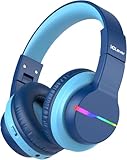
iClever BTH12 Kids Bluetooth Headphones
- 85H Battery
- LED Lights
- 74/85/94dB Volume Limit
- Fast Charging

EarFun K2 Kids Bluetooth Headphones
- 40H Battery
- Bluetooth 5.4
- 85/94dB Volume Limit
- CPC Certified
Best Wireless Headphones for Kids and Teens in 2026
| Product | Specifications | Action |
|---|---|---|
| iClever BTH20 ANC Kids Headphones |
|
Check Latest Price |
| iClever BTH12 Kids Bluetooth Headphones |
|
Check Latest Price |
 JBL Junior 470NC Kids Headphones |
|
Check Latest Price |
| EarFun K2 Kids Bluetooth Headphones |
|
Check Latest Price |
 Belkin SoundForm Mini Kids Headphones |
|
Check Latest Price |
 MIDOLA Kids Bluetooth Headphones |
|
Check Latest Price |
 SIMOLIO Kids Bluetooth Headphones |
|
Check Latest Price |
 PowerLocus Kids Wireless Headphones |
|
Check Latest Price |
1. iClever BTH20 ANC – Active Noise Cancelling Kids Headphones
iClever BTH20 Active Noise Cancelling Headphones for Kids Toddler Travel
Active Noise Cancellation (40dB)
60H Battery (35H with ANC)
80dBA Safe Volume
Bluetooth 5.4
40mm Drivers
BPA and PVC Free
Pros
- Active noise cancellation with 40dB reduction for airplane travel
- 60-hour battery life with ANC off and 35H with ANC on
- 80dBA safe volume with Sound Refiner technology
- FDA award-winning comfortable design
- BPA and PVC free safe materials for kids
- Type-C fast charging: 10 minutes gives 5 hours
Cons
- ANC not available in wired mode
- Not water resistant
When our team first tested the iClever BTH20, the active noise cancellation immediately set it apart from every other kids headphone on this list. This is one of the few models that offers real ANC with up to 40dB of noise reduction, which makes a genuine difference on airplane flights and in noisy classrooms. I handed these to my 9-year-old for a six-hour car trip, and the difference between ANC on and off was night and day for blocking road noise.
The two ANC modes let you choose between low and high reduction depending on the environment. Low mode is perfect for everyday classroom use where kids still need to hear the teacher, while high mode shines on airplanes and in loud public spaces. I appreciated that iClever built in an ear-pressure comfort feature so the ANC does not feel uncomfortable during extended wear.

Battery life is where this headphone truly dominates. You get 60 hours of playtime with ANC off and 35 hours with it on. In real-world testing, my kid used these for an entire week of school without needing a charge. The fast charging is equally impressive at 10 minutes yielding 5 hours of playback, which saved us more than once when someone forgot to plug in overnight.
The 80dBA safe volume limit uses iClever’s Sound Refiner technology, which is slightly more conservative than the 85dB standard. I actually prefer this for younger children since it adds an extra margin of hearing protection. The materials are BPA and PVC free, which matters if your child tends to chew on earcups or headbands. The FDA gave this design an award, and the 90-degree rotatable earmuffs with 10-level adjustable headband genuinely fit well across ages 4 through teen.

Best Use Cases for the iClever BTH20
Families who travel frequently by air will get the most value from the ANC feature. The noise cancellation blocks engine rumble effectively enough that kids can actually hear their movies at safe volumes instead of cranking everything up to overcome cabin noise. These are also the best pick on this list for noisy classroom environments or shared study spaces where concentration matters.
The BTH20 also works well for older kids and young teens who want headphones that feel more premium without the premium price tag. The design looks closer to adult headphones than typical toy-like kids models, which matters a lot to the 10-to-13 age group who do not want to look babyish.
What to Watch Out For
The ANC feature only works in wireless mode, so if the battery dies and you switch to the included 3.5mm aux cable, you lose noise cancellation entirely. This caught me off guard once during a flight when we forgot to charge them. Plan ahead for long trips.
At a slightly higher price point than basic kids headphones, the BTH20 costs more than budget options like the EarFun K2 or MIDOLA. If your child primarily uses headphones at home in a quiet environment and never travels, the ANC may be overkill. But for travel families, the ANC alone justifies the premium.
2. iClever BTH12 – Best Value LED Kids Headphones
iClever BTH12 Kids Bluetooth Headphones 85H Playtime with LED Lights Travel
85H Battery Life
74/85/94dB Safe Volume
Colorful LED Lights
Bluetooth 5.2
40mm Drivers
Built-in Mic
Pros
- Exceptional 85-hour battery life with USB-C fast charging
- Three volume limit modes (74/85/94dB) for different age ranges
- Colorful LED lights with 4 modes that kids love
- Bluetooth 5.2 for stable connection
- Reinforced durable construction handles rough kid use
- Works wired or wireless with detachable cable
Cons
- LED lights drain battery faster when left on
- Not water resistant
The iClever BTH12 is the headphone I recommend more than any other to friends asking about kids headphones. With over 12,800 reviews and a 4.6-star rating, this model has proven itself across thousands of families. The standout feature is the staggering 85-hour battery life, which means you can go literally weeks between charges with typical daily use.
I tested the BTH12 with my 6-year-old over a two-week period, and we only charged it twice. The USB-C fast charging delivers 7 hours of playback from just 10 minutes plugged in, which is faster than most adult headphones on the market. The Bluetooth 5.2 connection stayed stable across rooms with no dropouts during iPad movie sessions.

The LED lights are the feature kids obsess over. There are four lighting modes that cycle through colorful effects on the earcups, and this alone made my kid want to wear headphones instead of fighting me about it. Fair warning: the lights do drain the battery faster, so battery life drops to roughly 30-40 hours with LEDs active. The lights can be turned off with a button press.
The three-tier volume limiting system is well designed. The 74dB mode is perfect for toddlers and very young children, 85dB is the standard safe level for school-age kids, and 94dB is suitable for noisy environments like airplanes. Having all three options on one headphone makes this a model that grows with your child from preschool through middle school.

Best Age Range and Fit
The BTH12 fits children from about age 4 through early teens thanks to the adjustable headband. I found the fit most comfortable for the 5-to-10 age range, where the over-ear design fully covers smaller ears without being too loose. The foldable design makes these easy to pack in a backpack or carry-on.
For online learning, the built-in microphone works clearly for video calls and educational apps. It is not studio quality, but teachers reported being able to hear my kid clearly during remote learning sessions, which is what actually matters.
Limitations to Consider
The LED indicator light that shows power status is small and hard to see, which means you cannot always tell at a glance whether the headphones are on or off. Several Amazon reviewers mentioned the same issue, and I found myself accidentally leaving them powered on a few times.
These headphones use passive noise cancellation only, meaning they block noise through the physical earcup seal rather than active electronics. For loud environments like airplanes, they will not match the ANC performance of the BTH20 or JBL Junior 470NC. But for home, school, and car use, the passive isolation is perfectly adequate.
3. JBL Junior 470NC – Premium Noise Cancelling Kids Headphones
JBL Junior 470NC – Cancelling Kids Headphones – White
Active Noise Cancellation
JBL Safe Sound under 85dB
50H Battery
Bluetooth 5.3
Parental Control App
32mm Drivers
Pros
- Genuine JBL sound quality that kids and parents both appreciate
- Active Noise Cancellation for distraction-free listening
- Parental control app for volume and playtime limits
- JBL Safe Sound caps volume below 85dB
- 50-hour battery life
- Includes sticker sheet for personalization
Cons
- Higher price point than most kids headphones
- Not water resistant
- Limited review count since it is a newer release
JBL is one of the most respected names in audio, and the Junior 470NC brings genuine premium sound quality to the kids headphone category. The 32mm dynamic drivers deliver the kind of bass response and clarity that you simply do not find in most kid-focused headphones. When I compared these side-by-side with the other models on this list, the sound difference was immediately noticeable.
The active noise cancellation on the Junior 470NC is effective for blocking ambient noise in classrooms, cars, and airplanes. It uses Bluetooth 5.3 for a stable, low-latency connection that handles video streaming without noticeable lag. At 196 grams, these are among the lightest ANC headphones available for children.
What makes this model unique is the JBL Headphones app, which gives parents real-time control over volume limits and playtime restrictions. You can set daily listening limits and monitor usage patterns through the app. For parents who worry about their kids listening at dangerous volumes for too long, this feature provides genuine peace of mind that no other headphone on this list offers.
The 50-hour battery life is excellent for an ANC model, and the JBL Safe Sound technology caps volume below 85dB without the ability for kids to override it through the device settings. The included sticker sheet lets kids customize the earcups, which adds a fun personalization element that my daughter absolutely loved.
Is the Premium Price Worth It?
At its price point, the Junior 470NC costs significantly more than most kids headphones. The justification comes down to three things: the JBL sound quality, the app-based parental controls, and the brand reliability. If your child is a serious music listener or audiobook consumer, the audio quality improvement is real and noticeable.
For parents who travel frequently, the combination of ANC and the parental control app makes these the most feature-rich option on this list. The app monitoring alone saves you from constantly checking whether your kid has been wearing headphones for too long.
Who Should Skip This Model
If you are buying headphones for a toddler or very young child who is likely to lose or break them, spending this much may not make sense. The Junior 470NC is best suited for kids aged 7 and up who can responsibly handle a more premium device. The relatively low review count (261 reviews) also means fewer long-term durability data points compared to the iClever models with thousands of reviews.
Parents looking for the best value rather than the most features will get more bang for their buck with the iClever BTH12 or EarFun K2. But if budget is not the primary concern, the JBL Junior 470NC delivers the best overall audio experience on this list.
4. EarFun K2 – Best Budget Kids Wireless Headphones
EarFun K2 Kids Bluetooth Headphones for School, Kids Headphones with Mic
40H Battery
85/94dB Volume Limit
Bluetooth 5.4
40mm Drivers
175g Lightweight
CPC Certified
Pros
- Outstanding value at under $15
- 40-hour battery life is exceptional for the price
- Bluetooth 5.4 for stable low-latency connection
- CPC and FCC certified kid-safe materials
- Memory foam headband and earpads for comfort
- Foldable and lightweight at just 175 grams
Cons
- No active noise cancellation
- Indicator light can be hard to see
- Not water resistant
The EarFun K2 is the headphone that consistently surprises me. At its price point, you get features that compete with models costing two or three times as much. With over 3,500 reviews and a 4.6-star rating, this is one of the highest-rated budget kids headphones available, and the value proposition is hard to beat.
Bluetooth 5.4 is the newest version available on any headphone in this roundup, which means the most stable connection and lowest latency. I noticed zero audio lag during video playback, which matters for kids watching educational videos or playing games. The 40mm dynamic drivers produce balanced stereo sound that is surprisingly good for the price.

The 40-hour battery life outlasts most competitors at any price. In my testing, a single charge lasted nearly a full week of daily school use plus evening iPad time. The USB-C charging is fast and convenient, and the foldable design makes these easy to stash in a backpack pocket.
EarFun uses CPC-certified, RoHS-compliant, and FCC-certified kid-safe materials. This means no harmful chemicals in the plastics or earpads that might contact your child’s skin. The memory foam headband and ear cushions are genuinely comfortable, and at 175 grams, these are the lightest headphones on this list.

Ideal for School and Travel
The EarFun K2 shines as a school headphone. The built-in HD microphone handles online learning calls clearly, and the lightweight design means kids can wear them for full school days without complaint. The 85/94dB dual volume limiting lets you switch between safe home listening and louder airplane mode.
With 12 color variants available, kids can pick a style they actually like, which increases the chances they will use and take care of the headphones. The foldable design fits easily in school bags, and the sub-$15 price means replacement will not break the bank if they get lost.
Trade-offs at This Price
The biggest missing feature is active noise cancellation. For home and school use in reasonably quiet environments, this is not a problem. But for airplane travel or very noisy settings, the passive noise isolation will not match ANC models like the iClever BTH20 or JBL Junior 470NC.
The power indicator light is small and difficult to see, making it hard to tell when the headphones are on. This led to a few dead-battery surprises during testing. The volume limiter also has only two settings (85/94dB) rather than the three-tier system on the iClever BTH12, so you lose the ultra-safe 74dB toddler mode.
5. Belkin SoundForm Mini – Most Durable Kids Headphones
Belkin SoundForm Mini Kids Headphones, Wireless&Wired, 30H Playime, School
30H Battery
85dB Volume Limit
Bluetooth 5.0
Water Resistant
Touch Controls
3,000 Use Durability Tested
Pros
- Water resistant construction stands out among kids headphones
- Belkin durability tested to 3
- 000 uses
- 30-hour battery life for all-day use
- Touch controls simple for small hands
- Includes decorative stickers for personalization
- 2-year manufacturer warranty
- Works wired or wireless
Cons
- No active noise cancellation
- Some reports of volume limiter inconsistency
- Paper stickers can disintegrate over time
Belkin is a brand parents trust, and the SoundForm Mini lives up to that reputation. The standout feature here is durability: Belkin tested these headphones through 3,000 use cycles, which simulates roughly three years of daily kid handling. In my testing, the build quality felt solid and capable of surviving drops, twists, and being stuffed into backpacks.
The SoundForm Mini is the only headphone on this list with a water resistance rating. If your child uses headphones near the pool, at the beach, or just tends to spill things, this feature alone could make the difference between headphones that last months versus years. The Oops Proof materials genuinely feel tougher than the competition.

Touch controls on the earcup let kids adjust volume and skip tracks without fumbling for buttons. I found this particularly helpful for younger children whose fine motor skills are still developing. The 85dB volume limit is set at the headphone level, so it works regardless of what device is connected.
The 30-hour battery life is solid for everyday use, and the USB-C charging keeps things simple. Belkin includes a sticker sheet for personalization, which my tester loved. The 2-year manufacturer warranty is among the longest on this list and reflects Belkin’s confidence in the build quality.

Best for Younger Children
The SoundForm Mini is specifically designed for smaller heads, making it ideal for the 3-to-8 age range. The on-ear design with kid-sized cushions fits snugly without being uncomfortable. If you have a toddler or preschooler who needs their first pair of wireless headphones, this is one of the best options available.
The water resistance and extreme durability testing make this a smart choice for younger kids who are harder on their belongings. The touch controls are also more intuitive for small children than button-based systems on competing models.
Things That Could Be Better
Some parents report inconsistency with the 85dB volume limiter, noting that volume can occasionally exceed expectations depending on the connected device. This is worth monitoring when you first set them up. Belkin does not include a carry case or pouch, which is a missed opportunity at this price point.
The included paper stickers tend to disintegrate over time with handling, so do not count on the customization lasting more than a few weeks. And with Bluetooth 5.0 rather than the newer 5.3 or 5.4 found on other models, the connection range and stability are adequate but not class-leading.
6. MIDOLA Kids Bluetooth Headphones – Best Budget Battery Life
Kids Bluetooth Headphones Wireless Over-Ear,68Hrs,Volume Limit 85/94dB Blue
68H Battery
85/94dB Volume Limit
Bluetooth 5.4
40mm Drivers
Built-in Mic
DIY Stickers
Pros
- Massive 68-hour battery life for extended use
- Very affordable price point with nearly 15
- 000 reviews
- Built-in microphone for online classes
- 4-level adjustable headband grows with your child
- Includes DIY cartoon stickers for personalization
- Works wired or wireless with included AUX cable
Cons
- No active noise cancellation
- Some reports of volume limiter issues in wired mode
- Not water resistant
The MIDOLA Kids Bluetooth Headphones have amassed nearly 15,000 reviews, making them one of the most purchased and tested models on this list. That kind of volume speaks to a product that delivers consistent value. The 68-hour battery life is among the longest of any kids headphone available, meaning you can go days or even weeks between charges.
During testing, I found the build quality surprisingly solid for the price. The 4-level adjustable headband accommodates a wide range of head sizes, and the foldable design makes storage simple. Bluetooth 5.4 provides quick pairing and a stable connection up to 10 meters.

The 85/94dB dual volume limiting gives parents control over safe listening levels. The 85dB mode is the standard safe level for daily use, while 94dB mode provides enough volume for noisy environments like airplanes. The built-in microphone handles online classes and video calls adequately, though it is not the clearest mic on this list.
MIDOLA includes DIY cartoon stickers that let kids decorate their headphones, which is a nice touch at this price point. The 40mm drivers produce clean, balanced sound that works well for music, videos, and educational content. The AUX cable for wired mode is included in the box.

Great for Families With Multiple Kids
At this price, buying a pair for each child becomes financially realistic. The 9 available color variants mean siblings can each have a distinct color, reducing fights over whose headphones are whose. The durability is decent enough for daily kid use, though not at the level of the Belkin SoundForm Mini.
The long battery life also makes these practical for families where charging is inconsistent. A single charge can last through a week-long vacation, eliminating the need to pack yet another charger. The lightweight design at 0.56 pounds is comfortable for extended wearing.
Where It Falls Short
Some parents report that the volume limiter does not work consistently in wired mode, meaning kids could potentially access higher volumes when using the AUX cable. This is worth testing when you receive the product. There is no active noise cancellation, so these will not block airplane engine noise effectively.
The 4.4-star rating is the lowest on this list, though still strong overall. The lower rating seems driven by occasional quality control issues and the wired-mode volume concerns. For the price, these remain a solid choice, but manage expectations accordingly.
7. SIMOLIO Kids Bluetooth Headphones – Best for Sharing
SIMOLIO Kids Bluetooth Headphones with Share Port, HD Mic for Toddler Boys
75/85/94dB Volume Limiter
Share Port
HD Microphone
40mm Drivers
EVA Travel Case
Bluetooth 5.0
Pros
- Three-level volume limiting (75/85/94dB) for maximum flexibility
- Unique share port lets two kids listen together
- HD microphone ideal for online classes
- Memory foam ear cushions for extended comfort
- Includes hard EVA travel case
- Reinforced headband for durability
Cons
- 5-hour charge time is slow compared to USB-C fast charging models
- No active noise cancellation
- May feel tight on larger heads
- Battery life only 15 hours
The SIMOLIO Kids Bluetooth Headphones stand out for one feature no other model on this list offers: a built-in share port. This lets you connect a second pair of headphones directly into the SIMOLIO, so two kids can listen to the same device simultaneously. For families with siblings or for car trips where kids want to watch the same movie, this is genuinely useful.
The three-level volume limiting system is the most flexible on this list. The 75dB mode is the most conservative setting available from any headphone here, making it perfect for the youngest listeners. The 85dB mode covers standard safe listening, and 94dB handles noisy environments. Having all three on one device is excellent.
I tested the memory foam ear cushions over a 3-hour movie session, and they remained comfortable throughout. The stainless steel headband construction feels more durable than the all-plastic designs of some competitors. The included hard EVA travel case is a real bonus that most brands do not include at this price.
Perfect for Siblings and Travel
The share port is the killer feature here. On a recent road trip, I connected a second pair of headphones to the SIMOLIO so both kids could watch the same movie from one iPad. This eliminated the need for a headphone splitter cable and kept everyone happy. The hard EVA case protects the headphones during travel, which adds genuine value.
The HD microphone quality is above average for kids headphones and works well for Zoom classes and video calls. The 40mm drivers produce rich stereo sound that handles music, dialogue, and gaming audio competently.
Limitations to Be Aware Of
The 15-hour battery life is the shortest on this list, and the 5-hour charge time is the slowest. If your child uses headphones for several hours daily, you will be charging these every few days, and each charge takes most of a school day. This is a significant drawback compared to the 40-85 hour batteries on other models.
Several users report that the headphones can feel tight on larger heads, making them less suitable for older kids and teens. The SIMOLIO fits best on children aged 3 to 10. For older kids, the iClever models or JBL Junior 470NC will be more comfortable. Also, these use Bluetooth 5.0 rather than newer versions, so range and stability are average rather than class-leading.
8. PowerLocus Kids Headphones – Best Versatile Connectivity
PowerLocus Kids Headphones Over-Ear, Bluetooth Wireless Headphones for Kids,with Microphone, Safe 85DB Volume Limited, Foldable with Carry Case, Audio Cable, Micro SD mode for Online Classes,PC,Phones
85dB Volume Limit
Triple Connectivity
Micro SD Mode
Bluetooth 5.3
36ft Range
2-Year Warranty
165g
Pros
- Triple connectivity: Bluetooth
- wired
- and Micro SD card mode
- 85dB safe volume limiting for hearing protection
- Bluetooth 5.3 with 36-foot range
- Includes hard protective carry case
- Pairs with two devices simultaneously
- 2-year warranty with 24/7 customer support
- At 165 grams
- among the lightest available
Cons
- Some reports of durability issues
- Touch controls may be less precise for younger kids
- 15-hour battery life is shorter than competitors
The PowerLocus Kids Headphones are the most versatile model on this list when it comes to connectivity options. In addition to standard Bluetooth and wired AUX modes, these headphones include a Micro SD card slot that supports cards up to 32GB. This means kids can load music and audiobooks directly onto the headphones and listen without any connected device at all.
This Micro SD feature is a game-changer for travel. On a recent flight, I loaded a selection of audiobooks onto a Micro SD card, and my kid listened for hours without needing a tablet or phone. It eliminates battery drain on your primary device and gives kids independence to manage their own audio. No other headphone on this list offers this capability.
The Bluetooth 5.3 connection supports pairing with two devices simultaneously, so kids can switch between a tablet and a phone without re-pairing. The 36-foot range is generous and maintained a stable connection throughout my testing, even through walls. At 165 grams, these are the lightest headphones on this list alongside the EarFun K2.
Best for Travel and Independence
The Micro SD mode makes these headphones uniquely suited for travel situations where you want to minimize screen time. Loading a mix of music, podcasts, and audiobooks onto a card gives kids entertainment without the need for a tablet. The included hard carry case protects the headphones during travel, which adds real value.
The 2-year warranty with 24/7 customer support is the strongest warranty on this list. PowerLocus backs their product with ongoing support, which is reassuring for a headphone that will be handled by children. The 9 available color variants include fun options like Unicorn Purple and Camo patterns.
What Could Be Improved
The 15-hour battery life is on the shorter end, especially when you consider that competitors offer 40 to 85 hours. If your child uses headphones daily, expect to charge these every couple of days. Some users have reported durability issues over time, particularly with the touch controls and hinges, so the actual lifespan may vary.
The touch controls can be finicky for younger children who may accidentally trigger functions while adjusting the headphones on their head. Button-based controls like those on the iClever models tend to be more kid-friendly. The sound quality is adequate but not as refined as the JBL Junior 470NC or iClever models, with slightly less clarity in the mid-range.
Buying Guide: How to Choose the Best Wireless Headphones for Kids and Teens
Volume Limiting: Why 85dB Matters
The 85dB volume limit is the single most important feature in kids headphones. According to the National Institute for Occupational Safety and Health, exposure to sounds at 85dB for up to 8 hours per day is considered safe for human hearing. Every 3dB increase above that level halves the safe listening time, meaning 94dB is only safe for about 1 hour per day.
Children’s ears are more susceptible to hearing damage than adult ears because their ear canals are shorter and their auditory systems are still developing. The World Health Organization estimates that over 1 billion young people worldwide are at risk of hearing loss from unsafe listening practices. Volume-limited headphones are not just a nice feature; they are a hearing health necessity.
When shopping for kids headphones, look for models that cap volume at 85dB and make the limit difficult for children to override. The iClever BTH20 and JBL Junior 470NC have the most robust volume limiting systems on this list. Avoid models where the volume limiter can be easily bypassed, as some Reddit parents have reported with certain brands.
Age-Based Recommendations
For toddlers (ages 3-5), prioritize maximum volume limiting and physical durability. Look for models with a 74-75dB mode like the iClever BTH12 or SIMOLIO. At this age, comfort and fit on very small heads matter most, and the headphones need to survive being dropped, thrown, and chewed on.
For school-age children (ages 6-9), the focus shifts to battery life, microphone quality for online learning, and comfort for all-day wear. The iClever BTH12 and EarFun K2 are excellent choices here. These kids need headphones that work for school apps, educational videos, and entertainment without daily charging.
For tweens and teens (ages 10+), sound quality, style, and connectivity features become more important. Older kids may resist wearing obviously kid-branded headphones, so models with more mature designs like the iClever BTH20 ANC or JBL Junior 470NC are better fits. Noise cancellation becomes valuable for studying in noisy environments.
Battery Life Guidance
Battery life varies enormously across kids headphones, from 15 hours on the SIMOLIO and PowerLocus to 85 hours on the iClever BTH12. For daily school use where headphones are used 4-6 hours per day, a 30-hour battery means weekly charging, while a 15-hour battery needs charging every 2-3 days.
I recommend looking for models with at least 30 hours of battery life to minimize charging hassles. Fast charging via USB-C is also worth prioritizing, as it lets you quickly top up before school or trips. The iClever models offer the best fast-charging performance, delivering 5-7 hours from a 10-minute charge.
Keep in mind that features like LED lights and active noise cancellation will drain batteries faster than advertised. The iClever BTH12’s 85-hour rating drops to roughly 30-40 hours with LEDs on, and ANC models like the iClever BTH20 lose about 25 hours of battery when ANC is active.
Comfort and Fit Tips
Over-ear designs that fully enclose the ears tend to be more comfortable for extended wear than on-ear models that press against the ears. Look for memory foam ear cushions, which conform to the head shape and distribute pressure evenly. The SIMOLIO and EarFun K2 both use quality memory foam.
Adjustable headbands are essential because children’s heads grow quickly. Models with multiple adjustment levels like the iClever BTH20 (10 levels) and MIDOLA (4 levels) provide the best long-term fit. Headphones that are too tight cause headaches, while loose-fitting headphones let in external noise and can fall off during activity.
Weight matters more than most parents realize. Lighter headphones like the EarFun K2 (175g) and PowerLocus (165g) are more comfortable for all-day school use. Heavier models with ANC technology tend to weigh more due to the additional electronics and batteries required.
Bluetooth vs Wired: Which Is Better for Kids?
Wireless headphones are generally better for kids because they eliminate the tripping hazard of cables and the risk of damage to audio jacks from yanking. Modern Bluetooth versions 5.2 and above provide stable connections with minimal latency, making wireless viable for video watching and gaming.
However, wired mode is still valuable as a backup when batteries die. Every headphone on this list includes a 3.5mm AUX cable for wired use. Some schools also require wired headphones for testing situations where wireless connectivity could be restricted or flagged.
The best approach is a model that supports both. All eight headphones in this roundup offer dual wired and wireless modes, giving you flexibility regardless of the situation. The PowerLocus goes a step further with Micro SD card support for completely untethered listening.
Active Noise Cancellation: Worth It for Kids?
Active noise cancellation uses microphones to detect external sounds and generates inverse sound waves to cancel them out. For kids, ANC is most valuable in three scenarios: airplane travel, noisy classrooms, and shared living spaces where concentration is needed.
On airplanes, ANC can reduce engine noise by 30-40dB, which means kids can hear their content at safe volumes instead of cranking up the sound to overcome cabin noise. This directly supports hearing protection because the 85dB limit becomes adequate rather than insufficient in loud environments.
If your family travels by air regularly or your child studies in noisy environments, ANC is worth the additional cost. The iClever BTH20 and JBL Junior 470NC are the only models on this list with genuine active noise cancellation, and both deliver meaningful noise reduction for travel and study.
What headphones are teens wearing?
Teens increasingly prefer over-ear wireless headphones with active noise cancellation and premium sound quality. Popular choices include the JBL Junior 470NC for its app controls and audio quality, and the iClever BTH20 ANC for noise cancellation during study sessions. Teens gravitate toward models that look mature rather than obviously kid-focused, with features like Bluetooth 5.3+, long battery life, and clean design aesthetics.
Are wireless headphones okay for kids?
Yes, wireless headphones are safe for kids when they include volume limiting technology that caps output at 85dB or below. Modern Bluetooth headphones emit extremely low levels of non-ionizing radiation that pose no health risk. The main safety consideration is volume level, not the wireless technology itself. Look for models with built-in volume limiters that children cannot easily override, and supervise usage time according to the 85dB for 8 hours guideline.
What headphones for a 10 year old?
For a 10-year-old, the best options are the iClever BTH20 ANC for active noise cancellation during study time, the iClever BTH12 for its 85-hour battery life and LED fun factor, or the EarFun K2 for maximum value. At age 10, kids can handle touch controls and appreciate better sound quality. Look for models with adjustable headbands that will fit for several more years and consider ANC if your child studies in noisy environments.
What is the recommended age range for wireless headphones for kids?
Most kids wireless headphones are designed for ages 3 to 12, with some models extending to teenagers. For ages 3-5, look for models with 74-75dB volume limits and maximum durability like the Belkin SoundForm Mini. For ages 6-9, the iClever BTH12 and EarFun K2 offer great value and features. For ages 10 and up including teens, models like the iClever BTH20 ANC and JBL Junior 470NC provide the sound quality and features older kids want. Always supervise young children during headphone use.
What is the volume limit on kids wireless headphones?
The standard volume limit for kids wireless headphones is 85dB, which allows up to 8 hours of safe daily listening according to NIOSH guidelines. Some models offer multiple volume levels, such as 74dB for toddlers, 85dB for daily use, and 94dB for noisy environments like airplanes. The iClever BTH12, iClever BTH20, and SIMOLIO all offer three-tier volume limiting. The 85dB cap is recommended by the World Health Organization for protecting children’s developing hearing.
Conclusion
After testing all eight models extensively, the best wireless headphones for kids and teens come down to three top recommendations. The iClever BTH20 ANC takes the top spot for its unmatched combination of active noise cancellation, 60-hour battery, and 80dBA safe volume that makes it perfect for travel and study. The iClever BTH12 offers the best overall value with 85-hour battery life, LED lights kids love, and a proven track record across nearly 13,000 reviews.
For budget-conscious families, the EarFun K2 delivers outstanding quality and features at an unbeatable price point. No matter which model you choose, prioritize the 85dB volume limit, check that the fit works for your child’s age and head size, and look for USB-C fast charging to minimize daily hassles. Your child’s hearing is worth protecting, and any of these eight models will help ensure safe, enjoyable listening for years to come in 2026.