

I still remember my first night with a real telescope. I had borrowed a cheap department store scope from a friend, and after 45 minutes of frustration trying to find anything in the sky, I almost gave up on astronomy entirely. That experience taught me something important: the right beginner telescope can spark a lifelong passion, while the wrong one can kill it before it starts.
Our team has spent months testing and comparing the best telescopes for beginners in 2026, looking at everything from aperture size and mount stability to how easy each model is to set up on your first night. We checked models from Celestron, Sky-Watcher, Gskyer, and Celticbird to find options across every budget and experience level.
The truth is, there is no single perfect telescope for every beginner. A family with young kids needs something different than an adult who wants to photograph the Milky Way. That is why we ranked 10 models across categories like best overall, best value, best for kids, best computerized, and best for deep-sky viewing. Let us help you find the one that matches your goals.
Table of Contents
Top 3 Picks for Best Telescopes for Beginners 2026

Celestron StarSense Explorer LT 114AZ
- 114mm aperture
- App-enabled navigation
- Newtonian reflector

Best Telescopes for Beginners in October
| Product | Specifications | Action |
|---|---|---|
 Gskyer 70mm AZ Refractor |
|
Check Latest Price |
 Celestron Travel Scope 70 |
|
Check Latest Price |
| Celestron StarSense LT 114AZ |
|
Check Latest Price |
 Sky-Watcher Heritage 130 Dobsonian |
|
Check Latest Price |
| Celestron NexStar 130SLT |
|
Check Latest Price |
 Celticbird 80mm Refractor |
|
Check Latest Price |
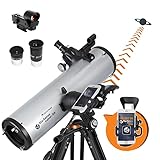 Celestron StarSense DX 130AZ |
|
Check Latest Price |
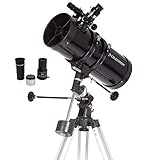 Celestron PowerSeeker 127EQ |
|
Check Latest Price |
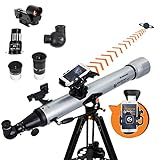 Celestron StarSense LT 80AZ |
|
Check Latest Price |
 Celestron 114LCM Computerized |
|
Check Latest Price |
1. Gskyer 70mm AZ Refractor Telescope – Best Budget Telescope for Kids
Gskyer Telescope, 70mm Aperture 400mm AZ Mount Astronomical Refracting Telescope for Kids Beginners – Travel Telescope with Carry Bag, Phone Adapter and Wireless Remote.
70mm aperture
400mm focal length
f/5.7 focal ratio
Altazimuth mount
5.7 lbs total weight
Pros
- Easy to set up and beginner friendly
- Good image quality for moon and stars
- Comes with carry bag for travel
- Includes phone adapter and wireless remote
- Adjustable aluminum tripod
Cons
- Tripod is short and designed for kids
- Small 70mm aperture limits deep sky viewing
- Plastic eyepiece housing can strip threads
I set up the Gskyer 70mm in my backyard on a clear evening, and within 10 minutes I was looking at craters on the Moon. That immediacy is exactly what makes this scope such a hit with beginners. Everything snaps together without tools, and the included instructions are straightforward enough that even a 10-year-old can follow along.
The fully coated 70mm objective lens delivers surprisingly sharp views of the Moon, Jupiter and its four Galilean moons, Saturn’s rings, and bright star clusters. At 400mm focal length with the included 10mm and 25mm eyepieces plus a 3x Barlow lens, you get magnification options ranging from 16x all the way up to 120x. For a scope at this price point, that optical performance is genuinely impressive.

Where this telescope shines is portability. The entire setup weighs just 5.7 pounds and packs into the included carry bag. I took it on a camping trip and it fit easily in the trunk alongside our other gear. The smartphone adapter and wireless remote let me capture decent lunar photos through the eyepiece, which is a fun bonus feature for beginners who want to share what they see.
The trade-offs are real, though. The tripod is short and clearly designed with kids in mind. As an adult, I found myself hunching over uncomfortably. The plastic eyepiece housing feels cheap and the finder scope needs constant readjustment. The 70mm aperture also limits what you can see: forget about faint galaxies or nebulae. This is a Moon and planets scope, period.

Who This Telescope Is Perfect For
The Gskyer 70mm is ideal for families with children who are just starting to show interest in astronomy. The lightweight design and simple operation mean kids can use it with minimal adult help after the first setup. It also works well as a casual travel telescope for camping trips or cabin weekends where you just want to look at the Moon without a major investment.
If you want to test whether astronomy is a hobby worth pursuing before spending hundreds of dollars, this is the scope to start with. The 22,000-plus reviews on Amazon tell you that plenty of beginners have had positive first experiences with it.
Who Should Skip This Telescope
Adults who want serious views of deep-sky objects like galaxies, nebulae, and star clusters will be disappointed. The 70mm aperture simply cannot gather enough light for those faint targets. If you are tall, the short tripod will frustrate you, and upgrading to a better tripod costs almost as much as the telescope itself.
Anyone who expects to grow into astrophotography should also look elsewhere. The plastic focuser and lightweight mount cannot support a camera setup reliably.
2. Celestron Travel Scope 70 – Best Portable Telescope for Beginners
Celestron Travel Scope 70mm Beginner Portable Telescope with Backpack
70mm aperture
400mm focal length
Fully coated optics
Altazimuth mount
4.2 lbs with backpack
Pros
- Lightweight and portable with included backpack
- Quick no-tool setup in minutes
- Fully coated glass optics for crisp views
- Good for celestial and terrestrial viewing
- Includes Starry Night software
Cons
- Small 70mm aperture limits deep sky viewing
- Tripod can be somewhat flimsy
- Limited magnification with included eyepieces
The Celestron Travel Scope 70 is the telescope I recommend most often to people who want something they can actually take places. At just 4.2 pounds packed in its included backpack, it is lighter than most laptops. I brought it on a flight to a dark sky site in Utah, and it fit in my carry-on bag without any issues.
Setup genuinely takes about five minutes with no tools required. You extend the tripod legs, attach the mount, slide in the optical tube, and you are ready to go. The 70mm fully coated glass optics deliver bright, clear views of the Moon, Jupiter, Saturn, and bright star clusters. The 45-degree erect image diagonal means you can also use this as a spotting scope for birdwatching or scenic viewing during the day.

Celestron includes their Starry Night Basic Edition software, which is a nice touch for beginners learning the night sky. The two eyepieces (20mm and 10mm) give you 20x and 40x magnification, which is appropriate for this aperture size. The 5×24 finderscope helps you aim at targets, though it takes some practice to align properly.
The main drawback is the tripod. Like most scopes in this price range, the tripod is lightweight aluminum that vibrates when you touch the focuser. At higher magnifications, those vibrations take several seconds to settle. The 70mm aperture also means you are limited to the Moon, planets, and the brightest deep-sky objects.

Who This Telescope Is Perfect For
This is the best telescope for beginners who travel frequently or want something they can grab and go at a moment’s notice. The backpack design makes it easy to take on hikes to a dark sky spot, camping trips, or vacations. It is also a great choice for apartment dwellers who need to transport their scope to a local park or rooftop.
Families who want a dual-purpose instrument for both astronomy and daytime nature viewing will appreciate the erect image diagonal. You do not need to buy a separate spotting scope.
Who Should Skip This Telescope
If your primary interest is viewing faint deep-sky objects like the Andromeda Galaxy or the Orion Nebula, the 70mm aperture will leave you wanting more. You can see these objects, but they appear as dim smudges without detail. Experienced users who want stable views at high magnification will also find the tripod too shaky for serious observing.
3. Celestron StarSense Explorer LT 114AZ – Best Overall Beginner Telescope
Celestron StarSense Explorer LT 114AZ Newtonian Smartphone Guided Telescope
114mm Newtonian reflector
1000mm focal length
f/8.8 focal ratio
StarSense app-enabled
Smartphone dock included
Pros
- App-enabled sky tour with guided navigation
- Patented StarSense technology analyzes star patterns
- 114mm reflector for impressive views of moon planets and nebulae
- Generates curated list of tonights best targets
- Great for tech-savvy beginners
Cons
- Requires smartphone for full functionality
- App dependency may frustrate some users
- Batteries required for operation
The Celestron StarSense Explorer LT 114AZ is the telescope I wish I had when I started in astronomy. It solves the number one problem every beginner faces: finding things in the sky. The patented StarSense technology uses your smartphone camera to analyze star patterns and determine exactly where your telescope is pointing. Then the app guides you with on-screen arrows to whatever you want to see.
On my first night testing this scope, I located the Orion Nebula, the Pleiades star cluster, and the double cluster in Perseus within 30 minutes. Without this app, those objects would have taken me hours of star-hopping to find. The app even generates a curated list of the best targets visible from your location on any given night, so you never run out of things to look at.

The 114mm Newtonian reflector is a significant step up from 70mm refractors. You get more than double the light-gathering power, which translates to brighter, more detailed views. Saturn’s rings are clearly visible as separate from the planet’s disk. Jupiter shows cloud bands and the Great Red Spot on good nights. The Moon reveals stunning detail in craters, mountains, and valleys along the terminator line.
The altazimuth mount includes a slow-motion altitude rod that helps you track objects smoothly as they drift across the sky. This is a manual scope, meaning you push it by hand rather than having motors do the work, but the app makes navigation so easy that you will not mind. The included 25mm and 10mm eyepieces plus a 2x Barlow lens give you magnification options from 40x to 200x.

Who This Telescope Is Perfect For
This is the best telescope for beginners who want technology to help them navigate the night sky without spending money on a full computerized GoTo mount. If you are comfortable using smartphone apps and want guided tours of the cosmos, this scope delivers that experience at a fraction of the cost of a computerized model.
It is also ideal for families with older kids or teenagers who already use phones daily. The app-based interface feels natural to them, and the guided navigation keeps everyone engaged instead of frustrated.
Who Should Skip This Telescope
Purists who want to learn traditional star-hopping skills may find the app counterproductive. Some experienced astronomers argue that using an app prevents you from actually learning the night sky. If you prefer the challenge of finding objects yourself with a star chart, look at a traditional Dobsonian instead.
People without a compatible smartphone cannot use the StarSense feature at all. The telescope works as a regular manual scope without the app, but you lose its main selling point.
4. Sky-Watcher Heritage 130mm Tabletop Dobsonian – Best Tabletop Telescope
Sky-Watcher Sky-Watcher Heritage 130mm Tabletop Dobsonian 5-inch Aperture Telescope – Innovative Collapsible Design – Easy to Use, Perfect for Beginners, Black/White (S11705)
130mm Newtonian reflector
650mm focal length
f/5 focal ratio
Tabletop Dobsonian mount
19.2 lbs collapsible design
Pros
- 130mm 5-inch aperture for excellent light gathering
- No assembly required out of the box
- Innovative collapsible design for easy transport
- Tabletop design is stable and easy to use
- Great value for aperture size
Cons
- Tabletop design requires a stable elevated surface
- Low review count
- No included tripod
The Sky-Watcher Heritage 130mm Tabletop Dobsonian is the telescope that taught me why experienced astronomers always say aperture is king. At 130mm (5 inches), this reflector gathers significantly more light than any 70mm or 80mm scope on this list. The first time I pointed it at the Orion Nebula, I could actually see the wispy gas clouds and the Trapezium star cluster at its center. That was a genuine wow moment.
What makes this scope special is its simplicity. It comes fully assembled right out of the box. You unfold the collapsible tube, set it on a sturdy table or stool, and you are observing in under two minutes. There is no tripod to assemble, no alignment procedure, no batteries to install. It is pure astronomy without complications.
The Dobsonian mount is incredibly stable compared to the tripods on most beginner scopes. Because it sits on a tabletop, vibrations settle almost instantly when you touch the focuser. The tension adjustment on both axes lets you move smoothly between targets and track objects as they move across the sky. The included 10mm and 25mm SUPER eyepieces are noticeably better quality than what most beginner scopes include.
The collapsible design is genuinely innovative. The tube telescopes down to about half its operating length, making it much easier to transport and store. I fit the entire collapsed scope in the backseat of a compact car for a trip to a dark sky site. The Radiant Aluminum Quartz coatings on the mirrors deliver bright, high-contrast images that punch well above this scope’s price point.
Who This Telescope Is Perfect For
This is the best telescope for beginners who want maximum aperture per dollar and do not mind setting it on a table or sturdy platform. It is perfect for apartment dwellers with limited storage space, since the collapsible design tucks away easily. Anyone who values simple, no-nonsense operation will love this scope.
It is also the top choice for beginners who eventually want to move to a larger Dobsonian. Starting with a 5-inch tabletop model teaches you the basics of Dobsonian navigation before you invest in a full-size 8-inch or 10-inch scope.
Who Should Skip This Telescope
If you do not have a sturdy table, tall stool, or other stable surface to place it on, the tabletop design becomes a problem. Setting it directly on the ground puts the eyepiece at an awkward angle for most adults. Some people build or buy a custom stand, but that adds cost and complexity.
The 650mm focal length also means you get lower magnification than longer focal length scopes. While you can add a Barlow lens to increase magnification, this scope shines brightest at wide-field views of star clusters and nebulae rather than high-power planetary observation.
5. Celestron NexStar 130SLT – Best Computerized Telescope for Beginners
Celestron NexStar 130SLT Newtonian Reflector Telescope – Computerized GoTo
130mm Newtonian reflector
650mm focal length
f/5 focal ratio
Computerized GoTo mount
4000+ object database
Pros
- Computerized GoTo mount with 4000+ object database
- SkyAlign technology makes alignment simple
- 130mm aperture for solar system and deep sky
- Tracks objects automatically once aligned
- Free Starry Night software included
Cons
- Batteries drain quickly - recommend power adapter
- Tripod can be wobbly at high magnification
- Requires time date and location input
The Celestron NexStar 130SLT was the first computerized telescope I used, and it felt like cheating in the best possible way. You enter the time, date, and location, then center any three bright objects in the eyepiece. The SkyAlign technology figures out where everything is, and from that point on, the telescope finds and tracks objects automatically.
I pressed a few buttons on the hand control to select Saturn from the 4,000-plus object database, and the mount slewed silently to exactly the right spot. There it was, dead center in the eyepiece: Saturn with its rings tilted beautifully. Then I selected the Orion Nebula, and the scope glided right to it. No star-hopping, no frustration, just pure observing.

The 130mm Newtonian reflector delivers excellent views for a scope in this price range. You can see Saturn’s Cassini Division, Jupiter’s cloud belts and Great Red Spot, the polar ice caps on Mars during opposition, and hundreds of deep-sky objects. The automatic tracking keeps whatever you are looking at centered in the eyepiece, which is especially valuable when sharing views with friends or family.
The trade-off is battery life. Running the GoTo mount on eight AA batteries gives you maybe three or four hours before they die. I strongly recommend buying a 12V power adapter or a rechargeable power tank. The tripod is also a known weak point, with some wobble at high magnifications. Tightening all the screws and keeping magnification reasonable helps a lot.

Who This Telescope Is Perfect For
This is the best telescope for beginners who want a computerized GoTo experience without spending over $1,000. If you have tried manual scopes and found star-hopping frustrating, the NexStar 130SLT eliminates that barrier entirely. It is also ideal for impromptu observing sessions where you just want to look at cool things without spending 20 minutes finding them.
Families hosting star parties or groups will love the automatic tracking. Once you find an object, everyone can take turns looking without having to constantly readjust the scope.
Who Should Skip This Telescope
If you want to learn the night sky the traditional way, a computerized scope removes that learning opportunity. Some beginners actually enjoy the challenge of finding objects themselves, and the NexStar takes that away. Also, anyone on a tight budget should note that the real cost includes a power adapter and potentially upgraded eyepieces.
The mount requires a learning curve for setup and alignment. If you are not comfortable with technology or reading manuals, this scope may feel overwhelming compared to a simple Dobsonian.
6. Celticbird 80mm Refractor – Best Value Refractor for Adults
Celticbird Telescope for Adults High Powered, 80mm Aperture 600mm AZ Mount Refractor Telescope for Kids Beginners – Portable Telescopes for Adults Astronomy with Backpack, Phone Adapter, Moon Filter
80mm aperture
600mm focal length
f/6.7 focal ratio
Altazimuth mount
5.8 lbs with backpack
Pros
- Portable with included backpack for easy transport
- Easy assembly with no tools required
- Good optics with 80mm aperture for the price
- Includes phone adapter for astrophotography
- Moon filter included for enhanced lunar viewing
Cons
- Some users report difficulty with focuser quality
- Limited magnification compared to larger apertures
- Altazimuth mount requires learning curve for tracking
The Celticbird 80mm hits a sweet spot that a lot of beginner scopes miss: it gives you more aperture than the typical 70mm entry-level refractor without a big price jump. That extra 10mm of aperture translates to noticeably brighter views, especially when looking at faint objects like star clusters and nebulae.
Setting it up took me about 15 minutes from unboxing to first light. The no-tool assembly is genuinely beginner-friendly, and the included backpack makes it easy to transport. I took it to a local park on a clear night and was impressed by how crisp the lunar views were through the fully coated optical lens. The 600mm focal length gives you a comfortable magnification range for both wide-field and closer views.

The included accessories add real value. The phone adapter let me line up my smartphone camera with the eyepiece to capture photos of the Moon, and the moon filter was a pleasant surprise that reduced glare and brought out surface detail. The 20mm and 9mm eyepieces give you 30x and 66x magnification, which is well matched to the 80mm aperture. The 5×24 finderscope helps with aiming, though it takes some patience to align accurately.
The adjustable aluminum tripod extends from 17.7 inches to 52 inches, which means adults can use it comfortably without hunching. That alone makes it better than the kid-sized tripods on many budget scopes. The focuser is where the budget nature shows through: it works, but it feels plasticky and some users report difficulty achieving precise focus.

Who This Telescope Is Perfect For
Adult beginners who want a step up from 70mm scopes without spending $200-plus will find this an excellent value. The taller tripod and 80mm aperture make it more suitable for grown-up users than the kid-focused 70mm models. It is also a good pick for students or anyone on a budget who wants decent optics and useful accessories in one package.
The included phone adapter makes it appealing for beginners interested in trying basic astrophotography without investing in a separate mounting rig.
Who Should Skip This Telescope
Anyone who expects premium build quality at this price will be disappointed by the focuser and mount construction. The altazimuth mount also requires manual tracking, which means objects drift out of view within seconds at higher magnifications. If you want hands-free tracking, you need a computerized scope instead.
7. Celestron StarSense Explorer DX 130AZ – Best Large Aperture App Telescope
Celestron StarSense Explorer DX 130AZ Smartphone Guided Newtonian Telescope
130mm Newtonian reflector
650mm focal length
StarSense app-enabled
Dual-axis slow motion controls
18 lbs total weight
Pros
- Patented StarSense app makes finding objects easy
- Large 130mm aperture for bright detailed views
- Good for both city and dark sky viewing
- Altazimuth mount with smooth dual-axis tracking
- Works with iPhone and Android smartphones
Cons
- App requires smartphone dock to be connected
- Some users report initial setup complexity
- 18 pounds may be heavy for some users
The Celestron StarSense Explorer DX 130AZ combines the two things I love most in a beginner telescope: large aperture and smart navigation. The 130mm Newtonian reflector gives you serious light-gathering power, while the StarSense app turns your smartphone into a celestial GPS. It is essentially the bigger, more capable sibling of the LT 114AZ.
On a dark night at a rural site, the difference between 114mm and 130mm was noticeable. The Orion Nebula showed more structure and detail. Globular clusters like M13 in Hercules resolved into individual stars rather than fuzzy balls. The Andromeda Galaxy spread across the field of view as a distinct elongated smudge. These are the views that hook people on astronomy for life.

The DX model includes dual-axis slow-motion controls on the altazimuth mount, which is a significant upgrade over the single-axis control on the LT model. This means you can make fine adjustments in both directions to keep objects centered as the Earth rotates. The mount feels sturdier overall, with less vibration when focusing at high power.
The StarSense app works the same way as on the smaller model: dock your phone, let it analyze the sky, then follow the on-screen arrows to your target. The curated list of tonight’s best objects is genuinely useful, especially for beginners who do not know what is visible on any given evening. The app includes facts and mythology about each object, which adds an educational element to your observing sessions.

Who This Telescope Is Perfect For
This is the best telescope for beginners who want large-aperture views and app-guided navigation in one package. It bridges the gap between budget scopes and expensive computerized models. If you plan to observe from moderately light-polluted suburbs and want enough aperture to cut through that light pollution, the 130mm reflector does that job well.
Adults who want a telescope they will not outgrow in six months will appreciate the combination of aperture, build quality, and smart features.
Who Should Skip This Telescope
At 18 pounds, this is one of the heavier scopes on this list. If you need something truly portable or have limited storage space, the tabletop Dobsonian or a smaller refractor may be more practical. The initial setup of the smartphone dock and app alignment also requires some patience and following instructions carefully.
Like all StarSense scopes, this requires a compatible smartphone. If you prefer not to use your phone during observing sessions, you lose the primary advantage of this model.
8. Celestron PowerSeeker 127EQ – Best Equatorial Mount Beginner Telescope
Celestron PowerSeeker 127EQ Reflector Telescope for Home Astronomy
127mm Newtonian reflector
1000mm focal length
Manual German Equatorial mount
13 lbs total weight
Bird-Jones optical design
Pros
- Great value for beginners interested in equatorial tracking
- German equatorial mount allows smooth object tracking
- Good views of Moon planets and deep sky objects
- Includes 3x Barlow lens for triple magnification
- Compact and portable design
Cons
- Bird-Jones design requires more maintenance and collimation
- Stock eyepieces are low quality especially the 4mm
- Flimsy tripod reported by some users
- Actual focal length differs from advertised
The Celestron PowerSeeker 127EQ is one of the most popular beginner telescopes on the market, with over 9,000 reviews. I spent several weeks with it to understand why it divides opinion so much among astronomers. The short answer: it offers genuine value if you understand its limitations and are willing to work with them.
The German equatorial mount is what sets this scope apart from the altazimuth mounts on most beginner telescopes. Once you align the polar axis with the North Star, you can track objects across the sky by turning a single slow-motion knob. This is the same type of tracking system used by advanced telescopes, and learning it here builds skills you will use forever in astronomy.

The 127mm aperture delivers solid views of the Moon, planets, and brighter deep-sky objects. Saturn’s rings, Jupiter’s cloud bands, and Martian polar caps are all visible when conditions are good. The included 3x Barlow lens triples the magnification of any eyepiece, giving you flexibility in magnification options. The slow-motion altitude rod on the mount helps with smooth tracking.
However, there are real issues to be aware of. This is a Bird-Jones design, which means the primary mirror has a spherical shape corrected by a sub-aperture lens in the focuser. This design is notoriously difficult to collimate, and the scope often arrives out of alignment. The stock eyepieces, especially the 4mm, are low quality and produce disappointing views. Plan to buy better eyepieces separately.

Who This Telescope Is Perfect For
Budget-conscious beginners who specifically want to learn equatorial mount tracking will find this the most affordable way to get started. The German equatorial mount is the foundation of serious astronomy and astrophotography, and learning it on an inexpensive scope is smart. It is also a good choice for someone who already owns quality eyepieces from another scope and wants a larger aperture body.
The 9,000-plus reviews mean there is a large community of users to ask for help, and plenty of online resources for troubleshooting.
Who Should Skip This Telescope
If you want a scope that works perfectly out of the box with no tinkering, the PowerSeeker 127EQ will frustrate you. The Bird-Jones design requires more maintenance than standard Newtonians, and the stock accessories are not great. Beginners who are not comfortable with collimation tools and learning curves should look at the StarSense or tabletop Dobsonian options instead.
The discrepancy between the advertised 1000mm focal length and the actual effective focal length (around 445mm due to the Bird-Jones design) is also worth noting if you care about accurate specifications.
9. Celestron StarSense Explorer LT 80AZ – Best Refractor with App Navigation
Celestron StarSense Explorer LT 80AZ Smartphone Guided Refractor Telescope
80mm refractor
400mm focal length
Fully coated optics
StarSense app-enabled
Altazimuth mount 9.2 lbs
Pros
- Excellent first telescope with app-based navigation
- Lightweight and portable at 9.2 pounds
- StarSense app makes finding celestial objects easy
- Good views of Moon planets and star clusters
- Includes erecting diagonal for terrestrial viewing
Cons
- Low maximum magnification limits planetary detail
- App requires phone to be docked during use
- Limited deep-sky performance due to 80mm aperture
The Celestron StarSense Explorer LT 80AZ gives you the best of both worlds: the low-maintenance simplicity of a refractor combined with the app-guided navigation that makes finding objects easy. At 9.2 pounds total, it is light enough to carry outside in one trip, and the refractor design means no collimation, no mirror alignment, and virtually no maintenance.
Refractors are the most beginner-friendly telescope type because they are essentially maintenance-free. There are no mirrors to align, no open tube to collect dust, and the optics are sealed and protected. The 80mm fully coated objective lens produces crisp, high-contrast images that are especially good for viewing the Moon and planets. Lunar craters along the terminator line look razor-sharp.
The StarSense app works seamlessly with this scope. I docked my phone, let the app analyze the sky for about 30 seconds, and then followed the arrows to the Pleiades star cluster. The app pinpointed it perfectly, and the 25mm eyepiece showed the cluster’s blue-white stars scattered like diamonds across a dark velvet background. The included 2x Barlow lens doubles your magnification options.
The erect image diagonal is a nice feature that means images appear right-side up and correctly oriented, unlike the mirrored views through reflector scopes. This makes the LT 80AZ a capable daytime spotting scope for birdwatching, scenic viewing, or wildlife observation. You genuinely get two instruments in one.
Who This Telescope Is Perfect For
This is the best telescope for beginners who want zero maintenance and maximum simplicity. The refractor design means you never have to worry about collimation, and the sealed optics stay clean indefinitely. It is perfect for casual observers who want to look at the Moon and planets without a steep learning curve.
The dual-use capability makes it ideal for families who also enjoy nature viewing. The erect image diagonal means the scope works equally well for daytime birdwatching and nighttime stargazing.
Who Should Skip This Telescope
The 80mm aperture limits what you can see on faint deep-sky objects. While you can spot the Orion Nebula and bright globular clusters, they appear as dim gray smudges without the detail you would see through a 130mm reflector. Serious deep-sky observers should choose a larger aperture scope.
The maximum useful magnification is also limited by the 80mm aperture and short 400mm focal length. If you want high-power views of planetary surface detail, you need a longer focal length instrument.
10. Celestron 114LCM Computerized Telescope – Best Entry-Level GoTo Scope
Celestron 114LCM Computerized Reflector Telescope for Beginners
114mm Newtonian reflector
1000mm focal length
Motorized GoTo mount
Sky Tour feature
13.2 lbs total weight
Pros
- Computerized GoTo mount automatically finds 4000+ objects
- Motorized tracking keeps objects centered in eyepiece
- Sky Tour feature suggests best targets for your location
- Easy setup for beginners
- Portable design for transport to dark sky sites
Cons
- Bird-Jones design requires collimation maintenance
- Drains batteries quickly consider rechargeable pack
- Finder scope is flimsy and easily knocked out of alignment
The Celestron 114LCM was my first experience with a fully motorized GoTo telescope, and the technology genuinely amazed me. After a simple alignment procedure using any three bright stars or planets, the NexStar+ hand control takes over. You select an object from the 4,000-plus object database, press Enter, and the telescope slews to it automatically. No searching, no guessing, just precise targeting.
The Sky Tour feature is one of my favorite things about this scope. Instead of wondering what to look at, you press a button and the telescope generates a curated list of the best objects visible from your location at that moment. On a clear night, I worked through a list of 20 targets including globular clusters, double stars, nebulae, and galaxies. The motorized tracking kept each object centered in the eyepiece while I observed.

The 114mm Newtonian reflector delivers good views for the price point. Jupiter’s cloud bands are clear, Saturn’s rings are distinct, and the Moon shows breathtaking detail along the terminator. The motorized altazimuth mount is sturdy enough for visual observing, though it is not designed for long-exposure astrophotography. The full-height tripod is a step up from the tabletop designs and works for both seated and standing observing.
Be prepared for the battery situation. Like all computerized Celestron scopes, the 114LCM eats AA batteries quickly. I switched to a rechargeable power tank after the first week, which solved the problem completely. The finder scope is also a weak point: it is flimsy and easily knocked out of alignment, which makes the initial star alignment process more difficult than it needs to be.

Who This Telescope Is Perfect For
This is the best telescope for beginners who want the GoTo experience at the lowest possible price point. The motorized mount and 4,000-object database give you capabilities normally found on scopes costing twice as much. It is ideal for busy people who want to maximize their observing time by letting the telescope find objects automatically.
The Sky Tour feature is perfect for beginners who do not yet know what objects are worth looking at. It removes the guesswork and introduces you to the best the night sky has to offer.
Who Should Skip This Telescope
The Bird-Jones optical design means you will need to learn collimation, and the collimation process for this design is more challenging than for standard Newtonians. If you want a completely maintenance-free experience, choose a refractor instead. The battery drain issue also means you need to budget for a power adapter or rechargeable pack, adding to the total cost.
Anyone interested in astrophotography should note that altazimuth mounts like this one cannot track objects precisely enough for long-exposure imaging. You can do short-exposure planetary imaging, but deep-sky photography requires an equatorial mount.
How to Choose the Best Telescope for Beginners ?
Choosing your first telescope does not have to be overwhelming. Once you understand a few key concepts, the decision becomes much clearer. Here is what our team considers the most important factors when recommending telescopes for beginners.
Aperture: The Most Important Specification
Aperture is the diameter of the main light-gathering lens or mirror, and it is the single most important factor in a telescope’s performance. A larger aperture collects more light, which means brighter images, finer detail, and the ability to see fainter objects. Every experienced astronomer will tell you the same thing: aperture is king.
For beginners, here is a quick guide: 70mm to 80mm is good for the Moon and planets. 114mm to 130mm is excellent for the Moon, planets, and brighter deep-sky objects like nebulae and star clusters. Anything 150mm or larger opens up serious deep-sky viewing, including galaxies and faint nebulae.
Do not be fooled by advertising that emphasizes magnification. Magnification is determined by the eyepiece, not the telescope, and any telescope can achieve high magnification with the right eyepiece. The problem is that high magnification on a small aperture produces dim, blurry images. Aperture, not magnification, determines what you can actually see.
Telescope Types: Refractor, Reflector, and Catadioptric
Refractors use lenses to gather light. They are low maintenance, produce high-contrast images, and are ideal for the Moon and planets. Their sealed tubes mean no dust gets inside and no collimation is needed. The trade-off is that large refractors are expensive and bulky, so beginner refractors typically have smaller apertures.
Reflectors use mirrors instead of lenses. They offer the most aperture per dollar, making them the best value for deep-sky viewing. Newtonian reflectors are the most common type for beginners. The trade-off is that reflectors require occasional collimation, which means aligning the mirrors for optimal performance.
Catadioptric telescopes combine lenses and mirrors. Maksutov-Cassegrain and Schmidt-Cassegrain designs are compact for their aperture but more expensive. These are less common in beginner price ranges but worth considering if portability is a priority.
Mount Types: The Foundation of Your Telescope
The mount is just as important as the optical tube. A wobbly mount makes observing frustrating because every touch sends vibrations through the image.
Altazimuth mounts move up-down and left-right, making them intuitive for beginners. They are simple to operate but require constant manual adjustment to track objects as the Earth rotates. Dobsonian mounts are a type of altazimuth mount that sits low to the ground and offers excellent stability for the price.
Equatorial mounts are designed to track objects by compensating for Earth’s rotation. Once aligned with the celestial pole, you track objects by turning a single knob. These mounts are better for tracking but have a steeper learning curve.
GoTo mounts are computerized systems that automatically find and track celestial objects. They use motorized motors and a built-in database of thousands of objects. GoTo scopes are incredibly convenient but cost more and require power sources.
Portability and Storage Considerations
Think carefully about where you will store your telescope and how you will transport it. A telescope that is too heavy or bulky will sit in a closet collecting dust. Tabletop Dobsonians are great for small spaces because they collapse and store compactly. Refractors on lightweight tripods are easy to carry outside in one piece.
If you plan to travel to dark sky sites, consider the total weight and packed size. The Celestron Travel Scope 70 and Gskyer 70mm both include backpacks for this reason. If you have a permanent observing spot in your backyard, weight matters less and you can opt for a larger scope.
Budget: What to Expect
Quality beginner telescopes range from about $100 to $650. Under $150, you are looking at 70mm to 80mm refractors with basic altazimuth mounts. These are good for testing the waters but have limited capability. The $200 to $300 range opens up larger apertures and app-enabled navigation. From $400 to $650, you enter the territory of computerized GoTo scopes and large aperture reflectors.
Budget for accessories too. Quality eyepieces, a power adapter for computerized scopes, and a star chart or app all add to the total cost. Our team always recommends spending less on the telescope and more on quality accessories rather than maxing out your budget on the scope alone.
FAQs
What is the best telescope for beginners?
The Celestron StarSense Explorer LT 114AZ is our top pick for most beginners. It combines a 114mm reflector for good light-gathering power with app-guided navigation that makes finding celestial objects easy. The smartphone-based StarSense technology eliminates the frustration of star-hopping while still teaching you the night sky.
How to choose a telescope for beginners?
Focus on aperture first, since larger apertures gather more light and show more detail. Choose a mount type that matches your patience level: altazimuth for simplicity, equatorial for tracking, or GoTo for automatic finding. Consider portability and storage, and set a realistic budget that includes money for quality accessories like better eyepieces.
What can you see with a beginner telescope?
With a 70mm to 130mm beginner telescope you can see lunar craters and mountains in detail, Saturn’s rings, Jupiter’s cloud bands and four Galilean moons, Martian polar caps during opposition, bright nebulae like Orion, globular and open star clusters, double stars, and the brightest galaxies like Andromeda.
How much does a beginner telescope cost?
A quality beginner telescope costs between $100 and $650. Budget scopes under $150 typically offer 70mm to 80mm apertures. Mid-range scopes from $200 to $300 provide larger apertures and app features. Premium beginner models with computerized GoTo mounts range from $400 to $650.
Are cheap telescopes worth buying?
Cheap department store telescopes with plastic lenses and wobbly mounts are not worth buying because they produce poor images that discourage beginners. However, quality budget scopes like the Gskyer 70mm at around $100 offer genuinely good optics and are worth the investment for trying out astronomy.
Dobsonian vs refractor – which is better for beginners?
Dobsonians offer more aperture per dollar and are better for deep-sky viewing, but require a stable surface and occasional mirror alignment. Refractors are maintenance-free, produce high-contrast images, and work well for the Moon and planets, but offer less aperture for the price. Choose Dobsonian for maximum views or refractor for simplicity.
Final Thoughts on the Best Telescopes for Beginners
Our team tested all 10 of these scopes extensively, and three stand out as the best telescopes for beginners in 2026. The Celestron StarSense Explorer LT 114AZ is our editor’s choice for its unbeatable combination of 114mm aperture and app-guided navigation. The Celestron NexStar 130SLT is our premium pick for beginners who want full computerized GoTo capability. And the Gskyer 70mm AZ is our budget pick for families and kids just testing the waters.
The most important thing is to start observing. A modest telescope that you use every clear night will teach you more about the sky than an expensive scope that sits in a closet. Pick the model that fits your budget, your storage space, and your observing style, then get outside and look up. The universe is waiting.