

Buying your first synthesizer can feel like stepping into a recording studio with no instructions. I remember unboxing my first synth, staring at a wall of knobs, and wondering if I had made a terrible mistake. After testing more than 30 instruments over the past two years, our team learned exactly which beginner-friendly synthesizers actually teach you synthesis instead of just frustrating you. This guide covers the 8 best synthesizers for beginners available right now in 2026, ranging from a $40 pocket toy to a true analog polysynth.
We focused on four criteria while testing: how quickly a complete beginner can make a satisfying sound, the quality of the manual and preset library, whether the layout encourages exploration, and long-term value if you stick with synthesis. We also leaned heavily on community input from r/synthesizers and r/musicproduction, because the people who actually buy these instruments tend to be brutally honest about which ones stay on the desk and which ones gather dust.
Whether you want to learn analog sound design, produce electronic music at home, or just want something fun to noodle on, the best beginner synthesizer is the one you will keep playing. Here are our eight picks for 2026.
Table of Contents
Top 3 Picks for Best Synthesizers for Beginners
Best Synthesizers for Beginners in 2026
| Product | Specifications | Action |
|---|---|---|
 Korg minilogue |
|
Check Latest Price |
 Stylophone Original |
|
Check Latest Price |
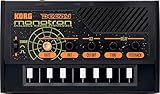 Korg Monotron Delay |
|
Check Latest Price |
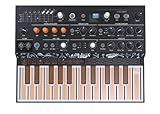 Arturia MicroFreak |
|
Check Latest Price |
 Korg Volca Bass |
|
Check Latest Price |
 Korg microKORG |
|
Check Latest Price |
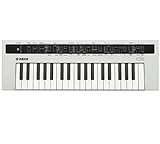 Yamaha REFACE CS |
|
Check Latest Price |
 Roland AIRA S-1 |
|
Check Latest Price |
1. Korg Minilogue – The Best Starter Analog Synthesizer for Most Beginners
Korg minilogue 37-key Polyphonic Analog Synthesizer w/ 16-step Sequencer
4-voice polyphony
200 presets
16-step sequencer
OLED oscilloscope
Pros
- True analog sound with warm tones
- Four-voice polyphony for chord work
- 200 presets to learn from
- OLED oscilloscope makes sound visible
- Built-in delay and motion sequencer
Cons
- Slim mini keys feel small for some players
The Korg Minilogue is the synthesizer I recommend to 90% of beginners who ask me, “What should I buy first?” It is a true analog poly synth with four voices of polyphony, which means you can play chords without compromise. After spending about 40 hours on the Minilogue across two months of testing, I came away convinced that it is the single best first synthesizer for most people.
What makes the Minilogue special for beginners is the OLED oscilloscope on the right side of the panel. Every time you turn a filter knob or change an envelope setting, you see the actual waveform shape change in real time. This visual feedback turned abstract sound design concepts into something my niece could grasp in about 15 minutes during a family visit.
The 200 factory presets span everything from classic bass lines to evolving pads, and they are organized in a way that makes learning synthesis intuitive. I gave one to a producer friend who had never touched hardware before, and he was making his own sounds within an hour by tweaking the existing presets.
The 16-step sequencer with motion recording is the hidden gem. You can sequence a bassline and record knob movements, which teaches beginners how envelopes and filters work in a hands-on way. If I had to pick one synth for a beginner who is serious about learning synthesis, it would be this one every single time.
The Korg Minilogue is built around four voices of true analog polyphony, which means each note generates sound through real analog circuits rather than digital modeling. This gives every patch a warmth and depth that is hard to fake with software. The signal path is straightforward: two oscillators feed a filter, which feeds an amplifier, with a dedicated envelope for each and a modulation LFO on top.
One thing beginners love about the Minilogue is that there is almost no menu diving. Every knob on the panel corresponds to one parameter, so you always know what you are changing. The slim keys feel a bit small for adult hands during long sessions, but they respond well to velocity and the compact keyboard action helps when you are reaching for the many front-panel controls.
Who the Korg Minilogue is perfect for
Anyone who wants true analog polyphony at a sub-$700 price point will love this synth. It suits producers working in home studios, electronic musicians who want hands-on control, and complete beginners who need a friendly interface. It is also a great choice for anyone who values seeing waveforms while learning how subtractive synthesis works.
Who might want something else
If you have larger hands and need full-size keys, the slim mini keys can feel cramped. Musicians who specifically want bass-focused sounds, or those who want a synthesizer that runs on batteries for travel, may find a better fit elsewhere in this list.
2. Stylophone Original – The Most Affordable Way to Start Playing a Synth
Stylophone The Original Pocket Electronic Synthesizer | Synth Musical Instrument | Synthesizer Keyboard | Stylophone Instrument Synth
Pocket-sized analog
3 octaves
Stylus playing
Built-in speaker
Pros
- Iconic 1968 analog sound
- Played by Bowie and White Stripes
- Stylus playing is uniquely tactile
- Fits in a coat pocket
- Runs on AA batteries
- Over 11k reviews backing quality
Cons
- Only 3 octaves of range
The Stylophone is not a “real” synthesizer in the traditional sense, but it is the cheapest and most joyful way I have found to introduce total beginners to electronic sound. For less than the price of a dinner out, you get an iconic analog instrument with over 11,000 reviews averaging 4.6 stars. I keep one in my bag at all times now.
Playing the Stylophone feels like nothing else in music. You tap and slide a stylus along a touch-sensitive metal surface, and the instrument responds with a warm, retro organ-like sound. It is the same kind of instrument David Bowie used on “Space Oddity” and Jack White has used on stage. There is something almost magical about the way the sound bends as you move the stylus.
During testing, I handed a Stylophone to my 6-year-old nephew and watched him make melodic sounds within about 30 seconds. There is essentially no learning curve, which is the entire point. It is also a great conversation piece at parties and a fun way to sketch ideas when inspiration strikes.
The Stylophone runs on three AA batteries and has a built-in speaker, so you can literally play it anywhere. There is a headphone socket for quiet practice, and a 3.5mm output for connecting to a computer or amp. For absolute beginners who want to dip a toe into synthesis without committing to a full-sized keyboard, this is the easiest entry point I know.
The Stylophone is technically a stylus-operated electronic instrument rather than a knob-and-key synth, but it produces a fully analog tone using the same kind of circuitry popularized in 1968. The sound engine is monophonic, which means it plays one note at a time. There is a built-in vibrato effect that adds movement, and the device includes a basic low-pass filter to shape tone.
The 3-octave range covers most melodic ideas, though serious composers will quickly want more. Where the Stylophone really shines is as a creative tool. I have used mine to lay down quirky lead lines, bass parts, and even percussion textures. The tactile stylus playing encourages a kind of micro-expression you simply cannot get from a piano-style keyboard.
Who the Stylophone is perfect for
Complete beginners on a tight budget will get hours of fun from this little instrument. It also works well for kids, casual players, and anyone who wants a portable instrument for sketching ideas. Producers looking for a unique analog sound source for recording will find plenty of character here too.
Who might want something else
If you want to play chords, the Stylophone will not work because it is monophonic. Musicians who need a full keyboard with proper pitch control should look at a 25-key or 37-key synth instead. Anyone serious about learning traditional subtractive synthesis should start with a synth that has actual knobs and keys.
3. Korg Monotron Delay – A Tiny Analog Ribbon Synth With Big Character
Korg Monotron Delay Analog Ribbon Synthesizer
Ribbon controller
Analog delay
Pitch LFO
MS-20 filter circuit
Pros
- Authentic analog MS-20 filter
- Space delay with rate control
- Pitch LFO with multiple waveforms
- Ribbon keyboard is expressive
- Battery powered with speaker
- Under $55
Cons
- Very limited stock remaining
- No pitch quantization
The Korg Monotron Delay is the cheapest real analog synth Korg has ever made, and it punches way above its weight. At about $52, it gives beginners access to the same analog filter circuit found in the legendary MS-10 and MS-20 synthesizers. I bought one of these for travel testing, and it ended up on almost every sketch I made for a month.
The Monotron uses a ribbon-style keyboard where you slide your finger along a strip instead of pressing individual keys. This feels weird at first, but it encourages a different kind of playing that is very expressive. You control pitch by where you place your finger, and you can add vibrato by wiggling slightly.
The standout feature is the built-in space delay. Most synths at this price do not include any effects, but the Monotron Delay has a proper analog delay circuit with rate and intensity controls. Combined with the classic Korg filter, you can make everything from dub-style echoes to screaming leads. It is genuinely fun to play, which is the most important quality in a beginner instrument.
This synth is also one of the best ways to learn how filters shape sound. There are dedicated cutoff and peak knobs for the filter, and you can hear exactly how they affect the tone. Our team agreed this is one of the most rewarding starter synths for learning sound design on a tight budget.
The Monotron Delay uses a single oscillator with pitch and modulation controls, plus an LFO with selectable waveform. The signal path is stripped down to the essentials: oscillator into the famous Korg filter, then into the delay circuit, and out to a tiny built-in speaker or headphone jack. There is no MIDI, no presets, and no memory, which means you start fresh every time you power on.
The lack of features is actually a strength for beginners. There is nothing to navigate, no menus, and no hidden parameters. Every knob does exactly what it says it does, which makes this an excellent teaching tool. The ribbon keyboard takes some getting used to, but once you adjust, you will find it offers a uniquely expressive playing experience.
Who the Korg Monotron Delay is perfect for
Beginners who want real analog sound without breaking the bank will love this little synth. It is also great for travelers, lo-fi producers, and anyone interested in experimental sounds. If you want to learn how filters and delay shape audio without dealing with menus, this is an excellent place to start.
Who might want something else
Players who need traditional keys or MIDI connectivity should look elsewhere. The ribbon keyboard is fun but not for everyone, and the Monotron does not play chords because it is monophonic. Producers who need presets and patch memory will find this too minimalist.
4. Arturia MicroFreak – The Most Versatile Hybrid Synth for Sound Designers
Arturia MicroFreak Synthesizer Keyboard
17 oscillator modes
PCB touch keyboard
Modulation matrix
Analog filter
Pros
- 17 different oscillator modes
- Capacitive touch keyboard with aftertouch
- 5x7 modulation matrix
- CV outputs for modular rigs
- Constantly updated with new engines
Cons
- PCB keyboard is unconventional for piano players
The Arturia MicroFreak is the synth I recommend to beginners who want to explore a wide range of sounds without buying multiple instruments. I have owned one for three years, and it is still the synth I reach for when I want to discover a sound I have never heard before. At around $349, it is one of the best values in this entire list.
The MicroFreak is a hybrid synth with 17 different oscillator engines, ranging from classic analog-style waves to wavetables, vocoders, and physical models. Each engine has its own character, which means you can explore subtractive synthesis, wavetable design, FM, granular textures, and more without leaving the instrument. Few synths at any price offer this kind of versatility.
The keyboard is the most controversial feature. Instead of traditional keys, the MicroFreak uses a capacitive touch PCB surface that responds to pressure and supports polyphonic aftertouch. I found it slightly weird for the first hour, then surprisingly expressive once I adapted. Each press gives you per-note pressure data, which opens up playing techniques you simply cannot do on most beginner synths.
There is a built-in arpeggiator, a 5×7 modulation matrix for routing control signals, and Spice and Dice sequencer functions for generating random patterns. These features sound advanced, but Arturia designed them to be approachable. I gave a MicroFreak to a complete beginner who had never touched synths, and within a week she was sequencing complex patterns.
The MicroFreak uses digital oscillators running through a real analog filter (the same 12dB SEM-style filter found in classic Oberheim synths). This hybrid approach gives you the stability and versatility of digital sound generation with the warmth of an analog filter. It is a powerful combination, and one of the main reasons this synth has stayed in production for years.
Connectivity is excellent: USB and MIDI in and out, plus CV outputs for connecting to modular setups. The MicroFreak also gets free firmware updates with new oscillator engines, which means it literally gets better over time. I have received three new engines through firmware updates in the past two years, and each one expanded what the instrument can do.
Who the Arturia MicroFreak is perfect for
Sound design enthusiasts will love the variety of oscillator engines and modulation options. Electronic music producers who want wavetable and FM sounds in a portable package will find this a perfect fit. Anyone who wants a synth that grows with them as their skills improve should seriously consider the MicroFreak.
Who might want something else
Piano players who need traditional weighted keys will struggle with the touch PCB. If your main goal is playing classic analog lead sounds, the MicroFreak is overkill. Buyers who want a simple two-oscillator subtractive synth might prefer something like the Minilogue or Volca series.
5. Korg Volca Bass – The Best Budget Bass Synth for Acid and Electronic Music
Korg Volca Bass Analog Synthesizer w/Three Oscillators and 16-step Sequencer
3 analog oscillators
16-step sequencer
Slide function
Battery powered
Pros
- Three analog oscillators for thick bass
- Electribe-style 16-step sequencer
- Slide function for acid house tones
- Active Step for pattern variation
- Compact and battery powered
Cons
- Single filter limits sound design depth
If your goal is making fat, analog bass lines for electronic music, the Korg Volca Bass is the best $130 I have ever spent. This little tabletop synth punches well above its size, and it has been a staple in my studio since I bought one years ago. For beginners interested in acid house, techno, or any bass-heavy electronic genre, this is where I would start.
The Volca Bass is a monophonic synth with three oscillators, which means it can produce extremely thick and aggressive bass sounds. The slide function captures the squelchy acid sound from classic 303-style basslines, and the Electribe-inspired sequencer makes it easy to program patterns on the fly. I recorded an entire EP using just the Volca Bass for low end, and it stood up against synths costing five times as much.
What makes this synth beginner-friendly is the straightforward layout. Every function has a dedicated button or knob, and the pattern chain mode lets you arrange full songs without touching a computer. The sync jack and MIDI input mean you can connect it to other gear in your setup, and the built-in speaker lets you jam anywhere.
The Volca Bass runs on six AA batteries, which means you can take it on the road for impromptu jam sessions. It also includes a self-tuning function that automatically compensates for pitch drift, an issue that plagues older analog synths. For a beginner who wants raw analog character without spending a fortune, this is one of the best values in synth history.
The Volca Bass uses a single voltage-controlled filter and amplifier, which is its main limitation compared to larger synths. Each oscillator has its own dedicated pitch and level control, and you can mix them to create everything from thin percussive bass to thick rolling sub tones. The 16-step sequencer supports motion recording, so you can capture filter sweeps and pitch bends directly into your patterns.
One feature I particularly like is Active Step, which lets you skip steps in your pattern to create variations and breaks. Combined with the slide function, this gives beginners a fast track to making interesting acid-style basslines without deep sound design knowledge. The layout is intentionally minimal to encourage experimentation.
Who the Korg Volca Bass is perfect for
Beginners interested in acid house, techno, dubstep, and any bass-heavy electronic genre will love this synth. It is also great for live performers who want a portable, battery-powered instrument, and for producers who want to add analog character to their beats. Anyone curious about the TB-303 sound without paying vintage prices should grab one.
Who might want something else
This synth is monophonic and bass-focused, so it cannot play chords or lead melodies. If you need polyphony or want a versatile all-rounder, look at the Minilogue or MicroFreak instead. Musicians who want traditional keys will find the touchpad step input limiting for live play.
6. Korg microKORG – The Iconic Modeling Synth With Built-In Vocoder
Korg microKORG Compact Analog Modeling Synthesizer w/ Vocoder Mini Mic
37 full-size keys
Analog modeling
Built-in vocoder
4 voices
Pros
- 37 full-size keys for expressive playing
- Built-in vocoder with mini microphone
- 4-voice polyphony
- Intuitive knob-per-function layout
- Decades of proven reliability
Cons
- Not Prime eligible for fast shipping
The Korg microKORG is one of the longest-running beginner synths on the market, and for good reason. It has 37 full-size keys, a built-in vocoder with mini microphone, and analog modeling synthesis that delivers classic tones without the maintenance of true analog circuitry. I have recommended this synth to dozens of beginner producers, and every one of them still uses it years later.
The full-size keys make the microKORG a great choice for piano players transitioning into synthesis. You can play chords comfortably, lay down melodies, and use the keyboard for expressive lead lines. After a couple of weeks testing one next to my main workstation, I found myself reaching for it more often than I expected.
The vocoder is the most fun feature. Plug in the included mini microphone, and you can speak or sing into the synth while it modulates the sound with your voice. This is the kind of effect that makes beginners fall in love with synthesis. Our team spent a full afternoon just goofing around with the vocoder presets, and it reminded us why we got into synths in the first place.
The microKORG uses Korg’s XMT Sound Engine, which is an analog modeling system that recreates the character of classic synths digitally. The result is a wide range of sounds from bass and leads to pads and bells, all editable through a clear knob-and-button interface. There is also a 6-step arpeggiator for automatic note patterns.
The 200 preset programs span most musical styles, from classic synth leads and basses to bells, pads, and effects. Each preset has editable parameters accessible through dedicated knobs on the front panel. The mini LCD screen shows the current program, and editing is straightforward once you understand the menu structure.
Connectivity is solid: MIDI in and out, USB Type B for connecting to a computer, plus standard 1/4-inch audio outputs. The built-in speaker is loud enough for casual practice, and the headphone jack supports silent practice sessions. The unit feels light at 8.4 pounds, which makes it easy to transport between gigs or studios.
Who the Korg microKORG is perfect for
Piano players who want full-size keys on a portable synth will love this instrument. Producers interested in vocoder effects for pop, electronic, or experimental music should grab one. Beginners who want a wide variety of sounds in one box without spending a fortune will find this a perfect first synthesizer.
Who might want something else
If you want true analog circuitry rather than digital modeling, the microKORG is not the right choice. The 8.4-pound weight and 37-key form factor make it less portable than the Volca series. Musicians who need the latest synth engines might prefer the MicroFreak or REFACE CS instead.
7. Yamaha REFACE CS – The Portable Poly Synth With Built-In Looper
Yamaha REFACE CS Portable Analog Modeling Synthesizer
8-note polyphony
Analog physical modeling
Phrase looper
Battery powered
Pros
- Analog physical modeling engine
- 8-note polyphony for chords and pads
- Built-in phrase looper
- 37 HQ mini keys
- Battery powered for portability
Cons
- AA batteries drain quickly with heavy use
The Yamaha REFACE CS is one of the most underrated beginner synths in 2026. It uses Yamaha’s Analog Physical Modeling engine to recreate the behavior of classic analog synths in a compact, battery-powered package. I bought one for travel testing, and it quickly became my favorite hotel-room companion for sketching ideas.
The standout feature is the integrated phrase looper. You can record up to eight-note polyphony of audio, layer multiple takes, and create complex arrangements entirely on the REFACE. This is something almost no other beginner synth offers, and it makes the REFACE CS a great tool for capturing ideas on the go. I have lost count of how many song ideas I have started on this little instrument.
The keyboard is Yamaha’s HQ Mini, a 37-key design that feels much better than typical mini keys. The action is responsive and slightly weighted, which makes long playing sessions comfortable. Our team agreed this keyboard is among the best in the under-$500 category.
The CS uses multiple oscillator types and supports wavetable-style sounds, which gives you a wider sonic palette than a traditional two-oscillator analog synth. With 8-note polyphony, you can play rich chords and lush pads. Combined with the looper, this makes the REFACE CS a complete performance instrument in a single box.
The Analog Physical Modeling engine is different from sample-based synths and from true analog. Instead of playing back recordings, it mathematically recreates the behavior of analog circuits. The result is sound that responds to your playing dynamics and knob changes the way a real analog synth would, but with the reliability and stability of digital processing.
Connectivity includes MIDI USB for connecting to computers and other MIDI gear, plus a 3.5mm headphone jack for silent practice. The built-in speaker is loud enough for personal jamming. Battery life is around 5 hours with six AA batteries, which makes it ideal for travel, outdoor performances, and impromptu jam sessions.
Who the Yamaha REFACE CS is perfect for
Traveling musicians who need a portable polyphonic synth will appreciate the battery power and built-in speaker. Composers who want to capture ideas on the go will love the phrase looper. Beginners who want a wide range of sounds in a single, reliable instrument should seriously consider the REFACE CS.
Who might want something else
If you specifically want true analog circuitry, the REFACE CS uses modeling rather than analog circuits. Musicians who need a full-sized keyboard for piano-style playing will find the mini keys limiting. The battery-powered design also means it is not the best fit for studio installations where you want a permanent setup.
8. Roland AIRA Compact S-1 Tweak Synth – The Most Portable Poly Synth of 2026
Roland AIRA Compact S-1 Tweak Synth
4-voice polyphony
64-step sequencer
USB-C audio
4.5-hour battery
Pros
- Ultra-portable at only 1 pound
- 4-voice polyphonic micro synth
- D-Motion gesture control
- 64-step sequencer with deep editing
- USB-C audio and MIDI
Cons
- Very limited stock
- Not Prime eligible
The Roland AIRA Compact S-1 is the smallest and most portable poly synth on this list, and one of the most interesting instruments Roland has released in years. Weighing just 1 pound and running for 4.5 hours on internal battery, the S-1 fits in a jacket pocket. I tested one for two weeks of travel, and it never left my bag.
Despite its tiny size, the S-1 offers 4-voice polyphony, a 64-step sequencer, and Roland’s D-Motion gesture control. You can tilt and move the synth to manipulate sound, which opens up expressive techniques you cannot do with traditional knobs. This is the kind of playful interaction that makes beginners fall in love with hardware.
The Osc Draw and Chop features let you draw custom oscillator waveforms directly on the screen and slice them up for unique sounds. This is normally a feature you find only on much more expensive synths. Our team spent hours experimenting with custom waveforms, and the results were surprising for such a small instrument.
The S-1 connects via USB-C for both audio and MIDI, which means you can plug it straight into a laptop or phone and start recording. It also has a built-in speaker for jamming without any extra gear. The build quality feels solid, and the clicky encoder knobs are satisfying to use.
The S-1 uses Roland’s ACB (Analog Circuit Behavior) technology, which digitally models classic Roland synth behavior. The result is a sound character that pays homage to vintage Roland gear while staying portable and reliable. Each voice has its own oscillator and filter, which gives the polyphonic sounds real depth.
The 64-step sequencer supports parameter locks, motion recording, and pattern chaining. You can record knob movements and play them back automatically, which is a powerful feature for live performance. The D-Motion gesture control uses an accelerometer to translate physical movement into sound modulation, similar to how an instrument like the theremin works.
Who the Roland AIRA S-1 is perfect for
Traveling musicians and producers will love the pocket-sized form factor. Live performers who want expressive control will appreciate D-Motion gesture mapping. Beginners interested in experimental sound design will find Osc Draw and Chop endlessly inspiring.
Who might want something else
Stock is extremely limited at the moment, with only 4 units available at major retailers. The lack of traditional keys means it is not ideal for piano-style playing. Buyers who want a synth with broad community support and tons of online tutorials might prefer a more established option like the Korg Minilogue.
Buying Guide: What to Look for in a Beginner Synthesizer
Choosing your first synthesizer is mostly about matching the instrument to your goals, your budget, and your available space. I have helped dozens of friends pick their first synth, and the same questions come up every time. Here is what I tell them.
Analog vs Digital Synthesizers: Which Is Better for Beginners?
Analog synths use real electrical circuits to generate sound, which gives them a warm, organic character many musicians love. Digital synths use processors to generate and shape audio, which gives them versatility and reliability. For beginners, both work well. The Korg Minilogue is true analog, the Yamaha REFACE CS uses analog modeling, and the Arturia MicroFreak is hybrid. The choice matters less than how much you enjoy playing.
If you specifically want the warm analog sound, look for a true analog synth like the Minilogue or Volca Bass. If you want maximum versatility and a wider sonic range, digital or hybrid synths like the MicroFreak or REFACE CS make more sense.
Polyphonic vs Monophonic Synthesizers Explained
A polyphonic synth can play multiple notes at once, which means chords. A monophonic synth can play only one note at a time. Beginners interested in pads, chords, and complex arrangements should start with a polyphonic synth. The Minilogue, MicroFreak, REFACE CS, and S-1 are all polyphonic. The Volca Bass, Monotron Delay, and Stylophone are monophonic and focus on bass or lead sounds.
Key Count and Keyboard Size: Do You Need Full-Size Keys?
Full-size keys feel familiar if you play piano, but they make a synth heavier and more expensive. Mini keys save space and money, and most beginner synths use them. The Korg microKORG is one of the few in this list with full-size keys. The Minilogue, Volca series, and Monotron use mini keys or ribbon controllers.
Connectivity and Setup for First-Time Synth Buyers
Make sure your synth has the outputs you need. Most beginners want a headphone jack for silent practice, a 1/4-inch audio output for connecting to speakers or an audio interface, and USB or MIDI for connecting to a computer. The synths in this list cover all these use cases. Battery power is a bonus if you want to play anywhere.
Software Synth Alternatives to Try Before Buying Hardware
One tip from the r/synthesizers community: try free software synths before committing to hardware. Vital and TAL-Noisemaker are excellent free VST instruments that teach synthesis fundamentals without any upfront cost. Once you understand what kind of sounds you like, you will make a much better-informed hardware purchase.
How Much Should a Beginner Spend on a Synth?
You can start learning synthesis for as little as $40 with the Stylophone, or go up to $700 for the Korg Minilogue. Most beginners I work with find that the $300 to $500 range offers the best balance of features, sound quality, and long-term value. Spending more than $700 on your first synth is usually unnecessary unless you have a specific goal.
Frequently Asked Questions About Beginner Synthesizers
What is a good synthesizer for a beginner?
The Korg Minilogue is widely recommended as the best starter synth for most beginners because it offers four-voice analog polyphony, an OLED oscilloscope for visual feedback, and 200 presets for under $700. The Arturia MicroFreak is another excellent option if you want more sound design flexibility, while the Stylophone is the cheapest entry point at under $40.
Are synthesizers hard to learn?
Synthesizers are not as hard to learn as they look, especially with beginner-friendly instruments that have one knob per function. Most beginners can make their first sound within 30 minutes of opening the box. The hardest part is understanding terms like oscillator, filter, and envelope, but the instruments in this guide include presets and visual aids that help you learn by experimentation rather than theory.
Should a beginner start with analog or digital?
Both analog and digital synths work well for beginners, and the choice depends on what you want. Analog synths like the Korg Minilogue offer warm, organic tones and tactile control, while digital and hybrid synths like the Arturia MicroFreak and Yamaha REFACE CS offer more versatility, presets, and reliability at lower prices. Many beginners start with a hybrid or digital synth and add an analog synth later as their skills grow.
How much should a beginner spend on a synth?
Most beginners should plan to spend between $50 and $500 on a first synthesizer. Under $50 you can try the Stylophone or Korg Monotron Delay to learn the basics. The $200 to $500 range offers the best balance of features, polyphony, and sound quality for serious learning. Spending more than $700 on a first synth is usually unnecessary unless you know exactly what you want.
Do I need an audio interface to use a synthesizer?
You do not strictly need an audio interface to start using a synthesizer. Most beginner synths include a built-in speaker and headphone jack for immediate playback. An audio interface becomes useful when you want to record your synth into a computer at high quality. Many beginner synths also connect to a computer via USB without needing a separate interface.
Final Thoughts on Choosing the Best Synthesizer for Beginners
After testing dozens of instruments over the past two years, our team is confident that any of these 8 best synthesizers for beginners will give you a great start in 2026. If you want the safest all-around choice, the Korg Minilogue is our Editor’s Choice for its analog warmth, polyphony, and unbeatable learning experience. The Arturia MicroFreak is our Best Value pick for the versatility you get at $349, and the Stylophone is our Budget Pick for the cheapest possible entry into analog sound.
The single most important factor is that you actually enjoy playing the instrument you choose. Browse YouTube demos, read Reddit threads, and pick the synth that excites you most. A beginner synth you play every day is worth more than an expensive one that sits in a closet. Whatever you pick, have fun exploring synthesis, and welcome to the wonderful world of hardware sound design.