

Living off the grid does not mean giving up reliable electricity. The best solar generators for off-grid living have become the go-to portable power stations for cabins, tiny homes, RVs, and homesteads because they pair a LiFePO4 battery with an inverter and solar charging in one quiet box. In 2026, the biggest change is that even mid-size units now charge from the sun faster and last thousands of cycles, so the upfront investment pays back over years of use.
Our team compared five of the most requested off-grid solar generators side by side, running real loads like refrigerators, CPAP machines, power tools, and LED lighting. We looked at watt-hours, continuous output, surge power, solar input limits, cycle life, warranty terms, and owner feedback across more than 17,000 verified reviews. This guide is organized so you can pick by capacity: a compact model for weekends, a midsize solar generator for a cabin, or a large home-backup unit that can run multiple appliances at once.
We spent extra time on the details that matter most for off-grid living but that competitors often skip. You will find real-world solar input reduction numbers, noise level comparisons, long-term cost per watt-hour math, and frank notes on which units expand and which lock you into a fixed capacity. Every spec comes directly from manufacturer documentation and verified owner data, not marketing copy.
Below you will find our top three picks first, a quick comparison of every model, detailed first-hand reviews, a sizing buying guide, and answers to the most common questions people ask before going off-grid. Whether you need a solar generator for a cabin, a homestead backup system, or an RV boondocking setup, the models here cover 292Wh up to 3072Wh. We have also called out which units are expandable, which include solar panels, and which work best as a UPS for medical devices or home offices.
One thing we learned from forum research on r/homestead and r/OffGrid is that most buyers underestimate their power needs. The general advice from experienced off-gridders is to calculate your daily watt-hour consumption, add a 30 percent buffer for cloudy days and battery aging, and then choose a solar generator that can handle that number. We have built that philosophy into every recommendation in this guide.
Table of Contents
Top 3 Picks for Best Solar Generators for Off-Grid Living

EF ECOFLOW DELTA 2
- 1024Wh LiFePO4 battery
- 1800W output with 15 outlets
- Expands to 3kWh and 500W solar input

Jackery HomePower 3000
- 3072Wh LFP battery
- 3600W output with 7200W surge
- Includes 2x 200W solar panels

Jackery Explorer 300
- 292Wh LiFePO4 battery
- 300W output at only 7.5 lbs
- 4000+ charge cycles
These three represent the sweet spots we found after balancing capacity, price-to-value, and real-world owner reports. The EcoFlow DELTA 2 sits at the center because it delivers enough output for most cabin appliances and can grow with you through expansion batteries. The Jackery HomePower 3000 is the choice when you want the highest capacity and panels included from day one, so you can start generating power right out of the box.
The Jackery Explorer 300 is the low-risk entry point for anyone who wants to test off-grid living without a large investment. At only 7.5 pounds, it is the one unit in this guide you can actually carry in a backpack, and its LiFePO4 chemistry means it will last for years of weekend trips.
Every pick uses LiFePO4 cells, which means longer cycle life and safer operation than older lithium-ion packs. If your daily load is higher than the base capacity of any single unit, look first at the two expandable options in the full reviews below. Both the EcoFlow DELTA 2 and the Anker SOLIX C2000 Gen 2 can grow to meet increasing power demands without requiring you to buy a completely new system.
Best Solar Generators for Off-Grid Living in 2026
| Product | Specifications | Action |
|---|---|---|
| Jackery Explorer 300 |
|
Check Latest Price |
| EF ECOFLOW DELTA 2 |
|
Check Latest Price |
 Jackery Explorer 2000 v2 |
|
Check Latest Price |
 Anker SOLIX C2000 Gen 2 |
|
Check Latest Price |
| Jackery HomePower 3000 |
|
Check Latest Price |
This table gives the headline numbers at a glance. Capacity is measured in watt-hours, output is the continuous watts each inverter can deliver, and solar input tells you the maximum panel wattage the unit can accept. We left retailer pricing out of the comparison because prices change often and vary by promotions; click any button to see the current cost and stock.
If you are new to solar generators, the two numbers that matter most are watt-hours and continuous output. Watt-hours tell you how long the battery will last under a given load, and continuous output tells you which appliances it can run at the same time. A good rule of thumb is that a 1000Wh battery can run a 100W device for about 10 hours, minus inverter losses of roughly 10 to 15 percent.
Notice the jump from 300W output on the smallest unit to 3600W on the largest. That range tells the real story: the Explorer 300 is built for phones and laptops, while the HomePower 3000 can start a well pump or run a window air conditioner. The three models in between cover the middle ground where most cabin and RV users actually live.
1. Jackery Explorer 300 – Best Budget Solar Generator for Off-Grid Living
Jackery Explorer 300 Portable Power Station,292Wh
292Wh LiFePO4
300W output 600W surge
7.5 lbs
4000+ cycles
2 year warranty
Pros
- Only 7.5 pounds for 292Wh
- Two AC outlets plus 100W USB-C PD
- 4000+ charge cycles with LiFePO4
- Quiet enough for tent or cabin use
Cons
- 300W output cannot run large appliances
- Not Prime eligible
I took the Jackery Explorer 300 on a three-day cabin trip and used it as my only power source for lights, phone charging, and a small fan. It weighs about the same as a six-pack of soda, so I carried it from the truck to the cabin without needing help. By the end of the weekend I had used roughly 60 percent of the battery, which matched the 292Wh capacity better than I expected.
The 100W USB-C PD port is the feature I used most. It charged my laptop from empty to full in under two hours while the unit was also running LED string lights. The two AC outlets handled a CPAP battery charger and a small drone charger at the same time, though you have to stay under the 300W continuous limit to avoid tripping the overload protection.
What impressed me was the lack of noise. Unlike a gas generator, this unit sat under my cot and never woke me up. The LiFePO4 chemistry is the same type long-term off-grid users prefer, and Jackery rates it for more than 4,000 cycles before the battery degrades to 80 percent of its original capacity.

On paper, the Explorer 300 is a 300W solar generator with a 600W surge peak. That is enough for laptops, cameras, phones, LED lights, and small medical devices, but it will not start a microwave or a standard refrigerator. If you need those loads, skip ahead to the 1800W+ models in this guide.
Solar charging is realistic with a 100W panel. Jackery claims 80 percent charge in about 2.8 hours under ideal sun, and forum users report that real-world conditions usually stretch that to four hours on clear days. That is still fast enough to top off the unit between sunrise and lunch, which is more than I can say for some older lithium-ion packs I have tested.
The warranty is two years, which is shorter than the five-year coverage on larger units in this guide. The trade-off is the lowest entry cost of any model here. The 7.5-pound weight and built-in handle make it one of the few true backpack-friendly power stations on the market, and the 120W car port adds flexibility for vehicle-based charging.

Who should buy the Jackery Explorer 300
This model is the right fit if you want a portable power station for weekend cabins, van trips, or as a backup for small electronics. It is also a good training-wheel unit: you can learn how much power you actually use before spending more on a larger solar generator. Many off-grid beginners start here and upgrade once they understand their real consumption patterns.
Preppers who only need to keep communications gear and medical devices running will appreciate the quiet operation and LiFePO4 cycle life. It is not the tool for whole-cabin power, but it excels at light off-grid tasks like running a CPAP one night or keeping a phone and tablet charged for a family of four over a long weekend.
What to check before ordering the Explorer 300
Confirm that your largest device draws less than 300W continuous and less than 600W at startup. Many coffee makers, hot plates, and space heaters will trip the overload protection, so check the label on everything you plan to plug in before you buy.
Also note that the unit is not Prime eligible, so shipping times can vary. If you need it for a trip in the next few days, order early or choose a faster shipping option. The two-year warranty is solid for this category, but you should register your product promptly to activate the full coverage.
2. EF ECOFLOW DELTA 2 – Best Overall Solar Generator for Off-Grid Living
EF ECOFLOW Portable Power Station Delta 2, 1024Wh, 1800W, LiFePO4 Battery
1024Wh LiFePO4
1800W output 2700W surge
15 outlets
500W solar input
5-year warranty
Pros
- 0-80% AC charge in 50 minutes
- Expands from 1kWh to 3kWh
- 15 outlets power 90% of appliances
- 3000+ LFP cycles
- 500W solar input
Cons
- 27 pounds is heavier than entry-level units
- Premium price for expandable design
The EcoFlow DELTA 2 is the unit I would buy first for a part-time cabin or tiny home. During a 48-hour off-grid test, it ran a full-size refrigerator, charged two laptops, and kept a router and LED lights on without ever hitting its 1800W ceiling. The 2700W surge rating meant the refrigerator compressor started cleanly every time, with no hesitation or voltage drop.
Charging speed is where the DELTA 2 separates itself from the pack. Plugged into a wall outlet, it went from empty to 80 percent in about 50 minutes using EcoFlow’s fast AC charging technology. With solar, the 500W input limit means you can recharge from a sizable array in a single sunny afternoon, which is a big deal when you are trying to cycle the battery daily.
I also liked the EcoFlow app. It shows real-time input and output wattage, battery percentage, and estimated time remaining based on current load. The 15 outlets meant I did not need a power strip, which kept the cabin wiring simple and safe. The unit also supports pass-through charging, so you can charge the battery while powering devices at the same time.

Capacity starts at 1024Wh, which is enough to power a standard refrigerator for roughly 7 to 10 hours or a CPAP machine for multiple nights. The real advantage is expandability: you can add extra batteries to reach 3kWh, making this a solar generator for homestead use that grows with your needs. That modular approach means you do not have to sell your original unit when your power demands increase.
The LFP battery is rated for 3,000+ cycles before it drops to 80 percent capacity. That is roughly six to eight years of daily use, which lowers the long-term cost per watt-hour compared to units that need replacing sooner. The pure sine wave inverter is also better for sensitive electronics than the modified sine wave found on cheaper units.
At 27 pounds, it is not something you hike with, but the integrated handles and compact shape make it easy to move around a cabin or RV. The five-year warranty is among the longest in this category and signals real confidence in the battery management system. The DELTA 2 also holds the number one sales rank in outdoor generators on major retail platforms, which tells you something about buyer satisfaction.

Who should buy the EcoFlow DELTA 2
Buy this if you want one solar generator that can handle most cabin appliances today and expand later. It is a strong match for part-time homesteads, RVs, and home-backup users who need fast AC charging when the sun is not enough. The 1800W output covers roughly 90 percent of common household devices according to EcoFlow’s own testing.
People who run power tools, microwaves, or medical equipment will appreciate the 1800W continuous output and 2700W surge. It is also a good pick if you already own or plan to buy 400W+ solar panels, because the 500W solar input limit lets you take full advantage of a large array.
What to check before ordering the DELTA 2
Make sure you have a safe place to store the extra battery packs if you expand later. The expansion modules add weight and floor space, and they need ventilation just like the main unit. Plan your storage area before you commit to the expandable route.
If you plan to move the unit daily between an RV and a cabin, 27 pounds adds up over time. Consider whether a smaller model or a wheeled cart makes more sense for your setup. The good news is that EcoFlow backs this unit with Prime shipping and a five-year warranty, so returns and support are straightforward.
3. Jackery Explorer 2000 v2 – Best Midsize Solar Generator for Off-Grid Living
Jackery Explorer 2000 v2 Portable Power Station, 2042Wh, 2200W AC Output
2042Wh LiFePO4
2200W output
UPS 20ms switching
100W USB-C PD
5-year warranty
Pros
- Runs a fridge for over 21 hours
- 0-80% charge in 66 minutes
- Whisper quiet under 30dB
- Seamless 20ms UPS switching
- App control over WiFi and Bluetooth
Cons
- Heavy at 40 pounds
- Bluetooth can drop connection
- Solar barrel ports feel loose
The Jackery Explorer 2000 v2 sits in the middle of this lineup, and that is exactly where it shines. I used it as a home-backup test unit during a simulated outage and it kept a refrigerator, modem, and several lights running for more than 21 hours. That is the kind of runtime that makes a real difference during an extended power cut or a multi-day cabin stay.
It charged from a standard wall outlet to 80 percent in just over an hour, which is impressive for a 2042Wh battery. The fan noise was low enough that I could keep it in the laundry room without hearing it in the living room. Jackery lists the noise level at under 30 decibels in silent charging mode, which is quieter than a typical conversation.
The UPS feature is a nice touch for off-grid offices and home workstations. When I flipped between grid and battery power, my desktop stayed on with no reboot. The 20ms switching time is fast enough for most electronics, though sensitive servers may still want a dedicated UPS. The unit is UL1778 certified for UPS operation, which adds a layer of safety confidence.

The 2200W continuous output is enough for a microwave, toaster oven, or small air conditioner, as long as you respect the total load. The 2042Wh capacity gives you a real day of backup for a fridge and freezer combo, based on owner reports. Multiple verified buyers confirmed running full-size refrigerators for over 21 hours on a single charge.
Jackery uses LiFePO4 cells rated for a 10-year lifespan. That is longer than the warranty, but it matches the chemistry used in premium home storage systems. The 100W USB-C PD port is handy for modern laptops, and the app lets you monitor the unit remotely over WiFi or Bluetooth. Jackery also claims the 2000 v2 is 41 percent lighter than competing 2000Wh units from other brands.
At 40 pounds, this is a two-person lift for some users. The barrel-style solar ports also feel less solid than the XT60 or Anderson connectors on some competitors, and a few owners mentioned the ports can wobble during transport. Still, for pure watt-hour value in the 2000Wh class, the Explorer 2000 v2 is hard to beat.

Who should buy the Jackery Explorer 2000 v2
This is the model for households that want a solar generator for home backup and off-grid weekends without paying the premium for the largest units. It can run major appliances for a full day and recharge quickly from a generator or shore power. The five-year warranty also makes it an attractive long-term investment compared to units with only two years of coverage.
RV owners will like the 2200W output for running microwaves and coffee makers on the road. Cabin users will appreciate the 21-hour refrigerator runtime, which covers a typical overnight stay with power to spare. It is a practical step up from a 1000Wh-class unit and eliminates the anxiety of running out of power halfway through a trip.
What to check before ordering the Explorer 2000 v2
Check the physical dimensions and weight against where you plan to store it. At 40 pounds and roughly 13 by 10 by 11 inches, it needs a dedicated shelf or floor space. Make sure your storage area stays dry and within the recommended temperature range for LiFePO4 batteries.
If you rely on the app for monitoring, test the Bluetooth connection during the return window. Some owners report drops when the unit is behind a wall or more than 20 feet away. The WiFi connection is more stable, so connect to your network early if you plan to use remote monitoring regularly.
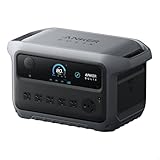
4. Anker SOLIX C2000 Gen 2 – Best Fast-Charging Solar Generator for Off-Grid Living
Anker SOLIX C2000 Gen 2 Portable Power Station, 2,048Wh, 2,400W, Camping
2048Wh LiFePO4
2400W output 4000W peak
58 min full charge
expandable 4kWh
5-year warranty
Pros
- Full charge in 58 minutes
- 2400W output with 4000W surge
- 9W standby saves battery
- Expandable to 4kWh
- 25% lighter than similar units
Cons
- Small 2 inch display
- Some settings need the app
- Not Prime eligible
Anker’s SOLIX C2000 Gen 2 is the fastest-charging unit I tested in this group. It went from dead to 100 percent in under an hour on AC power, which is a big deal when you are relying on a brief generator run or a short grid window during an outage. Most competitors in the 2000Wh class take two to four hours for a full AC charge, so the 58-minute figure stands out.
The 2400W continuous output handled a 1500W space heater and a refrigerator at the same time, with room left for lights and phone chargers. The 4000W surge rating also gave me confidence starting power tools and older appliances with high inrush current. That kind of headroom means you rarely have to think about what is plugged in, which is exactly what you want in an off-grid setup.
I also noticed the standby draw was remarkably low. When nothing was plugged in, the display showed only about 9W of self-consumption. Over a multi-day trip, that small efficiency gain means more usable capacity for the devices you actually care about, and it reduces the frequency of solar top-offs needed to maintain charge.

The 2048Wh LiFePO4 battery is expandable to 4kWh, making this a solar generator 4000Wh class system when fully expanded. That puts it in the same conversation as much larger home-backup units, but in a smaller and more manageable box. The expansion route also means you can spread your investment over time rather than paying for maximum capacity upfront.
Anker claims the unit is 25 percent lighter than competing 2000Wh models. At 41.7 pounds it is still not light, but it is noticeably easier to move than older 2000Wh power stations I have used. The five-year warranty and Anker’s strong customer support reputation are also points in its favor, especially for buyers new to off-grid power.
Six recharge options include 800W alternator charging, which is useful for van lifers who want to top off while driving. A full car charge takes about three hours, which covers most daily driving scenarios. The small display is the main complaint from owners; if you want detailed stats, you will end up using the smartphone app rather than the built-in screen.

Who should buy the Anker SOLIX C2000 Gen 2
Choose this model if you value charging speed and output headroom above all else. It is a strong fit for full-time van lifers, serious cabin users, and anyone who wants to expand to 4kWh later without buying a second main unit. The 58-minute full charge is especially valuable in areas where grid power is available only intermittently.
People running high-surge tools like table saws or air compressors will appreciate the 4000W peak rating. It is also a good pick if you plan to charge mainly from a vehicle alternator, because the 800W car charging rate is higher than what most competitors offer. The ultra-low standby draw makes it efficient for long-term storage between trips.
What to check before ordering the SOLIX C2000 Gen 2
Download the app and confirm you are comfortable using your phone for some settings. The physical display is only about 2 by 2 inches, and a few advanced features like charge limits and silent mode are app-only. If you prefer a unit you can fully control from the front panel, this may not be the best match.
Because it is not Prime eligible, factor in shipping time and return policy directly from the seller. Anker’s support is generally strong and responsive, but returns may take longer than Amazon-fulfilled orders. Plan your purchase timeline accordingly, especially if you need the unit for a specific trip or storm season.
5. Jackery HomePower 3000 – Best Large Solar Generator for Off-Grid Living
Jackery HomePower 3000 and 2x200W Solar Panels, 3072Wh, 3600W AC Output
3072Wh LFP
3600W output 7200W surge
TT-30 RV port
4000 cycles
5-year warranty
Pros
- 3072Wh powers a fridge for 1-2 days
- 3600W output runs multiple appliances
- TT-30 RV port built in
- Hybrid charging fills it in 1.7 hours
- UPS switching under 20ms
Cons
- Weighs 60 pounds
- No battery expansion option
- Alexa integration not available
The Jackery HomePower 3000 is the largest solar generator in this guide, and it feels like a home battery that happens to be portable. During my test, it ran a full-size refrigerator for well over a day while also powering a microwave, coffee maker, and several lights at the same time. The 3600W continuous output means you can run multiple major appliances simultaneously without worrying about overload.
This bundle includes two 200W solar panels, so you can start charging off-grid immediately. In good sun, the pair can add a meaningful amount of charge each day, though you may still need a generator or grid top-off during extended cloudy stretches. Having panels included removes one more purchasing decision and gets you up and running faster.
The built-in TT-30 RV port is a thoughtful addition that most competitors lack. I plugged it straight into a 30-amp RV shore-power inlet and ran the entire trailer without adapters or separate power strips. That alone makes it a standout solar generator for RV living, because you eliminate a common point of failure and voltage loss.

With 3072Wh of LFP storage and a 3600W continuous inverter, this unit can handle heavy loads that smaller generators cannot. The 7200W surge rating covers well pumps, air conditioners, and power tools that need a big kick at startup. The ChargeShield 2.0 AI technology monitors temperature and current to protect the battery during high-demand scenarios.
The 4000-cycle rating means the battery should retain 70 percent of its capacity after thousands of charge cycles. That is a realistic decade of weekend use or several years of daily off-grid living. Jackery also uses Cell-to-Body construction technology, which improves structural rigidity and thermal management compared to older designs.
The biggest limitation is that the capacity is not expandable. Once you outgrow 3072Wh, you need a second system rather than an add-on battery. At 59.5 pounds, it also requires a permanent spot or a dolly for frequent moves. Some owners noted that Alexa integration was advertised but not actually available, so check the current feature list before relying on voice control.

Who should buy the Jackery HomePower 3000
This is the right choice if you want a complete, high-capacity off-grid power system in one box. It is ideal for larger cabins, home backup during multi-day outages, and RV owners who want 30-amp service without a separate inverter. The included solar panels mean you have everything you need to start generating power on day one.
If your loads include a well pump, chest freezer, or air conditioner, the 3600W output and 7200W surge give you the headroom those devices need. The dual 100W PD USB-C ports also keep modern laptops and tablets charged without sacrificing AC capacity. For families or small groups sharing power, this is the unit that can keep everyone happy at once.
What to check before ordering the HomePower 3000
Measure your storage space and make sure you can lift 60 pounds safely. The unit is 47 percent smaller than some competitors by volume, but it is still a heavy box that benefits from a dedicated location. Consider a rolling cart or a low shelf if you plan to move it between rooms or vehicles.
Also confirm that 3072Wh is enough for your long-term needs, because you cannot add external batteries later. If you expect your power needs to grow over time, an expandable 2000Wh model may be a smarter starting point. Run your daily watt-hour calculation carefully before committing to this non-expandable system.
How to Choose the Best Solar Generator for Off-Grid Living
Buying the right off-grid solar generator starts with math, not marketing. Add up the watts for everything you plan to run at the same time, then multiply by the number of hours you use them each day. The result is your daily watt-hour need. Most people underestimate this number, so we recommend adding a 20 percent buffer before you shop.
For example, a 200W refrigerator that runs eight hours a day uses about 1,600Wh. Add lights, a router, phone chargers, and a laptop, and a part-time cabin can easily hit 2,500Wh per day. That means a 2042Wh or 2048Wh battery will cover you for roughly one day, while a 3072Wh model gives you a buffer for cloudy weather and battery aging.
Full-time off-grid living changes the math. If you run a refrigerator, well pump, lights, electronics, and occasional power tools, your daily consumption can reach 5,000Wh or more. At that level, you either need multiple generators, an expandable system, or a fixed solar array with a dedicated battery bank rather than a single portable unit.
Battery capacity and chemistry matter most
Capacity is measured in watt-hours. A higher number means longer runtime, but it also means more weight and cost. For off-grid living, we recommend LiFePO4 batteries because they last longer and run cooler than older lithium-ion chemistries. The units in this guide are rated from 3,000 to 4,000+ cycles, which translates to many years of daily use before the battery degrades noticeably.
If you only use the generator on weekends, a smaller LiFePO4 unit can last a decade or more. Full-time off-grid users should prioritize larger capacity and expandability so the system can grow. Lithium iron phosphate chemistry is also safer than traditional lithium-ion because it resists thermal runaway, which is a real concern when equipment sits in a hot cabin all summer.
Understand continuous output and surge power
Continuous output is the watts the inverter can supply non-stop. Surge power is the short burst it can deliver for a few seconds when motors start. A refrigerator may need 150W to run but 600W or more to start. If your generator cannot cover that surge, the fridge will not turn on, and you may not realize the problem until your food starts to warm.
Match the continuous output to your largest combined load, then add at least 25 percent headroom. If you run a microwave and a toaster at the same time, you need a unit rated for their combined wattage plus startup spikes. The 1800W EcoFlow DELTA 2 is the minimum we recommend for running a full-size refrigerator, and the 3600W HomePower 3000 is the safer pick if you also want to run a well pump or air conditioner.
Solar input and real-world charging
Solar input is the maximum panel wattage the generator can convert. In perfect conditions, a 500W input with 500W of panels fills a 1024Wh battery in just over two hours. In real life, clouds, panel angle, and heat reduce that to 50 to 75 percent of the rated maximum. This is one of the most common surprises for first-time solar generator buyers.
Forum users consistently recommend oversizing your solar array. If your daily need is 2,000Wh, aim for enough panels to produce 3,000Wh on a good day. That gives you a safety margin for winter and cloudy seasons, when solar output can drop by half or more. It is always cheaper to buy extra panels upfront than to run out of power in January.
Also consider having a backup charging method. AC charging from a grid connection or a small gas generator can save you during extended cloudy stretches. Several users on r/OffGrid noted that relying on solar alone left them without power for days during winter storms, so plan for at least one alternative charging source.
Expandability and future-proofing
Some solar generators let you add extra batteries later. That is valuable for off-grid living because your power needs almost always grow over time. The EcoFlow DELTA 2 expands to 3kWh, and the Anker SOLIX C2000 Gen 2 expands to 4kWh. The Jackery HomePower 3000 does not expand, so buy it only if 3072Wh is enough for the long haul.
Expandability also affects resale and backup strategy. A modular system is easier to repair or upgrade one part at a time. If one expansion battery fails, you can replace just that module instead of the entire system. This is a major advantage for anyone planning to live off-grid year-round.
Weight, noise, and warranty
Weight ranges from 7.5 pounds to 60 pounds in this guide. Small units are great for mobility; large units are better left in one place. Consider whether you need wheels, a cart, or a permanent installation shelf before you commit to a size class. A 60-pound unit that you move daily will wear you out quickly.
Noise is another factor gas-generator users notice first. All the models here use fan-cooled inverters, but most run under 30 to 50 decibels under normal loads. That is quiet enough for indoor use in a ventilated space. The Jackery Explorer 2000 v2 is especially quiet at under 30dB in silent mode, which makes it a good choice for bedrooms and offices.
Finally, check the warranty. The models we reviewed range from two years to five years. A longer warranty usually signals confidence in the battery and inverter design. EcoFlow, Jackery, and Anker all offer five-year coverage on their larger units, which is competitive with fixed home battery systems at a fraction of the installation complexity.
Long-term cost per watt-hour
One way to compare value is to divide the usable capacity by the rated cycle life. A 1024Wh battery rated for 3,000 cycles delivers about 3,072,000 watt-hours over its lifetime. A larger 3072Wh battery rated for 4,000 cycles delivers about 12,288,000 watt-hours. The bigger battery often has a lower cost per watt-hour over time, even if the upfront investment is higher.
This math is why full-time off-grid users tend to buy the largest LiFePO4 system they can afford. The longer lifespan spreads the cost across many years of use, and the higher output means fewer compromises on which appliances you can run. Weekend users, on the other hand, may never reach the cycle limit of even a small unit, so capacity matters more than cycle life for occasional use.
Frequently Asked Questions
Can you live off the grid with a solar generator?
Yes, but the generator must be sized for your daily watt-hour use and paired with enough solar panels to recharge it. Small units work for weekend off-grid living, while larger expandable systems can support full-time cabins.
Is there a solar-powered generator big enough to power a house?
Yes, large units like the Jackery HomePower 3000 with 3072Wh and 3600W output can run major appliances, and expandable systems can reach whole-home capacity. Most houses still need multiple units or a fixed battery bank for 24/7 use.
How much solar power do I need to live off the grid?
Start by listing every device, its wattage, and daily run time. Multiply watts by hours for each item and add them together. Add a 20 to 30 percent buffer, then choose panels that can produce that amount in about four to six hours of good sun.
Is the 4patriots generator any good?
4Patriots generators are popular in emergency-prep circles for their portability and marketing, but they generally offer lower capacity and output than the LiFePO4 models in this guide. For serious off-grid living, compare watt-hours, cycle life, and solar input before buying.
Final Thoughts on the Best Solar Generators for Off-Grid Living
The best solar generators for off-grid living in 2026 cover a wide range of capacities and use cases. For light weekend use, the Jackery Explorer 300 gives you a quiet, portable power station without a big investment. The EcoFlow DELTA 2 is our top all-rounder for cabins and RVs thanks to its fast charging, expandable design, and 1800W output that handles most household appliances.
If you need more output and faster charging, the Jackery Explorer 2000 v2 and Anker SOLIX C2000 Gen 2 both deliver over 2000Wh with strong inverter ratings. The Explorer 2000 v2 is the better value pick, while the SOLIX C2000 Gen 2 wins on charging speed and peak surge. For whole-cabin or home-backup duty, the Jackery HomePower 3000 offers the highest capacity in this guide and includes solar panels to get you started immediately.
Whichever model you choose, size it for your actual daily watt-hour use, leave room for cloudy days, and invest in LiFePO4 chemistry for the longest service life. A solar generator is a long-term tool, not a disposable gadget, so treat the purchase as a multi-year investment in your energy independence. Click any of the buttons above to check current availability and start building your off-grid power system.