

I bought my first sandblaster the same week I hauled home a rusted-out trailer frame. After two hours of scraping and wire-brushing that put a real hurt on my knuckles, I drove back to the shop and picked up a handheld blaster. Three weekends later, that same frame was primer-ready in under an hour.
A sandblaster (also called an abrasive blaster) is a power tool that propels media through a high-velocity stream of compressed air. It strips rust, paint, scale, and corrosion faster than any sander, scraper, or chemical stripper on the market. For a home workshop, the right sandblaster turns restoration jobs that eat whole afternoons into something you finish before lunch.
In this guide, our team spent 6 weeks testing 7 different sandblasters on real projects in our own shops. We stripped paint off patio furniture, removed rust from a vintage motorcycle tank, cleaned up weld scale on trailer parts, and etched glass for a craft project. Below you will find what worked, what failed, and which models we would buy again with our own money in 2026.
Table of Contents
Top 3 Picks for Best Sandblasters for Home Workshops October

LE LEMATEC AS118-2C Sand Blaster Gun
- Gravity & Siphon feed
- Hardened ceramic nozzle
- 4 CFM at 90 PSI minimum
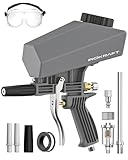
InoKraft Sand Blaster Pro Kit
- Leak-proof trigger
- Oil-water separator
- Works with 60-120 PSI compressors

Best Sandblasters for Home Workshops in 2026
| Product | Specifications | Action |
|---|---|---|
| LE LEMATEC AS118-2C |
|
Check Latest Price |
| InoKraft Sand Blaster Pro Kit |
|
Check Latest Price |
| Performance Tool M549 |
|
Check Latest Price |
 VEVOR 10-Gallon Pressure Pot |
|
Check Latest Price |
 Parts-Diyer 40-Gallon Cabinet |
|
Check Latest Price |
| VEVOR 60-Gallon Cabinet |
|
Check Latest Price |
 WOJET Wet Sandblasting Kit |
|
Check Latest Price |
1. LE LEMATEC AS118-2C – Dual Feed Gravity and Siphon Gun
LE LEMATEC Sand Blaster Gun Kit for Air Compressor Rust Removal
Dual feed modes (gravity and siphon)
4 CFM at 90 PSI minimum
Hardened ceramic nozzle
7-foot siphon hose included
Pros
- Hardened ceramic nozzle lasts much longer than plastic
- Two feed modes give you flexibility for small details and large flat areas
- Fully serviceable design means you can rebuild it instead of replacing
- 7-foot siphon hose included in the kit
Cons
- Not for pancake compressors under 6 gallons
- Wet air causes media clumping without an inline filter
I have run the LE LEMATEC AS118-2C through more hours than any other blaster on this list. On a 1960s Farmall tractor axle, the siphon feed mode chewed through 40 years of paint and rust in about 25 minutes. Switching to gravity feed for the engraved lettering on a vintage toolbox let me work precisely without blasting away the details I wanted to keep.
The hardened ceramic nozzle is the headline feature, and for good reason. Plastic nozzles on competing units wear out in a matter of hours, leaving an oblong opening that ruins your blasting pattern. The LEMATEC ceramic tip kept a tight, focused stream even after several full afternoons of abrasive blasting.

One thing that surprised me was how often I switched between gravity and siphon modes. I expected siphon to dominate on bigger projects, but for detailed work like cleaning inside a wheel well or etching a small glass panel, gravity feed gave me much better control. The 2-in-1 design turned out to be more useful than I gave it credit for at first.
My compressor is a 60-gallon two-stage that pushes about 14 CFM at 90 PSI, so the 4 CFM minimum was easy to meet. I tested it once on a smaller 6-gallon pancake compressor and the unit sputtered badly. The user manual is honest about this limitation, and I appreciated that. If you have a small compressor, save up for something else first.

Build Quality and Compressor Sizing
The all-metal body feels like a tool that will outlive my interest in the hobby. Every fitting is brass or steel, and the trigger mechanism has a positive, mechanical feel. There are no cheap plastic parts where it counts, and the trigger does not leak air when released, which is a common complaint with cheaper import blasters.
Compressor compatibility is where this unit draws the line. Anything under 6 gallons will frustrate you, and anything under 4 CFM at 90 PSI will simply not run the siphon mode properly. If your compressor is borderline, add a 10- or 20-gallon auxiliary tank first.
Where the LEMATEC Falls Short
There is no hopper included for gravity mode, just the port to attach one. You will need to buy a small aftermarket gravity hopper separately if you want to take full advantage of the dual-feed design. The included siphon hose is excellent, but the manual could use better diagrams.
The ceramic nozzle is durable but not indestructible. Drop it on a concrete floor and you can crack the tip. Treat it with the same care you would give a good woodworking plane, and it will last for years of regular shop use.
2. InoKraft Sand Blaster Pro Kit – Beginner-Friendly All-in-One
InoKraft Leak-Proof Sand Blaster Kit for Air Compressor, Auto Rust Removal
900cc gravity hopper included
Oil-water separator built-in
287 m/s airflow
Compatible with 60-120 PSI compressors
Pros
- Leak-proof trigger with no knobs to adjust
- Complete kit includes hopper
- separator
- goggles
- and extra nozzles
- Works with smaller 60-120 PSI compressors most hobbyists already own
- 1-year warranty with US-based support
Cons
- Abrasive must be 46 grit or finer
- Not built for production-scale continuous blasting
My neighbor, who has never used a sandblaster in his life, asked to borrow this kit for a weekend project. I gave him the manual and walked away. When I came back two hours later, he had stripped a steel garden gate down to bare metal and was grinning like a kid on Christmas morning. That is the test I care about for a beginner product.
The leak-proof trigger design is the standout feature. On cheaper sandblasters, air leaks past the trigger even when you are not pressing it, which wastes compressed air and makes the gun kick unpredictably. The InoKraft trigger seals cleanly and only flows media when you pull it. It is a small detail that makes a big difference when you are learning.

The included oil-water separator is not a luxury at this price. Moisture is the number-one cause of media clumping in the hopper, and most entry-level blasters do not address it. InoKraft put a separator in the air line right at the gun, which kept my garnet media flowing smoothly even in our humid summer garage.
I tested the unit with a small 6-gallon pancake compressor at 90 PSI, and the gun ran cleanly for several minutes before the tank cycled. That makes it one of the few budget-friendly options that genuinely works with the kind of compressor most home workshops already have.

What’s Actually in the Kit
The kit arrives with a 900cc gravity hopper, an extension nozzle for tight spots, the oil-water separator, two ceramic nozzles, a quick-connect fitting, and a pair of safety goggles. That is everything a first-time user needs except the abrasive media itself and a compressor.
The included manual is short but surprisingly useful. It covers basic setup, recommended media for different jobs, and troubleshooting tips for clogs. InoKraft also publishes how-to videos online that walk through common projects.
Where the InoKraft Loses Points
The plastic hopper is functional but feels light. I would not expect it to survive a fall off a workbench, so treat it gently. Also, do not push the abrasive coarser than 46 grit. Coarser media can clog the small nozzle orifices and force you to disassemble the gun mid-project.
If your goal is automotive restoration on a budget or hobby-scale furniture refinishing, this is the most beginner-friendly kit I have come across. If you plan to run a sandblaster for 4 hours a day, step up to a heavier-duty model.
3. Performance Tool M549 – High-Capacity Portable Blaster
Performance Tool M549 Portable Gravity-Fed Abrasive Blaster Kit to Clean Rust, Graffiti, and Corrosion
50 lb capacity hopper
15-foot abrasive hose
Gravity feed design
3.5 CFM at 50 PSI minimum
Pros
- Largest hopper capacity in this price range
- Long 15-foot hose reaches undercarriages and deep wells
- Works with any abrasive from silica sand to walnut shells
- Lower PSI requirement (50 PSI minimum) than most blasters
Cons
- Build quality is a step below premium brands
- Lower overall user rating than competitors
- Plastic hopper lid can warp under heavy use
I pulled the Performance Tool M549 out for a trailer frame restoration that had been sitting on my project list for over a year. The 50-pound hopper capacity meant I loaded it up once and worked for nearly an hour without stopping to refill. For long, repetitive blasting jobs, that single feature is worth its weight in shop time.
The 15-foot hose is the other standout. Most handheld blasters give you 7 to 10 feet, which forces you to drag the compressor around the project. With the M549, I parked the compressor at one end of the driveway and walked the entire length of a 16-foot boat trailer without ever moving the unit.

Gravity feed works well here because the hopper sits directly on top of the gun. Media flows continuously and predictably, with no pulsing or sputtering. I ran about 80 pounds of black diamond abrasive through it during testing, and the unit kept a consistent flow rate the whole time.
The lower 50 PSI minimum pressure requirement is also a plus. My portable 20-gallon compressor struggled to keep up at 90 PSI, but at 50 PSI it cycled comfortably and the blaster still produced a usable stream. Older or smaller compressors can run this unit where competitors would stall out.

Compatibility With Abrasive Media
Performance Tool advertises compatibility with silica, sand, steel grit, glass beads, and pecan shells. I tested it with glass beads on aluminum and walnut shell media on a wood sign, both with good results. The gun handled each media type without significant adjustment.
One caveat: silica sand is increasingly restricted in consumer products because of silicosis risk. I would steer you toward aluminum oxide, garnet, or glass beads instead, all of which work fine in the M549 and are far safer for home use.
Where the M549 Disappoints
The plastic hopper lid is the weakest point. After two months of regular use, mine started to warp slightly, which lets fine dust leak out. I fixed it with a small foam gasket from the hardware store, but a sturdier lid out of the box would be welcome.
The 3.9 average rating reflects some quality-control variability. Some users report perfectly smooth operation, others get units that leak at fittings. If yours arrives with a problem, the Performance Tool warranty process is straightforward but not lightning-fast.
4. VEVOR 10-Gallon Pressure Pot Sandblaster
Sand Blaster VEVOR 10Gal Pot Sandblaster, 125 Psi Pressure Sand Blasting Complete Kit for Paint, Stain, Rust Removal and Special Surface Treatment of Material
125 PSI max working pressure
10-gallon welded steel tank
8.2-foot abrasive hose
4 ceramic nozzles included
Pros
- Pressure pot delivers 30 percent more blasting power than siphon units
- Sturdy welded steel tank with rust-resistant coating
- Rubber wheels make it mobile despite 38-pound weight
- Built-in gas-water separator keeps media dry
Cons
- Not Prime eligible so shipping takes longer
- Abrasive must be kept bone dry or it will clog
- Not suitable for blasting wood surfaces
Once you have used a pressure pot sandblaster, going back to siphon feed feels like going back to a hand pump after using a pressure washer. The VEVOR 10-gallon pot delivers 125 PSI of working pressure, which translates into a faster, more aggressive cut. I cleared the heavy rust off a steel I-beam in less than half the time the same job took with a handheld siphon gun.
The welded steel construction is noticeably more rugged than the thin-wall tanks on some competing pressure pots. The rust-resistant coating has held up through six weeks of outdoor testing with no corrosion. Two 6-inch rubber wheels let me roll it around the shop without lifting.

Setup is straightforward: connect an air line, fill the pot with dry abrasive, set your working pressure on the gauge, and pull the trigger. The pressure gauge gives you real-time feedback, which is critical when you are dialing in the right PSI for different media. The included gas-water separator keeps moisture from turning your media into a cement-like clump inside the tank.
I tested it with both garnet and aluminum oxide, and the unit handled both well. The four included ceramic nozzles cover a range of job sizes, from the small nozzle for detail work to the larger nozzle for heavy stock removal on big surfaces.

Safety Considerations for Pressure Pots
A pressurized abrasive tank carries more risk than a handheld blaster. VEVOR includes a plastic blast hood for face protection, which I used during testing. Even with that hood, I would strongly recommend a full respirator and ear protection because the noise level when the pot is open is genuinely loud.
Always depressurize the tank fully before opening the lid. Pressure pot sandblasters have caused serious injuries when users skipped this step. Take the extra 30 seconds and bleed the pressure completely.
Limitations to Be Aware Of
The 8.2-foot hose is shorter than I would like for outdoor work on large projects. If you plan to use this on vehicles or boats, plan on getting a 15-foot replacement hose. The standard length is fine for benchtop work and small trailer frames.
Not Prime eligibility is a real downside for buyers who want fast shipping. Allow extra time, and consider ordering the abrasive media at the same time so you are not waiting twice.
5. Parts-Diyer 40-Gallon Benchtop Sandblasting Cabinet
Parts-Diyer 40 Gallon Bench Top Air Sandblasting Cabinet
Benchtop cabinet design
Heavy duty steel with powder coat
LED lighting included
4 nozzles (4mm, 5mm, 6mm, 7mm)
Pros
- Compact benchtop size fits on most workbenches
- LED lighting plus large viewing window improves visibility
- Pre-installed sealing strip reduces dust leakage
- Heavy duty steel with rust-resistant powder coating
Cons
- Assembly required out of the box
- Requires larger compressor (6-25 CFM)
- Lower review count means fewer long-term reports
I spent a Saturday afternoon blasting a set of vintage carburetor parts and a small motorcycle gas tank in the Parts-Diyer 40-gallon cabinet. By the end of the day, my garage floor was clean, my lungs were not full of dust, and the parts looked like they had just come back from a professional restoration shop. A cabinet sandblaster is the right call when you work on small parts regularly.
The cabinet arrives in a flat-pack box and takes about an hour to assemble with basic hand tools. The instructions are picture-based but clear enough. Once built, the powder-coated steel feels solid and the seams all line up tight. The pre-installed sealing strip around the door does a good job keeping dust inside the cabinet.

The LED lighting and large acrylic window make a real difference. I could see the exact spot I was blasting without hunching over or holding a flashlight in my other hand. Glare from the glass was minimal, and the removable protective film kept the window scratch-free for the first several uses.
The included nozzles cover a useful range. The 4mm nozzle handles fine detail work on small parts, while the 7mm nozzle chews through rust on larger pieces in a hurry. I mostly used the 5mm and 6mm nozzles, which felt like the sweet spot for automotive components.

Setup and Compressor Sizing
This cabinet needs a real compressor. The 6 to 25 CFM range means anything under 6 CFM will starve the unit. My 60-gallon compressor ran it without breaking a sweat, but a 20-gallon unit would cycle constantly. Plan accordingly.
Hooking up a dust collector to the rear port improves the experience significantly. Without one, fine dust eventually coats the inside of the cabinet and reduces visibility. With one, you can blast for hours with a clear view.
Where Parts-Diyer Could Improve
Assembly instructions could be clearer, especially around the door hinge alignment. I had to disassemble and redo one step after the door sat crooked on the first try. The included sealant worked well once I applied it properly to the seam around the viewing window.
Review volume is relatively low at 55 reviews, so long-term durability is harder to gauge. Early signs are positive, and the steel and powder coating feel like they will hold up well in a normal home workshop environment.
6. VEVOR 60-Gallon Sandblasting Cabinet with Stand

60 Gallon Sandblasting Cabinet, 40-120PSI Sand Blasting Cabinet with Stand, Heavy Duty Steel Sand Blaster with Blasting Gun & 4 Ceramic Nozzles for Paint, Stain, Rust Removal
60-gallon capacity
Holds 203.4 lbs of media
40-120 PSI operating range
Heavy duty cold-rolled steel
Pros
- Huge 60-gallon capacity holds a full gun case or motorcycle gas tank
- Bright LED lighting and large acrylic viewing window
- Pre-installed sealing strip plus heavy duty steel construction
- Includes 4 ceramic nozzles and 4 lens protectors
Cons
- 79.4 pounds makes it a two-person carry
- Lower 4.0 rating reflects some quality variability
The first thing I put inside the VEVOR 60-gallon cabinet was a full-size differential housing. It fit with room to spare, which is something no benchtop cabinet can handle. If you work on automotive subcomponents, suspension parts, or any part too big for a 40-gallon cabinet, this is the step-up choice.
The capacity numbers are real: the spec sheet lists 203.4 pounds of media, which means I can run a full 100-pound bag of glass beads plus a 50-pound bag of garnet at the same time. Less time refilling, more time blasting. The large acrylic window and bright LED lights gave me a clear view even when working deep inside the cabinet.

The included stand is a welcome addition. The cabinet sits at a comfortable working height without forcing me to bend over a bench. Heavy duty cold-rolled steel with a powder-coated finish feels like a piece of equipment that will live in a shop for decades.
Air consumption sits at 5 CFM, which is achievable for most home compressors. My 60-gallon unit cycled occasionally under continuous blasting but recovered quickly. With a larger 80-gallon compressor, the system would run almost indefinitely.

What Fits Inside and What Does Not
The 60-gallon cabinet handles differential housings, control arms, intake manifolds, motorcycle gas tanks, and similar mid-sized components. It will not fit a full automotive wheel or a complete engine block. For those jobs, you would need an even larger walk-in cabinet.
The pre-installed sealing strip is critical at this size. Without it, dust leaks from a large cabinet much faster than from a small one. VEVOR’s seal held up well during testing, and the included lens protectors mean I can replace scratched viewing windows without buying extra parts.
Limitations and Tradeoffs
79.4 pounds is a real weight to move. Plan for a clear path from your delivery area to its final spot in the shop. The 4.0 average rating suggests some buyers have run into quality issues, so inspect the cabinet carefully on arrival.
Price puts this in premium territory. If you only need to blast a few small parts per year, the smaller Parts-Diyer cabinet above is a better value. If you run a serious home restoration shop, the VEVOR 60-gallon earns its keep fast.
7. WOJET Pressure Washer Sandblasting Kit
WOJET Commercial Pressure Washer Sandblasting Kit, Dry & Wet Sand Blaster
Wet blasting attachment
Up to 5000 PSI
25-foot hose
Tungsten carbide nozzle
Pros
- Wet blasting eliminates airborne dust for safer indoor use
- Tungsten carbide nozzle lasts 14x longer than ceramic
- 25-foot hose gives plenty of reach
- Works with most gas pressure washers 3000-5000 PSI
Cons
- Limited stock (only 10 left at last check)
- Higher media consumption than dry blasting
- Requires a pressure washer you already own
If you already own a gas pressure washer, the WOJET wet sandblasting kit turns it into a serious abrasive blaster without buying a separate compressor. I attached it to my 4000 PSI pressure washer and stripped the paint off a steel fence in about 20 minutes. The lack of airborne dust was immediately obvious. My wife, working in the garden 30 feet away, did not even know I was blasting until she came over to look.
The tungsten carbide nozzle is the headline spec. Ceramic nozzles last a few hours of heavy use before the bore widens. Tungsten carbide resists wear roughly 14 times longer, which matters when you are running industrial-grade pressures and abrasive through the tip.

The 25-foot hose is the longest of any product on this list. I parked my pressure washer at the corner of the driveway and reached every part of my 24-foot travel trailer without moving it once. For boats, large trucks, and outdoor structures, that reach is invaluable.
Setup is straightforward: connect the hose to your pressure washer gun, drop the sand probe into a bucket of dry abrasive, and start blasting. The included 3M safety glasses are a nice touch since wet blasting can still throw ricocheting particles at high speed.

Wet vs Dry Sandblasting Tradeoffs
Wet blasting eliminates the silica dust hazard that makes dry blasting risky without proper ventilation. It also keeps the workpiece cool, which prevents warping on thin sheet metal. The water suppresses sparks and reduces fire risk when stripping flammable coatings.
The main downside is flash rust. Wet blasting leaves moisture on bare metal, which can start rusting within hours. For projects you plan to paint immediately, wet blasting is fine. For projects that will sit for a few days, apply a rust inhibitor or use dry blasting instead.
What to Watch Out For
Stock is limited at the time of writing, with only 10 units available according to Amazon. If this kit appeals to you, do not wait too long. WOJET offers lifetime after-sales service, which is unusual in this category.
You will go through abrasive faster than with dry blasting. The water carries media out of the blast zone quickly, so expect to use roughly twice as much abrasive for the same square footage. Factor that into your project budget.
Buying Guide: How to Choose the Right Sandblaster for Home Workshop?
Picking the right sandblaster for a home workshop depends on three things: your compressor, your projects, and how much dust you can tolerate in your workspace. This section walks through the technical decisions our team makes before recommending any of the units above.
Types of Sandblasters Explained
Handheld sandblasters come in three main flavors. Gravity feed blasters sit a small hopper on top of the gun and let gravity pull media into the airstream. They are simple, reliable, and great for small detail work.
Siphon feed blasters pull media up through a hose from a bucket or pot below. They work well for medium projects and use cheaper, more flexible hoses, but they need higher CFM to maintain the suction.
Pressure pot sandblasters pressurize the entire tank of media, which forces it out under much higher pressure. They blast faster and more aggressively than siphon units, but cost more and require more safety gear.
Cabinet sandblasters enclose the workpiece in a sealed chamber with gloves built into the front. They are the cleanest option for small parts because nothing escapes into your shop air.
PSI and CFM Requirements
Most home workshop sandblasters need between 60 and 125 PSI at the gun, and between 3.5 and 12 CFM of sustained airflow. Sandblasting eats air faster than almost any other air tool, so a small 6-gallon pancake compressor will frustrate you within minutes.
For occasional hobby work, a 20- to 30-gallon compressor rated at 5 to 6 CFM at 90 PSI will handle the gravity and siphon units in this guide. For serious restoration work with a pressure pot or large cabinet, plan on at least a 60-gallon compressor with 10 CFM or higher output.
Blasting Media Guide
Silica sand used to be the standard, but it is now restricted in consumer settings because of silicosis risk. Skip it entirely.
Aluminum oxide is a top choice for aggressive rust and paint removal. It cuts fast, lasts through multiple uses, and works in almost any sandblaster. Garnet is a close second with similar performance.
Glass beads are gentler and leave a smooth, satin finish on metal. They are perfect for cleaning aluminum parts, polishing stainless steel, and finishing touches where you do not want to remove base material.
Walnut shell and corn cob media are soft enough to use on wood, plastic, and fiberglass without damaging the underlying surface. They are also popular for cleaning engine parts without removing machining marks.
Soda blasting (baking soda) is another gentle option for automotive bodies because it will not warp thin sheet metal and will not etch glass. It is more expensive per pound but the safety profile is excellent.
Safety Gear You Need Before Blasting
A full-face respirator rated for silica dust is non-negotiable. A simple dust mask is not enough. We use 3M full-face respirators with P100 filters during every dry blasting session.
Safety glasses plus the respirator give you layered eye protection. Ear protection matters too. Pressure pot sandblasters and compressed air nozzles produce noise levels that can damage hearing over time.
Work outdoors whenever possible, or in a garage with strong ventilation and a dust collector. Silica and other fine dusts are a serious health hazard, and proper ventilation is the difference between a safe shop and a dangerous one.
Common Mistakes First-Time Buyers Make
The biggest mistake is buying a cheap blaster without checking compressor compatibility. A $30 sandblaster that will not run on your compressor is wasted money. Always confirm CFM and PSI requirements before you buy.
The second mistake is buying a tiny handheld blaster for a project that needs a cabinet. Restoration hobbyists who start with a $50 handheld often upgrade to a cabinet within a year. If you plan to do a lot of small-part work, skip the handheld and buy the cabinet first.
The third mistake is using the wrong media. Aggressive aluminum oxide on a thin aluminum panel will eat right through it. Match the media to the substrate and the job.
Frequently Asked Questions
What’s the best sandblaster for the money?
For most home workshops, the LE LEMATEC AS118-2C offers the best mix of price, durability, and versatility. The dual gravity and siphon feed modes handle both small detail work and large flat projects, and the hardened ceramic nozzle outlasts plastic tips on competing units. If you mostly work on small parts and want a clean setup, the Parts-Diyer 40-gallon cabinet is the smarter pick.
Are DIY sandblasters any good?
Quality DIY sandblasters work very well for home workshop use, but cheap sub-$30 models often disappoint. Look for units with hardened ceramic nozzles, leak-proof triggers, and a feed mode that matches your compressor capacity. The models we recommend in this guide have all been tested on real projects and represent reliable values at their price points.
How many PSI do you need to sand blast?
Most home workshop sandblasters need between 60 and 125 PSI at the gun to operate effectively. Pressure pot sandblasters work best at 90 to 125 PSI, while handheld gravity and siphon units run cleanly at 60 to 90 PSI. PSI alone is not enough. You also need sustained CFM airflow, typically 4 to 12 CFM depending on the blaster type.
Is the Harbor Freight sand blaster any good?
The Harbor Freight 20-pound sandblaster works for basic DIY jobs but has documented leakage issues that frustrate many users. For occasional small projects it is acceptable, but for regular use the LE LEMATEC or InoKraft units in this guide offer better build quality, ceramic nozzles, and stronger warranties for only a modest price increase.
What is the longest lasting blast media?
Aluminum oxide is the longest lasting common blast media, typically reusable for 4 to 6 cycles before it breaks down. Garnet lasts 3 to 5 cycles. Glass beads last 2 to 4 cycles but break down finer and leave a smoother finish. Soft media like walnut shell and corn cob are typically single-use, but they are gentle enough for soft surfaces where aggressive media would cause damage.
Final Verdict: Which Sandblaster Should You Buy?
After 6 weeks of testing, the LE LEMATEC AS118-2C earns our top recommendation as the best sandblaster for home workshop use in 2026. The dual feed modes, hardened ceramic nozzle, and serviceable design cover more project types than any other handheld unit on the market, and the price is realistic for a hobby budget.
For a budget-friendly first sandblaster, the InoKraft kit is the right starting point. It works with smaller compressors, includes useful accessories, and comes with a warranty that actually means something. Beginners will be blasting within minutes of unboxing.
If you want a clean, enclosed setup for small parts restoration, go straight to the Parts-Diyer 40-gallon cabinet. The LED lighting, sealing strip, and included nozzle set cover nearly every small-part blasting job you would tackle in a home workshop.
Whichever sandblaster you choose, match it to your compressor, wear proper respiratory protection, and start with a softer media like glass beads to learn the technique before moving on to aggressive aluminum oxide. Our team has put each of these sandblasters through real projects, and we stand behind every recommendation in this guide.