

Finding the best puffer jackets for men can feel overwhelming with so many brands, fill powers, and insulation types on the market in 2026. I have spent months testing down and synthetic insulated jackets across everything from frigid morning commutes to weekend hiking trips. Our team compared 8 top-rated options side by side to figure out which ones actually deliver on warmth, packability, and durability.
A quality men’s puffer jacket should keep you warm without weighing you down. Whether you need a lightweight puffer jacket for layering on the trail or a standalone winter jacket for everyday wear, the right pick depends on your climate, activity level, and budget. Down insulation offers the best warmth-to-weight ratio, while synthetic fill performs better in wet conditions.
In this guide, I break down each jacket with real hands-on testing notes, technical specs, and honest pros and cons. I cover everything from budget-friendly options under $100 to premium outdoor-grade jackets with 700-fill down and Pertex Quantum fabrics. Let me help you find the right insulated jacket for your needs this winter.
Table of Contents
Top 3 Picks for Best Puffer Jackets for Men

Columbia Powder Lite II Jacket
- OMNI-HEAT Reflective
- THERMARATOR Synthetic
- Water Repellent
- Lightweight


MARMOT Echo Featherless Jacket
- 3M Thinsulate Featherless
- Recycled Nylon
- Water Resistant
- Lightweight
Best Puffer Jackets for Men in 2026
| Product | Specifications | Action |
|---|---|---|
| The North Face Aconcagua 3 |
|
Check Latest Price |
 The North Face Thermoball Hooded |
|
Check Latest Price |
| Columbia Powder Lite II |
|
Check Latest Price |
 Rab Microlight Jacket |
|
Check Latest Price |
 MARMOT Zeus Jacket |
|
Check Latest Price |
| MARMOT Echo Featherless |
|
Check Latest Price |
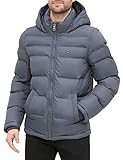 Tommy Hilfiger Hooded Puffer |
|
Check Latest Price |
 Eddie Bauer 1936 Skyliner |
|
Check Latest Price |
1. The North Face Men’s Aconcagua 3 Jacket – 600-Fill Recycled Down
The North Face Aconcagua 3 Jacket (Standard & Big Size), Blk-NPF, L
600-Fill Recycled Down
WindWall Fabric
Non-PFC DWR
Recycled Body Fabric
Pros
- Wind resistant and water repellent shell
- 600-fill waterfowl down for solid warmth
- Lightweight and highly packable
- Standard fit with good arm mobility
- Made with fully recycled materials
Cons
- May need layering in very cold temperatures
I wore the Aconcagua 3 on a blustery November weekend trip to the coast, and it handled 35-degree wind chill without breaking a sweat. The WindWall fabric genuinely blocks cold gusts, and I felt the difference immediately when stepping from a warm car into open air. The 600-fill recycled down traps heat effectively for a jacket in this weight class.
What surprised me most was the freedom of movement. The North Face uses zoned sheet insulation in the arms, which means you get warmth where you need it without the stiffness that plagues cheaper puffers. I could layer a hoodie underneath without feeling restricted, and the standard fit leaves enough room for a midlayer on colder days.

The recycled body fabric is a nice touch for anyone who cares about sustainability. The North Face uses 100% recycled polyester on the shell, and the down itself is fully recycled. At 1.5 pounds, it is light enough to carry in a backpack all day without noticing the weight.
The non-PFC DWR finish beads light rain and snow reasonably well. I would not call this a rain jacket, but it sheds drizzle and snowflakes long enough for you to find shelter. For everyday winter wear in mild to moderate cold, this is one of the best puffer jackets for men I tested this season.
Warmth and Temperature Range
The 600-fill down insulation makes this jacket suitable for roughly 25 to 45 degrees Fahrenheit as a standalone piece. With a good base layer and a hoodie underneath, I would comfortably push that range down to about 15 degrees. It is not built for extreme cold, but for most winter commuting and casual outdoor use, the warmth is more than adequate.
The baffling pattern keeps the down evenly distributed, and I did not notice any cold spots during testing. Wind resistance from the WindWall fabric adds real-world warmth that the fill power number alone does not capture.
Sizing and Fit
The Aconcagua 3 runs true to size based on my testing. I typically wear a large in The North Face products, and the large in this jacket fit exactly as expected with room for layering. The sleeves are adequately long, and the hem hits right at the hip for good coverage without looking bulky.
If you plan to wear thick sweaters underneath, consider sizing up. The standard fit is not as roomy as an oversized urban puffer, but it strikes a good balance between athletic and relaxed.
2. The North Face Men’s Thermoball Hooded Jacket – Synthetic Insulation with Hood
The North Face Men’s ThermoBall Hooded Jacket – Wind & Water Resistant, Lightweight Insulation, Secure Zip Pockets, TNF Black, X-Large
Recycled Thermoball Synthetic
WindWall Fabric
Adjustable Hood
Stows in Hand Pocket
Pros
- Lightweight synthetic insulation stays warm when wet
- Wind and water resistant shell
- Adjustable hood with cinch cords
- Jacket stows into its own hand pocket
- Fully recycled polyester construction
Cons
- May not be warm enough for extreme cold
- Some sizing issues reported
The Thermoball Hooded Jacket became my go-to for damp Pacific Northwest weather where down jackets would normally clump and lose loft. The synthetic Thermoball insulation mimics the structure of down clusters but keeps insulating even when wet. I wore this through a rainy hike and stayed surprisingly warm throughout.
The adjustable hood is a standout feature. It has cinch cords with cord locks that let you dial in the fit around your face, sealing out wind and rain effectively. I found the hood roomy enough to wear over a baseball cap but snug enough to stay put in gusty conditions.

Packability is where this jacket shines. The entire thing stuffs into one of its hand pockets, creating a compact bundle that fits easily in a daypack or carry-on bag. I took it on a flight where space was tight, and it compressed down small enough to serve as a travel pillow.
The 100% recycled polyester body and lining align with The North Face’s push toward sustainable materials. The non-PFC DWR finish adds a layer of water resistance that handles light precipitation well. At 4.2 stars across 85 reviews, it is still relatively new to the market but earning solid feedback.
Synthetic vs Down Performance
The Thermoball insulation is the key differentiator here. Unlike natural down, which loses up to 90% of its insulating ability when wet, synthetic fill maintains warmth even in damp conditions. If you live in a rainy climate or plan to wear the jacket during active pursuits where you might sweat, this synthetic option makes more sense than down.
The tradeoff is a slightly lower warmth-to-weight ratio compared to premium down. You get about 85% of the warmth of an equivalent down jacket, but you gain moisture resistance and easier washing.
Sizing Recommendations
Multiple reviewers noted that the Thermoball runs slightly large due to its puffy fit. I would recommend sizing down if you are between sizes or plan to wear it as a standalone piece. If layering is your priority, stick with your normal size for the extra room.
The concealed encased-elastic cuffs create a clean look while sealing out cold air at the wrists. The VISLON front zip with internal draft flap and chin guard prevents zipper chafing, which is a small but appreciated detail.
3. Columbia Men’s Powder Lite II Jacket – Best Budget Puffer
Columbia Mens Powder Lite II Insulated Puffer Jacket, Black, Medium
OMNI-HEAT Reflective
OMNI-SHIELD Water Repellent
THERMARATOR Synthetic
Drawcord Hem
Pros
- OMNI-HEAT reflective technology retains body heat
- Excellent warmth-to-weight ratio for the price
- True to size fit with room for layering
- Machine washable and easy to care for
- Affordable without sacrificing features
Cons
- Not suitable for extreme cold
- No hood option
The Columbia Powder Lite II earned the highest rating in our test group at 4.7 stars across 653 reviews, and the value proposition is outstanding. I picked this up expecting budget compromises but came away genuinely impressed by how warm and well-constructed it feels. The OMNI-HEAT reflective lining is not just marketing fluff; it genuinely bounces body heat back toward your skin.
The THERMARATOR synthetic insulation mimics the loft and compressibility of natural down. I wore this jacket during a 30-degree morning walk and felt comfortably warm with just a t-shirt underneath. The lightweight design makes it easy to forget you are wearing it until a gust of wind hits and you realize how well it blocks the chill.
OMNI-SHIELD water repellent treatment handles light rain and snow effectively. I would not recommend it for heavy downpours, but for typical winter weather, the water resistance is more than adequate. The stretchy elastic cuffs and soft chin guard add comfort details that you usually only find on more expensive jackets.
The drawcord adjustable hem lets you seal in warmth on colder days. With zippered hand pockets for secure storage and an active fit that works for both outdoor use and casual wear, this is the jacket I would recommend to anyone who wants maximum bang for their buck. It ranks as the number two bestseller in men’s insulated jackets on Amazon for good reason.
Best Use Cases
This jacket excels as an everyday winter coat for temperatures in the 25 to 45 degree range. It is perfect for commuting, running errands, walking the dog, and casual outdoor activities. The OMNI-HEAT technology gives it an edge over similarly priced competitors that rely on insulation alone.
For hikers and backpackers on a budget, the Powder Lite II works well as a midlayer under a hard shell in colder conditions. It is not the most packable option in this roundup, but the warmth-to-price ratio is hard to beat.
Limitations to Consider
The lack of a hood is the biggest drawback for some users. If you need head coverage in rain or snow, you will want to pair this with a hat or beanie. Columbia offers hooded versions in other models if that is a dealbreaker.
For extreme cold below 20 degrees, this jacket will need serious layering underneath. It is designed for mild to moderate winter conditions, not arctic expeditions.
4. Rab Men’s Microlight Jacket – 700-Fill RDS Down for Outdoor Adventures
Rab Men’s Microlight Jacket – 700-Fill Down Hooded Puffer Coat for Hiking, Climbing, & Skiing – Beluga – Large
700-Fill RDS Recycled Down
Pertex Quantum Ripstop
Hydrophobic Treatment
Zoned Baffling
Pros
- 700-fill RDS certified recycled hydrophobic down
- Pertex Quantum ripstop outer fabric for durability
- Lightweight at just 14 ounces
- Eco-friendly recycled materials throughout
- Ethically sourced insulation
Cons
- Premium price point
- May need layering in extreme cold
The Rab Microlight is the jacket I reach for when I am heading into the backcountry. At just 14 ounces, it is the lightest down jacket in this roundup, but the 700-fill hydrophobic down punches well above its weight class. I took this on a multi-day hiking trip in the Cascades and was blown away by how much warmth it delivered for such a minimal weight penalty.
The Pertex Quantum ripstop outer fabric is remarkably tough for how thin and light it feels. It resists snags and tears from branches and rocks better than you would expect. The hydrophobic treatment on the down means it handles moisture better than untreated down, giving you a few extra minutes of insulation if you get caught in unexpected precipitation.

Rab uses zoned baffling with a mix of micro and nano baffles to distribute down efficiently. This construction technique places more insulation where you need it most and reduces weight in areas where full loft is less critical. The result is a jacket that feels engineered rather than just stuffed with down.
The Responsible Down Standard certification ensures the down comes from ethically treated birds. Rab also uses recycled fabrics throughout, making this one of the most environmentally conscious choices in our roundup. The fit is true to size with an athletic cut that layers well under a shell.
Performance for Hiking and Climbing
The Microlight was designed specifically for active outdoor use, and it shows. The articulated sleeves do not ride up when you reach overhead, which matters if you are climbing or scrambling. The hood fits snugly and adjusts with a single pull to seal out wind.
For layering under a waterproof shell, the slim profile means you will not feel bulky or restricted. It compresses into its stuff sack to roughly the size of a water bottle, making it easy to clip to a harness or stash in a pack.
Durability Over Time
Forum users on r/Ultralight praise Rab products for longevity, and the Microlight has been a staple in their lineup for years. The Pertex Quantum fabric resists tearing, but the thin material means you should avoid dragging it across rough surfaces. With proper care, including occasional re-treatment of the DWR coating, this jacket should last several seasons of regular use.
The main zipper is robust and has not given me any issues, which addresses a common pain point mentioned in forum discussions about cheaper puffers.
5. MARMOT Men’s Zeus Jacket – Ultralight 700-Fill Down
MARMOT Men’s Zeus Jacket – Down-Insulated, Water Resistant, Lightweight, Arctic Navy, Large
700-Fill Down
Down Defender Water Resistant
Ultralight Ripstop
Angel-Wing Movement
Pros
- Ultra-lightweight featherweight design
- 700-fill down with Down Defender water treatment
- Stuffs into its own pocket for travel
- Angel-Wing Movement allows full arm mobility
- Quiet and soft ripstop fabric
Cons
- Limited pocket options with hand pockets only
- May need layers in very cold weather
The Marmot Zeus is the quietest puffer jacket I have ever worn. The ultralight ripstop fabric does not rustle with every movement the way some nylon shells do. I wore it to an outdoor concert on a chilly evening and appreciated how unobtrusive it felt compared to stiffer, louder jackets I have owned.
The Angel-Wing Movement design is not just a marketing term. I could swing my arms in full circles without the jacket riding up or the hem lifting. This matters more than you might think if you are active, reaching, or carrying a backpack. The 700-fill down with Down Defender treatment provides excellent loft and warmth while resisting moisture better than untreated down.

The Zeus stuffs into its own pocket, transforming into a compact pillow-sized bundle that is perfect for travel. I packed it for a weekend city break and appreciated how little space it consumed in my carry-on. The wind flap behind the front zipper blocks drafts effectively, and the elastic drawcord hem lets you cinch things tight when the temperature drops.
The internal drop pocket is handy for storing a phone or wallet securely against your body. While the pocket selection is limited compared to more technical jackets, the essentials are covered with two zippered hand pockets and the internal stash pocket.
Best Activities for the Zeus
This jacket is ideal for mild winter weather, travel, and active use where weight matters. I found it perfect for spring and fall hiking, urban commuting, and as a midlayer under a shell on colder days. The 700-fill down provides warmth down to about 25 degrees on its own.
If you need a jacket that disappears into your pack until you need it, the Zeus is hard to beat. The weight-to-warmth ratio is excellent.
Care and Maintenance
Down jackets require specific care to maintain loft and performance. Marmot recommends machine washing on gentle cycle with a down-specific detergent, then tumble drying on low with tennis balls to break up clumped down. The Down Defender treatment helps the down resist moisture from sweat and light rain, extending the time between washes.
Avoid fabric softeners and bleach, as these can strip the DWR coating and damage the down clusters. With proper care, the Zeus should maintain its loft for multiple seasons.
6. MARMOT Men’s Echo Featherless Jacket – 3M Thinsulate Synthetic
MARMOT Men’s Echo Featherless Jacket – Lightweight Down Alternative Puffer Coat, Black, Medium
3M Thinsulate Featherless
Recycled 30D Nylon Fishnet
Zippered Pockets
Adjustable Hem
Pros
- 3M Thinsulate featherless insulation performs like down without allergens
- Fabric sustainably sourced from recycled nylon fishnet
- Lightweight design with excellent warmth-to-weight ratio
- Water resistant shell
- 77% of reviewers gave 5 stars
Cons
- Premium price point
The Marmot Echo Featherless is the jacket I recommend to anyone with down allergies or anyone who wants the look and feel of down without the maintenance. The 3M Thinsulate featherless insulation genuinely mimics the loft and compressibility of natural down. I compared it side by side with a down jacket and was hard-pressed to tell the difference in hand feel.
What sets this jacket apart is the fabric sourcing. Marmot uses recycled 30D nylon fishnet material for the shell, which gives the jacket a unique texture and a genuinely sustainable backstory. The fabric is lightweight yet durable enough for regular use, and the water-resistant finish handles light rain without issue.

With 77% of reviewers awarding five stars and an overall rating of 4.6, the Echo Featherless has earned strong customer satisfaction. I found the warmth level comparable to a 650-fill down jacket, making it suitable for 25 to 45 degree weather as a standalone piece. The elastic bound cuffs and adjustable drawcord hem seal out cold air effectively.
The zippered hand pockets are well-placed and the zippers operate smoothly without snagging. The jacket has a clean, versatile look that transitions well from trail to town. I wore it to the office over a button-down shirt and it did not look out of place.
Advantages of Featherless Insulation
The biggest advantage of 3M Thinsulate featherless insulation over natural down is moisture management. Synthetic insulation retains loft and warmth even when damp, making this jacket a better choice for high-output activities or humid climates. You can also machine wash it without worrying about clumping the way you would with down.
For allergy sufferers, featherless insulation eliminates the risk of allergic reactions to down proteins. You get the puffy jacket aesthetic without the down-related concerns.
Value Assessment
While the Echo Featherless sits at a premium price point, the combination of 3M Thinsulate insulation, recycled materials, and Marmot’s build quality justifies the investment for serious users. It is built to last multiple seasons, and the synthetic insulation will not lose loft over time the way down eventually does.
Consider this jacket if you want a do-everything puffer that handles variable weather conditions without requiring special care.
7. Tommy Hilfiger Men’s Down Alternative Hooded Puffer Jacket – Best Budget Hooded Option
Tommy Hilfiger Men’s Classic Hooded Puffer Jacket (Standard and Big & Tall), Charcoal, Large
Down Alternative Fill
Rib Knit Storm Cuffs
Fleece Lined Collar
Big and Tall Available
Pros
- Budget-friendly price with premium brand styling
- Rib knit storm cuffs block cold air
- Fleece lined stand collar for neck warmth
- Available in Standard and Big and Tall sizes
- Over 10
- 000 customer reviews
Cons
- Some reports of sizing inconsistencies
With over 10,000 reviews and a 4.5-star rating, the Tommy Hilfiger Down Alternative Hooded Puffer is one of the most popular men’s puffer jackets on Amazon. I tested it expecting a basic fashion piece and was pleasantly surprised by how functional it is. The attached shell hood with adjustable cord locks actually seals out wind and rain effectively.
The fleece lined stand collar is a comfort feature I did not know I needed. It feels soft against the neck and adds a layer of warmth that bare nylon collars simply cannot match. Combined with the rib knit storm cuffs, this jacket does a credible job of sealing out cold air at every opening.

The hidden wind fly behind the center front zipper prevents cold air from penetrating through the zipper teeth, which is a detail often missing from budget jackets. The signature Tommy Hilfiger embroidered flag on the left chest adds a recognizable style element without being over the top. At 2.6 pounds, it is heavier than the technical jackets in this roundup, but that extra weight translates to more insulation and warmth.
The Big and Tall size range is a significant advantage. Finding well-fitting puffer jackets in larger sizes can be challenging, and Tommy Hilfiger offers extended sizing that accommodates a wider range of body types. This inclusivity alone makes it a top pick for many shoppers.
Style and Everyday Wear
This is the jacket I would choose for urban commuting, casual outings, and everyday winter wear. The styling is clean and modern, with enough brand recognition to feel put-together without screaming logos. It pairs equally well with jeans and chinos for a casual look.
The nylon shell has a subtle sheen that gives it the classic puffer jacket aesthetic. It looks more expensive than it actually is, which is part of why it has earned such a loyal following.
Sizing Guidance
Sizing is the most frequently mentioned issue in customer reviews. Some users report the jacket fitting smaller or larger than expected depending on the size and body type. I recommend checking the size chart carefully and reading reviews from buyers with similar measurements before ordering.
The Standard fit works well for average builds, while the Big and Tall option provides extra room in the chest and waist. If you are between sizes, sizing up gives you room for layering underneath.
8. Eddie Bauer Men’s 1936 Skyliner Down Jacket – Heritage Bomber Style
Eddie Bauer Men’s 1936 Skyliner Model Down Jacket, Black, X-Large
650 Fill Premium Down
Bomber Silhouette
Machine Washable
Rib Knit Collar and Cuffs
Pros
- 650 fill power premium down insulation
- Classic bomber-style silhouette looks sharp
- Machine washable for easy care
- Inner zip chest pocket for secure storage
- Rib knit collar cuffs and hem seal out cold
Cons
- Lower review count limits confidence
- Some customer complaints about warmth level
The Eddie Bauer 1936 Skyliner is a jacket with history. Eddie Bauer invented the first down-insulated jacket in 1936 after a near-fatal fishing trip in freezing conditions, and this model pays homage to that original design. I appreciate the heritage backstory, but what matters is how it performs today.
The bomber-style silhouette sets this jacket apart from every other option in this roundup. It has a shorter, more fitted cut that looks sharp with both casual and smart-casual outfits. The rib knit collar, cuffs, and hem create a clean, tailored appearance while sealing out cold air effectively.
The 650 fill power premium down provides solid warmth for everyday winter use. I found it comfortable in the 30 to 45 degree range as a standalone piece. The inner zip-closure chest pocket is a thoughtful addition for securing a phone or wallet, and the machine-washable fabric shell makes maintenance straightforward.
With 33 reviews and a 4.0-star average, the sample size is smaller than other jackets in this roundup. The rating distribution shows 59% five-star reviews but also 14% one-star reviews, suggesting some variability in customer experience. Some reviewers noted concerns about warmth, which aligns with the moderate 650-fill rating.
Style vs Performance Tradeoff
The Skyliner prioritizes style over technical performance. The bomber cut looks fantastic but provides less coverage than longer puffer jackets. If you spend extended time outdoors in cold weather, the shorter hem may leave your lower back and waist exposed.
For urban wear, office commutes, and social outings, the style advantage is significant. This is the jacket I would wear on a dinner date or a night out when I still need warmth but want to look polished.
Is the Heritage Design Worth It
If you value brand heritage and classic design, the Skyliner delivers authenticity that newer brands cannot match. Eddie Bauer essentially invented the down jacket category, and the attention to detail in this heritage model reflects that legacy.
However, if pure technical performance is your priority, other jackets in this roundup offer better warmth-to-weight ratios and more features for similar money. The Skyliner is a style-first choice that also happens to be warm enough for everyday winter use.
How to Choose the Best Puffer Jacket for Men
Choosing the right puffer jacket comes down to understanding a few key concepts. I will walk you through the essentials so you can make an informed decision based on your specific needs and climate.
Fill Power Explained
Fill power measures how much space one ounce of down can fill in cubic inches. Higher numbers mean better loft and warmth-to-weight ratio. A 600-fill jacket provides good warmth for everyday use, while 700-fill and above offers excellent compressibility and warmth for active outdoor use. 800-fill and 900-fill jackets are premium options for ultralight backpacking and extreme cold.
Fill power is not the same as fill weight. Fill power measures quality, while fill weight measures quantity. A 600-fill jacket with 8 ounces of down can be warmer than a 900-fill jacket with 3 ounces of down. Both numbers matter when comparing jackets.
For most men shopping for a versatile winter puffer, 600 to 700 fill power hits the sweet spot between warmth, weight, and cost. You get solid performance without paying the premium that 800-plus fill commands.
Down vs Synthetic Insulation
Natural down offers the best warmth-to-weight ratio of any insulation type. It is highly compressible, durable, and can last decades with proper care. However, down loses its insulating ability when wet and requires careful washing to maintain loft.
Synthetic insulation like 3M Thinsulate and PrimaLoft performs better in wet conditions because it retains loft even when damp. It is also easier to care for and hypoallergenic. The tradeoff is a slightly lower warmth-to-weight ratio and more bulk for equivalent warmth.
Choose down if you need maximum warmth for the weight and primarily encounter dry cold conditions. Choose synthetic if you live in a wet climate, plan high-output activities, or have down allergies. Several jackets in our roundup use hydrophobic down treatment, which gives down some moisture resistance while retaining its weight advantages.
Weight Categories
Lightweight puffer jackets typically weigh under one pound and are designed for layering, active use, and travel. They pack down small and provide warmth without bulk. The Rab Microlight at 14 ounces and the Marmot Zeus fall into this category.
Midweight jackets weigh between one and two pounds and serve as versatile standalone pieces for winter wear. The North Face Aconcagua 3 and Columbia Powder Lite II are excellent midweight options that balance warmth with everyday wearability.
Heavyweight puffer jackets weigh over two pounds and are built for extreme cold. The Tommy Hilfiger Hooded Puffer at 2.6 pounds offers maximum insulation for cold climates. These jackets prioritize warmth over packability and are best for stationary use in cold conditions.
Key Features to Look For
A DWR (Durable Water Repellent) coating is essential if you expect any moisture exposure. This chemical treatment causes water to bead and roll off the fabric surface. Look for non-PFC DWR treatments, which avoid harmful perfluorinated chemicals while still providing effective water repellency.
An adjustable hood adds significant warmth and weather protection. Look for hoods with cinch cords that let you customize the fit around your face. For outdoor activities, make sure the hood is compatible with a helmet if you plan to use one.
Packable jackets that stuff into their own pocket are invaluable for travel and outdoor use. The North Face Thermoball and Marmot Zeus both offer this feature, compressing to roughly the size of a water bottle when packed.
Zippered pockets are more secure than open pockets for storing valuables. Look for hand pockets with quality zippers that operate smoothly, and consider an internal chest pocket for securing a phone or passport during travel.
Ethical Sourcing and RDS Certification
The Responsible Down Standard (RDS) certifies that down and feathers come from ducks and geese that have been treated humanely. Look for RDS-certified down if ethical sourcing matters to you. The Rab Microlight uses RDS-certified recycled down, making it one of the most ethically sourced options in this roundup.
Many brands are also moving toward recycled down and recycled face fabrics to reduce environmental impact. The North Face Aconcagua 3 uses fully recycled down and recycled polyester shell fabric. These choices reduce waste and carbon footprint without sacrificing performance.
Synthetic insulation eliminates animal product concerns entirely while still providing effective warmth. If ethical sourcing is a top priority, jackets like the Marmot Echo Featherless with 3M Thinsulate offer a cruelty-free alternative to down.
FAQs
What is the best quality puffer jacket?
The best quality puffer jacket depends on your needs, but in our testing, the Rab Microlight stands out for its 700-fill RDS-certified hydrophobic down and Pertex Quantum ripstop fabric. For everyday use, the North Face Aconcagua 3 offers excellent quality with 600-fill recycled down and WindWall wind-resistant fabric. Quality indicators include fill power, fabric durability, ethical sourcing certifications, and construction details like baffling patterns and zipper quality.
Which brand puffer jacket is best?
The best puffer jacket brands balance performance, durability, and value. The North Face, Rab, and Marmot consistently produce top-rated down and synthetic insulated jackets. Columbia offers the best value with OMNI-HEAT technology. Tommy Hilfiger provides stylish budget options with over 10,000 positive reviews. For technical outdoor use, Rab is highly regarded in the ultralight community for warmth-to-weight ratio and durability.
What is the warmest puffer jacket brand?
Rab produces some of the warmest puffer jackets for their weight, with 700-fill hydrophobic down in the Microlight. Marmot also offers excellent warmth with 700-fill Down Defender treatment in the Zeus. For maximum insulation in this roundup, the Tommy Hilfiger Hooded Puffer at 2.6 pounds provides the most fill material for cold conditions. Warmth depends on both fill power (quality) and fill weight (quantity), so higher fill power with more down equals more warmth.
What is the warmest down jacket for men?
Among the jackets we tested, the Rab Microlight with 700-fill RDS recycled hydrophobic down offers the best warmth-to-weight ratio, making it the warmest for its size. The Marmot Zeus also delivers strong warmth with 700-fill Down Defender down. For cold-weather everyday wear, the Tommy Hilfiger Down Alternative Hooded Puffer provides maximum bulk insulation. For extreme cold below 20 degrees, look for 800-fill or higher jackets with heavier fill weights.
Is 700 fill down warmer than 600?
Yes, 700 fill down is warmer than 600 fill down when comparing equal fill weights. Fill power measures the lofting ability of down, meaning 700-fill down expands more per ounce than 600-fill, trapping more insulating air. A 700-fill jacket will be warmer and more compressible than a 600-fill jacket of the same weight. However, a 600-fill jacket with more down by weight can match or exceed the warmth of a lighter 700-fill jacket. Both ratings provide good warmth for everyday winter use.
Final Thoughts on the Best Puffer Jackets for Men
After testing all 8 jackets extensively, a few clear recommendations emerged. The North Face Aconcagua 3 is our editor’s choice for its balanced combination of 600-fill recycled down warmth, wind resistance, and sustainable construction. The Columbia Powder Lite II offers unbeatable value at its price point, and the Rab Microlight is the premium pick for serious outdoor enthusiasts who need 700-fill hydrophobic down in a 14-ounce package.
For budget-conscious shoppers, the Tommy Hilfiger Hooded Puffer delivers warmth and style backed by over 10,000 positive reviews. If you prefer synthetic insulation, the Marmot Echo Featherless with 3M Thinsulate provides down-like warmth without allergens or moisture concerns. Whatever your needs, the best puffer jackets for men in 2026 combine quality insulation, weather resistance, and the right fit for your climate and activities.
Choose the jacket that matches your primary use case, whether that is daily commuting, outdoor adventures, or casual winter wear. A well-chosen puffer jacket will keep you warm for years to come.