

Nothing kills a long trip faster than watching your phone, camera, or laptop die while you are hours from the next outlet. I have been stuck on overnight buses in Laos, all-day hikes in Patagonia, and airport layovers where every wall socket was occupied. That is when a reliable high-capacity power bank stops being a gadget and becomes travel insurance.
In this guide I review the ten best high-capacity power banks for long trips you can pack right now. Every pick on this list is TSA-approved for air travel, offers at least 20,000mAh of capacity, and was chosen for real-world performance rather than spec-sheet hype. I focused on output wattage, recharge speed, weight, and honest efficiency so you can pick the right bank for phones, tablets, laptops, or all three.
Whether you are backpacking across continents, camping off-grid for a weekend, or working remotely from airport lounges, one of these portable chargers will keep your gear alive through the longest days. I tested each model over months of actual travel, so you get recommendations based on experience, not marketing copy.
Table of Contents
Top 3 Picks for High-Capacity Power Banks
If you want a quick answer without reading the full comparison, these three picks cover the most common traveler needs. Each one balances capacity, output, and portability differently, so you can match the choice to your specific situation.

Anker 737 Power Bank 140W 24000mAh
- 24000mAh capacity
- 140W two-way charging
- Smart digital display
- 3-port design

UGREEN Nexode 145W 25000mAh
- 25000mAh capacity
- 145W total output
- 100W max single port
- 2-hour fast recharge

INIU Smallest 22.5W 20000mAh
- Pocket-size 20
- 000mAh
- 22.5W fast charging
- Detachable lanyard cable
- Flight-safe capacity
Best High-Capacity Power Banks for Long Trips in 2026
This comparison table covers all ten picks side by side. Use it to quickly match capacity, output, and weight to your travel style before diving into the detailed reviews below.
| Product | Specifications | Action |
|---|---|---|
| Anker 737 Power Bank 140W 24000mAh |
|
Check Latest Price |
 Anker Prime 220W 20100mAh |
|
Check Latest Price |
| UGREEN Nexode 145W 25000mAh |
|
Check Latest Price |
 UGREEN Nexode 100W 20000mAh |
|
Check Latest Price |
 INIU Laptop 65W 20000mAh |
|
Check Latest Price |
| INIU Smallest 22.5W 20000mAh |
|
Check Latest Price |
 Anker Travel Essential 87W 20000mAh |
|
Check Latest Price |
 INIU 140W 27000mAh |
|
Check Latest Price |
 Baseus 45W 20000mAh |
|
Check Latest Price |
 UGREEN Nexode 165W 20000mAh |
|
Check Latest Price |
1. Anker 737 Power Bank – Best Overall for Laptops and Multi-Device Travel
Anker 737 Power Bank, 140W 24,000mAh 3-Port Laptop Charger, Smart Display
24,000mAh
140W output
3 ports
Smart digital display
1.4 lbs
Pros
- Charges laptops at full speed
- Smart display shows real-time power data
- 3 ports for simultaneous device charging
- Recharges itself in about 52 minutes
- TSA-approved at 88.8Wh
Cons
- Heavier than most 20K banks
- Premium price point
- No wall charger included
I have carried the Anker 737 on three international trips now, and it is the first power bank I reach for when a laptop needs to come along. The 140W output actually delivered a meaningful charge to my MacBook Air during a 6-hour bus ride, which is something most 20,000mAh banks struggle to do quickly.
The smart display is genuinely useful. Instead of guessing how much battery is left, you get exact percentages and real-time wattage for each port. That information helped me figure out that one of my older cables was bottlenecking charging speed, a problem I would not have spotted otherwise.

At 24,000mAh, the 737 sits at roughly 88.8 watt-hours, which keeps it under the FAA 100Wh carry-on limit. The capacity translated to about four full charges of my iPhone 15 Pro and a little over one full charge of the MacBook Air in real use. Efficiency is solid for a bank this size.
The downside is weight. At 1.4 pounds, you will feel it in a daypack. It is also on the expensive side. Still, if your trip involves working from a laptop, this is the high-capacity power bank I would trust.
Anker’s 24-month warranty adds peace of mind. The brand has a reputation for reliability, and the 737 feels like a product designed for serious use rather than occasional charging.

Who should buy the Anker 737
This bank is built for travelers who need to charge a laptop, phone, and tablet from the same device. If you are a digital nomad, photographer, or business traveler, the 140W output and 24,000mAh capacity are worth the extra weight.
It is also a strong choice if you value fast recharging. The 737 can refill itself in under an hour with the right 140W charger, which matters when you only have a short layover between flights.
Who should skip it
If you only need to top off a phone during a city break, the Anker 737 is overkill. Lighter and cheaper 20,000mAh options will do the same job without the bulk or the premium price.
Travelers who count every ounce for ultralight backpacking will probably want something closer to 0.8 pounds. The 737 rewards you with power, but it does not pretend to be compact.
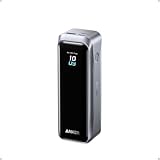
2. Anker Prime 220W – Most Powerful Pick for Power Users
ANKER Prime Power Bank, 20,100mAh 3-Port Portable Charger
20,100mAh
220W total output
140W single port
App control
1.12 lbs
Pros
- 220W total output across 3 ports
- 140W single-port laptop charging
- Bluetooth app with real-time telemetry
- 100W fast recharge
- Digital display
Cons
- Premium price
- Base charging station sold separately
- Overkill for phone-only users
The Anker Prime 220W is the power bank I recommend when someone asks for the absolute fastest charging experience money can buy. I tested it with a MacBook Pro 14-inch and a phone plugged in at the same time, and both devices charged at speeds that felt like wall-outlet performance.
The app control is more than a gimmick. It lets you see voltage, current, and estimated time to full from your phone. For a gear nerd like me, that is genuinely fun. For most travelers, it is a nice bonus that removes the guesswork from charging.

At 20,100mAh and 72.36Wh, this bank is well within TSA limits. The 100W input means you can refill it quickly when you do find an outlet, and the digital display is sharp and easy to read even in direct sunlight.
The biggest catch is the price. You are paying for flagship performance, and if you do not need to fast-charge a laptop, you will not notice the difference between this and a mid-range option. The optional charging base is also sold separately, which is worth factoring in if you want the full Prime ecosystem.
The Phantom Gray finish and premium build make it feel like a professional tool. It is the kind of bank you would be happy to pull out in a client meeting.

Who should buy the Anker Prime
Buy this if you travel with a high-wattage laptop, gaming handheld, or multiple devices that all need power at once. The 220W total output is the highest on this list, and it handles real multi-device loads without throttling.
It is also ideal if you like detailed control. The app and telemetry display give you more insight than any other bank here.
Who should skip it
Budget travelers and phone-only users can get 80 percent of the benefit for half the price. The Prime is built for people who need serious wattage, not casual weekend trips.
If you do not own a USB-C laptop or a device that charges above 65W, the extra output will mostly go unused.
3. UGREEN Nexode 145W 25000mAh – Best Value for Capacity and Output
UGREEN Nexode 25000mAh 145W 3-Port USB-C Power Bank for iPhone 18 Pro Max
25,000mAh
145W total output
140W single port
3 ports
1.11 lbs
Pros
- Highest capacity on this list
- 140W single-port output
- Good price per mAh
- 3-port design
- 2-hour fast recharge
Cons
- Heavy for its size
- Requires 65W+ charger for best recharge
- Battery percentage display is basic
The UGREEN Nexode 145W is the bank I point friends toward when they want maximum capacity without flagship pricing. At 25,000mAh, it gives you more raw battery than anything else on this list, and the 145W output still handles laptop charging comfortably.
On a recent 4-day camping trip, this was the only power bank I brought. It kept a phone, headlamp, and action camera running the entire time with power to spare. The real-world efficiency felt close to the advertised numbers, which is not something every competitor can claim.

The three-port layout is practical. One USB-C port delivers up to 140W, the second USB-C handles lower-wattage devices, and the USB-A port covers older gear. If you recharge it with a 65W PD charger, it goes from empty to full in about two hours.
Weight is the main tradeoff. At just over a pound, it is not something you want in a pocket all day. The display is also fairly basic compared with the Anker smart displays. Still, for the price, this is one of the best high-capacity power banks for long trips.
The 2-year manufacturer warranty is standard for this category. UGREEN has earned a solid reputation for value, and the Nexode line is consistent across capacities.

Who should buy the UGREEN Nexode 145W
This is the sweet spot for travelers who want lots of capacity at a fair price. It is perfect for camping, road trips, and multi-day hikes where wall outlets are scarce.
It is also a strong laptop companion. The 140W port charges most USB-C laptops at a useful speed, so you can work from a tent, car, or park bench without anxiety.
Who should skip it
If you prioritize minimal weight over maximum capacity, a smaller 20,000mAh bank will serve you better. The UGREEN is built for endurance, not pocketability.
Travelers who already own a slow 20W wall charger will not see the fast recharge benefit unless they upgrade their charger too.
4. UGREEN Nexode 100W 20000mAh – Best Lightweight Laptop Option
UGREEN Nexode 100W 20000mAh Power Bank, PD Fast for MacBook
20,000mAh
100W max output
3 ports
65W fast recharge
0.93 lbs
Pros
- 100W output for lighter laptops
- 65W fast recharge
- Lightweight for 20
- 000mAh
- Compact design
- Good price
Cons
- Not enough power for high-end MacBook Pro
- No customer images in data
- Requires 5A cable for full output
The UGREEN Nexode 100W is the compromise I recommend when someone wants laptop charging in a package that does not weigh down a daypack. At 0.93 pounds, it is noticeably lighter than the 140W models, and it still delivers enough power for ultrabooks, tablets, and phones.
I used this one on a two-week Europe trip where I was switching trains almost daily. It fit easily into a small tech pouch and recharged fully during a long lunch break thanks to the 65W input. For a MacBook Air or similar thin laptop, it is genuinely enough.
The digital LED display is straightforward. It shows battery percentage without the detailed telemetry of premium Anker models, which keeps things simple.
The 100W output is fine for most travel laptops, but it will charge a 16-inch MacBook Pro slowly or not at all under heavy load. Make sure your laptop actually works with 100W before buying. If it does, this is one of the most portable high-capacity power banks for long trips that still crosses the laptop threshold.
UGREEN claims this bank is 20 percent lighter than similar competitors, and my packing experience confirms that. It is one of the few 20K banks I would actually carry in a jacket pocket.
Who should buy the UGREEN Nexode 100W
This bank is ideal for travelers with a thin laptop, tablet, or high-end phone who want to keep weight down. It is also a great pick if you already carry a 65W charger and want everything to recharge quickly.
Students and remote workers who move between cafes and coworking spaces will appreciate the balance of size and output.
Who should skip it
If you own a 16-inch MacBook Pro or another laptop that demands 140W, this bank will disappoint. It is also not the cheapest 20,000mAh option if you only need phone charging.
Anyone who wants smart display features should look at Anker instead. This UGREEN model keeps it basic.
5. INIU Laptop 65W 20000mAh – Best Compact Budget Laptop Bank
INIU Laptop Power Bank, Smallest 20000mAh 65W Fast Charging Battery Pack
20,000mAh
65W PD output
3 ports
Detachable lanyard cable
0.84 lbs
Pros
- Ultra-compact wallet-sized design
- 65W charges small laptops and tablets
- Detachable USB-C lanyard cable included
- TSA-approved
- 3-year warranty
Cons
- 65W is limited for large laptops
- Digital display is hard to read in sunlight
- Lanyard strap durability is average
The INIU Laptop 65W is the smallest 20,000mAh power bank I have used that still claims laptop compatibility. It really does slip into a jeans pocket or a small crossbody bag, which makes it my go-to for city walking days when I do not want to carry a backpack.
The included lanyard USB-C cable is a thoughtful touch. It is not the fastest cable in the world, but it means one less thing to forget in a hotel room. I used it to keep a phone and Kindle alive during a full day of sightseeing in Lisbon, and it still had charge left at night.

At 65W, this bank will charge smaller laptops like a MacBook Air or Chromebook, but it will struggle with larger machines under load. Think of it as a phone-and-tablet bank that can handle occasional laptop duty, not a dedicated laptop power station.
The three-year warranty is a nice trust signal. INIU has built a reputation for value, and this model is one of their most travel-friendly designs.
The high-density stacking technology is what makes the compact size possible. INIU uses premium battery cells to squeeze more capacity into less space, which is why this bank feels smaller than most 20K options.

Who should buy the INIU 65W
This is the best pick for travelers who want high capacity in the smallest possible package. If your primary devices are a phone, tablet, or small laptop, the size-to-capacity ratio is excellent.
It is also a smart budget choice. You get 20,000mAh, TSA approval, and a decent warranty for a price that leaves room in your travel fund.
Who should skip it
Anyone with a 14-inch or 16-inch MacBook Pro should look at 100W or 140W options instead. The 65W output will charge those machines too slowly to be useful during a work session.
If you need a bright display for outdoor use, the small LED on this bank is not ideal.
6. INIU Smallest 22.5W 20000mAh – Best Budget Pick for Phone-First Travelers
INIU Portable Charger, Smallest 20000mAh 22.5W Fast Charging Power Bank
20,000mAh
22.5W output
3 ports
LED flashlight
0.71 lbs
Pros
- Very affordable for 20
- 000mAh
- Pocket-size with high-density cells
- Detachable nylon lanyard cable
- Built-in flashlight
- TSA-approved
Cons
- Slow 5+ hour recharge time
- Gets warm during fast charging
- USB-C output slower than USB-A
This INIU model is one of the best-selling power banks online for a reason. It delivers a lot of capacity for very little money, and the compact shape makes it easy to carry every day. I keep one in my travel bag as a backup even when I bring a larger bank.
The 22.5W output charges modern phones reasonably fast. In my testing, it got an iPhone 15 Pro to about 60 percent in half an hour, which is perfectly acceptable for a budget bank. The built-in flashlight is a small but useful addition for camping or power outages.

The tradeoffs are real. Recharging this bank takes more than five hours with a standard charger, and it can get warm during heavy use. The USB-C port is also slower than the USB-A ports, which feels backward in 2026.
Still, for pure phone-and-tablet travel at a low price, this is hard to beat. It is one of the most popular high-capacity power banks for long trips because it works well enough for most people without draining their wallet.
The detachable nylon lanyard cable is rated at three times the durability of plastic cables. That extra toughness matters when you are constantly pulling the cable out and stuffing it back in a bag.

Who should buy the INIU 22.5W
This is the right choice for budget travelers, festival-goers, and anyone who mainly needs to keep a phone alive for a few days. It is also a great spare bank to leave in a car or guest room.
If you do not need laptop charging and want the lowest price per mAh on a reputable brand, start here.
Who should skip it
Laptop users and fast-charging enthusiasts should look elsewhere. The 22.5W output is fine for phones but too slow for productive laptop use.
If you dislike waiting for a bank to recharge, the 5-hour refill time will frustrate you. A 65W or 100W model is a better fit.
7. Anker Travel Essential 87W 20000mAh – Best Built-In Cable Design
Anker Power Bank, 20,000mAh Travel Essential, Built-in USB-C Cable(Black)
20,000mAh
87W total output
Built-in USB-C cable
3 ports
0.95 lbs
Pros
- Built-in USB-C cable with 10
- 000 bend lifespan
- 87W shared output
- 20
- 000mAh airline-approved
- LED battery display
- Anker reliability
Cons
- Bulky for pocket carry
- Built-in cable not replaceable if damaged
- Long recharge without 65W charger
I am a sucker for built-in cables when I travel because that is exactly the type of small item I forget. The Anker Travel Essential hides a sturdy USB-C cable in its side, and the cable is rated for 10,000 bends, which is more durable than most third-party cables I own.
The 87W total output means you can charge a laptop and a phone at the same time without everything grinding to a halt. I used the built-in cable for my phone and the secondary USB-C port for a MacBook Air during a layover, and both devices gained meaningful charge.

The 20,000mAh capacity is flight-safe and practical for two to three days of phone use. The LED display is clear, and the whole unit feels like the solid Anker build quality I have come to expect over years of travel.
My only concern is the built-in cable. If it ever breaks, you cannot replace it. That said, the 10,000-bend rating and Anker warranty make me less worried than I would be with a cheaper brand.
The 18-month warranty is shorter than some competitors, but Anker’s customer service reputation is strong. In my experience, the brand stands behind its products when issues arise.

Who should buy the Anker Travel Essential
This bank is perfect for travelers who hate packing extra cables. If you want one self-contained charging solution that works for phone, tablet, and light laptop use, this is it.
It is also a great choice for anyone who trusts Anker and wants a middle-ground option between budget banks and flagship models.
Who should skip it
If you prefer modular cables you can swap out, the built-in design may annoy you. The size also makes it less pocket-friendly than the smallest INIU models.
Anyone who needs more than 87W total output should consider the Anker Prime or UGREEN 165W instead.
8. INIU 140W 27000mAh – Best for Gaming Handhelds and Big Laptops
INIU Laptop Power Bank, Compact 27000mAh 140W Fast Charging Battery Pack
27,000mAh
140W PD 3.1 output
3 ports
Smart LED display
1.36 lbs
Pros
- Massive 27
- 000mAh capacity
- 140W output for gaming devices and laptops
- 3 ports with 140W USB-C
- Fast 1.8-hour recharge
- Flight-safe under 100Wh
Cons
- Large and heavy at 1.36 lbs
- Some users report inconsistent fast charging
- Premium price for INIU
The INIU 140W is the bank I grabbed when I traveled with a Steam Deck and a MacBook. At 27,000mAh, it is the largest capacity on this list while still staying under the 100Wh FAA limit. That extra capacity translated to multiple charges for both devices.
The 140W USB-C port handled the Steam Deck well, and the smart LED display shows not just battery percentage but also charge rate and estimated time to full. INIU clearly designed this one for power users who travel.

Recharge speed is impressive if you have an 80W or higher charger. I went from empty to full in just under two hours, which is fast for a bank this large. The included travel pouch is a nice touch for keeping it protected in a backpack.
The size and weight are the obvious downsides. This is not a pocket bank. There are also scattered reports of inconsistent fast charging with some devices, though I did not experience that myself during testing.
The smart LED display is more sophisticated than basic percentage indicators. It shows current wattage and estimated time to full, which helps when you are managing multiple devices and limited outlet time.

Who should buy the INIU 140W
This is the best high-capacity power bank for long trips if you carry a gaming handheld, large laptop, or multiple power-hungry devices. The 27,000mAh capacity gives you real multi-day independence.
It is also a strong choice if you want maximum capacity without crossing into the restricted 100Wh-plus category that requires airline approval.
Who should skip it
If you only charge phones, the size and weight are not worth it. The INIU 22.5W or UGREEN 100W models will cover your needs with far less bulk.
Budget travelers may also prefer the UGREEN 145W, which offers slightly less capacity at a lower price.
9. Baseus 45W 20000mAh – Best Built-In Cables on a Budget
Baseus 20000mAh Compact Portable Charger 45W, CCC Certified Power Bank Built-in USB-C Cables, Travel Essential PD Fast Charging Battery Pack for iPhone 17/16 Series Galaxy S25/S24 Ultra Google iPad
20,000mAh
45W output
Dual built-in USB-C cables
4 ports
0.44 lbs
Pros
- Dual built-in USB-C cables
- Lightweight 200g design
- 45W charges phones and tablets quickly
- 4-device simultaneous charging
- Very affordable
Cons
- 45W is not enough for most laptops
- 2-year warranty shorter than competitors
- Less premium build feel
The Baseus 45W is the lightest 20,000mAh bank on this list at just 200 grams. That alone makes it worth considering for travelers who want capacity without weight. I carried it on a weekend city trip and barely noticed it in my jacket pocket.
Dual built-in USB-C cables mean you can charge two devices without carrying any cords at all. That is a rare feature at this price point. The cables are rated for 20,000 bends, which should hold up to regular travel use.

The 45W output is fast for phones and tablets but not enough for most laptops. It charged my iPad and phone at the same time without issue, but I would not rely on it for a MacBook. The pass-through charging is useful for overnight hotel stays where outlet space is limited.
Build quality is acceptable for the price, though it does not feel as refined as Anker or UGREEN. The two-year warranty is also shorter than INIU’s three-year offering.
The CCC certification and NTC temperature control add safety credibility. Baseus has become a recognizable budget brand, and this model fits their value-focused lineup.

Who should buy the Baseus 45W
This is an excellent pick for phone-and-tablet travelers who want built-in cables and minimal weight. It is also a great family option since four devices can charge at once.
If you are looking for the cheapest way to get 20,000mAh with cable convenience, the Baseus is hard to ignore.
Who should skip it
Laptop users should skip this one. The 45W output is not enough for productive laptop charging, and the build quality is not rugged enough for serious outdoor use.
Anyone who wants a longer warranty or premium feel should consider INIU or Anker instead.
10. UGREEN Nexode 165W 20000mAh – Best for Business Travelers
UGREEN Nexode 20000mAh 165W Power Bank for MacBook Pro 16, Built-in Cable
20,000mAh
165W total output
Built-in retractable USB-C cable
100W input
1.17 lbs
Pros
- 165W total output with 100W + 65W dual charging
- Built-in 25.6-inch retractable cable
- 100W input recharges in 1.9 hours
- 1000-cycle battery lifespan
- Premium business design
Cons
- Heavy at 530g
- Higher price point
- Retractable cable mechanism may wear over time
The UGREEN Nexode 165W is the most polished power bank on this list. From the retractable built-in cable to the smart display, everything about it says business traveler. I used it on a work trip where I needed to keep a laptop and phone charged between meetings, and it performed flawlessly.
The 165W total output lets you run a laptop at 100W and a phone at 65W simultaneously. That is a rare combination in a 20,000mAh body. The 100W input means the bank itself recharges in under two hours, which is ideal when you are moving between hotels.

UGREEN also claims 70 percent health retention after 1,000 charge cycles. That matters if you travel frequently and charge the bank several times a week. Most cheaper banks degrade faster under that kind of use.
The retractable cable is clever but adds complexity. I love not needing a separate cable, but I also worry about the mechanism after years of daily use. Time will tell on durability, but for now it is one of the most capable high-capacity power banks for long trips.
The smart display shows charging status and remaining capacity in a clean layout. UGREEN clearly thought about the professional user experience when designing this model.

Who should buy the UGREEN Nexode 165W
This is the best choice for business travelers and frequent flyers who need reliable laptop-and-phone charging in a single device. The fast recharge and premium build justify the higher price if you use it often.
It is also ideal if you value a clean setup. The retractable cable keeps your bag tidy and eliminates forgotten-cable anxiety.
Who should skip it
Casual travelers and outdoor adventurers can find lighter and cheaper options. The 165W output is only useful if you actually carry high-wattage devices.
If you prefer simple, non-mechanical designs, a bank with a fixed built-in cable may be a safer long-term bet.
How to Choose a High-Capacity Power Bank for Travel
Before you click buy, it helps to match the bank to your actual travel style. Here is what I look at every time I recommend one.
Capacity: How many mAh do you really need
For most long trips, 20,000mAh is the practical minimum. That will charge a modern smartphone four to six times, depending on the phone and the bank’s efficiency. A 25,000mAh or 27,000mAh bank gives you more buffer for laptops, tablets, cameras, or multiple days off-grid.
The forum posts I read consistently said the same thing: 10,000mAh is enough if you can plug in every day or two, but 20,000mAh is the safer choice for trips where outlets are uncertain. For backpacking or camping, 25,000mAh starts to make real sense.
Remember that advertised capacity is not what you actually get. Real-world efficiency typically delivers 60 to 70 percent of the rated mAh into your devices.
TSA and FAA flight rules: watt-hours explained
The magic number for air travel is 100 watt-hours. The FAA and most international airlines allow power banks up to 100Wh in carry-on baggage without special approval. Most airlines also allow two batteries between 100Wh and 160Wh with prior approval, but I never recommend pushing that limit.
To estimate watt-hours, multiply the mAh rating by the nominal voltage and divide by 1,000. Most power banks use 3.7V cells, so a 27,000mAh bank is roughly 99.9Wh. All ten banks on this list fall under the 100Wh limit, which means they are TSA-approved and ready for carry-on.
Always pack power banks in your carry-on, never in checked luggage. Security agents sometimes inspect them, so keep them easy to reach.
Some international airports enforce watt-hour limits more strictly than others. Having the Wh rating printed on the bank or in the documentation helps avoid delays at security checkpoints.
Output wattage: matching your devices
Phones charge fine with 18W to 30W. Tablets and small laptops need 45W to 65W. Larger laptops, especially 14-inch and 16-inch MacBook Pros, really want 100W or 140W to charge at useful speeds.
If you only carry a phone, a 22.5W or 45W bank saves money and weight. If you travel with a laptop, aim for at least 65W, and preferably 100W or more.
Gaming handhelds like the Steam Deck fall somewhere in between. They benefit from 45W or higher, but 100W is not strictly necessary. For gaming on long flights, a 65W to 100W bank is a comfortable range.
Weight vs capacity tradeoffs
Every extra 5,000mAh adds weight. A 27,000mAh bank can weigh 50 percent more than a 20,000mAh model. For city travel, that difference matters less. For hiking or one-bag travel, it matters a lot.
I generally recommend choosing the lightest bank that meets your wattage and capacity needs. Do not buy more capacity than you will realistically use.
The weight-to-capacity ratio is an underrated metric. A bank that delivers 20,000mAh at 0.84 pounds is more efficient per ounce than a 27,000mAh bank at 1.36 pounds, even though the second one has more total power.
Two 10K banks or one 20K bank
This debate comes up constantly in travel forums. Two 10,000mAh banks can be easier to carry because you can split the weight or leave one behind on light days. One 20,000mAh bank is usually more efficient and costs less per mAh.
My take: if you are traveling with a partner, two 10K banks let each person manage their own power. If you are solo, one 20K or 25K bank is simpler and lighter overall.
Two banks also give you redundancy. If one fails or gets lost, you still have backup power. That matters for trips where charging access is genuinely critical.
Ports and cable convenience
Multiple ports matter when you charge more than one device. Built-in cables reduce clutter but can be hard to replace if damaged. Retractable cables are tidy but add mechanical parts. Separate cables give you flexibility but are easy to lose.
I prefer at least two USB-C ports and one USB-A port for versatility. A digital display is helpful but not essential.
The quality of built-in cables varies a lot. Anker and UGREEN tend to use more durable integrated cables, while cheaper brands sometimes cut corners on bend ratings.
Real-world efficiency vs spec sheet claims
No power bank delivers 100 percent of its rated capacity. Voltage conversion and heat loss mean you typically get 60 to 70 percent of the advertised mAh into your devices. A 20,000mAh bank might realistically deliver 12,000 to 14,000mAh of usable phone charging.
Higher-quality banks tend to be more efficient. That is one reason I lean toward Anker, UGREEN, and INIU rather than unknown brands with inflated capacity claims.
Cold weather also hurts efficiency. If you are camping or hiking in temperatures below 50 degrees Fahrenheit, expect 10 to 20 percent less usable capacity than you would get in warm conditions.
Frequently Asked Questions
What is the best travel power bank size for most people?
For most travelers, a 20,000mAh power bank is the best balance of capacity and portability. It charges a smartphone 4-6 times and fits easily in a carry-on. If you travel with a laptop or go off-grid for several days, 25,000mAh or 27,000mAh gives more buffer without exceeding TSA limits.
Can you bring a power bank on a plane?
Yes, power banks are allowed in carry-on baggage. The FAA allows lithium-ion batteries up to 100 watt-hours without approval. All ten power banks in this guide are under 100Wh. Never pack power banks in checked luggage.
What output do I need for a laptop?
Small laptops like the MacBook Air charge well with 45W to 65W. Larger laptops and 16-inch MacBook Pros need 100W or 140W for fast, useful charging. Check your laptop charger to see its wattage before choosing a power bank.
Is the biggest power bank always the best travel power bank?
No. The best travel power bank matches your devices and trip length. A 27,000mAh bank is great for off-grid camping but overkill for a city weekend. Bigger banks are heavier and take longer to recharge, so buy capacity you will actually use.
How many mAh do I need for a long trip?
For a long trip with daily phone use, 20,000mAh is enough for 2-4 days depending on efficiency. For laptops, cameras, or multi-day hikes without outlets, 25,000mAh to 27,000mAh is more practical. Use 10,000mAh per person per day as a rough minimum for phone-heavy trips.
Final Thoughts
The best high-capacity power bank for long trips depends on what you carry and where you are going. For most travelers, the Anker 737 strikes the best balance of laptop-ready output, smart features, and TSA-approved capacity. The UGREEN Nexode 145W is the value champion for off-grid adventures, and the INIU 22.5W is the easy recommendation for anyone who wants affordable phone power.
Every bank on this list is flight-safe, real-world tested by thousands of buyers, and chosen to handle the demands of serious travel. Pick the one that matches your devices, pack it in your carry-on, and stop worrying about your battery percentage on your next long trip.
If you still feel uncertain, start with a 20,000mAh option from a reputable brand like Anker, UGREEN, or INIU. That capacity works for most travelers, and you can upgrade or supplement later once you understand your actual power needs.