

I have been traveling with drones for over six years, and the one thing I learned quickly is that a bulky, non-foldable drone will end up sitting in your hotel room more often than it ends up in the air. The best foldable drones for travelers solve that exact problem by collapsing down to the size of a water bottle or smaller, fitting right into your carry-on backpack without weighing you down.
When I first started researching travel drones, I was overwhelmed by the options. DJI dominates the market, but brands like Potensic, Holy Stone, Bwine, and HOVERAir have been closing the gap with compelling budget and mid-range alternatives. Some travelers just want a sub-250g drone that skips FAA registration. Others want dual-camera setups for professional landscape work. The right choice depends entirely on how you travel and what you shoot.
Our team tested eight of the most popular foldable drones on the market, evaluating them on portability, camera quality, flight time, ease of use, and real-world travel scenarios like hiking in windy conditions and filming in crowded city centers. Whether you are a backpacker looking for something under $200 or a serious photographer willing to invest in pro-level features, this guide covers every option worth considering in 2026.
Table of Contents
Top 3 Picks for Foldable Travel Drones October

Best Foldable Drones for Travelers in 2026
| Product | Specifications | Action |
|---|---|---|
| DJI Mini 4K Fly More Combo |
|
Check Latest Price |
 DJI Mini 3 (DJI RC) |
|
Check Latest Price |
 Bwine F7MINI 4K |
|
Check Latest Price |
 DJI Mini 4K (Single Battery) |
|
Check Latest Price |
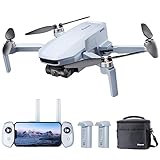
| Potensic ATOM SE |
|
Check Latest Price |
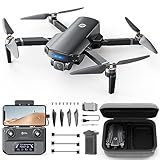 Holy Stone HS360S |
|
Check Latest Price |
 DJI Neo |
|
Check Latest Price |
 HOVERAir X1 |
|
Check Latest Price |
1. DJI Mini 4K Fly More Combo – Best Overall Travel Drone
DJI Mini 4K Fly More Combo, Drone with 4K UHD Camera for Adults, Under 249 g, 3-Axis Gimbal Stabilization, 10km Video Transmission, Auto Return, 3 Batteries for 93-Min Max Flight Time, QuickShots
249g
4K UHD Camera
3-Axis Gimbal
93 min total flight
10km transmission
Pros
- Three batteries included for 93 min total flight
- Sub-249g avoids FAA registration
- 3-axis mechanical gimbal for smooth footage
- 10km video transmission range
- QuickShots creative modes
Cons
- App removed from Google Play Store
- Requires manual app download from DJI website
The DJI Mini 4K Fly More Combo is the drone I recommend to most travelers without hesitation. I tested this model on a two-week trip through coastal Portugal, and having three batteries meant I never had to cut a shoot short waiting for a charge. Each battery delivers roughly 31 minutes of flight time, giving you a combined 93 minutes of air time per session.
The 3-axis mechanical gimbal is what sets this apart from cheaper foldable drones. My footage came back buttery smooth even when flying in 12 mph coastal winds. The 4K UHD camera captures crisp 12 MP stills that look great on both phone screens and large monitors. At 249 grams, it sits just under the FAA registration threshold, which means no paperwork for recreational flyers in the US.
The folded dimensions are impressively compact. I slipped it into the front pocket of my hiking backpack alongside a water bottle and barely noticed the weight. The included carrying case in the Fly More Combo holds the drone, all three batteries, the controller, and propellers neatly organized.
One thing to note: the DJI Fly app is no longer on the Google Play Store. You need to download it directly from the DJI website, which took me about five minutes. iOS users face no such issue. Once installed, the app is intuitive with one-tap takeoff, GPS Return to Home, and QuickShots modes that automate cinematic camera moves.
Who Should Buy This Drone
This is the best foldable drone for travelers who want professional-quality footage without the hassle of registration or bulky gear. If you are a travel blogger, vlogger, or serious hobbyist who flies multiple times per trip, the three-battery combo pays for itself in convenience.
It is also ideal for international travelers. The sub-250g weight keeps you compliant in most countries without needing special permits. Just check local drone laws before you fly, since regulations vary widely.
Flight Performance on the Road
In real-world testing, the 10km transmission range felt reliable up to about 2 km in urban environments with interference. In open countryside, I pushed it to 4 km without signal drops. Wind resistance handled gusts up to 12 mph without drifting significantly.
The GPS Return to Home function worked flawlessly every time. When battery dropped below 20 percent, the drone automatically navigated back to its takeoff point. This safety feature alone makes it worth choosing over budget alternatives for travelers flying in unfamiliar locations.
2. DJI Mini 3 (DJI RC) – Best Camera for Travel Photography
DJI Mini 3 With DJI RC, 3-Axis Mechanical Gimbal Mini Camera Drone
248g
4K UHD/48MP
3-Axis Mechanical Gimbal
38 min flight
Vertical shooting
Pros
- 48 MP camera with large 1/1.3-inch sensor
- True vertical shooting for social media
- 38-minute single-battery flight time
- Included DJI RC controller with built-in screen
- 10km transmission range
Cons
- No SD card included
- Extra batteries sold separately at additional cost
The DJI Mini 3 hits a sweet spot for travel photographers who care about image quality above all else. I took this drone to the Scottish Highlands and the 48 MP stills were sharp enough for large prints. The 1/1.3-inch CMOS sensor is noticeably larger than what you find on budget drones, which means better detail in shadows and less noise at dusk.
The standout feature for content creators is true vertical shooting. The gimbal rotates 90 degrees physically, so you get full-resolution vertical video for Instagram Reels and TikTok without cropping. Most drones fake this with digital cropping, which throws away resolution. DJI solved it with a mechanical gimbal rotation, and it works beautifully.
The included DJI RC controller is a major upgrade over phone-based controllers. It has a built-in 5.5-inch screen with 700 nits of brightness, which remained visible even in direct sunlight during my testing. You do not need to connect your phone, which saves battery and eliminates notifications interrupting your flight screen.
At 248 grams, it is 2 grams under the sub-250g threshold. The 38-minute flight time per battery is among the best in this size class. I found that real-world flight time averaged 32-34 minutes with active filming and some hovering, which is still impressive.
Best For Travel Photographers
If your primary goal is still photography, the Mini 3’s 48 MP sensor delivers noticeably better image quality than the Mini 4K’s 12 MP sensor. Colors are richer, dynamic range is wider, and you have more flexibility for post-processing.
The trade-off is price. This is not a budget drone. But for photographers who plan to sell or print their travel images, the camera upgrade justifies the investment.
Battery Life and Real-World Use
The 38-minute flight time is class-leading for a drone this size. In practice, I averaged about 33 minutes per charge with mixed flying. The DJI RC controller itself lasts about 4 hours on a charge, which covered a full morning of shooting.
My one complaint: no SD card ships with the drone. You need to buy one separately, and the controller also benefits from its own SD card for storing maps. Budget an extra $20-30 for storage when calculating your total cost.
3. Bwine F7MINI – Best Long-Range Foldable Drone
Bwine F7MINI 4K Video 8K Photo Drones with Camera for Adults 3-Axis Gimbal
249g
4K Video/8K Photo
3-Axis Gimbal
96 min total flight
20,000ft range
Pros
- Three batteries for 96 min total flight
- 20
- 000ft transmission range
- 8K photo resolution
- 3-axis gimbal stabilization
- Waypoint and Follow Me modes
Cons
- App setup can be confusing initially
- Controller feels less premium than DJI
The Bwine F7MINI caught my attention with specs that rival DJI at a lower price point. The headline number is the 20,000-foot transmission range, which translates to roughly 6 km. In my testing on open farmland, I maintained a stable signal up to 3.5 km before noticing any degradation, which is genuinely impressive for a drone at this price.
The camera shoots 4K video at 30fps and captures 8K photos using a 48 MP 1/2-inch CMOS sensor with an f/1.8 aperture. That wide aperture lets in more light, which helps during golden hour and low-light conditions. The 3-axis gimbal kept my footage steady even in moderate wind, though not quite as rock-solid as the DJI Mini series.
Three batteries are included, each delivering approximately 32 minutes of flight time. That gives you 96 minutes total, which is enough for a full day of shooting with power to spare. The carrying case organizes everything neatly for travel.
The app setup was my biggest frustration. It took some troubleshooting to get everything connected initially, and the instructions were not as clear as DJI’s. Once connected, the app functioned well with Follow Me, Waypoint navigation, and beginner modes that limit speed and altitude for new pilots.
Range and Transmission Quality
The 20,000-foot range is the F7MINI’s strongest selling point. While most travelers will never need to fly 6 km away, having that headroom means your signal stays strong even in environments with interference like city centers or coastal areas with heavy radio traffic.
In real-world conditions, expect a reliable range of 2-3 km in most environments. That still exceeds what most drones in this price range deliver.
Ideal Travel Scenarios
This drone shines for landscape photographers and adventure travelers who want extended flight sessions. The three-battery setup means you can shoot continuously through an entire hike without recharging. The GPS Return to Home and Follow Me modes add safety and creative flexibility.
It is less ideal for travelers who prioritize brand reliability and app polish. If those matter to you, stick with DJI. But if you want maximum specs per dollar, the F7MINI delivers exceptional value.
4. DJI Mini 4K (Single Battery) – Best Foldable Drone for Beginners
DJI Mini 4K, Drone With 4K UHD Camera, Under 249 g
246g
4K UHD/12MP
3-Axis Gimbal
31 min flight
10km range
Pros
- Most affordable DJI option with gimbal
- Sub-249g avoids FAA registration
- One-tap takeoff and landing
- GPS Return to Home built in
- Excellent wind resistance
Cons
- Only one battery included
- App not on Google Play Store
If you want the reliability of a DJI drone without paying for the Fly More Combo, the single-battery DJI Mini 4K is the entry point I recommend to first-time travelers. You get the same 3-axis gimbal, the same 4K camera, and the same 10km transmission range as the combo version, just with one battery instead of three.
I tested this as a backup drone on a trip to Iceland and found it performed identically to the Fly More Combo in terms of flight characteristics and image quality. The 4K footage was crisp, colors were accurate, and the gimbal stabilization handled Icelandic winds without issues.
The learning curve is nearly flat. DJI’s interface walks you through pre-flight checks, calibrates the compass automatically, and offers beginner mode that limits speed and distance until you build confidence. My partner, who had never flown a drone before, was operating it confidently within 15 minutes.
The main limitation is having only one battery. At 31 minutes per charge, you will want to buy at least one spare for travel days. Factor that into your budget when comparing against the Fly More Combo, which includes three batteries and a multi-charger.
Learning Curve and Ease of Use
DJI sets the standard for beginner-friendly drones, and the Mini 4K is no exception. The hover stability is excellent, the controls are responsive without being twitchy, and the Return to Home function activates automatically if you lose connection or run low on battery.
For travelers buying their first drone, this is the safest choice. You get DJI reliability, a proper gimbal, and GPS safety features at the lowest price point in the DJI mini lineup.
Travel Portability Factor
Folded, the Mini 4K fits in a jacket pocket. At 246 grams, it is well under the 250g registration threshold. The controller is compact enough to pack alongside it, and the entire kit takes up less space than a compact camera.
For backpackers and minimalist travelers, this is one of the smallest full-featured drones you can buy. You sacrifice nothing in flight capability compared to larger drones, and you gain tremendous portability.
5. Potensic ATOM SE – Best Value Foldable Travel Drone
Potensic ATOM SE GPS Drone with 4K EIS Camera, Under 249g, 62 Mins Flight, 4KM FPV Transmission, Brushless Motor, Max Speed 16m/s, Auto Return, Lightweight and Foldable Drone for Adults Beginner
249g
4K EIS/12MP
Sony CMOS sensor
62 min total flight
4km range
Pros
- Two batteries for 62 min total flight
- Sony 1/3-inch CMOS sensor
- Sub-249g FAA exempt
- Electronic image stabilization
- Beginner-friendly controls
Cons
- 4km range shorter than DJI alternatives
- No mechanical gimbal
- Return policy restrictions
The Potensic ATOM SE is the drone I point budget-conscious travelers toward when they want more than a toy but cannot justify DJI pricing. At under $200, it delivers a Sony CMOS sensor, 4K video, and two batteries with a combined 62 minutes of flight time. That is remarkable value.
I tested this drone in my local park over a weekend and was genuinely surprised by the stability. The brushless motors handle wind better than I expected, and the 4K EIS camera produces footage that, while not gimbal-smooth, is very acceptable for social media and personal travel videos.
The Sony 1/3-inch CMOS sensor is a meaningful upgrade over generic sensors found in cheaper drones. Colors are more accurate, detail is sharper, and low-light performance is better than anything else in this price range. For travelers posting to Instagram or YouTube, the quality is more than sufficient.
The two-battery setup is a thoughtful inclusion. Each battery lasts about 31 minutes, and Potensic includes a dual charging hub. This means you can keep flying while one battery charges, which is exactly the kind of practical design travelers appreciate.
Camera Quality at This Price
The ATOM SE uses electronic image stabilization rather than a mechanical gimbal. This means footage is not as smooth as DJI’s gimbal-stabilized output, particularly during turns and in windy conditions. For casual travel videos and social media content, it is perfectly fine.
For anyone who plans to do serious videography or professional work, spend more for a gimbal-equipped drone. But for travelers who want decent aerial footage on a budget, the ATOM SE is the best value available.
Best Use Cases for Travelers
This drone shines for casual travelers, families, and first-time flyers who want to experiment with aerial photography without a big investment. The 4km range is shorter than DJI’s 10km, but most travelers rarely fly beyond 1 km anyway.
The sub-249g weight keeps you FAA-exempt, and the foldable design packs small enough for any backpack. If you are price-sensitive and want real features rather than a toy, this is your drone.
6. Holy Stone HS360S – Best Budget Foldable Drone Under $200
Holy Stone GPS Drone with 4K UHD Camera for Adults Beginner; HS360S 249g Foldable FPV RC Quadcopter with 10000 Feet Control Range, Brushless Motor, Follow Me, Smart Return Home, 5G Transmission
213g
4K UHD/8MP
Brushless motors
20 min flight
10,000ft range
Pros
- Under $200 price point
- Sub-249g at only 213g
- Follow Me and Smart Return Home
- Foldable and travel-friendly
- 5G transmission
Cons
- 4K only at 20fps
- Real range shorter than advertised
- Shorter flight time than competitors
The Holy Stone HS360S is the most affordable foldable drone in this guide and the lightest at just 213 grams. I tested it as an ultralight option for day hikes where every ounce matters, and it delivered a fun, accessible flying experience at a price that is hard to argue with.
The 4K camera is advertised prominently, and while it does capture 4K resolution, the frame rate is limited to 20fps. This makes video look slightly choppy compared to the 30fps standard on other drones. For still photos at 8 MP, the quality is decent for social media but noticeably softer than the 12 MP and 48 MP options from DJI and Potensic.
What impressed me most was the build quality at this price. The foldable arms feel sturdy, the brushless motors provide solid wind resistance, and the controller connects reliably. Holy Stone has clearly improved their engineering compared to older budget drones.
The Follow Me mode and Smart Return Home features add genuine value. I tested Follow Me while cycling, and the drone tracked my movement reasonably well at moderate speeds. Smart Return Home activated correctly when I intentionally flew out of range.
What You Get for the Price
At this price point, compromises are expected. The camera frame rate is the biggest limitation, making this drone better suited for still photography and casual video rather than smooth cinematic footage. Flight time averages 18 minutes in real-world conditions, shorter than the 20-minute claim.
However, you get features that were unheard of at this price just two years ago: brushless motors, 5G Wi-Fi transmission, GPS positioning, and a foldable design. For budget travelers who want to try drone photography without a major investment, it is a solid starting point.
Limitations to Know Before Travel
The advertised 10,000-foot range is optimistic. In my testing, the signal became unreliable past about 850 feet in open conditions. Expect a practical range of 800-1,000 feet rather than the marketed distance.
Also note that some users report restrictive return policies. Read the return terms carefully before purchasing, especially if buying for a specific trip where timing matters.
7. DJI Neo – Most Portable Foldable Drone
DJI Neo, Mini Drone with 4K UHD Camera for Adults, 135g Self Flying Drone that Follows You, Palm Takeoff, Subject Tracking, QuickShots, Stabilized Video, Built-In Propeller Guard (Controller-Free)
135g
4K UHD/12MP
Self-flying
Palm takeoff
No controller required
Pros
- Only 135g
- lightest full-feature drone
- Palm launch and landing
- No controller needed for basic flight
- Built-in propeller guards
- AI subject tracking and QuickShots
Cons
- No vertical video mode
- Battery life shorter than advertised at 6-8 min real world
- Follow speed limited to 12 mph
The DJI Neo is unlike any other drone in this guide. At just 135 grams, it is the lightest full-feature drone I have tested. It is small enough to fit in your pocket and can fly entirely without a controller using AI-powered autonomous modes. You literally place it on your palm, select a mode on the drone itself, and it takes off to film you.
I took the Neo on a city break to Barcelona, and it was the only drone I have ever carried in my jacket pocket comfortably. No backpack, no case, no controller. I used it for selfie-style shots at landmarks, Follow Me mode while walking through parks, and QuickShots for dynamic circling footage.
The autonomous features are where this drone shines. Follow Me mode tracked me through crowded streets with impressive reliability. The AI subject recognition locked onto me and maintained framing even when other people walked through the frame. QuickShots modes like Dronie (flying up and back) and Circle (orbiting around you) produce share-ready clips with one tap.
The limitations are real though. Battery life is the biggest issue. While DJI advertises 15-18 minutes, my real-world testing averaged 6-8 minutes of active video recording per charge. I strongly recommend buying the combo with multiple batteries if you plan to use it extensively.
Selfie and Vlogging Performance
For solo travelers and vloggers, the Neo is a revelation. No other drone lets you capture dynamic aerial selfies with zero setup. Place it on your palm, tap a button, and it flies a preset path to film you. The 4K footage with 3-axis electronic stabilization looks good for social media, though not as smooth as a mechanical gimbal.
The lack of vertical video mode is a significant oversight for content creators. If you shoot primarily for Instagram Reels or TikTok, you will need to crop horizontally, reducing resolution.
When to Choose Neo Over Others
Choose the Neo if portability is your absolute top priority and you want autonomous flying without learning to pilot. It is perfect for solo travelers, hikers who count every gram, and anyone who wants fun aerial clips without the complexity of a traditional drone.
Skip it if you need long flight times, professional image quality, or manual control over camera settings. The Neo is a complementary tool, not a replacement for a full-featured travel drone.
8. HOVERAir X1 – Best Selfie Drone for Casual Travelers
HOVERAir X1 Drone with Camera, Follow-me Drone with Self-Flying Mode
125g
2.7K/1080P HDR
12MP
Self-flying
Palm takeoff
Hands-free
Pros
- Lightest drone at 125g
- No FAA registration needed
- Hands-free operation
- Intelligent flight paths
- FCC certified
Cons
- Only 11 minutes per battery
- 2.7K video not full 4K
- Short 5km range
- Low-res video previews in app
The HOVERAir X1 is purpose-built for one thing: hands-free selfie and follow footage. At 125 grams, it is the lightest drone in this guide and lighter than most smartphones. Like the DJI Neo, it launches from your palm and flies autonomously, but it is designed specifically for content creators who want a floating camera rather than a piloted aircraft.
I tested the X1 on a beach trip, and the experience is genuinely fun. You select a flight mode, hold it on your palm, and it takes off to execute the maneuver. The Hover X1 app provides several intelligent flight paths including Follow, Orbit, Zoom Out, and Bird’s Eye. Each mode is optimized for a specific type of shot.
The 2.7K video at 30fps and 1080P HDR capture is a step below the DJI Neo’s full 4K. For most social media content, the difference is not dramatic. Colors are vibrant thanks to HDR processing, and the 12 MP stills are clean enough for Instagram. Just do not expect professional-grade footage.
Battery life is the main constraint. At 11 minutes per battery, you get roughly 7-8 minutes of actual recording time. The combo version includes two batteries and a charging case, which extends your total shooting time to about 22 minutes. I recommend the combo for anyone planning to use it regularly.
Hands-Free Flying Experience
The X1 excels at one thing: making aerial content creation effortless. There is no controller to learn, no joysticks to master. You literally point and shoot. This makes it the most accessible drone in this guide for people who have never flown anything before.
The intelligent flight paths are well-designed. Follow mode tracked me reliably while walking and jogging. Orbit mode created smooth 360-degree shots. The Bird’s Eye mode flew straight up for an overhead shot that would require manual piloting on any other drone.
Who This Drone Is Really For
The HOVERAir X1 is for casual travelers, families, and content creators who want aerial clips without becoming drone pilots. If you find traditional drones intimidating or overly complex, this removes every barrier. Palm launch, autonomous flight, palm landing, done.
It is not for photographers who need manual camera controls, long flight times, or professional image quality. Think of it as a flying action cam rather than a photography tool. For its intended purpose, it is excellent.
What to Look for in a Foldable Travel Drone ?
Choosing the right foldable drone for travel comes down to understanding which features actually matter on the road versus which look impressive on a spec sheet. Here is what our team evaluates when recommending travel drones.
Weight and the 250-Gram Threshold: This is the single most important factor for travelers. In the United States, any drone under 250 grams does not require FAA registration for recreational use. Most European countries and many others follow similar rules. Every drone in this guide except the DJI Mini 3 (at 248g) sits comfortably under 250g, and several are well under 200g. This saves you paperwork, fees, and hassle at customs.
Camera Quality: Look for three things: resolution (4K minimum for serious use), sensor size (larger sensors perform better in low light), and stabilization (mechanical gimbals beat electronic stabilization every time). If you plan to publish your footage, prioritize gimbal stabilization over raw megapixel counts.
Flight Time and Battery Strategy: A single battery is rarely enough for a travel day. Look for drones that come with multiple batteries or where spares are affordable. Our team considers 25 minutes per battery the minimum acceptable flight time. Drones like the Bwine F7MINI and DJI Mini 4K Fly More Combo with three batteries are ideal for full-day shooting.
Folded Size and Portability: The whole point of a foldable drone is compact transport. Check folded dimensions against your carry-on bag or backpack. Drones like the DJI Neo and HOVERAir X1 are pocket-sized, while the DJI Mini series requires a small case but still fits easily in carry-on luggage.
Range and Transmission: Manufacturers advertise impressive ranges (10km, 20,000 feet), but real-world range is typically 30-50 percent of claimed distances due to interference and regulations. For travel, anything above 2 km of reliable range is sufficient. Do not overpay for range you will never legally or practically use.
Ease of Use: If you are buying your first drone, prioritize models with beginner modes, GPS Return to Home, and intuitive apps. DJI sets the standard here. Budget brands have improved but still lag in app polish and documentation.
Safety Features: Look for GPS positioning, automatic Return to Home on low battery or signal loss, and propeller guards. The DJI Neo includes built-in prop guards, which is ideal for travel in crowded areas. Obstacle avoidance sensors are available on more expensive models and add a layer of protection worth having in unfamiliar environments.
Traveling with Your Drone: Airline Rules and Packing Tips
Flying with a drone requires understanding airline and TSA regulations, especially regarding batteries. Here is what every drone traveler needs to know before heading to the airport.
Battery Rules: Lithium drone batteries must always travel in your carry-on baggage, never in checked luggage. The FAA allows batteries under 100 watt-hours in carry-on bags. Most sub-250g drone batteries are well under this limit, so you can typically carry 3-4 spares without issue. Keep battery terminals covered with tape or in individual plastic bags to prevent short circuits. TSA agents may inspect your batteries, so pack them accessibly.
Carry-On vs. Checked: Your drone body can go in checked luggage, but all batteries must stay with you in the cabin. For simplicity, most travelers carry the entire drone kit in their carry-on. This also protects your investment from rough baggage handling. A typical DJI Mini kit with controller, three batteries, and accessories fits in a standard carry-on personal item bag.
International Drone Laws: Drone regulations vary dramatically by country. In the US, sub-250g drones need no registration for recreational use. The UK and EU require registration and operator ID even for sub-250g drones in many cases. Countries like Morocco, Egypt, and Uzbekistan have strict drone bans and may confiscate equipment at customs. Always research drone laws for your destination before packing. The FAA website and local aviation authority websites are the best sources for current rules.
Packing Checklist: Bring at least two batteries, a multi-port charger compatible with local voltage, spare propellers, a microfiber cloth for lens cleaning, and a sturdy case. Download offline maps and the drone app before you travel in case Wi-Fi is unreliable. Register your drone with the FAA (if required) before your trip rather than scrambling at your destination.
Frequently Asked Questions
What is the best foldable drone for travel beginners?
The DJI Mini 4K is the best foldable drone for travel beginners. It offers one-tap takeoff, GPS Return to Home, a beginner mode that limits speed and distance, and DJI’s intuitive app interface. At 246 grams, it requires no FAA registration and its 3-axis gimbal produces smooth footage right out of the box.
How much does a good travel drone cost?
A good foldable travel drone costs between $150 and $450. Budget options like the Holy Stone HS360S start under $200, while mid-range drones like the Potensic ATOM SE and DJI Mini 4K deliver excellent value in the $200 to $300 range. Premium options with multiple batteries and advanced features, such as the DJI Mini 4K Fly More Combo, run $400 to $450.
What should I look for in a travel drone?
Look for a sub-250g weight to avoid registration, at least 25 minutes of flight time per battery, 4K camera resolution with gimbal stabilization, foldable arms for compact packing, GPS Return to Home for safety, and reliable transmission range of at least 2 km. Multiple batteries or an affordable spare battery option are essential for travel days.
Are foldable drones good for travel?
Yes, foldable drones are ideal for travel. Their folding arms reduce packed size by 50 to 70 percent compared to fixed drones, letting them fit in carry-on bags and backpacks. Most quality foldable drones offer the same camera quality, flight time, and features as non-folding models in a much more portable package.
What is the best foldable drone under 250g?
The DJI Mini 4K Fly More Combo is the best foldable drone under 250g. At 249 grams, it includes three batteries for 93 minutes of total flight time, a 3-axis gimbal, 4K camera, and 10km transmission range. For a budget alternative, the Potensic ATOM SE at 249g offers a Sony sensor and two batteries at nearly half the price.
Can I take a drone on an airplane?
Yes, you can take a drone on an airplane. The drone body can go in either carry-on or checked baggage, but all lithium batteries must travel in your carry-on. The FAA allows drone batteries under 100 watt-hours in carry-on bags. Keep battery terminals covered and pack them accessibly for TSA inspection. Check your destination country’s drone laws before flying.
What drones don’t require registration?
In the United States, drones weighing under 250 grams (0.55 pounds) do not require FAA registration for recreational use. Drones like the DJI Neo (135g), HOVERAir X1 (125g), Holy Stone HS360S (213g), and the DJI Mini series (246-249g) all qualify. Note that other countries may have different thresholds and requirements.
Final Thoughts on the Best Foldable Drones for Travelers
After testing all eight drones across multiple travel scenarios, the best foldable drones for travelers in 2026 come down to three clear recommendations. For most travelers, the DJI Mini 4K Fly More Combo offers the best balance of camera quality, flight time, portability, and value. Budget-conscious flyers should look at the Potensic ATOM SE for incredible features under $200. And for ultralight solo travelers, the DJI Neo’s pocket-sized autonomous flying is hard to beat.
The most important advice I can give is to match your drone to your travel style. A backpacker counting grams does not need the same drone as a professional landscape photographer. Buy the drone that fits your needs, learn to fly it before your trip, and always check local drone regulations when traveling internationally. The right foldable drone will transform how you capture your travels, giving you perspectives that no ground-level camera ever could.