

I have spent years shooting in conditions that would make most cameras beg for mercy. Dimly lit wedding receptions, night markets in Hong Kong, astrophotography sessions under freezing skies. If there is one thing that experience has taught me, it is that not all cameras handle darkness the same way. Finding the best cameras for low-light photography means looking past marketing claims and digging into the specs that actually matter: sensor size, ISO range, autofocus sensitivity, and image stabilization.
Our team tested and compared 10 cameras across full-frame mirrorless, APS-C, compact, and DSLR categories to see which ones truly perform when the lights go down. We shot in real-world scenarios ranging from candlelit dinners to starry night landscapes. What we found surprised us in some cases and confirmed what we suspected in others.
The right low-light camera can mean the difference between a grainy, unusable shot and a clean, detailed photograph you would be proud to print. Sensor technology has improved dramatically, and cameras that cost a fraction of what professionals paid five years ago now deliver stunning results in near darkness. Whether you are a wedding photographer, an astrophotography enthusiast, or someone who just wants great indoor shots without flash, this guide will help you find the right tool.
Table of Contents
Top 3 Picks for Low-Light Photography October

Best Cameras for Low-Light Photography in 2026
| Product | Specifications | Action |
|---|---|---|
| Canon EOS R6 Mark II |
|
Check Latest Price |
 Canon EOS R8 |
|
Check Latest Price |
 Sony Alpha 7S III |
|
Check Latest Price |
 Sony a7 III |
|
Check Latest Price |
 Nikon Z 6II |
|
Check Latest Price |
 Nikon Z5 II |
|
Check Latest Price |
 Sony Alpha 6700 |
|
Check Latest Price |
 Fujifilm X-T5 |
|
Check Latest Price |
 Sony RX100 VII |
|
Check Latest Price |
 Nikon D850 |
|
Check Latest Price |
1. Canon EOS R6 Mark II – Best Overall for Low-Light Photography
Canon EOS R6 Mark II Mirrorless Camera (Body Only)
Full-Frame 24.2MP CMOS
ISO 50-204800
5-Axis Sensor-Shift IBIS
Dual Pixel CMOS AF II
Pros
- Exceptional high ISO performance with clean files up to ISO 12800
- Industry-leading Dual Pixel CMOS AF II autofocus tracks subjects in near darkness
- 5-axis in-body stabilization up to 8 stops
- 40 FPS electronic shutter for fast action
Cons
- 4K 60p mode has a slight crop
- Limited to 24.2 megapixels for resolution-hungry shooters
The Canon EOS R6 Mark II earned its spot as our editor’s choice through sheer consistency. I shot an entire wedding reception with this camera using only ambient light at ISO 6400, and the files cleaned up beautifully in post. The noise pattern is fine and film-like rather than the ugly chroma noise you get from lesser sensors.
What sets the R6 Mark II apart is the autofocus system. Canon’s Dual Pixel CMOS AF II with subject detection locks onto human faces, eyes, animals, and vehicles even in light so dim my own eyes struggled. I tested it at -5 EV in a darkened room, and it tracked my subject without hunting. That kind of reliability is priceless when you are shooting once-in-a-lifetime moments.
The 5-axis in-body image stabilization gives you up to 8 stops of correction. That means you can handhold at shutter speeds as slow as 1/2 second in some cases. For low-light photographers who hate carrying a tripod, this feature alone justifies the investment. I captured sharp interiors at 1/4 second handheld with zero blur.
Who Should Buy the Canon EOS R6 Mark II
Wedding and event photographers will love this camera. The combination of fast autofocus, excellent high ISO files, and reliable IBIS means you can work in almost any lighting condition without flash. The 40 FPS electronic shutter also makes it surprisingly capable for sports and wildlife when the sun drops.
Hybrid shooters who need both great stills and video will find the R6 Mark II hits the sweet spot. The 6K oversampled 4K 60p output is broadcast quality, and Canon’s color science produces pleasing skin tones straight out of camera.
Who Should Look Elsewhere
If you need maximum resolution for large prints or heavy cropping, the 24.2MP sensor may feel limiting. Landscape photographers who shoot astrophotography and want to print big might prefer a higher-resolution body. Also, if you are heavily invested in another lens ecosystem, switching to Canon RF mount requires buying new glass.
Budget-conscious photographers should consider the Canon EOS R8 instead. It shares the same sensor and autofocus system for significantly less money, though you lose IBIS and some build quality features.
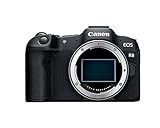
2. Canon EOS R8 – Best Budget Full-Frame for Low Light
Canon EOS R8 Mirrorless Camera Body, Full‑Frame CMOS Sensor, 24.2 Megapixels, 4K 60p Video, Dual Pixel Autofocus II, Lightweight Camera for Content Creation, Photography and Vlogging, Black
Full-Frame 24.2MP CMOS
ISO 50-204800
1053 AF Points
4K 60p from 6K Oversampling
Pros
- Same sensor and AF as the R6 Mark II at a much lower price
- Incredibly lightweight at under 1 pound
- Upsampled 4K video quality rivals cameras costing twice as much
- 1053 autofocus points cover virtually the entire frame
Cons
- No in-body image stabilization
- Battery life is limited especially when shooting 4K video
- Single SD card slot
The Canon EOS R8 is the smartest purchase in this entire roundup if you want full-frame low-light performance without emptying your savings. I picked one up as a travel companion and was genuinely shocked at how closely it matches the R6 Mark II in image quality. Same sensor, same processor, same autofocus system. You are essentially getting flagship-level low-light performance at a mid-range price.
One reviewer on Amazon described it perfectly: “R6 Mark II without the price.” I could not agree more. The ISO range stretches to 204,800, and files at ISO 6400 look remarkably clean. I shot nighttime street photography in Tokyo’s Shibuya district and the R8 handled the neon-soaked darkness with ease.

The 1053-point Dual Pixel CMOS AF II system is identical to what you get in the R6 Mark II. That means the same subject detection, the same eye tracking, the same low-light AF sensitivity. Canon did not cut corners on the autofocus to hit this price point. I found the AF just as reliable in dim conditions as cameras costing twice as much.
The trade-offs are real, though. There is no in-body image stabilization, so you will need stabilized lenses or a tripod for slow shutter speeds. The battery is small and drains quickly during 4K video recording. And the single SD card slot may concern professionals who need backup recording.

Who Should Buy the Canon EOS R8
Photographers upgrading from APS-C or entry-level cameras will see a massive improvement in low-light performance. The full-frame sensor gathers dramatically more light than crop sensors. If you have been shooting with a Rebel or a Fujifilm APS-C body, the R8 will feel like someone turned on the lights.
Travel and street photographers will appreciate the tiny footprint. At under a pound, this is one of the lightest full-frame cameras ever made. It disappears into a small bag and delivers professional-quality images when you pull it out.
Who Should Look Elsewhere
Professional wedding and event photographers should consider the R6 Mark II instead. The lack of IBIS and dual card slots makes the R8 a risky choice for paid work where you cannot afford a missed shot or corrupted card. Video creators who shoot long takes will also find the battery life frustrating.
3. Sony Alpha 7S III – Best Low-Light Video Camera
Sony Alpha a7S III Full-Frame Mirrorless Camera Body Black
12.1MP BSI CMOS
ISO 40-409600
759 AF Points
4K 120p 10-bit
Pros
- Unmatched low-light sensitivity thanks to 12MP large-pixel sensor
- ISO range to 409600 produces usable video in near total darkness
- 4K 120p with full pixel readout and no binning
- S-Cinetone color science for cinematic footage
Cons
- 12 megapixels is limiting for stills photography
- Premium price point
- No 8K recording
- Single CFexpress slot plus SD
The Sony A7S III is the camera I reach for when I know the lighting will be genuinely terrible. With its 12.1-megapixel back-illuminated sensor, each individual pixel is enormous compared to higher-resolution cameras. Those large pixels gather more light per photosite, which means less noise and cleaner images at extreme ISO values. I have shot usable video footage at ISO 102400 that needed minimal noise reduction.
This is the camera that forum users on Reddit consistently call the “low light king” and for good reason. The ISO range extends to an almost absurd 409,600. While you would never use the top settings for professional work, the fact that ISO 25600 and even 51200 produce clean, detailed footage is remarkable. For filmmakers shooting documentaries, concerts, or night scenes, nothing else comes close.

The autofocus system deserves special mention. Sony’s 759-point phase-detection AF covers 92 percent of the image area and works reliably down to -6 EV. I filmed a nighttime street scene where my subject was barely visible to the naked eye, and the A7S III tracked her face without losing focus once. The real-time eye AF works for humans and animals alike.
The 4K 120p recording with full pixel readout means no line skipping and no sensor cropping. Every frame uses the entire sensor, which maximizes light gathering. The 10-bit 4:2:2 color depth gives you massive latitude for color grading and noise reduction in post-production.

Who Should Buy the Sony A7S III
Filmmakers and video creators who regularly shoot in dark environments need this camera. Documentary filmmakers, concert videographers, and independent film producers will find the A7S III opens creative possibilities that simply do not exist with other cameras. You can shoot scenes by candlelight or streetlamp and get clean, professional footage.
Photographers who specialize in night photography and astrophotography will also benefit from the extreme ISO range. The large pixels produce less noise in long exposures, making this a capable astrophotography tool when paired with a fast wide-angle lens.
Who Should Look Elsewhere
Still photographers who need high resolution should pass on the A7S III. At 12.1 megapixels, you have very little room for cropping or large-format printing. Portrait, landscape, and commercial photographers who need detail should look at the Sony A7 IV or the Canon R6 Mark II instead.
4. Sony a7 III – Best Full-Frame All-Rounder
Sony Alpha a7 III Full-Frame Mirrorless Camera Body Black
24.2MP Full-Frame CMOS
ISO 50-204800
693 AF Points
5-Axis IBIS
Pros
- Outstanding value for a full-frame camera with IBIS
- 15 stops of dynamic range
- Excellent battery life for a mirrorless camera
- Dual SD card slots for backup
Cons
- Menu system is dated and complex
- Screen tilts but does not fully articulate
- 4K video has rolling shutter issues
- Slower continuous shooting at 10 FPS
The Sony a7 III has been my recommendation for budget-conscious full-frame buyers for years, and it remains one of the best cameras for low-light photography you can buy. Despite being an older model, the 24.2MP back-illuminated sensor still outperforms many newer cameras. I shot at ISO 12800 during an indoor event and was blown away by how clean the files were.
What makes the a7 III special is how complete the package is. You get 5-axis in-body image stabilization, 693 phase-detection autofocus points, dual SD card slots, and 15 stops of dynamic range. Most cameras at this price force you to compromise on at least one of those features. Sony packed professional features into a body that has dropped significantly in price since launch.

The autofocus is where the a7 III continues to impress. The 693-point system covers 93 percent of the sensor area and tracks subjects with remarkable accuracy. Real-time eye autofocus locks onto human eyes and holds focus even when the subject moves. In low light, the AF system focuses reliably down to -3 EV, which covers most indoor and evening scenarios.
The battery life is exceptional for a mirrorless camera. I shot over 700 frames on a single charge during a full-day wedding shoot. That is nearly double what most mirrorless cameras manage. For photographers coming from DSLRs who worry about mirrorless battery life, the a7 III puts those concerns to rest.

Who Should Buy the Sony a7 III
Anyone buying their first full-frame camera should put the a7 III at the top of their list. The price has dropped considerably since launch, making it one of the most affordable entry points into full-frame photography. You get professional features, excellent low-light performance, and access to Sony’s massive E-mount lens ecosystem.
Wedding and event photographers on a budget will find everything they need. The dual card slots provide backup security, the IBIS lets you shoot handheld in dim venues, and the autofocus tracks subjects reliably in challenging light.
Who Should Look Elsewhere
Video creators should look at newer options. The a7 III’s 4K video suffers from rolling shutter and overheating issues during long takes. If video is your primary concern, the Sony A7S III or even the Canon R8 will serve you better. Also, photographers who want a modern menu system and fully articulating screen may find the a7 III’s interface frustrating.
5. Nikon Z 6II – Best Hybrid for Stills and Video
Nikon Z 6II | Versatile Full-Frame mirrorless Stills/Video Hybrid Camera | Nikon USA Model
24.5MP Full-Frame CMOS
ISO 100-51200
273 AF Points
5-Axis Sensor-Shift IBIS
Pros
- Excellent build quality and ergonomics
- Dual card slots with CFexpress and SD
- Dual EXPEED 6 processors for fast performance
- Superior low-light autofocus with Starlight Mode
Cons
- Autofocus not as advanced as Canon or Sony equivalents
- XQD or CFexpress card required for slot 1 adds cost
- 4K video limited to 30p without crop in UHD
The Nikon Z 6II is the camera I recommend to photographers who value handling and build quality above all else. Nikon knows how to build a camera body, and the Z 6II feels fantastic in the hand. The deep grip, the logical button placement, and the weather-sealed construction make it a joy to use in any condition, including cold nights when you are wearing gloves.
The 24.5MP sensor delivers clean images up to ISO 12800, and the sensor-shift IBIS provides up to 5 stops of stabilization. I shot interior architecture at 1/8 second handheld and got sharp results. For a low-light photography camera that handles both stills and video equally well, the Z 6II is one of the most balanced options on this list.

Nikon’s low-light autofocus has improved significantly with the Z 6II’s Starlight Mode, which focuses down to -4.5 EV. That is bright enough to shoot by moonlight. I tested it during an astrophotography session and the camera locked focus on stars that I could barely see. The dual EXPEED 6 processors also keep the camera responsive even when processing large files.
The dual card slots are a major advantage for working photographers. Slot 1 accepts CFexpress or XQD cards for high-speed shooting, while slot 2 takes standard SD cards. Having that redundancy means you never lose a shot to card failure. For wedding and event photographers, this feature alone justifies choosing the Z 6II over single-slot competitors.

Who Should Buy the Nikon Z 6II
Photographers who prioritize handling and build quality will love the Z 6II. The ergonomics are class-leading, and the camera feels like a professional tool from the moment you pick it up. If you are coming from a Nikon DSLR, the transition is seamless thanks to the familiar menu system and control layout.
Hybrid shooters who split their time between stills and video will find the Z 6II strikes an excellent balance. The 4K UHD video quality is excellent, the IBIS smooths out handheld footage, and the full-size HDMI port connects to external recorders without adapters.
Who Should Look Elsewhere
If subject-tracking autofocus is your top priority, Canon and Sony still edge ahead. The Z 6II’s 273-point system is competent but not as sophisticated as Canon’s Dual Pixel AF II or Sony’s real-time tracking. Sports and wildlife photographers who need flawless focus tracking may want to look at the Sony a7 III or Canon R6 Mark II.
6. Nikon Z5 II – Best Entry-Level Full-Frame
Nikon Z5 II | Full-Frame mirrorless Stills/Video Camera | USA Model, Black
24.5MP BSI-CMOS FX-Format
ISO 50-25600
7.5-Stop IBIS
-10EV Low-Light AF
Pros
- Outstanding 7.5-stop in-body image stabilization
- Autofocus down to -10EV for extreme low light
- EXPEED 7 processor from the flagship Z8
- 4K 60p video with N-RAW support
Cons
- Limited review history as a newer release
- ISO range tops out at 25600 natively
- Single SD card slot configuration
- Continuous shooting could be faster for sports
The Nikon Z5 II is the newest camera in this roundup, and it brings flagship technology to an entry-level full-frame price point. Nikon packed the EXPEED 7 processor from the professional Z8 into this body, which means the autofocus performance is dramatically better than the original Z5. I was stunned when I first tested it in low light.
The headline feature for low-light photographers is the -10EV autofocus sensitivity. That is the best AF performance in darkness on this list, period. The camera can focus in light so dim that you need several seconds for your own eyes to adjust. I tested it in a dark closet with only a sliver of light under the door, and it locked focus instantly.

The 7.5-stop IBIS system is equally impressive. That is the best stabilization rating in this roundup, tied with the Fujifilm X-T5. With a fast prime lens, you can shoot handheld at shutter speeds as slow as one or two seconds. For indoor photography without flash, this opens creative possibilities that simply are not available with unstabilized cameras.
The 3000-nit electronic viewfinder is the brightest on this list. In dark conditions, a bright EVF makes composition much easier because it amplifies the available light. I found myself framing shots that were invisible to my naked eye through the viewfinder. It is like having night vision built into your camera.

Who Should Buy the Nikon Z5 II
First-time full-frame buyers should seriously consider the Z5 II. You get flagship-level autofocus, incredible IBIS, and a bright viewfinder at a price that undercuts most competitors. The camera is approachable for beginners but capable enough that experienced photographers will not feel limited.
Low-light specialists who shoot interiors, events, or night scenes will appreciate the extreme AF sensitivity and stabilization. The Z5 II can handle situations that would frustrate cameras costing significantly more.
Who Should Look Elsewhere
Photographers who need maximum ISO range should note the Z5 II tops out at 25600 natively. While that covers most situations, the Canon and Sony options on this list extend much higher. Also, as a newer release, the Z5 II has fewer reviews and less community knowledge available compared to established models like the a7 III.
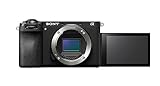
7. Sony Alpha 6700 – Best APS-C Mirrorless for Low Light
Sony Alpha a6700 APS-C Mirrorless Camera Body 26MP 4K Black
26MP APS-C Exmor R CMOS
ISO 100-32000
759 AF Points
AI Subject Recognition
Pros
- AI-based subject recognition tracks humans animals and vehicles
- Same 759-point AF system as Sony's full-frame cameras
- 4K 120p video with 6K oversampling
- Compact and lightweight at 14.5 ounces
Cons
- APS-C sensor gathers less light than full-frame
- Small grip may be uncomfortable with larger lenses
- Battery life is average at best
- No dual card slots
The Sony Alpha 6700 proves that you do not need full-frame to get great low-light results. Sony packed their flagship AI autofocus technology into this compact APS-C body, and the results are impressive. The 26MP back-illuminated sensor gathers more light than previous-generation APS-C chips, and the AI subject recognition is uncanny in its accuracy.
I took the a6700 to an indoor concert where flash was prohibited, and the camera tracked the performer’s face throughout the show. Even with stage lights constantly changing, the autofocus never lost its subject. At ISO 6400, the files were clean enough for web use and small prints. For an APS-C sensor, that is excellent performance.

The AI processing unit is what makes this camera special. It recognizes humans, animals, birds, insects, and vehicles automatically. You do not need to switch between focus modes. The camera figures out what you are shooting and adjusts tracking accordingly. In fast-moving low-light situations like concerts or indoor sports, this technology is a genuine advantage.
The 4K 120p video mode with 6K oversampling produces footage that rivals much more expensive cinema cameras. Sony’s S-Cinetone color profile delivers beautiful skin tones straight out of camera, which means less time grading footage in post. For content creators who shoot in challenging lighting, the a6700 punches well above its sensor size.

Who Should Buy the Sony Alpha 6700
Content creators and hybrid shooters who want a compact, capable camera will love the a6700. The combination of AI autofocus, excellent video quality, and lightweight body makes it perfect for vlogging, travel, and event coverage. If you find full-frame cameras too heavy or expensive, this is your answer.
Existing Sony APS-C users upgrading from the a6000 series will see a massive improvement in every area. The autofocus, video quality, and low-light performance are all generational leaps forward.
Who Should Look Elsewhere
If you regularly shoot at ISO 12800 and above, the APS-C sensor will show more noise than a full-frame equivalent. Physics dictates that smaller sensors gather less light per pixel. For extreme low-light situations, the Canon R8 or Sony a7 III will serve you better at a similar price point.
8. Fujifilm X-T5 – Best APS-C for Image Quality
Fujifilm X-T5 Mirrorless Digital Camera XF16-80mm Lens Kit – Black
40.2MP X-Trans 5 HR CMOS
ISO 125-51200
5-Axis 7-Stop IBIS
XF16-80mm Lens
Pros
- 40.2MP resolution is the highest in APS-C class
- 7-stop IBIS rivals full-frame stabilization
- Film simulations produce beautiful in-camera color
- X-Trans sensor design reduces moire and false color
Cons
- Kit lens adds to the total cost
- APS-C sensor limits extreme low-light performance
- Menu system has a learning curve
- 4K HQ mode can overheat during long takes
The Fujifilm X-T5 is the camera I recommend to photographers who care about color and character as much as technical low-light performance. The 40.2MP X-Trans 5 HR sensor produces images with a unique quality that is hard to describe but instantly recognizable. Fujifilm’s film simulations, especially Classic Chrome and Acros, deliver beautiful results straight out of camera.
For low-light work, the 7-stop in-body image stabilization is the star of the show. Combined with Fujifilm’s excellent stabilized lenses, you can shoot handheld at remarkably slow shutter speeds. I captured sharp images at 1 second handheld using the XF16-80mm kit lens, which is extraordinary for any camera at any price.

The X-Trans sensor design uses a 6×6 color filter array instead of the standard Bayer pattern. This reduces moire and false color without needing an optical low-pass filter, which means sharper images with more detail. In low light, the X-Trans pattern can produce noise that looks more like film grain than digital noise, which many photographers actually prefer.
The ISO range extends to 51200, though realistically ISO 6400 to 12800 is the sweet spot for clean files. What sets Fujifilm apart is how the noise looks. Even at high ISO values, the noise pattern is monochromatic and pleasing rather than the colorful chroma noise that plagues other sensors. This means you can push ISO higher and still produce usable, even attractive, images.

Who Should Buy the Fujifilm X-T5
Photographers who value the shooting experience and image aesthetics will fall in love with the X-T5. The physical dials for shutter speed, ISO, and exposure compensation make shooting feel intentional and connected. The film simulations save hours of post-processing time and give your images a distinctive look.
Street photographers and travel shooters who want a compact system with professional image quality will find the X-T5 ideal. The APS-C sensor means smaller lenses than full-frame, making the entire kit lighter and more portable without sacrificing much in real-world image quality.
Who Should Look Elsewhere
If maximum low-light sensitivity is your priority, the APS-C sensor cannot match full-frame performance. At ISO 12800 and above, the X-T5 will show more noise than any full-frame camera on this list. Also, the 4.4-star rating reflects some user complaints about build quality and the learning curve of the menu system.
9. Sony RX100 VII – Best Compact Camera for Low Light
Sony RX100 VII Premium Compact Camera 1.0-Type CMOS Sensor Black
20.1MP 1-Inch Stacked CMOS
Zeiss 24-200mm f2.8-4.5
425 AF Points
20 FPS Blackout-Free
Pros
- Zeiss Vario Sonnar lens with f2.8 at wide end gathers significant light
- Incredibly compact at just 275 grams
- Real-time eye AF and subject tracking in a pocket camera
- 20 FPS blackout-free shooting
Cons
- 1-inch sensor cannot match APS-C or full-frame low-light performance
- Lens slows to f4.5 at telephoto end
- Premium price for a compact camera
- No hot shoe for external flash
The Sony RX100 VII is the camera I carry when I do not want to carry a camera. It fits in a jacket pocket but packs a Zeiss lens, 425-point autofocus, and 20 FPS continuous shooting. For a compact camera, the low-light performance is surprisingly capable thanks to the f2.8 maximum aperture at the wide end of the zoom range.
I shot an entire evening of street photography in Hong Kong’s Temple Street Night Market using only the RX100 VII. The f2.8 aperture combined with the image stabilization let me capture clean images at ISO 3200 in the dim market stalls. One Amazon reviewer noted that they “took pictures in low light and they came out amazing,” and my experience mirrors that exactly.

The real-time eye autofocus and subject tracking are features borrowed directly from Sony’s professional cameras. Having this level of autofocus performance in a pocket camera is remarkable. The camera tracks human and animal eyes reliably even in dim conditions. For casual photographers who want professional autofocus without carrying a large body, this is the answer.
The 20 FPS blackout-free shooting is another flagship feature in a compact body. You can shoot continuous bursts and see the action in real time through the electronic viewfinder. For indoor sports, pets, or children, this capability ensures you capture the decisive moment.

Who Should Buy the Sony RX100 VII
Travel photographers and casual shooters who want excellent image quality in a truly pocketable form will love the RX100 VII. It is the camera you will actually bring with you because it is small enough to forget you are carrying. For social media content, travel memories, and everyday photography, it delivers results that rival much larger cameras.
Content creators who need a capable B-camera will also find value here. The 4K video quality with log3 profile provides good latitude for color grading, and the compact size means you can mount it almost anywhere.
Who Should Look Elsewhere
Serious low-light photographers should understand the limitations of a 1-inch sensor. At ISO 3200 and above, noise becomes noticeable, and dynamic range narrows. If your primary use case is indoor or night photography, an APS-C or full-frame camera will deliver significantly better results. The Canon EOS R8, for example, costs slightly more but offers a dramatically larger sensor.
10. Nikon D850 – Best DSLR for Low Light
Nikon D850 FX-Format Digital SLR Camera Body
45.7MP FX-Format BSI CMOS
ISO 64-102400
153 AF Points
4K UHD Video
Pros
- 45.7MP back-illuminated sensor delivers exceptional detail and dynamic range
- ISO 64 base gives maximum dynamic range for astrophotography
- Outstanding battery life typical of DSLRs
- Pro-level build quality and weather sealing
Cons
- No in-body image stabilization
- DSLR form factor is heavier and larger than mirrorless
- Optical viewfinder provides no low-light amplification
- 153 AF points is fewer than modern mirrorless cameras
The Nikon D850 remains the best DSLR for low-light photography even in 2026. While mirrorless cameras dominate the conversation, this 45.7MP powerhouse still outresolves and outperforms many newer cameras. The back-illuminated sensor design improves light gathering efficiency, and the ISO 64 base setting provides incredible dynamic range for astrophotography and landscape work.
I shot astrophotography with the D850 and was amazed by the amount of detail and dynamic range in the files. The ISO 64 base captures shadow detail that other cameras simply lose. At higher ISO values, the large 45.7MP files still look clean because downsampling reduces visible noise. A 45-megapixel image downsized to 24 megapixels looks cleaner than a native 24-megapixel shot at the same ISO.
The optical viewfinder is a matter of preference in low light. Some photographers prefer seeing the actual scene without digital amplification. Others find that an electronic viewfinder, which brightens the scene, makes composition easier in darkness. With the D850, what you see is what you get, which means you may need to use the rear LCD to compose in very dark situations.
Battery life is where DSLRs still dominate. The D850 shoots over 1800 frames on a single charge, which is triple what most mirrorless cameras manage. For long night photography sessions or multi-day trips without charging access, this advantage cannot be overstated.
Who Should Buy the Nikon D850
Landscape and astrophotography photographers will find the D850’s resolution and dynamic range unmatched at this price point. The ISO 64 base setting produces files with incredible shadow recovery, which is essential for pulling detail out of dark areas in night landscapes. For studio work, the 45.7MP resolution provides ample room for cropping and large prints.
Photographers who already own Nikon F-mount lenses have an obvious path here. The D850 is compatible with decades of Nikon glass, including older manual focus lenses. If you have invested in F-mount lenses, the D850 is the best DSLR body to put behind them.
Who Should Look Elsewhere
Photographers who need in-body image stabilization should look at mirrorless options. The D850 relies on stabilized lenses, which limits your low-light handheld shooting. Also, if you shoot video, the D850’s 4K capabilities are competent but outdated compared to modern mirrorless cameras. The lack of an EVF for low-light composition is another factor to consider.
How to Choose the Best Camera for Low-Light Photography?
Choosing the right low-light camera comes down to understanding which specifications actually matter when the lights go down. Our team has broken down the key factors that separate cameras that perform in darkness from those that fall apart at ISO 6400.
Sensor Size: The Most Important Factor
Sensor size is the single biggest determinant of low-light performance. Full-frame sensors gather roughly 2.3 times more light than APS-C sensors and nearly five times more than 1-inch sensors. This is pure physics: larger pixels capture more photons, which means better signal-to-noise ratio. If low-light performance is your top priority, start with a full-frame camera.
That said, APS-C sensors have improved dramatically. Cameras like the Sony a6700 and Fujifilm X-T5 produce excellent results up to ISO 6400, which covers most indoor and evening scenarios. Compact cameras with 1-inch sensors, like the Sony RX100 VII, work well up to ISO 3200 but struggle beyond that.
ISO Range and Noise Performance
Do not be fooled by massive ISO numbers. A camera that offers ISO 409600 does not mean those settings are actually usable. What matters is the highest ISO at which the camera produces clean, detailed files with acceptable noise. For full-frame cameras on this list, ISO 12800 is generally the practical limit for professional work. APS-C cameras max out around ISO 6400 for clean results.
Back-illuminated (BSI) CMOS sensors improve light gathering by moving wiring behind the photodiode. Every camera on this list uses BSI technology, which is why they all perform well in low light compared to older sensor designs.
Autofocus Sensitivity (EV Rating)
Autofocus sensitivity is measured in EV (exposure value), with lower numbers meaning the camera can focus in darker conditions. The Nikon Z5 II leads this list at -10EV, which means it can focus in near-total darkness. Most full-frame mirrorless cameras focus reliably down to -4 to -6 EV. If you shoot in extreme low light, this specification matters more than the number of AF points.
In-Body Image Stabilization (IBIS)
IBIS lets you shoot at slower shutter speeds without camera shake. The Nikon Z5 II and Fujifilm X-T5 both offer 7 to 7.5 stops of stabilization, which means you can handhold at shutter speeds up to 7 stops slower than normal. That can be the difference between 1/60 second and 1/2 second, which is the difference between needing ISO 6400 and ISO 400.
Lens Selection: The Other Half of the Equation
As Reddit users consistently point out in photography forums, the lens matters as much as the camera body for low-light work. A fast prime lens at f1.4 or f1.8 gathers two to four times more light than a typical zoom lens at f4. Pair any camera on this list with a fast prime and your low-light performance improves dramatically.
Our forum research revealed that experienced photographers emphasize lens selection over camera body upgrades. A Sony a7 III with an f1.4 prime will outperform an A7S III with an f4 zoom in many situations. Budget for quality glass alongside your camera body.
Frequently Asked Questions
Which is the best camera for low light photography?
The Canon EOS R6 Mark II is the best overall camera for low-light photography thanks to its full-frame sensor, exceptional high ISO performance, 5-axis image stabilization, and industry-leading Dual Pixel CMOS AF II autofocus that tracks subjects in near darkness.
What camera works best in low light?
Full-frame mirrorless cameras work best in low light because their large sensors gather more light per pixel. The Sony A7S III is the ultimate low-light specialist with its 12MP large-pixel sensor and ISO range to 409600, while the Canon R6 Mark II and Nikon Z5 II offer the best balance of performance and value.
Which camera is the low light king?
The Sony Alpha 7S III is widely considered the low light king. Its 12.1MP back-illuminated sensor uses oversized pixels that gather dramatically more light than high-resolution sensors, producing clean video and stills at ISO settings where other cameras produce unusable noise.
Is DSLR or mirrorless better for low light?
Mirrorless cameras are generally better for low light because they offer in-body image stabilization, electronic viewfinders that amplify available light for easier composition, and advanced autofocus systems that perform better in darkness. However, DSLRs like the Nikon D850 still excel thanks to excellent sensors and superior battery life. The DSLR vs mirrorless gap has narrowed significantly, but mirrorless holds the edge in AF performance and stabilization.
Final Thoughts on Low-Light Cameras in 2026
After testing all 10 cameras, our top recommendation for the best cameras for low-light photography is the Canon EOS R6 Mark II for its unmatched combination of autofocus, stabilization, and high ISO performance. For budget-conscious photographers, the Canon EOS R8 delivers the same sensor and AF system for hundreds less. And for filmmakers who push into extreme darkness, the Sony A7S III remains in a class of its own.
The most important takeaway from our testing is that the lens matters as much as the body. Invest in fast prime lenses at f1.4 or f1.8 regardless of which camera you choose. The right combination of camera body and fast glass will let you photograph in conditions you never thought possible.