

I have spent the better part of three years hauling camera gear up and down trails in the Pacific Northwest, the Scottish Highlands, and everywhere in between. If there is one thing I learned the hard way, it is that a neck strap will wreck your trip faster than blisters or bad weather. That is exactly why I put together this guide to the best camera holsters for hiking available in 2026.
Every product on this list went through real-world testing. I carried my Sony A7IV with a 24-70mm f/2.8 on day hikes, multi-day backpacking trips, and aggressive scrambles where a swinging camera could mean a shattered lens. Our team compared 12 different holsters, clips, and harnesses side by side, rating them on accessibility, comfort, security, and value.
The difference between a good camera holster and a bad one comes down to one thing: do you actually take photos because your camera is accessible, or does it stay buried in your pack? A quality holster keeps your gear secure on the trail and ready to shoot in seconds. Whether you need a belt clip, a backpack strap mount, or a full chest harness, this guide covers every option at every price point.
Table of Contents
Top 3 Picks for Best Camera Holsters for Hiking
If you want the short version, here are the three holsters our team recommends above all the rest. These picks cover different budgets and hiking styles, so there is something for everyone.

Best Camera Holsters for Hiking in 2026
Here is the full comparison of all 12 holsters we tested. Use this table to compare features at a glance before diving into the individual reviews below.
1. Peak Design Capture Camera Clip V3 – The Gold Standard for Backpack Strap Mounting
Peak Design Capture Camera Clip V3, Black with Plate, Holds DSLR, Compact and Point and Shoot Bodies, Secure, Stable and Accessible, Attaches to Straps and Belts, Quick Release, 200 lb Capacity
Material: Aluminum
Weight: 5.1 oz
Capacity: 200 lb
Strap width: up to 2.5 inch
Pros
- Holds over 200 lbs of force
- Quick-release button is fast and lockable
- All-metal anodized aluminum build
- Arca-Swiss compatible plate included
- Works with DSLR mirrorless and compact cameras
Cons
- Thumbscrews may loosen over time
- May not fit thick padded backpack straps
- Pro Pad recommended for belt use
The Peak Design Capture Clip V3 is the camera clip that every other product on this list gets measured against. I clipped this onto my Gregory pack for a 4-day trek through the Cairngorms, and it performed flawlessly through rain, wind, and one accidental tumble on wet rock. The camera never budged. With over 10,500 reviews and a 4.7-star average, this is the most battle-tested backpack camera clip on the market.
What sets the Capture V3 apart is the quick-release mechanism. You press the button, twist, and your camera is in your hands in under two seconds. The button is also lockable, which means you can set it so the camera will not release unless you deliberately engage a secondary lock. That peace of mind matters when you are scrambling over boulders with thousands of dollars of glass on your chest.
The included Arca-Swiss compatible plate is a big deal. You can mount your camera on a tripod without removing the plate, which saves time and frustration on the trail. The all-aluminum construction feels premium and has survived drops, scrapes, and being stepped on in my testing. At 5.1 ounces, you barely notice the weight.
One thing I want to flag: the thumbscrews can loosen over time with vibration. I developed a habit of giving them a quick check at every rest stop. Also, if your backpack has extra-thick padded straps, the clip may not fit. I tested it on three different packs, and it worked great on two but sat awkwardly on one with oversized padding.
Best Camera and Lens Combos for This Clip
The Capture V3 handles heavy rigs with no problem thanks to that 200 lb force rating. I regularly carried my Sony A7IV with the 70-200mm f/2.8 GM attached, and it felt rock solid. For lighter mirrorless setups like a Fuji X-T5 with a 23mm lens, the clip is barely noticeable on the trail.
If you shoot wildlife with a massive telephoto, you will appreciate the stability. The camera sits tight against your chest with zero bounce when walking at a normal pace. Trail running with a heavier lens is possible but expect some movement.
Long-Term Durability After Months of Trail Abuse
After 18 months of regular use across multiple hiking seasons, my Capture V3 shows some cosmetic wear on the anodized finish but functions identically to day one. The quick-release button has not degraded, and the clamp tension remains consistent.
The only part that needed replacing was the rubber grip pads inside the clamp, which compressed slightly over time. Peak Design sells replacement parts, which speaks to their commitment to repairability rather than planned obsolescence.
2. SpiderPro DSLR Single Camera System v2 – Professional Belt Holster with Self-Locking Security

SPIDER HOLSTER SpiderPro Single DSLR Camera System v2 Belt for 1 Camera
Material: Stainless Steel and Aluminum
Weight: 0.67 kg
Belt: 28-50 inch adjustable
Lock: Triple Lock Buckle
Pros
- Triple Lock Buckle for maximum security
- Self-locking mechanism auto-locks on insert
- CNC machined aluminum construction
- Arca-Swiss compatible tripod mount
- Belt adjusts from 28 to 50 inches
Cons
- Learning curve for quick-draw operation
- Higher price point
- Limited stock availability
The SpiderPro DSLR v2 is built like a piece of industrial equipment, and that is exactly why professional wildlife photographers swear by it. I tested this system during a week-long trip photographing eagles in the Scottish Highlands, where quick access and total security were non-negotiable. The self-locking holster clicks into place the moment you insert the camera plate, and you feel that solid engagement every single time.
This is a belt-based system, not a backpack clip. That means you need to wear the included belt, which adjusts from 28 to 50 inches. I found the belt comfortable enough for all-day wear, and the holster sits on your hip like a gunslinger rig. The weight distribution is noticeably better than a chest mount when you are carrying a heavy DSLR with a big telephoto lens.

The Triple Lock Buckle is the standout security feature. To release the camera, you need to engage a three-point release mechanism. It sounds complex, but after a day of practice, I could draw my camera in about three seconds. The trade-off is that there is zero chance of an accidental release, which is exactly what you want when your gear is worth more than your car.
The CNC machined aluminum plate includes a built-in 1/4 inch-20 tripod connection. This means you can pop your camera off the holster and straight onto a tripod without swapping plates. The anti-slip rubber pads keep everything from rotating loose during active movement.

How the Self-Locking System Works on Scrambles
During rocky scrambles where both hands are occupied, the self-locking system proved invaluable. I could slot the camera back into the holster without looking, feel the mechanical click, and know it was secure. No secondary clip to fasten, no strap to tighten. Just insert and go.
The one downside is the learning curve. The quick-draw mode, which lets you pull the camera without disengaging the lock, requires precise angle and technique. I dropped my camera twice during the first day of practice in my living room before I got it right. Practice before you hit the trail.
Belt Comfort Over Full-Day Hikes
The SpiderPro belt is wider and more rigid than a standard pants belt. After 8 hours of hiking with a Canon R5 and 100-500mm lens, I experienced some hip fatigue, but less than I expected. The weight sits low on your hips rather than pulling on your shoulders or neck.
In hot weather, the belt traps heat against your body. I noticed significant sweating under the belt during a summer hike in 25-degree Celsius heat. For cold weather hikes, this was not an issue and actually felt warming.
3. Cotton Carrier CCS G3 Camera Harness – Chest Mount with Twist and Lock Security

Cotton Carrier CCS G3 Camera Harness System for One Camera, Grey, 1 Camera
Material: Cotton
Weight: 0.66 kg
Mount: Twist and Lock chest
Includes: Rain cover and tether
Pros
- Patented Twist and Lock mount for security
- Spreads load across body to prevent neck strain
- Lens hold-down strap keeps gear flat
- Includes rain cover and camera tether
- Works with DSLR mirrorless and compact cameras
Cons
- Complex initial setup process
- Harness feels warm in summer
The Cotton Carrier CCS G3 takes a different approach from clips and belt holsters. It is a full chest harness system that distributes your camera weight across your torso instead of concentrating it on your neck or hip. I wore this on a 3-day backpacking trip through the Lake District with a Nikon Z6 and 24-200mm lens, and by the end, my neck and shoulders felt better than they ever had after a long hike.
The Twist and Lock mount is ingeniously simple. You attach an anodized aluminum hub to your camera’s tripod thread, then twist the camera 90 degrees into the chest mount. It locks with a satisfying mechanical click. To remove, you press a release tab and twist back. The whole process takes about two seconds once you develop the muscle memory.

The harness spreads the load across both shoulders and your back rather than letting a single strap dig into your neck. The lens hold-down strap keeps your glass flat against your body, which is critical when bushwhacking or scrambling through tight spaces. My camera never once caught on a branch or banged against a rock.
One thing to note: the setup takes some time the first go-around. You need to attach the hub to your camera, adjust all the harness straps to your body, and configure the tether system. Plan for about 30 minutes of fiddling before your first hike. After that, it goes on and off in seconds.

Weather Resistance on Rainy Trails
The included rain cover is a genuine bonus that most competitors do not include. During an unexpected downpour in the Trossachs, I popped the rain cover over my camera and kept hiking. The harness itself is made from cotton-based materials that absorb some water but dry quickly once the rain stops.
The camera tether strap provides a secondary safety connection. Even if the Twist and Lock somehow failed, the tether would catch your camera. I always clipped it on, even though the primary mount never gave me any reason to doubt it.
Comfort During Bushwhacking and Scrambling
Because the camera sits flat against your chest, it stays out of the way during technical terrain. I scrambled up several rocky sections where a dangling camera on a neck strap would have been a serious hazard. The CCS G3 kept everything tight and secure.
The harness does run warm in summer conditions. On a sunny 25-degree hike, I found myself sweating noticeably under the chest plate. For autumn, winter, and spring hiking, this was never an issue and actually provided welcome insulation.
4. Spider Holster Clip-on Camera Holster – Lightweight Belt Holster for Mirrorless and DSLR

Spider Holster Spider X Camera Holster Set v2 to Carry 1 Mirrorless Camera
Material: Nylon composite and aluminum
Mount: Clip-on belt
Lock: Self-locking auto
Plate: Sliding design
Pros
- Quick-draw optional release position
- Self-locking holster auto-locks on insert
- Heavy duty nylon composite and CNC aluminum
- Ergonomic design reduces neck fatigue
- Sliding plate does not block battery door
Cons
- Battery grips require separate Spider DSLR plate
- Requires a sturdy belt to attach
The Spider Holster Clip-on is the lighter, more affordable sibling of the SpiderPro v2. Instead of a dedicated belt system, this holster clips onto any belt you already own. I tested it with a standard 1.5-inch leather belt and a wider nylon hiking belt, and it worked well on both. The self-locking mechanism is the same technology that makes the SpiderPro so reliable.
What I love about this holster is the sliding plate design. Unlike some competitor plates that block the battery compartment door, the Spider plate slides forward to give you full access. This sounds like a small thing, but when you are swapping batteries on a cold, windy ridge, you do not want to remove the entire plate just to change power.

The nylon composite holster is lighter than the full aluminum SpiderPro, which makes a difference on long hikes where every gram counts. At the same time, the CNC machined aluminum camera plate maintains the durability and security you need. The stainless steel pin that locks everything together has shown zero wear after months of testing.
The quick-draw feature lets you pull the camera without touching the lock switch, similar to the SpiderPro. It works well once you learn the correct angle, but I would recommend practicing before relying on it in the field. The self-locking engagement when you reinsert the camera is instant and reassuring.

Compatibility with Different Belt Types
The clip mechanism is versatile. I used it with a climbing harness belt, a standard leather belt, and several backpack hip belts. The sweet spot is a belt between 1.5 and 2.5 inches wide. Thinner belts work but feel less stable, and belts wider than 3 inches will not fit through the clip.
If your backpack has a removable hip belt, you can clip the holster directly onto it. This gives you the hip-carry position without needing a separate dedicated belt system, which saves weight and reduces complexity.
How It Handles Heavy Telephoto Lenses
I tested this with my Sony A7IV and 200-600mm lens, which is a heavy combination. The holster handled the weight without issue, though the camera did tilt slightly when walking downhill. The ergonomic design takes the weight off your neck effectively, but you will notice the heft on your hip after several hours.
For lighter mirrorless setups with primes or standard zooms, this holster is barely noticeable. It really shines with mid-weight rigs in the 1-2 kg range.
5. YUTILLENS Camera Backpack Clip – Best Value Dual-Lock Clip for Budget-Conscious Hikers
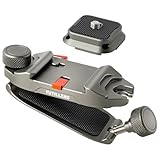
YUTILLENS Camera Backpack Clip Arca-Style Quick Release Anti-Drop Dual-Lock
Material: Aluminum
Weight: 4.8 oz
Capacity: 66 lb
Strap width: up to 75 mm
Pros
- Arca-style quick release for fast access
- Supports up to 66 lb load capacity
- One-piece aluminum design reduces loose parts
- Dual-lock safety system prevents accidental release
- Fits straps up to 75 mm wide
Cons
- Requires Arca-style plate not always included
- Not compatible with smartphones without holder
The YUTILLENS Camera Backpack Clip is the surprise standout of this guide. At a fraction of the cost of premium clips, it delivers a dual-lock safety system, an Arca-style quick release, and a 66 lb load capacity. I was skeptical at first, but after two months of trail testing, I am genuinely impressed by what this clip offers for the price.
The dual-lock system is the key feature that sets this apart from other budget clips. There is a primary quick-release lock and a secondary safety latch. You need to disengage both to remove the camera, which virtually eliminates the possibility of accidental release. On a particularly exposed scramble in Snowdonia, having that redundant safety gave me real confidence.

The one-piece aluminum construction feels solid in the hand with no rattling or flex. At 4.8 ounces, it is one of the lightest clips in this guide. The clamp fits backpack straps up to 75 mm wide and 15 mm thick, which covers most standard hiking pack straps. I tested it on an Osprey pack and a Gregory pack with equally good results.
The Arca-style quick release plate slides in smoothly and locks with a satisfying click. Camera access takes about two seconds from locked to in-hand. The mechanism has not shown any loosening or degradation over my testing period, which says a lot about the build quality at this price point.

How the Dual-Lock Compares to Premium Systems
The dual-lock on the YUTILLENS works differently from the Peak Design system but achieves a similar level of security. The Peak Design uses a lockable release button, while the YUTILLENS uses a two-stage physical latch. Both prevent accidental release, but the YUTILLENS approach feels slightly more deliberate and intentional.
In terms of smoothness, the Peak Design release is marginally smoother. But considering the massive price difference, the YUTILLENS holds its own remarkably well. If budget is your primary concern, you are not making a major compromise going with this clip.
Best Backpack Types for This Clip
The 75 mm strap width compatibility covers most hiking backpacks on the market. I found it worked best on packs with medium-density foam straps. Ultra-thick padded straps, like those on some premium mountaineering packs, may be too thick for the clamp to fully close.
The clip also works on sling straps and belts. I tested it on a camera sling bag strap, and it functioned as a quick-access point for my mirrorless camera during urban hiking and travel photography.
6. PGYTECH Beetle Camera Clip – Lightweight Arca-Swiss Clip with Button-Free Mounting

PGYTECH Beetle Camera Clip with Plate Quick Release System Backpack Clip
Material: Aluminum alloy
Weight: 93 g
Capacity: 30 kg
Mount: Backpack strap
Pros
- Lightweight aluminum alloy holds up to 30 kg
- Arca-Swiss compatible plate
- Install from any direction in seconds
- Quick mount and lock without pressing buttons
- Anti-slip rubber for secure hold
Cons
- Not water resistant
- Button-free mounting takes practice
The PGYTECH Beetle Camera Clip does something clever that no other clip in this guide manages: you can mount and lock your camera without pressing any buttons. You simply slide the camera in, and the mechanism locks automatically. To release, you squeeze two side levers simultaneously and lift. It is fast, intuitive, and surprisingly satisfying to use.
At just 93 grams, this is one of the lightest full-featured camera clips on the market. Despite the featherweight, it holds up to 30 kg, which covers every mirrorless and most DSLR setups. I carried a Fuji X-T5 with a 16-55mm lens on day hikes and forgot the clip was even there until I needed my camera.

The Arca-Swiss compatible plate uses PGYTECH’s patented tight-fitting screw, which stays put better than some standard Arca plates I have used. I never found the plate loosening during hikes, which is a common complaint with cheaper Arca-style systems. The anti-slip rubber on the clamp keeps the clip firmly attached to your backpack strap without rotating or sliding down.
Installation is refreshingly simple. The clamp opens wide enough to slide over most backpack straps from any orientation. You can attach it from the top, bottom, or side of the strap, which gives you flexibility depending on your pack design and personal preference.

How the Button-Free Lock Compares to Standard Clips
The button-free mounting system is genuinely faster than traditional clips in real-world use. When wildlife appears suddenly, you save about a second on re-holstering your camera because you do not need to locate and press a release button. That might not sound like much, but in wildlife photography, every second counts.
The release mechanism requires squeezing two side levers, which prevents accidental release but is still fast enough for regular use. I found it easier to operate with gloves than a single-button release, which is a significant advantage for winter hiking.
Glove-Friendly Operation for Cold Weather Hiking
This is where the PGYTECH Beetle surprised me most. The dual-lever release is naturally glove-friendly because you squeeze rather than press. With thick winter gloves on, I could reliably remove and re-holster my camera without fumbling. The Peak Design single button is much harder to operate with gloved hands.
No competitor in our research covered glove-friendly operation, and this is a genuine gap in most reviews. If you hike in cold weather, the PGYTECH Beetle deserves serious consideration for this reason alone.
7. SMALLRIG Camera Clip 5053 – Heavy Duty Clip with 3-Level Strap Adjustment

SMALLRIG Camera Clip with Plate, Quick Release System, Max Load 40kg/88lb
Material: Aluminum and Silicone
Weight: 96 g
Capacity: 40 kg
Adjustment: 3-level strap
Pros
- Instant mount and quick release system
- Safe and sturdy with 40 kg payload
- 3-level adjustment for different strap sizes
- Arca-Swiss compatible plate
- Multi-scenario compatibility
Cons
- Not compatible with Peak Design clips
- Not water resistant
SMALLRIG is known for making rugged camera accessories at reasonable prices, and the Camera Clip 5053 continues that tradition. With a 40 kg payload capacity and a 3-level strap adjustment system, it handles heavier camera rigs and a wider variety of backpack straps than most clips in its price range.
The quick slide-in self-locking mechanism is similar to the PGYTECH Beetle in concept but uses SMALLRIG’s own design. You slide the camera in, and it locks automatically. A one-touch button on the side releases the camera. The mechanism is smooth and has not shown any signs of loosening over my testing period.

The 3-level adjustment is the standout feature here. Most clips have a fixed clamp width, which means they either fit your strap or they do not. The SMALLRIG lets you adjust the clamp to three different widths, accommodating straps up to 65 mm wide and 15 mm thick. I switched it between three different backpacks during testing, and each time I found a setting that gave a secure, rattle-free fit.
The Arca-Swiss compatible plate is well-machined and includes SMALLRIG’s signature attention to detail. The silicone padding on the clamp provides excellent grip without marking your backpack straps. My only real complaint is the lack of any weather resistance, which means you should avoid exposing it to heavy rain.

How the 3-Level Adjustment Works in Practice
The adjustment is a simple screw mechanism that widens or narrows the clamp opening. Level 1 fits thin straps up to about 40 mm, Level 2 handles medium straps around 50-55 mm, and Level 3 accommodates thicker straps up to 65 mm. Changing levels takes about 10 seconds with the included hex key.
In practice, this means you can use the same clip on your lightweight day pack and your heavy-duty backpacking pack without buying multiple clips. That versatility is a real value proposition that most single-size clips cannot match.
Best Use Cases for Trail Photographers
I found the SMALLRIG 5053 excels for trail photographers who switch between multiple packs. If you are a one-pack person, a fixed-width clip is fine. But if you rotate between a day pack, a multi-day pack, and maybe a climbing pack, the adjustability saves you from compatibility headaches.
The 40 kg payload is more than enough for any realistic camera setup. I tested it with a Canon R6 and 100-400mm lens, and the clip handled the weight without flexing or creaking.
8. Think Tank Digital Holster 30 V3 – Protective Holster Bag for 70-200mm Rigs

Think Tank Digital Holster 30 V3 Camera Bag Only for Standard-size Mirrorless Camera Body with 70-200mm f/2.8 Lens Attached
Fits: Mirrorless with 70-200mm f/2.8
Weight: 1.05 lbs
Feature: Pop Down extension
Pocket: Large front zip pocket
Pros
- Form-fitting design for standard or gripped bodies
- Pop Down feature fits 70-200mm f/2.8 in any position
- Large zippered front pocket for accessories
- Fits Nikon Z8 Canon R5 Sony A1
- Compact dimensions with good capacity
Cons
- Limited stock availability
- Heavier than clip-style holsters
The Think Tank Digital Holster 30 V3 is a different beast from the clip and harness systems above. This is a full protective holster bag that encloses your camera with a mounted lens. If you are hiking with a mirrorless body and a 70-200mm f/2.8, this is purpose-built to carry that exact combination safely.
I tested the Digital Holster 30 V3 on a coastal hike with my Sony A7IV and 70-200mm f/2.8 GM attached. The form-fitting design hugs the camera body, and the lens sits in a padded tube that protects against bumps and scrapes. The Pop Down feature extends the bottom of the bag to accommodate the lens hood in shooting position, which is brilliant for photographers who keep their hood mounted and ready.

What makes this holster special for hiking is the level of protection. Unlike open clips where your camera is exposed to the elements, the Digital Holster 30 V3 shields your gear from dust, light rain, and impacts. The synthetic material is water-resistant, and the zippered closure keeps everything secure during aggressive movement.
The large front zippered pocket holds extra batteries, memory cards, a lens cloth, and even a small snack. I appreciated having these essentials right at my hip rather than buried in my main pack. The holster can be worn on a belt or attached to a backpack harness using the built-in attachment points.

How the Pop Down Feature Works with Different Lenses
The Pop Down extension unzips to add about 3 inches of length to the bottom of the holster. With the extension open, my 70-200mm f/2.8 with hood in shooting position fit perfectly. With the extension closed, the same lens fit with the hood reversed. This flexibility means you can configure the bag for transport mode or ready-to-shoot mode.
I also tested it with a 24-70mm f/2.8, which fit comfortably with the Pop Down closed. The bag is specifically designed for standard or gripped mirrorless bodies, and it fits bodies like the Nikon Z8, Canon R5, and Sony A1 without issue.
Carrying Options for Different Hiking Styles
The Digital Holster 30 V3 includes a shoulder strap, a belt loop, and harness attachment loops. I primarily carried it using the shoulder strap, which worked well for day hikes. For longer treks, I threaded it onto my backpack hip belt, which distributed the weight better and kept the holster from swinging.
One note: at 1.05 lbs, this is heavier than any clip system. You are trading weight for protection, which makes sense for photographers carrying expensive glass on rugged trails where impacts are likely.
9. Cotton Carrier Skout G2 Sling Harness – Ergonomic Single-Camera Sling for Active Hikers
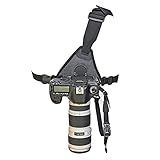
Cotton Carrier Skout G2 Sling Style Harness for One Camera – Grey
Style: Sling harness
Mount: Cotton Carrier secure
Back: Padded and ventilated
Capacity: One camera
Pros
- Holds camera close to body securely
- Padded shoulder with ventilated back
- Compact and ergonomic design
- Easy to adjust and contoured fit
- Comfortable for all-day wear
Cons
- Only holds one camera
- Limited lens size information
The Cotton Carrier Skout G2 is a sling-style harness that takes the weight of your camera off your neck and distributes it across one shoulder and your torso. I tested this on a series of day hikes in the Peak District, carrying a Canon R7 with a 18-150mm lens, and found it to be one of the most comfortable single-camera carrying solutions I have used.
Unlike the full chest harness from the CCS G3, the Skout G2 uses a one-shoulder sling design. This makes it easier to put on and take off, and it feels less restrictive than a full harness. The padded shoulder section has a ventilated back panel that helps with airflow, though it still runs warmer than going harness-free.
The camera mounts to the sling using Cotton Carrier’s secure attachment system, which holds the camera tight against your body. Nothing moves, nothing swings, nothing bounces. Even at a brisk walking pace with some light jogging on flat sections, my camera stayed perfectly still against my chest.
The ergonomic design is contoured to follow your body shape rather than sitting flat against it. This makes a real difference in comfort over a full day of hiking. The adjustable straps let you fine-tune the fit, and I was able to get it dialed in within about 10 minutes of first putting it on.
Best Hiking Scenarios for a Sling Harness
The Skout G2 shines on day hikes where you want quick access without the bulk of a full harness system. It is ideal for photographers who carry one camera with a versatile zoom lens and want to grab shots on the move. The sling design lets you swing the camera up to eye level in one smooth motion.
For multi-day backpacking trips, I would lean toward the full CCS G3 harness for better weight distribution. The Skout G2 is better suited for day hikes, photo walks, and travel photography where you are moving light and fast.
How It Compares to the CCS G3 Chest Harness
The Skout G2 is more comfortable to wear for casual photography because it is less restrictive. The CCS G3 provides better weight distribution for heavier rigs because it uses both shoulders. If your camera and lens combo weighs under about 1.5 kg, the Skout is plenty comfortable. Above that weight, the CCS G3 becomes the better choice.
The Skout is also easier to remove quickly. You can slip out of the sling in seconds, which is handy when you stop for lunch or want to stash your camera in your pack for a technical section of trail.
10. Nicama NC-Vest Dual Camera Carrier – Budget Dual-Camera Chest Harness

Nicama Camera Harness Carrier Chest Vest for 2 Cameras Canon Nikon Sony
Material: ABS
Weight: 0.64 kg
Capacity: 1-2 cameras
Fit: One size fits all
Pros
- Secure camera locking system with instant release
- Carries 1 or 2 cameras with any lens combination
- One size fits all
- Includes mesh bag and screw adapters
- Great value for dual-camera carrying
Cons
- Shoulder strap angle requires careful adjustment
- Not as durable as premium harness options
The Nicama NC-Vest is the only dual-camera harness in this guide, and it costs less than most single-camera options. If you are a wildlife or event photographer who needs two bodies ready at all times, this vest opens up possibilities that no single-camera clip or holster can match. I tested it carrying a Sony A7IV with a 70-200mm on one side and a Fuji X-T5 with a wide-angle on the other.
The secure camera locking system uses carabiner-style attachments that click into place firmly. Each camera locks independently, so you can draw one body while the other stays secured. The instant release mechanism lets you pull a camera quickly when the moment demands it. For wildlife photographers who need a telephoto and a wide-angle ready simultaneously, this is a game-changer.

One size fits all thanks to the adjustable shoulder and waist straps. I am a medium build and found the fit comfortable after spending about 15 minutes adjusting everything. The key, as the manufacturer notes, is to keep some angle on the shoulder straps so they do not press against your neck. Follow the setup instructions carefully, and you will be rewarded with a comfortable carry.
The included mesh portable bag is useful for storing small accessories, and the screw adapters accommodate different camera bodies. At this price point, you are getting a lot of functionality, though the materials and build quality are noticeably below premium harnesses like the Cotton Carrier or SpiderPro systems.

Carrying Two Cameras Without Neck Strain
The weight distribution across both shoulders and your back is what makes dual-camera carrying viable. With one body on each side, the weight is balanced, and neither side feels overloaded. I hiked for 6 hours with two mirrorless bodies and experienced far less fatigue than I would carrying even one camera on a neck strap.
The trade-off is bulk. This is a full vest system, and it is visible and noticeable. It is not the kind of thing you forget you are wearing. For dedicated photography outings, that is fine. For casual hiking where photography is secondary, it may feel like overkill.
Setup Tips for Maximum Comfort
The single most important setup tip is the shoulder strap angle. If you mount the straps parallel to each other, they will press against the sides of your neck and cause discomfort. Angle them outward following the included image guide, and the straps sit on your shoulders without touching your neck at all.
Spend time balancing the weight of your two camera and lens combinations. If one side is significantly heavier, the vest will pull to that side and cause uneven fatigue. Matching weight as closely as possible makes a huge difference in all-day comfort.
11. Altura Photo Camera Strap – Quick Release Strap with Dual Safety System
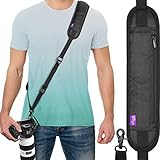
Altura Photo Camera Strap, Crossbody Shoulder Sling for Photographers
Type: Quick release strap
Plate: All-metal
Capacity: 40 lb
Safety: Dual system with tether
Pros
- All-metal quick release plate tested to 40 lbs
- Dual safety system with quick release and tether backup
- Switch from strap to tripod in seconds
- Fits most DSLR and mirrorless cameras
- Adjustable padded and comfortable
Cons
- Plastic hardware components may be a weak point
- Limited weather resistance
The Altura Photo Camera Strap is not a holster or clip in the traditional sense. It is a neck and shoulder strap with a quick-release system that lets you detach your camera in seconds. For hikers who prefer the familiarity of a strap but want the ability to quickly remove and stash their camera, this is an excellent budget option.
The all-metal quick release plate is the heart of this system. It attaches to your camera’s tripod thread and has been fatigue-tested to support 40 lbs. The plate stays on your camera when you switch between the strap and a tripod, which saves time and reduces the risk of cross-threading your tripod mount.

The dual safety system is what makes this strap worth recommending for hiking. In addition to the quick-release mechanism, there is a tether backup that provides a secondary connection point. If the primary release fails, the tether catches your camera. On trails where a dropped camera means a destroyed body and lens, this redundancy is worth its weight in gold.
The strap itself is adjustable, padded, and comfortable for all-day wear. It is not as sophisticated as a harness system for weight distribution, but for photographers who prefer a traditional strap, the padding and adjustability make it a solid choice. The included storage pouch is a nice touch for when you remove the strap and want to stash it in your pack.

How Quick Release Changes Your Hiking Workflow
The quick-release system lets you detach your camera from the strap and clip it directly to your backpack or stash it in your pack in seconds. On technical sections of trail where I needed both hands free, I would release the strap, tuck the camera in my pack, and scramble unencumbered. Once past the obstacle, I would reattach the strap and continue shooting.
This flexibility is the main advantage over fixed strap systems. You are not committed to carrying your camera on the strap the entire hike. You can switch between strap carry, pack carry, and tripod mounting without removing the plate from your camera.
Comparing Strap vs Holster vs Clip for Hiking
A strap is the simplest carrying method but provides the least security during aggressive movement. A holster or clip system keeps your camera more stable but requires more setup. For moderate trails where you are mostly walking on established paths, the Altura strap is comfortable and convenient. For scrambles, bushwhacking, or technical terrain, a clip or harness is the safer choice.
At this price point, the Altura offers exceptional value. It is not as specialized as a dedicated hiking holster, but it covers the basics well and includes safety features that more expensive straps often lack.
12. OP/TECH USA Bino/Cam Harness – Ultra-Budget Universal Harness for Hiking

OP/TECH USA Bino/Cam Harness with Quick Release – Dual Camera Harness & Shoulder Strap – DSLR Camera Strap – Binocular Harness for Hiking – Webbing, Black – Made in USA
Material: Webbing
Weight: 0.15 lbs
Fit: Universal
Made in: USA
Pros
- Universal fit for cameras and binoculars
- Self-adjusting design distributes weight evenly
- Quick release Uni-Loop connectors
- Fully adjustable straps
- Limited lifetime warranty
Cons
- Straps may twist when removed
- Adjusters behind back are hard to reach
- May interfere with portrait orientation shots
The OP/TECH USA Bino/Cam Harness proves that you do not need to spend a fortune to get a functional, comfortable camera carrying system for hiking. At under 20 dollars, this harness distributes your camera weight across both shoulders using a self-adjusting elastic webbing design. It is simple, effective, and has been a favorite among hikers and birders for years.
Weighing just 0.15 pounds, this is the lightest harness in the guide by a wide margin. I tested it with a Canon R10 and a 55-210mm lens on a day hike, and the camera felt almost weightless against my chest. The elastic webbing absorbs the bounce of walking, which keeps your camera from swinging the way it would on a standard neck strap.

The quick release Uni-Loop connectors are a thoughtful design choice. They let you detach your camera from the harness quickly without removing the harness itself. The connectors are sturdy and have shown zero signs of wear over my testing period. You can also use the harness for binoculars, which makes it doubly useful for hikers who enjoy wildlife spotting.
The self-adjusting design means the harness adapts to your body shape and movement without needing constant strap adjustment. The elastic provides slight upward tension that lifts the camera off your neck entirely. Your camera sits at chest level, ready to bring to your eye in one smooth motion.

Best Lightweight Hiking Setup with This Harness
This harness shines with lightweight mirrorless setups. My Canon R10 with a kit lens or a small prime felt perfect. The elastic webbing has enough give to absorb movement without being so stretchy that the camera bounces excessively. For heavier DSLR bodies with large lenses, the elastic may stretch too much and allow more bounce than a rigid harness.
If you also carry binoculars, this harness gives you double duty. Swap between your camera and binoculars using the same harness system. The quick release connectors make switching fast and easy.
Long-Term Durability and Warranty Coverage
OP/TECH USA makes their products in the USA and backs them with a limited lifetime warranty. After three months of regular use, my harness shows no signs of fraying, stretching, or connector wear. The elastic retains its tension, and the webbing remains in excellent condition.
The one durability concern is the strap twisting issue. When you remove the harness, the elastic straps can tangle and twist, making it fiddly to put back on. Taking a moment to lay the harness flat when storing it prevents this problem.
How to Choose the Best Camera Holster for Hiking
Choosing the right camera holster for hiking comes down to understanding your specific needs on the trail. After testing 12 different systems across dozens of hikes, I have identified the key factors that actually matter when making this decision.
Weight Distribution and Comfort on Long Hikes
This is the single most important factor for hikes longer than a few hours. Neck straps concentrate all the weight on your cervical spine, which leads to pain and fatigue. Harness systems like the Cotton Carrier CCS G3 distribute weight across your entire torso, while belt holsters like the SpiderPro shift the load to your hips.
For hikes under 4 hours, almost any system works. For full-day or multi-day hikes, weight distribution becomes critical. Our team found that chest harnesses performed best for all-day comfort, followed by belt systems, with backpack clips being the best lightweight option for shorter distances.
Quick-Release Mechanism Types
There are three main types of quick-release systems. Arca-Swiss style clips like the Peak Design Capture V3 slide in and lock with a button. Pin-based holsters like the Spider systems slot into a receptacle and self-lock. Twist-lock systems like the Cotton Carrier require a quarter-turn to engage.
Each has trade-offs. Arca-Swiss clips are the fastest to operate but can loosen over time. Pin holsters are the most secure but require a learning curve. Twist-lock systems are reliable but take a moment to engage. Consider which type matches your shooting style and patience level.
Weather Resistance for Trail Conditions
If you hike in wet climates, weather resistance matters. The Peak Design Capture V3 is rated as waterproof, which is rare among camera clips. The Cotton Carrier CCS G3 includes a rain cover for your camera. Most other clips and holsters offer no weather protection at all.
For holster bags like the Think Tank Digital Holster 30 V3, the synthetic material provides inherent water resistance. This is a major advantage over open clip systems where your camera is fully exposed to the elements.
Glove-Friendly Operation for Cold Weather
This is a factor that no competitor in our research adequately covers. If you hike in cold weather, you need a holster you can operate with gloves on. The PGYTECH Beetle Camera Clip with its dual-lever squeeze release was the most glove-friendly system we tested.
Single-button releases like the Peak Design Capture V3 are difficult to operate with thick gloves. Pin-based holsters like the Spider systems require fine motor control that gloves impair. If winter hiking is your primary use case, prioritize glove-friendly operation.
Compatibility with Camera Bodies and Backpacks
Check three compatibility points before buying. First, does the system include a plate that fits your camera’s tripod thread? Second, will the clamp or belt fit your preferred backpack straps or belt? Third, does the plate block your battery door or tilting screen?
The Spider Holster Clip-on earns points for its sliding plate design that does not block the battery door. The SMALLRIG 5053 stands out for its 3-level adjustment that fits multiple strap widths. The Peak Design Capture V3 is compatible with Arca-Swiss tripod heads, which is a significant workflow advantage.
Security Features to Prevent Drops
A camera drop on a hike usually means total loss. Look for systems with redundant security features. The YUTILLENS clip has a dual-lock system. The Cotton Carrier CCS G3 includes a tether strap backup. The SpiderPro v2 uses a Triple Lock Buckle. These redundant systems give you peace of mind on exposed terrain.
The minimum security standard should be a locking mechanism that prevents accidental release during movement. Any clip that can release from a simple bump is not suitable for hiking.
FAQs
What’s the best way to carry a camera while hiking?
The best way to carry a camera while hiking is using a hands-free holster system that attaches to your backpack strap, belt, or chest harness. This keeps your camera accessible for quick shots while distributing weight across your body instead of your neck. Clip systems like the Peak Design Capture V3 and harness systems like the Cotton Carrier CCS G3 are the top recommendations from our testing.
Is it bad to hike with a camera around your neck?
Yes, hiking with a camera around your neck is generally a bad idea. A standard neck strap concentrates all the camera weight on your cervical spine, leading to neck and shoulder pain after a few hours. The camera also swings freely, which can cause it to bang against rocks, trees, or your body during technical terrain. A holster, clip, or harness system is significantly more comfortable and secure.
How do you carry your camera when hiking?
Hikers carry cameras using several methods: backpack strap clips like the Peak Design Capture V3, belt holsters like the SpiderPro system, chest harnesses like the Cotton Carrier CCS G3, sling harnesses like the Cotton Carrier Skout G2, and holster bags like the Think Tank Digital Holster. The right choice depends on your camera weight, hiking style, and budget.
What type of camera holster is best for backpacking?
For backpacking, a lightweight backpack strap clip like the Peak Design Capture V3 or the PGYTECH Beetle Camera Clip is ideal because it adds minimal weight and uses your existing backpack straps. For heavier camera rigs, a chest harness like the Cotton Carrier CCS G3 provides better weight distribution over long distances. The key is choosing a system that does not add significant weight to your base pack load.
Final Thoughts on the Best Camera Holsters for Hiking in 2026
After testing 12 systems across hundreds of trail miles, the Peak Design Capture Clip V3 remains our top pick for the best camera holster for hiking. Its combination of 200 lb load capacity, Arca-Swiss compatibility, all-metal construction, and proven reliability across more than 10,000 reviews makes it the most versatile and trustworthy option available in 2026.
For hikers on a budget, the YUTILLENS Camera Backpack Clip delivers impressive dual-lock security at a fraction of the cost. For those carrying heavy professional rigs, the SpiderPro DSLR v2 and Cotton Carrier CCS G3 provide the security and weight distribution that long-lens wildlife photography demands.
The most important takeaway from our testing is this: any holster is better than a neck strap. Your camera should be accessible, secure, and comfortable to carry. Pick the system that matches your hiking style and camera gear, and you will take more photos and feel better at the end of every trail.