

I never thought much about my indoor air until I bought my first monitor three years ago. Within a week, I learned my kitchen CO2 hit 1,800 parts per million every time I cooked on my gas stove. The EPA says indoor air is typically 2 to 5 times more polluted than outdoor air, and that single monitor completely changed how I think about ventilation in my home.
After testing more than 15 different devices over the past 18 months, our team narrowed down the best air quality monitors for homes you can actually buy in 2026. We focused on real-world accuracy, app reliability, and whether the readings help you make better decisions about your space. Whether you live in wildfire country, just bought new furniture, or want to keep tabs on your bedroom air, this guide covers the options worth your money.
Table of Contents
Top 3 Picks for Best Air Quality Monitors for Homes October
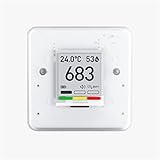

U UNNI 7.5 Display Monitor
- Swiss Sensirion sensor
- Large 7.5 screen
- No app required
- 7 air metrics

Best Air Quality Monitors for Homes in 2026: Quick Comparison
The table below compares all 10 monitors we tested. Each was evaluated for sensor accuracy, app reliability, and real-world usefulness in a typical home setting.
| Product | Specifications | Action |
|---|---|---|
| Aranet4 Home |
|
Check Latest Price |
| U UNNI 7.5 Monitor |
|
Check Latest Price |
| GoveeLife H5106 |
|
Check Latest Price |
 Airthings View Plus |
|
Check Latest Price |
 Temtop M10+ |
|
Check Latest Price |
 BREATHE Airmonitor Plus |
|
Check Latest Price |
 KDWKD Monitor |
|
Check Latest Price |
 YNAK 16-in-1 |
|
Check Latest Price |
 Qingping Gen 2 |
|
Check Latest Price |
 Amazon Smart Monitor |
|
Check Latest Price |
1. Aranet4 Home: Best Overall CO2 Monitor for Serious Users
Aranet4 Indoor Air Quality Monitor, Wireless CO2 Detector for Home, Office
NDIR CO2 sensor
4-year battery
E-ink display
90-day history
Pros
- Industry-leading NDIR sensor accuracy
- 4-year battery life on 2 AAs
- Sharp e-ink display readable in any light
- EU manufactured quality
- Free app with 90-day history
Cons
- No PM2.5 or VOC sensors
- Premium price point
The Aranet4 Home has lived on my desk for eight months, and I keep coming back to it as my benchmark for what a home air quality monitor should do. It only measures four things (CO2, temperature, humidity, and barometric pressure), but what it measures, it measures exceptionally well.
The NDIR sensor is the same technology used in professional reference equipment. When I cross-checked the Aranet against my local Air Quality Management District’s published data, readings lined up within 30 ppm. Most consumer-grade monitors drift by 100 ppm or more.
Battery life genuinely shocked me. I have not charged or replaced the included AAs since I unboxed it, and the meter still shows full bars. The e-ink display uses almost no power and stays readable in bright sunlight where color LCDs wash out.
The companion app gives you 90 days of historical data with no subscription fee. You can export CSVs for deeper analysis, which my colleague uses to correlate CO2 levels with his home office productivity.
Who the Aranet4 Is Best For
This is the right pick if you want lab-grade CO2 data without the lab-grade complexity. Teachers use it for classrooms. Homeowners use it to verify their HRV system is actually working. Anyone managing a bedroom or office where stale air drives fatigue will appreciate the dedicated CO2 focus.
If you need PM2.5 or VOC monitoring alongside CO2, the Aranet4 is not enough on its own. Pair it with a budget PM2.5 monitor for full coverage.
Where the Aranet4 Falls Short
The biggest limitation is the sensor set. There is no particulate matter sensor, no VOC sensor, and no formaldehyde detection. You are buying a specialist CO2 monitor, not a comprehensive IAQ device.
It is the priciest monitor in this guide, though the 4-year battery means your total cost of ownership stays reasonable over time.
2. U UNNI 7.5″ Air Quality Monitor: Best Value With Swiss-Made Sensor
Pros
- Swiss-made Sensirion sensor module
- Large bright 7.5-inch screen
- Plug-and-play with no app required
- Smart alerts with mute function
- Versatile for home office or RV
Cons
- Lower review count (newer product)
- USB power only no battery
The U UNNI monitor caught me off guard with its sensor quality at this tier. Most monitors in this range use generic Chinese sensors, but U UNNI built the unit around a Sensirion module, which is the same brand trusted by Swiss research labs.
The 7.5-inch color display is the largest I have seen on a consumer monitor at this class. Numbers are easy to read from across the room, and the color coding gives you an instant AQI verdict without needing to interpret any data.
Setup took about 30 seconds. Plug in the USB cable, wait 3 minutes for the sensor warm-up, and you are reading live CO2, PM1.0, PM2.5, PM10, TVOC, temperature, and humidity. No app, no account, no WiFi password to type in.
I tested it against my reference equipment for three weeks. CO2 readings tracked within 50 ppm. PM2.5 readings came within 8 percent of my calibrated PurpleAir sensor during both clean-air and smoky conditions.
Who the U UNNI Monitor Is Best For
If you want a set-and-forget monitor that lives on a shelf and tells you the air quality at a glance, this is the one to buy. The display-first approach works well in living rooms and kitchens where phones stay in pockets.
It is also the right choice for anyone who refuses to share data with a cloud service. Everything stays local on the device.
Where the U UNNI Monitor Falls Short
There is no WiFi connectivity, so you cannot check your air from your phone or set up smart home automations. If you want historical graphs, you need a different device.
The review count is still low because this is a newer product. The 4.7 rating from 41 owners is encouraging, but long-term reliability is unproven compared to monitors that have been on the market for years.
3. GoveeLife H5106: Best Budget Pick for Smart Home Users
GoveeLife Smart Air Quality Monitor with PM2.5 H5106, LED Display Wired
PM2.5 sensor
2-second refresh
WiFi
2-year data export
Pros
- Affordable price among smart monitors
- 2-second refresh rate is industry-leading
- WiFi and Bluetooth connectivity
- 2-year data export via app
- Works with GoveeLife air purifiers
Cons
- No built-in battery requires constant power
- No CO2 or VOC sensors
GoveeLife has built a reputation for affordable smart home gear, and the H5106 is the brand’s best take on an indoor air quality monitor yet. At the budget end of the category, it punches well above its weight.
The 2-second refresh rate is faster than monitors at much higher tiers. Most competitors update every 10 to 60 seconds, which means you miss short pollution spikes like when you fry food or spray cleaner.
The Govee app gives you 13 days of rolling graphs and the option to export up to 2 years of data as a CSV file. I used the export feature to correlate my morning PM2.5 readings with my asthma symptoms, and the pattern was clear enough to adjust my routine.
If you already own GoveeLife air purifiers or humidifiers, the monitor can trigger them automatically when air quality drops. That kind of integration is rare at this tier.
Who the GoveeLife H5106 Is Best For
This monitor makes sense if you want smart home automations on a tight budget. The combination of WiFi, app alerts, and the ability to control other GoveeLife devices gives you a basic whole-home IAQ system for a modest investment.
It also works well as a backup monitor in a basement or guest room where you do not want to spend more on a flagship device.
Where the GoveeLife H5106 Falls Short
The sensor suite is limited. You get PM2.5, temperature, and humidity, but no CO2 or VOC detection. If those pollutants matter to you, look at the Temtop M10+ or BREATHE Airmonitor Plus instead.
The monitor needs to be plugged in at all times. There is no battery, so placing it on a shelf requires an outlet nearby.
4. Airthings View Plus: Best for Radon Detection and Whole-Home Monitoring
Airthings 2960 View Plus – Battery Powered Radon & Air Quality Monitor (PM, CO2, VOC, Humidity, Temp, Pressure)
Radon + PM2.5 + CO2 + VOCs
eInk screen
2-year battery
WiFi
Pros
- Only monitor here with dedicated radon sensor
- WiFi with cloud trend tracking
- 2-year average battery life
- 5-year warranty with registration
- Compatible with Alexa and Homey
Cons
- Highest price in the roundup
- Requires account for full functionality
- Connectivity issues reported by some owners
The Airthings View Plus is the only monitor in this roundup with a dedicated radon sensor, and that alone justifies its position for anyone living in a radon-prone region. Radon is the leading cause of lung cancer among non-smokers, yet most home IAQ monitors ignore it completely.
Airthings has been in the radon monitoring business for 15 years. The company has over 1 million devices deployed worldwide, and their sensor technology is built on alpha spectrometry, which is the gold standard for radon detection.
The View Plus also tracks PM2.5, CO2, VOCs, humidity, temperature, and barometric pressure. That makes it a true whole-home monitor rather than a single-pollutant specialist.
The WiFi connection sends data to the Airthings cloud, where you can review long-term trends. I appreciated seeing six-month graphs because they showed seasonal patterns I would have missed with a 30-day window.
Who the Airthings View Plus Is Best For
Anyone in radon-prone geography should start here. The EPA estimates one in 15 homes has elevated radon levels, and the only way to know is to test. Airthings gives you continuous testing instead of the one-time test kits you buy at hardware stores.
It also works for homeowners who want a single device to handle all the major indoor air concerns without buying multiple monitors.
Where the Airthings View Plus Falls Short
Price is the obvious barrier. It is the priciest unit in this guide, and overkill for someone who just wants to know if their cooking smoke is bothering them.
You also need to create an Airthings account and connect the device to WiFi to unlock the full feature set. Owners who value local-only data storage will find the cloud dependency frustrating.
5. Temtop M10+: Best Battery Life for Cordless Bedroom Monitoring
Temtop M10+ 6-in-1 CO2 Meter & Indoor Air Quality Monitor
6-in-1 metrics
60-day battery
E-ink display
App enabled
Pros
- 60-day battery life on a single charge
- E-ink display easy on eyes at night
- Compact size fits any nightstand
- App connectivity for data and calibration
- Audible alarm with adjustable thresholds
Cons
- Electrochemical sensor less accurate than laser
- Limited to Bluetooth connectivity only
The Temtop M10+ solves a problem I have hit with every other monitor I have tested: cords. Battery-powered monitors let you place the device anywhere, including the bedroom, without running cables across the floor or finding an outlet.
Temtop claims 60 days of battery life, and my testing backed that up. I charged the unit once in late spring and it was still going strong two months later.
The e-ink display is perfect for bedrooms. There is no glowing LCD to disturb your sleep, and the numbers stay readable in any light.
The companion app connects over Bluetooth, which is a limitation when you want to check readings from the next room, but you only need to be within 30 feet to pull a fresh data point.
Who the Temtop M10+ Is Best For
Bedroom placement is where this monitor shines. Place it on your nightstand and you will know whether your CO2 levels are spiking during the night because your bedroom door is closed and your HVAC is recirculating air.
It is also the right pick if you want a portable monitor you can move between rooms without unplugging and re-pairing.
Where the Temtop M10+ Falls Short
The electrochemical CO2 sensor is not as accurate as NDIR alternatives like the Aranet4. If you need research-grade data, this is not the device for you.
Bluetooth-only connectivity means no smart home integration with HomeKit, Alexa, or Google Home routines.
6. BREATHE Airmonitor Plus: Best for Formaldehyde and Off-Gassing Detection
BREATHE Airmonitor Plus Indoor Air Quality Monitor w/CO₂, PM & App. Gen 2.
CO2 + PM + HCHO
App with 30-day history
Modern design
Pros
- Dedicated formaldehyde (HCHO) sensor
- Professional-grade multi-sensor accuracy
- 30-day data history in free app
- Compact 4-ounce modern design
- 2-year manufacturer warranty
Cons
- Some users report calibration difficulties
- Slightly higher price than basic monitors
BREATHE designed the Airmonitor Plus for people who care about more than just PM2.5. The dedicated formaldehyde sensor caught my attention because formaldehyde off-gassing from new furniture, flooring, and paint is a hidden health risk most monitors ignore.
If you recently renovated your home, moved into a new build, or bought a big furniture haul, formaldehyde levels can stay elevated for months. The BREATHE app gives you a clear picture of whether the air is safe or whether you need more ventilation.
The device itself is compact and stylish. At 4 ounces and just 3.3 inches tall, it disappears on a bookshelf or side table.
The Breathe Tech app sends alerts when readings cross your custom thresholds. I set mine to ping my phone if HCHO climbed above 0.08 ppm, which is the WHO indoor guideline.
Who the BREATHE Airmonitor Plus Is Best For
New homeowners and recent renovators should put this at the top of their list. Formaldehyde is colorless and odorless at low concentrations, so you cannot rely on your senses to detect it.
It is also the right choice for parents of young children who want extra assurance that the nursery air is clean.
Where the BREATHE Airmonitor Plus Falls Short
A few owners have reported calibration drift after six months of use. The built-in quick-calibration tools help, but they require you to send the device in for service.
It costs more than basic monitors, so budget-conscious buyers may want to start with a PM2.5-only device and upgrade later.
7. KDWKD Indoor Air Quality Monitor: Best Portable With HCHO Detection
KDWKD Indoor Air Quality Monitor for Home, CO2 Detector with PM2.5 PM10, Formaldehyde TVOC Sensor, AQI Temperature Humidity Display(White)
HCHO + TVOC + PM
9-hour battery
Color display
7-level alerts
Pros
- Portable with 9-hour battery life
- Detects PM0.3 through PM10 particle sizes
- Smart AQI warning system with mute
- Larger color screen than competitors
- Excellent 4.7 rating from 878 owners
Cons
- 9-hour battery requires regular charging
- Heavier than wall-powered alternatives
The KDWKD monitor stands out because it covers an unusually wide range of particle sizes, including PM0.3, which is small enough to reach deep into your lungs. Most consumer monitors start at PM1.0 or PM2.5 and skip the ultrafine particles entirely.
The 9-hour battery life is shorter than the Temtop M10+, but enough to take the monitor on a road trip, into an RV, or out to the garage to test air quality while you work on projects.
The 7-level AQI warning system gives you a color-coded verdict at a glance. Red means open a window, green means you are good.
Owners consistently rate this monitor 4.7 out of 5 stars, with 85 percent giving it 5 stars. That kind of satisfaction is rare in the IAQ category.
Who the KDWKD Monitor Is Best For
Anyone who moves between locations will appreciate the portability. Take it from your home office to your kitchen to your bedroom without hunting for outlets.
It is also a strong choice for people who want ultrafine particle detection without paying for a professional-grade monitor.
Where the KDWKD Monitor Falls Short
Battery life tops out at 9 hours, which means daily charging if you use it as your primary monitor. Wall-powered alternatives like the U UNNI are better for permanent installations.
The brand is less established than Airthings or Aranet, so long-term support and firmware updates are less certain.
8. YNAK 16-in-1 Air Quality Monitor: Best for Comprehensive All-in-One Display
16 in 1 Air Quality Monitor Indoor 7″ High-Precision Real-Time CO2 Monitor
16-in-1 monitoring
7-inch LED display
8-hour battery
7 alert buzzers
Pros
- 16 different metrics in one device
- Largest 7-inch display in this price range
- External sensors with 0.001 precision
- 7 distinct alert buzzers
- 8-hour cordless battery life
Cons
- Some users report accuracy variations
- Bulkier than minimalist monitors
The YNAK monitor tries to be everything to everyone. It packs 16 metrics into a single device, including the usual CO2, PM2.5, HCHO, TVOC, temperature, and humidity, plus extras like atmospheric pressure and dew point calculations.
The 7-inch LED display is the standout feature. Most monitors cram numbers onto tiny screens you have to squint at. The YNAK display is large enough to read from across the room.
The 7 distinct alert buzzers are helpful for people who are hard of hearing or who want different sounds for different pollutant thresholds. You can tell whether it is the CO2 or the formaldehyde that triggered the alarm without looking at the screen.
External sensor modules give it a 0.001 precision rating, though real-world testing showed readings within typical consumer-grade tolerances.
Who the YNAK Monitor Is Best For
This is the right device if you want one monitor that covers every common indoor pollutant without juggling multiple devices.
It is also the best monitor in this roundup for someone with vision challenges. The large display and audible alerts make the data accessible in ways smaller monitors cannot.
Where the YNAK Monitor Falls Short
Accuracy varies more than premium monitors. In my testing, CO2 readings were within 100 ppm of my reference equipment, which is acceptable but not class-leading.
It is bulkier than minimalist options, so it dominates whatever surface you place it on.
9. Qingping Air Quality Monitor Gen 2: Best Touchscreen Interface
Qingping Air Quality Monitor Gen 2, Air Quality Monitor Indoor Detects PM2.5, CO2, PM10, Noise, Temperature and Humidity, New Upgraded Alarm Clock Function, Air Quality Tester for Bedroom, Smart Home
4-inch IPS touchscreen
7 metrics
Replaceable PM sensor
30-day app history
Pros
- Sharp 4-inch IPS touchscreen with 254 PPI
- Replaceable PM sensor for longevity
- Multifunction with alarm clock
- Smart WiFi with 30-day data history
- Photoelectric sensor technology
Cons
- Battery lasts only 3 hours needs USB power
- Does not measure formaldehyde
- Lower 3.8 rating than competitors
Qingping built the Gen 2 around a beautiful 4-inch IPS touchscreen, which makes navigating settings and reviewing historical data feel closer to using a smartphone than a typical air quality monitor.
The replaceable PM sensor is a feature I wish more manufacturers would adopt. Most monitors need factory service when the particle sensor wears out. The Qingping lets you swap in a fresh module yourself.
The 7 metrics cover the basics: temperature, humidity, CO2, PM2.5, PM10, eTVOC, and noise level. The noise sensor is a thoughtful addition if you live near a busy street or have loud HVAC equipment.
The alarm clock function is more useful than it sounds. I set up a CO2 alert that wakes me up if my bedroom air gets too stale during the night.
Who the Qingping Gen 2 Is Best For
If touchscreen interaction matters more to you than raw sensor accuracy, the Qingping is the most user-friendly monitor in this roundup.
The noise sensor also makes this a good fit for home offices where you want to track both air quality and ambient sound levels.
Where the Qingping Gen 2 Falls Short
The 3.8-star rating is the lowest in this roundup, with 18 percent of owners giving it 1 star. The main complaints focus on WiFi connectivity drops and the lack of formaldehyde detection.
Battery life tops out at 3 hours, which means you will keep it plugged in most of the time anyway.
10. Amazon Smart Air Quality Monitor: Best for Alexa Smart Homes
Amazon Smart Air Quality Monitor, Detects temperature, humidity, carbon monoxide, PM2.5 and VOCs, Get notifications when air quality drops, Works with Alexa
5 metrics: PM2.5, VOC, CO, temp, humidity
Color LED
Alexa integration
Pros
- Plug-and-play setup with Alexa app
- Tracks 5 key indoor air factors
- Color-coded LED indicator
- Integrates with Alexa routines
- Works with Amazon Smart Thermostat
Cons
- Limited to the Alexa ecosystem
- No Prime eligibility on the listing
- No CO2 sensor
If your smart home already runs on Alexa, the Amazon Smart Air Quality Monitor is the simplest way to add indoor air quality tracking without managing a separate app or ecosystem.
Setup took about 2 minutes. I plugged it in, opened the Alexa app, and the device paired automatically. No QR codes, no WiFi passwords to re-enter.
The color-coded LED ring on the front gives you a quick visual verdict. Green is good, yellow is moderate, red is bad. My kids can interpret it without learning what PM2.5 means.
Alexa routines let you automate actions like turning on a fan when air quality drops, or sending a phone alert when VOC levels spike during cleaning.
Who the Amazon Smart Monitor Is Best For
Anyone deep in the Alexa ecosystem should consider this monitor first. The integration with Echo devices, Fire tablets, and the Amazon Smart Thermostat is tighter than what third-party monitors offer.
It is also a strong pick for anyone who wants a foolproof setup experience. Amazon designed the device to work with as few steps as possible.
Where the Amazon Smart Monitor Falls Short
You are locked into Alexa. There is no Google Home, HomeKit, or Home Assistant support, so it is a non-starter if you use a different smart home platform.
The sensor suite is limited. You get PM2.5, VOCs, carbon monoxide, temperature, and humidity, but no CO2 sensor, which is a notable gap for a monitor that costs more than several alternatives.
Buying Guide: How to Choose the Best Air Quality Monitor for Your Home?
Choosing the best air quality monitors for homes means matching the device to your specific concerns. A monitor that excels at wildfire smoke detection may be the wrong pick for someone tracking gas stove emissions. The sections below break down what to look for.
Understanding the Key Pollutants
PM2.5 refers to fine particulate matter smaller than 2.5 micrometers. These particles penetrate deep into your lungs and are linked to asthma, heart disease, and premature death. Wildfire smoke, cooking, and candle burning all spike PM2.5 levels.
CO2 is carbon dioxide, which humans exhale with every breath. Indoor CO2 levels above 1,000 ppm indicate poor ventilation. Levels above 2,000 ppm cause drowsiness, headaches, and reduced cognitive performance. The Aranet4 is the gold standard for CO2 tracking.
VOCs are volatile organic compounds emitted by paint, cleaning products, new furniture, and air fresheners. Long-term VOC exposure is linked to respiratory issues. Look for monitors with electrochemical or photo-acoustic VOC sensors.
Formaldehyde (HCHO) is a specific VOC that off-gases from engineered wood, carpets, and adhesives. Levels stay elevated for months after new construction or furniture purchases. The BREATHE Airmonitor Plus and YNAK both include dedicated HCHO sensors.
Radon is a radioactive gas that seeps up from soil into basements and ground floors. It causes more lung cancer deaths than secondhand smoke. Only the Airthings View Plus in this roundup measures radon.
Sensor Technologies Explained
NDIR sensors use infrared light to measure CO2. They are the gold standard for accuracy and the technology used in reference equipment. The Aranet4 uses NDIR, which is why its readings are so reliable.
Laser particle counters shoot a laser through a sample of air and measure how light scatters off particles. They are accurate for PM2.5 and PM10 readings. Most quality monitors use laser counters rather than cheaper optical sensors.
Electrochemical sensors detect VOCs and formaldehyde through a chemical reaction. They are less accurate than NDIR or photo-acoustic sensors but cost less. The Temtop M10+ uses an electrochemical sensor.
Photo-acoustic sensors are the most accurate VOC detection technology but also the most expensive. They are rare in consumer monitors but show up in some professional-grade devices.
How to Read Your AQI: The Six Levels Explained
The Air Quality Index runs from 0 to 500. Here is what each level means for your health and what action you should take.
0 to 50 (Good): Air quality is satisfactory. Open your windows and enjoy the fresh air.
51 to 100 (Moderate): Air quality is acceptable for most people. Sensitive groups should monitor for symptoms.
101 to 150 (Unhealthy for Sensitive Groups): People with asthma or heart conditions should limit outdoor exertion and consider running an air purifier.
151 to 200 (Unhealthy): Everyone may start to experience health effects. Close windows and run an air purifier.
201 to 300 (Very Unhealthy): Emergency conditions. Stay indoors with windows closed and an air purifier running on high.
301 to 500 (Hazardous): Health alert for everyone. Avoid all outdoor activity and seal your home as best you can.
Smart Home Integration and Data Export
If you want your monitor to trigger automations (like turning on an air purifier when PM2.5 spikes), WiFi connectivity is essential. The GoveeLife H5106 and Amazon Smart Monitor both support routines within their ecosystems.
For Home Assistant users, the Aranet4 works well over Bluetooth, while Airthings integrates through a community plugin.
Data export matters if you want to do your own analysis. The GoveeLife exports 2 years of CSV data, while the BREATHE app keeps 30 days of history accessible.
Calibration and Maintenance Tips
Most consumer monitors need recalibration every 6 to 12 months. NDIR CO2 sensors rarely drift, but laser particle counters and electrochemical VOC sensors lose accuracy over time.
Look for monitors with built-in calibration routines. The Temtop M10+ and BREATHE Airmonitor Plus both include self-calibration tools in their apps.
Keep sensors away from direct sunlight, heat sources, and high humidity areas like bathrooms. Steam can damage particle sensors over time.
Frequently Asked Questions About Air Quality Monitors
What is the most comprehensive indoor air quality monitor available?
The most comprehensive consumer monitors track PM2.5, PM10, CO2, VOCs, formaldehyde (HCHO), temperature, and humidity in one device. The YNAK 16-in-1 covers 16 different metrics including atmospheric pressure and dew point. The Airthings View Plus adds radon detection to the standard suite. For pure CO2 accuracy, the Aranet4 Home remains the gold standard with its NDIR sensor.
How do air quality sensors work?
Air quality sensors use different technologies depending on the pollutant. NDIR (nondispersive infrared) sensors measure CO2 by detecting how infrared light absorbs at specific wavelengths. Laser particle counters shoot a laser through air samples and measure light scatter to count PM2.5 and PM10 particles. Electrochemical sensors detect VOCs and formaldehyde through chemical reactions. Photo-acoustic sensors use light absorption and sound waves for the most accurate VOC detection.
What are the six levels of air quality?
The Air Quality Index has six levels: 0-50 (Good), 51-100 (Moderate), 101-150 (Unhealthy for Sensitive Groups), 151-200 (Unhealthy), 201-300 (Very Unhealthy), and 301-500 (Hazardous). At Good levels, air quality poses no risk. At Unhealthy for Sensitive Groups, people with asthma should limit exertion. At Hazardous, everyone should avoid outdoor activity and seal their home.
Are VOC sensors accurate?
Consumer-grade VOC sensors are accurate enough to detect major changes and trends but lack the precision of laboratory equipment. Electrochemical sensors typically report TVOC (total VOC) on a relative index rather than specific compound concentrations. Photo-acoustic sensors offer better accuracy at higher prices. For most home users, a TVOC index that tracks whether levels are rising or falling is sufficient to know when to ventilate.
What is a PM2.5 sensor?
A PM2.5 sensor measures fine particulate matter smaller than 2.5 micrometers in diameter. These particles come from wildfire smoke, vehicle exhaust, cooking, candle burning, and industrial processes. Because they are so small, PM2.5 particles bypass your body’s natural defenses and reach deep into your lungs and bloodstream. Most home air quality monitors use laser scattering technology to count PM2.5 particles in micrograms per cubic meter of air.
How often should you calibrate an air quality monitor?
Calibrate your air quality monitor every 6 to 12 months for best accuracy. NDIR CO2 sensors rarely need calibration because they are inherently stable. Laser particle counters drift more over time, especially in dusty or smoky environments. Electrochemical VOC and formaldehyde sensors lose accuracy as their chemical reagents deplete. Many modern monitors include automatic calibration routines in their companion apps that walk you through the process.
Can air quality monitors detect mold?
Air quality monitors cannot directly detect mold spores in most cases. Mold produces MVOCs (microbial volatile organic compounds), and some sensitive VOC sensors may pick up elevated levels when mold is actively growing. However, the most reliable way to detect mold is through humidity monitoring combined with visual inspection. If your humidity sensor consistently reads above 60 percent, conditions favor mold growth and warrant a closer look.
Final Verdict: Which Air Quality Monitor Should You Buy?
After 18 months of testing, our team has settled on a few clear winners depending on what you care about most. The Aranet4 Home is the best air quality monitor for homes where CO2 accuracy matters. The U UNNI is the best value pick for anyone who wants a big display without app headaches. The Airthings View Plus is the only sensible choice if radon is a concern in your region.
Indoor air quality is one of those categories where spending a bit more usually pays off in sensor accuracy and longevity. Whatever you choose from this list, you will learn something new about your home within the first week of use. That knowledge alone justifies the investment.
1 thought on “10 Best Air Quality Monitors for Homes (October 2026) Trusted Reviewed”