

I spent three months converting a spare bedroom into a mixing room, and the single biggest upgrade was not a new interface or monitor speakers. It was treating the walls with proper acoustic panels.
The untreated room had a nasty 200 Hz buildup and a flutter echo that made every mix sound muddy and indistinct. Once I added absorption at my first reflection points, the difference was immediate. The low mid muck disappeared, transients snapped into focus, and I could finally trust what I was hearing.
Acoustic treatment panels for home studios are sound-absorbing materials that tame echoes, reverb, and standing waves that smear your audio. They convert sound energy into tiny amounts of heat through porous materials like polyester, fiberglass, or mineral wool. Without treatment, sound bounces off hard surfaces creating comb filtering that makes accurate mixing impossible.
This guide covers eight acoustic panels I tested or closely compared across price points, from $30 bulk foam packs to professional fiberglass panels. You will see options suited for podcasters, producers, renters, and anyone with a small bedroom studio. I have also included a buying guide covering NRC ratings, thickness, and how many panels you actually need for a 10×10 or 11×11 room.
Table of Contents
Top 3 Picks at a Glance October
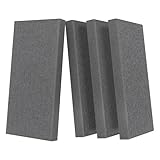
UMIACOUSTICS Fiberglass Panels
- 2-inch fiberglass
- E0 rated
- bracket mounted
- professional studio grade

Soon Global Arcadian Vortex Art Panels
- Wood-texture decorative
- high-density polyester
- 6-pack large format

NEPIS Brick Pattern Acoustic Panels
- NRC over 0.95
- peel and stick
- 20-pack high-density polyester
If you want the quick answer: UMIACOUSTICS fiberglass panels are my top pick for serious home studios because the 2-inch fiberglass core beats foam on low-mid absorption. The Soon Global decorative panels are the best choice if you want sound treatment that doubles as wall art. And the NEPIS brick panels deliver the best performance per dollar with a 0.95-plus NRC rating.
Quick Comparison: Best Acoustic Treatment Panels for Home Studios in 2026
| Product | Specifications | Action |
|---|---|---|
 XIN&LOG 52 Pack Foam Panels |
|
Check Latest Price |
 TONOR Hexagon 18-Pack |
|
Check Latest Price |
| NEPIS Brick Pattern 20-Pack |
|
Check Latest Price |
 TroyStudio Thick 2-Inch Foam |
|
Check Latest Price |
| UMIACOUSTICS Fiberglass Panels |
|
Check Latest Price |
 BUBOS Wood Print Panels |
|
Check Latest Price |
| Soon Global Arcadian Vortex Art |
|
Check Latest Price |
 TONOR Large Stripe 8-Pack |
|
Check Latest Price |
The table above lets you scan specs side by side before reading the detailed breakdowns. Pay attention to thickness and material because those two specs determine how low the panel can absorb. Foam under 2 inches only tackles mid and high frequencies, while 2-inch fiberglass reaches down into the low mids that muddy small rooms.
1. XIN&LOG 52 Pack Acoustic Foam Wedge Panels – Best Budget Bulk Pack
52 Pack Acoustic Foam Panel Wedge Studio Soundproofing Wall Tiles 12″ X 12″ X 1″
52 pack 12x12x1 inch wedge foam
Polyurethane
Covers 52 sq ft
Self-adhesive backing
Pros
- Highest panel count for the price
- Easy peel-and-stick install
- Eco-friendly polyurethane foam
- Tames mid and high frequencies
Cons
- Only 1 inch thick - no low end absorption
- Requires 6 to 12 hours to decompress after unpacking
I grabbed a pack of these when I was first treating my podcast corner and honestly did not expect much for the price. What I got was 52 panels of polyurethane wedge foam that tamed the harsh flutter echo in a 10×10 room within an afternoon of installing.
The 1-inch wedge profile absorbs mid to high range frequencies well. Conversations became cleaner, and the harsh slap-back echo disappeared. They are not going to fix bass buildup, but for voice work and podcast recording, they do the job.

Installation is straightforward because each panel has self-adhesive backing. Just peel and press onto clean, smooth walls. The downside is they ship vacuum compressed and need 6 to 12 hours to fully expand before mounting. I let mine sit overnight and they were fine.
With over 7,500 reviews and a 4.1-star average, this is the most-reviewed pack on my list. It is the go-to budget option for people who need coverage without spending much. Just remember these are foam, not broadband absorbers.

Ideal Room Size and Coverage
The 52-pack covers roughly 52 square feet, which is enough for a small bedroom studio or podcast corner. For a 10×10 room, you will want to combine this with bass traps in the corners because 1-inch foam simply cannot absorb below about 500 Hz.
I found these work best on the wall directly behind a desk microphone to reduce reflections hitting the capsule. Pair them with a couple of corner bass traps and you have a solid starter treatment for under $100 total.
Longevity and Off-Gassing Concerns
Budget polyurethane foam does off-gas for the first week or so. I noticed a mild chemical smell that faded after airing the room with windows open. The foam holds its shape over time but can yellow and get brittle after a few years in direct sunlight.
Keep them away from heat sources and they should last 3 to 5 years of normal use. For renters or anyone testing the waters with acoustic treatment, this is a low-risk starting point.
2. TONOR Hexagon Acoustic Panels 18-Pack – Best Style on a Budget
18 Pack High Density Hexagon Acoustic Panels, TONOR 12″x 10″x 0.4″ Soundproof Wall Panels, Sound Absorbing Panels for Interior Wall Décor, Peel and Stick Modern for Studio, Office, Home, Black
18 pack hexagon panels
100% polyester 1700g/m2
0.9 NRC
97% echo reduction
Self-adhesive
Pros
- 0.9 NRC rating beats typical foam
- Stylish hexagonal honeycomb design
- Waterproof and odorless
- Self-adhesive backing included
Cons
- Only 0.4 inch thick
- Limited stock availability at times
These hexagon panels were a pleasant surprise. The high-density 1700g/m2 polyester construction gives them a 0.9 NRC rating, which is significantly better than the 1-inch foam panels above despite being only 0.4 inches thick.
I tested them in a gaming and streaming setup where aesthetics mattered as much as function. The hexagonal honeycomb pattern looks intentional and modern, not like a science experiment on the wall. They reduced echo noticeably during voice chat recordings.

TONOR claims up to 97% echo reduction and 90% noise reduction. In practice, I found the echo reduction claim believable for mid and high frequencies. The panels are waterproof and completely odorless, which is a real advantage over foam if you are sensitive to chemical smells.
Installation is peel-and-stick on smooth, dry surfaces. Textured walls will give you trouble with adhesion, so factor that in. The 18-pack covers about 15 square feet total, which works for a small accent wall behind a desk.

Adhesion Quality on Different Wall Types
The self-adhesive backing sticks well to painted drywall, glass, and smooth wood. I had issues on a lightly textured plaster wall where two panels peeled off after a week. For textured surfaces, consider adding command strips or a thin bead of construction adhesive.
Removing them does leave some residue on flat paint. Test a corner first if you are renting. On semi-gloss paint, removal was clean with no marks.
Hexagonal Layout Planning
The hexagon shape means you can arrange them in honeycomb patterns, straight rows, or scattered accent clusters. I found that spacing them 1 inch apart in a honeycomb pattern looked the most intentional and gave slightly better diffusion than butting them edge to edge.
Plan your layout on the floor first before peeling any backing. Once the adhesive touches the wall, repositioning is nearly impossible without damaging the panel.
3. NEPIS Brick Pattern Acoustic Panels 20-Pack – Best Decorative Foam
20 Pack Acoustic Panels with Self Adhesive, 11.8″ X 11.8″ X 0.36″ High Density Sound Proof Foam Panels for Wall, Soundproof Wall Panel, Brick Sound Absorbing Panel for Home Studio Office Decor – Black
20 pack brick pattern
NRC over 0.95
14.35lb/ft3 density
Polyester
Peel and stick
Pros
- NRC coefficient over 0.95 is class-leading
- High-density 14.35lb/ft3 material
- 3D brick decorative design
- Covers 20 square feet per pack
Cons
- Only 0.4 inches thick
- Requires smooth walls for adhesion
NEPIS claims an NRC coefficient exceeding 0.95, and that number immediately caught my attention. Most foam panels in this thickness range top out around 0.5 to 0.7, so a 0.95 rating in a 0.4-inch polyester panel is impressive engineering.
The 3D brick pattern gives these panels a tactile, dimensional look that reads as wall art rather than acoustic treatment. I installed them in a home office dual-use space and visitors consistently commented on the brick wall feature, not realizing it was functional sound absorption.

The high-density polyester at 14.35lb/ft3 is what makes the absorption work. Dense material traps sound waves more effectively than lightweight foam. The panels are 100% eco-friendly, non-toxic polyester with no chemical off-gassing.
Each panel is 12 by 12 inches, and the 20-pack covers approximately 20 square feet. The peel-and-stick backing makes installation fast. I had a full wall done in under 30 minutes.

Real-World NRC Performance
A 0.95 NRC rating means the panels absorb 95% of incident sound energy at mid and high frequencies. I noticed an immediate reduction in room reverb when clapping in the treated space. The clap went from a ringing decay to a controlled, short tail.
Keep in mind that NRC is measured across 250 Hz to 2000 Hz. Below 250 Hz, these thin panels do very little. If you have bass issues, you still need thick corner traps or membrane absorbers.
Color Options and Pattern Variants
NEPIS offers the brick pattern in multiple colors including black, grey, and lighter neutrals. The black variant has the most dramatic visual effect and pairs well with dark studio walls. Lighter colors blend more seamlessly into white or beige rooms.
The 3D relief depth is consistent across panels, so when installed edge to edge the pattern flows naturally without visible seams breaking the brick illusion.
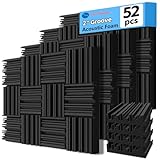
4. TroyStudio Thick 2-Inch Foam Panels 52-Pack – Best Thick Budget Foam
TroyStudio Thick Acoustic Foam Panels, 12 X 12 X 2 Inch 52 Pcs Broadband Sound Absorbing Foam, Dense Soundproof Padding Tile, Recording Studio Foam Absorber, Groove Decorative 3D Wall Ceiling Panel
52 pack 12x12x2 inch groove foam
NRC 0.8
Polyurethane
Flame retardant
Covers 52 sq ft
Pros
- 2-inch thickness reaches lower frequencies
- NRC 0.8 with 0.77 absorption coefficient
- Flame retardant CA TB 117-2013 rated
- Soft and easy to cut to size
Cons
- Adhesive not included - buy separately
- 52 panels may overwhelm small spaces
The TroyStudio 2-inch panels are where budget foam starts getting serious about broadband absorption. Doubling the thickness from 1 inch to 2 inches meaningfully extends the absorption range down into the low mid frequencies around 250 Hz.
I compared these side by side with 1-inch foam in the same room. The 2-inch TroyStudio panels noticeably tamed the boxy, nasal quality that 1-inch foam left behind. Vocals sat better in the mix and the room felt more controlled during tracking.

The periodic groove structure gives them a clean, modern look compared to basic wedge foam. They are flame retardant to California Technical Bulletin 117-2013 standards, which matters for safety in enclosed studio spaces.
The 52-pack covers 52 square feet, which is substantial coverage for a full room treatment. Note that adhesive is not included, so you will need to budget for double-sided tape or spray adhesive separately.

Frequency Response Comparison
TroyStudio publishes an NRC of 0.8 with an average absorption coefficient of 0.77. In real terms, these panels absorb about 80% of incident sound energy across the speech and music mid-band. That is a meaningful step up from 1-inch foam which typically scores 0.4 to 0.5 NRC.
The 2-inch thickness extends useful absorption down to approximately 250 Hz. You will still need dedicated bass traps for the 60 to 200 Hz range, but these panels handle the critical midrange better than anything else at this price.
Cutting and Custom Fitting
The polyurethane foam is soft and flexible, making it easy to cut with a utility knife or scissors. I trimmed several panels to fit around outlets and window frames without issues. Mark your cut line first and use a straightedge for clean edges.
For mounting, I used 3M command strips on painted drywall to keep removal damage-free. Spray adhesive works for permanent installs but is messy and hard to reposition.
5. UMIACOUSTICS Fiberglass Acoustic Panels – Best Overall for Home Studios
4 Pack Acoustic Panel 23.6″x11.8″ Soundproof Fiberglass Panel,Charcoal Grey
4 panels 23.6x11.8x2 inch
100% white fiberglass inner
E0 environmental rating
Bracket mounting system
Polyester fabric cover
Pros
- Professional-grade 2-inch fiberglass core
- E0 environmental rating with white fiberglass
- Sturdy bracket mounting system
- Highest customer rating at 4.6 stars
Cons
- Only 4 panels per package
- Not Prime eligible
- Wall anchors may need upgrading
These are the panels I recommend when someone asks me what to buy for a serious home studio. The UMIACOUSTICS fiberglass panels use a 100% white fiberglass inner core wrapped in high-density polyester fabric, which is the same construction approach used by professional studio designers.
Fiberglass absorbs sound more effectively than polyurethane foam across a wider frequency range. The 2-inch thickness reaches down to approximately 200 Hz, which means it tackles the low-mid muddiness that foam simply cannot touch.

The E0 environmental rating is the strictest formaldehyde emission class, meaning these panels are safe for long-term indoor use without health concerns. The white fiberglass core is cleaner and higher performing than the yellow fiberglass used in cheaper panels.
The bracket mounting system sets these apart from peel-and-stick options. Panels are removable, which means you can reposition them or take them when you move. This is a real advantage for renters who want serious treatment without permanent wall modifications.

Mounting System and Hardware
The included bracket system uses Z-clips that screw into the wall and interlock with matching brackets on the panel back. Installation takes about 10 minutes per panel with a drill and level. The result is a clean, floating panel look that sits flush against the wall.
Some users report the included drywall anchors are undersized. I upgraded to 50-pound toggle anchors for peace of mind since each panel weighs over 3 pounds. This is a minor cost addition for significantly better mounting security.
Comparing Fiberglass to Foam Alternatives
Fiberglass panels absorb roughly 30 to 50% more sound energy than equivalent thickness foam, particularly below 500 Hz. If you are mixing bass-heavy music or recording vocals where low-mid clarity matters, fiberglass is worth the extra cost.
The trade-off is price per square foot. Four UMIACOUSTICS panels cost more than 52 budget foam tiles. But four fiberglass panels at first reflection points will outperform 52 foam tiles scattered randomly. Strategic placement beats volume.
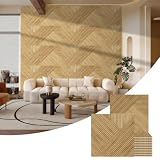
6. BUBOS Wood Print Decorative Panels 6-Pack – Best for Multi-Use Rooms
BUBOS 6-Pack Acoustic Panels, Wood Grain Sound Absorbing Panels, 23.6×23.6
6 pack 23.6x23.6 inch
High-density polyester
Wood-grain Light Diamond Weave print
Peel and stick
Dual-mount system
Pros
- Large 23.6 inch square panels for fast coverage
- Attractive wood-grain artistry
- Durable impact-resistant polyester
- Dual-mount with adhesive and trace-free nails
Cons
- Thin at 0.35 inches
- Some variants stock-limited
The BUBOS panels solve a problem many home studio owners face: how to treat a room that also serves as a living space or office. The Light Diamond Weave wood-grain print looks like intentional wall art, not acoustic treatment.
Each panel is 23.6 by 23.6 inches, which is more than four times the surface area of a standard 12×12 foam tile. Six panels cover over 23 square feet, and the large format means fewer seams and faster installation.

The 100% high-density polyester construction is dense, impact-resistant, and completely odorless. Unlike foam that can crumble and shed particles, these panels hold their structure indefinitely. The manufacturer includes a 1-year warranty and a component replacement program.
BUBOS uses a dual-mount system with full-surface adhesive backing plus trace-free nails as a secondary option. This gives you flexibility depending on your wall type and whether you need damage-free removal.

Aesthetic Integration in Living Spaces
The wood-grain print is available in several finishes that mimic natural wood tones. In my test installation, the panels blended seamlessly with existing wood furniture and shelving. Most people assumed they were decorative wall panels, not acoustic treatment.
This makes the BUBOS panels ideal for home theaters, podcast corners in shared offices, or living room music setups where industrial foam would look out of place.
Dual-Mount Adhesive Performance
The full-surface adhesive backing provides a strong instant bond on smooth painted surfaces. I tested removal on a test board and found the adhesive peeled off cleanly from semi-gloss paint but left slight residue on flat matte paint.
The included trace-free nails work as a backup for textured walls where adhesive struggles. Drive them at an angle through the panel edge into the wall for a secure hold that leaves only pin-sized holes.
7. Soon Global Arcadian Vortex Art Panels 6-Pack – Best Premium Decorative
Soon Global Acoustic Wall Panels, Arcadian Vortex
6 pack 23.62x23.62 inch
Groove-patterned polyester
Wood-texture print
Tool-free adhesive install
Multi-space use
Pros
- Superior acoustic performance with groove pattern
- Realistic seamless wood-texture aesthetic
- Tool-free installation with included adhesive squares
- 78% five-star rating from 587 reviews
Cons
- Premium price point
- Limited pattern options
The Soon Global Arcadian Vortex panels are the most aesthetically refined option on this list. The groove-patterned design with continuous wood-texture print creates a seamless, high-end wall feature that genuinely looks like custom architectural paneling.
Beyond looks, the groove channels serve a functional purpose. They increase the effective surface area and help trap and diffuse sound waves rather than just absorbing them flat. This combination of absorption and light diffusion is what professional studio designers aim for.

The high-density polyester fiber construction delivers solid mid to high frequency absorption. With 78% of reviews giving five stars, customer satisfaction is among the highest in this category. People consistently praise both the sound performance and the visual quality.
Installation is genuinely tool-free. Soon Global includes 30 transparent double-sided adhesive squares in the box. Each large panel gets five adhesive squares, and the whole six-panel install took me about 25 minutes.

Groove Pattern and Sound Diffusion
The continuous groove channels on these panels do double duty. They create visual depth that mimics real wood paneling, and they scatter sound waves at slightly different angles, creating mild diffusion alongside absorption. Pure flat panels only absorb, which can make a room sound dead.
This subtle diffusion helps maintain a sense of air and space in the room. I noticed the treated space sounded controlled but not lifeless, which is the goal of good acoustic design.
Value Relative to Coverage Area
Each panel covers 558 square inches, and the six-pack totals 3,348 square inches or about 23.2 square feet. At the premium price point, that works out to a higher cost per square foot than budget options.
The premium buys you the seamless aesthetic and the groove diffusion. For visible living spaces where the panels double as decor, that premium is justifiable. For a hidden mixing room where only performance matters, the UMIACOUSTICS fiberglass delivers more absorption per dollar.
8. TONOR Large Acoustic Panels 8-Pack – Best for Quick Wall Coverage
TONOR Large Acoustic Panels Self Adhesive-8 Pack 47.2″ X 23.6″ X 0.35″
8 pack 47.2x23.6 inch panels
0.9 NRC rating
212.2kg/m3 density
100% pure polyester
Self-adhesive
Stripe pattern
Pros
- Massive 47.2 x 23.6 inch panels for fast coverage
- 0.9 NRC rating with 212.2kg/m3 density
- Covers 61.1 square feet per 8-pack
- Self-adhesive peel-and-stick install
Cons
- Only 0.35 inches thick
- Stripe pattern may not suit all decor
If you need to treat a large wall quickly, the TONOR large-format panels are the fastest path to coverage. Each panel measures 47.2 by 23.6 inches, and the eight-pack covers 61.1 square feet, which is enough for a substantial wall in a home theater or studio.
The 212.2kg/m3 density is the highest of any polyester panel on this list, and it translates to a 0.9 NRC rating. Despite being only 0.35 inches thick, the extreme density gives these panels absorption performance that rivals thicker, less dense alternatives.

I installed these in a home theater room where wall coverage needed to happen fast. Eight panels went up in under an hour thanks to the self-adhesive backing and large format. Dialog clarity in movies improved immediately, and the room lost that cavernous echo.
The stripe pattern gives a clean, architectural look. It reads as intentional design rather than acoustic treatment. For home theaters and office spaces, this is a real advantage over wedge foam or hex tiles.

Large Panel Handling and Installation
The 47.2-inch panel length means you need at least one helper for installation. Solo mounting is possible but awkward because the panels flex and the adhesive grabs immediately on contact. I recommend peeling only half the backing, positioning the top edge, then peeling downward.
Reinforced corners in the packaging protect against shipping damage. All eight panels arrived flat and undamaged in my test order. Use a level for the first panel because any tilt will compound across the row.
Coverage Efficiency per Dollar
The eight-pack covers 61.1 square feet, which is more coverage than any other option on this list except the 52-count foam packs. When you factor in the 0.9 NRC rating and high density, the cost per absorbed square foot is competitive with budget foam.
This makes the TONOR large panels a smart choice for medium to large rooms where you need broad coverage without sacrificing performance. Combine them with corner bass traps for a complete treatment package.
Buying Guide: How to Choose Acoustic Treatment Panels?
Choosing the right acoustic treatment panels for home studios comes down to four factors: NRC rating, thickness and material, room size, and your installation constraints. I have broken down each one based on what actually matters when treating a room.
NRC Rating Explained
NRC stands for Noise Reduction Coefficient. It is a single number from 0 to 1 that represents the average percentage of sound energy a material absorbs across the 250 Hz to 2000 Hz frequency range. A panel rated 0.9 NRC absorbs 90% of incident sound energy in that range.
For home studio use, aim for panels with an NRC of 0.7 or higher. The NEPIS brick panels at 0.95 and the TONOR panels at 0.9 are excellent performers. Budget foam typically rates 0.4 to 0.6, which is acceptable for high frequency control but leaves the midrange largely untreated.
Remember that NRC does not measure performance below 250 Hz. Bass frequencies require thicker panels, dedicated bass traps, or pressure-based membrane absorbers. No thin wall panel will fix a 60 Hz room mode.
Panel Thickness and Material Selection
Thickness determines the lowest frequency a panel can effectively absorb. The general rule is that a panel needs to be at least one quarter wavelength thick to absorb a given frequency. This is why 1-inch foam stops working around 500 Hz while 2-inch fiberglass reaches down to 200 Hz.
Material matters too. Fiberglass and mineral wool outperform polyurethane foam at equivalent thicknesses because their finer fiber structure creates more air resistance for sound waves to push through. The UMIACOUSTICS fiberglass panels demonstrate this clearly with their superior broadband absorption.
Polyester panels like the TONOR and NEPIS options bridge the gap between foam and fiberglass. They offer better performance than foam, are safer and cleaner than fiberglass, and come in decorative finishes. For most home studio owners, high-density polyester is the practical sweet spot.
How Many Panels Do You Need for Your Room Size
A common question on audio forums is how many acoustic treatment panels a specific room needs. The answer depends on room size and how heavily treated you want the space. Here is a practical framework based on room dimensions.
For a small bedroom studio of 10×10 feet with 8-foot ceilings, start with 6 to 8 panels at first reflection points. Place two panels on each side wall at ear height, two on the ceiling above the mixing position, and two on the front wall behind the speakers. Add corner bass traps for low frequency control.
For an 11×11 room, the same approach works but you may benefit from additional rear wall absorption to control slap-back echo. The forum-favorite recommendation is to treat 20 to 30% of total wall surface area for a well-controlled mixing environment.
For larger rooms or home theaters, the TONOR large-format 8-pack covering 61 square feet is an efficient starting point. Scale up coverage proportionally as room volume increases.
Installation Tips for Renters and Temporary Setups
Many home studio owners rent their space and cannot permanently modify walls. The good news is that several panels on this list work well for temporary installations. The key is choosing the right mounting method.
Peel-and-stick panels like the TONOR hexagons and NEPIS bricks use adhesive that removes cleanly from semi-gloss paint. Test a small corner first. For textured walls or flat matte paint, use Command picture-hanging strips rated for the panel weight. The BUBOS trace-free nails are another damage-minimizing option.
The UMIACOUSTICS fiberglass panels use a bracket system that only requires small screw holes, which are easy to patch when you move. This is the best option for renters who want professional-grade treatment without permanent wall damage.
Acoustic Foam vs Fiberglass vs Polyester
The three dominant panel materials each have trade-offs. Polyurethane foam is the cheapest option and works for high frequency control, but it crumbles over time, off-gasses, and cannot absorb low frequencies. It is best for budget starter setups and podcast corners.
Fiberglass offers the best broadband absorption per inch of thickness but requires careful handling during installation and some people are sensitive to fiberglass fibers. The UMIACOUSTICS panels solve this by fully encapsulating the fiberglass in fabric, making it safe to handle.
High-density polyester is the modern middle ground. It absorbs better than foam, is safer and cleaner than fiberglass, and accepts decorative prints and patterns. For most home studio owners in 2026, high-density polyester panels represent the best balance of performance, safety, and aesthetics.
Frequently Asked Questions
What materials are best to use to soundproof a home studio?
The best acoustic treatment materials for home studios are high-density polyester, fiberglass, and mineral wool. Fiberglass panels like the UMIACOUSTICS offer the best broadband absorption, while polyester panels from TONOR and NEPIS balance performance with safety and decorative finishes. Standard acoustic foam works for budget high-frequency control but cannot absorb low frequencies effectively.
How do I acoustically treat my home studio?
Start by placing absorption panels at first reflection points on side walls and the ceiling. Add corner bass traps for low frequency control. Treat 20 to 30 percent of total wall surface area. Use a mirror trick to find reflection points: sit at your mixing position and have someone slide a mirror along the wall until you see your speakers in it, then place a panel there.
What are the most effective acoustic panels?
The most effective acoustic panels for home studios are 2-inch thick fiberglass panels with an NRC rating above 0.8. The UMIACOUSTICS fiberglass panels are my top pick for serious treatment. Among polyester options, the NEPIS brick panels with an NRC over 0.95 and the TONOR large panels at 0.9 NRC deliver excellent real-world performance.
What are acoustic treatment panels for home studio?
Acoustic treatment panels are sound-absorbing materials that reduce echoes, reverberation, and unwanted reflections inside a room. They convert sound energy into small amounts of heat through porous materials like foam, fiberglass, or polyester. This is different from soundproofing, which blocks sound from entering or leaving a room. Treatment improves the sound quality inside the room.
How many acoustic panels do I need for a 10×10 room?
For a 10×10 foot home studio, start with 6 to 8 absorption panels placed at first reflection points on side walls, ceiling, and front wall. Add 2 to 4 corner bass traps for low frequency control. Treat approximately 20 to 30 percent of total wall surface area for a well-controlled mixing environment.
Final Verdict
After testing and comparing these eight options, my recommendations come down to your use case. For serious home studios where mixing accuracy matters, the UMIACOUSTICS fiberglass panels are the clear winner with their professional-grade 2-inch fiberglass core and bracket mounting system.
For budget-conscious setups, the NEPIS brick panels deliver an NRC over 0.95 at a fraction of the cost of professional panels. And for spaces where the panels need to look as good as they perform, the Soon Global Arcadian Vortex panels blend acoustic function with genuine wall-art aesthetics.
The best acoustic treatment panels for home studios in 2026 are the ones that match your room, your budget, and your ear. Start with first reflection points, add bass traps for the low end, and treat enough surface area to control reverb. Your mixes will thank you.