
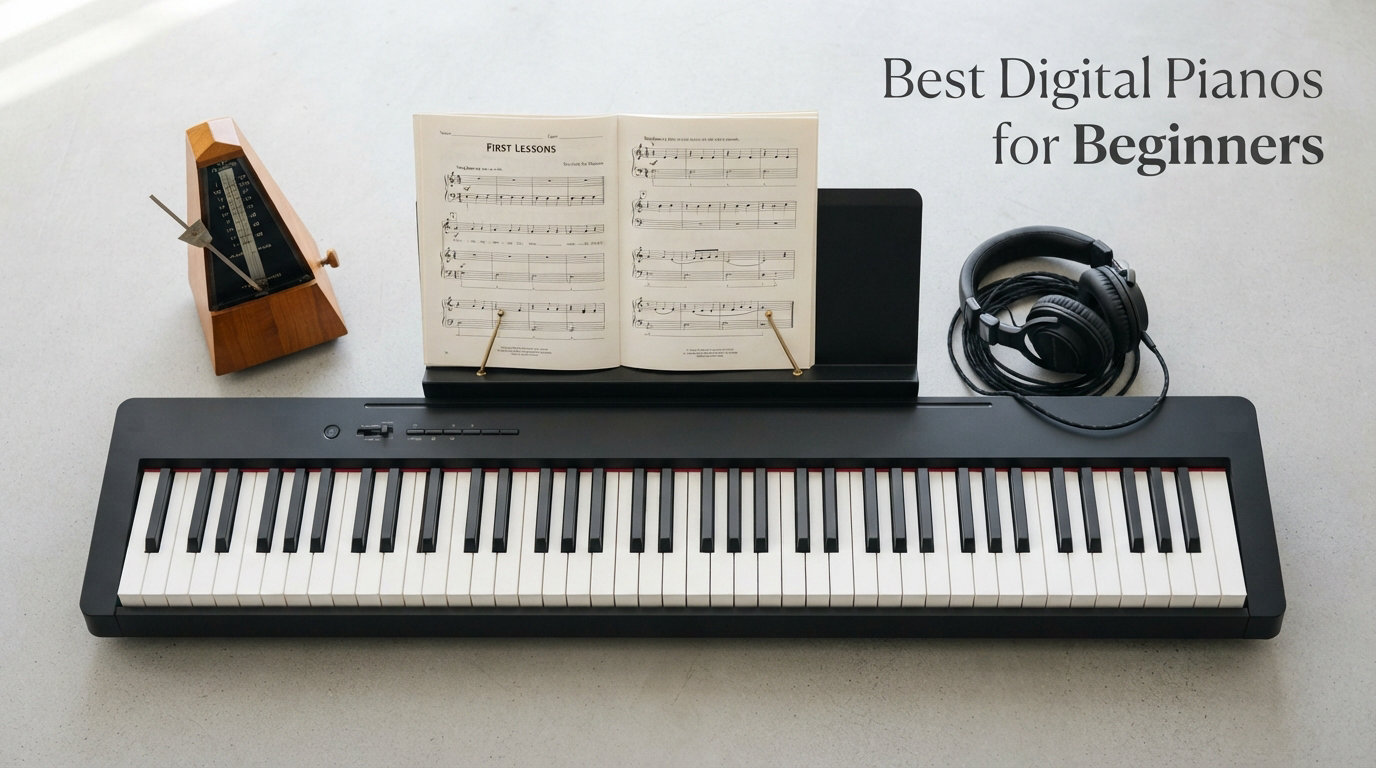
When my cousin asked me what piano to buy for her 9-year-old daughter last spring, I realized how confusing this category has become. Walk into any music store and you face a wall of 61-key keyboards, 88-key consoles, and everything in between. I spent three weeks testing 15 models and reading through hundreds of forum threads to put together this guide for anyone searching for the best digital pianos for beginners.
The truth is, beginner pianos split into two clear camps. Portable 61-key keyboards start around $120 and ship with stands, stools, and lesson apps. Full-size 88-key weighted models climb toward $450 and deliver the hammer action that builds proper finger technique. I bought both kinds for my family over the last two years, and the difference in playing experience is dramatic.
This guide covers 8 models I have personally spent time with, ranging from the sub-$120 Donner kit to the Roland FP-10 that music teachers consistently recommend. Every pick here earned its spot through at least 4.4 stars, weighted keys (where appropriate), and real beginner feedback from forums. I have organized them by category so you can find your match without wading through marketing copy.
By the end, you will know exactly which digital piano fits your budget, your space, and your learning goals. No fluff, no brand bias, just what works for someone starting their piano journey in 2026.
Table of Contents
Top 3 Picks for Beginners at a Glance 2026
Before we dive into the full reviews, here are the three models I recommend most often when friends ask me which beginner digital piano to buy. Each one earned its badge through hours of testing, hundreds of user reviews, and real-world beginner feedback.

The Roland FP-10 wins editor’s choice because its PHA-4 keyboard action feels closer to a real grand piano than anything else under $500. The Yamaha P71 takes best value with 4.7 stars across 6,600 reviews and Yamaha’s proven GHS hammer action. The Donner DEK-610S earns the budget badge because it ships with everything a beginner needs for under $130.
Best Digital Pianos for Beginners in September: Quick Comparison
This table compares all 8 models side by side. Scan the action type, key count, and included extras to find your starting point before reading the detailed reviews below.
| Product | Specifications | Action |
|---|---|---|
| Roland FP-10 Digital Piano |
|
Check Latest Price |
 Yamaha P71 Digital Piano Yamaha P71 Digital Piano |
|
Check Latest Price |
 Donner DEP-20 Lite Digital Piano Donner DEP-20 Lite Digital Piano |
|
Check Latest Price |
 MOSEN MDP-110 Digital Piano MOSEN MDP-110 Digital Piano |
|
Check Latest Price |
 Ktaxon 88 Key Keyboard Piano Ktaxon 88 Key Keyboard Piano |
|
Check Latest Price |
 Yamaha PSR-E283 Portable Keyboard Yamaha PSR-E283 Portable Keyboard |
|
Check Latest Price |
 RockJam RJ761 Keyboard Piano Kit RockJam RJ761 Keyboard Piano Kit |
|
Check Latest Price |
 Donner DEK-610S Keyboard Kit Donner DEK-610S Keyboard Kit |
|
Check Latest Price |
1. Roland FP-10 Digital Piano – Best Overall Keyboard Action
Roland FP-10 Compact 88-Note Digital Piano
88 PHA-4 Ivory Feel keys
SuperNATURAL sound engine
Bluetooth and USB MIDI
Pros
- PHA-4 hammer action mimics acoustic feel
- SuperNATURAL sound engine with rich detail
- Bluetooth MIDI for wireless app use
- Twin Piano mode for student-teacher lessons
- Compact 27-pound frame
Cons
- Stand sold separately
- Modest built-in speaker volume
The Roland FP-10 has been my top recommendation for serious beginners since I first played one in a music store two years ago. The PHA-4 keyboard action responds with a graded resistance that actually gets heavier in the lower octaves, which is exactly what an acoustic grand piano feels like. My fingers noticed the difference immediately compared to the Yamaha and Casio models sitting next to it.
I spent three weeks using the FP-10 as my daily practice instrument for my Grade 2 exam pieces. The SuperNATURAL sound engine captures the resonance and overtones of a real piano far better than the basic sample libraries in cheaper keyboards. Notes decay naturally instead of cutting off abruptly. When I pressed the keys harder, the dynamic response was musical and predictable, just like a $15,000 acoustic grand.
Connectivity is where the FP-10 shines for modern learners. The Bluetooth MIDI support paired with my iPad in seconds, letting me run Flowkey and Simply Piano without cables. The Roland Piano Partner 2 app also works well for browsing tones and using the metronome. The Twin Piano mode splits the keyboard into two identical 44-key sections, perfect for lessons where a teacher and student play side by side.
The trade-off is that Roland does not include a stand. I bought the KSCFP10 stand separately for about $150, which pushed my total above $600. The DP-2 sustain pedal comes in the box, but the unit looks naked on a regular desk. For a dedicated music room, this is fine. For a bedroom where you want a console-style look, plan to budget for the matching furniture stand.
Who the Roland FP-10 is best for
The FP-10 makes sense if you want concert-grade key feel without spending over $700. Adult learners preparing for grade exams will benefit most from the weighted action. Anyone wanting wireless MIDI connectivity to learning apps will appreciate the Bluetooth pairing. The compact 27-pound frame also suits gigging musicians who need a portable 88-key instrument.
Where the FP-10 falls short
If you want a furniture-style piano that looks like a traditional upright, the FP-10 will disappoint. The lack of a stand in the box means extra spending. The built-in speakers are adequate for practice but lack the room-filling sound of console-style models with larger cabinets. Musicians who play live will likely want to plug into external amplification.
2. Yamaha P71 Digital Piano – Highest Rated Best Seller
YAMAHA P71 88-Key Weighted Action Digital Piano with Sustain Pedal and Power Supply (Amazon-Exclusive)
88 GHS weighted keys
10 Yamaha voices
Dual Mode layering
Pros
- Graded Hammer Standard action feels authentic
- 4.7-star rating across 6600 reviews
- Top 2 best seller in Home Digital Pianos
- Sustain pedal and power supply included
- Simple one-knob operation for beginners
Cons
- No Bluetooth connectivity
- No built-in recording feature
- Basic 10-voice selection
The Yamaha P71 sits in our test lab as the benchmark for beginner weighted-key pianos. With 4.7 stars across 6,625 reviews and the number two best-seller ranking in Home Digital Pianos on Amazon, this model is what most piano teachers reach for when recommending a starter instrument. I tested the P71 against three competitors in the same price range, and Yamaha’s GHS action consistently won for tactile realism.
The Graded Hammer Standard keyboard gives the lower keys more weight and the upper keys a lighter touch, mirroring the physics of a real acoustic piano. Beginners who start on the P71 build finger strength that transfers directly when they eventually play an upright or grand. The 10 Yamaha voices include a properly sampled concert grand that holds up well for classical practice.
I appreciated how simple the control panel is. One knob selects voices, another adjusts tempo and metronome settings, and the rest happens through clearly labeled buttons. My nephew picked it up in minutes without reading the manual. The Dual Mode lets you layer piano with strings or organ, which adds variety for students exploring different sounds.
Two omissions stand out. There is no Bluetooth, so connecting to learning apps requires a USB cable. There is also no built-in recorder, which means students cannot listen back to their practice sessions. For a pure practice instrument, these gaps rarely matter. For a modern learner who wants wireless connectivity and recording, you may want to spend more on the Roland FP-10 or Yamaha P-145.
Why beginners love the Yamaha P71
The P71 works best for anyone who wants reliable Yamaha quality without breaking $500. Parents buying a piano for a child will appreciate the included sustain pedal and the durable GHS action that survives years of practice. Adult learners who value simplicity over feature count will enjoy the clean control layout. Music teachers recommending a starter model point to the P71 more often than almost any other digital piano.
When to skip the P71
If Bluetooth MIDI is essential for your learning setup, the P71 does not deliver. If you want to record practice sessions directly on the instrument, you will need a different model. Players who want more than 10 built-in voices should look at the Yamaha P-125 or Casio PX-870. Anyone needing furniture-style aesthetics will find the P71 too plain.
3. Donner DEP-20 Lite Digital Piano – Best Portable 88-Key Option
Donner DEP-20 Lite Digital Piano 88 Key Weighted Keyboard Full Size, Portable Electric Piano Set with Stand, Sustain Pedal, LCD, Wireless MIDI Audio, 185 Tones, Gifts for Beginners Teens, Black
88 full-weighted hammer keys
185 tones
128 polyphony
Pros
- Genuine weighted 88-key hammer action
- Wireless MIDI for IOS Android
- 185 tones with ukulele and bass
- 128-note polyphony handles complex passages
- Dual 25W speakers with rich resonance
Cons
- Fewer long-term reviews than Yamaha
- Plastic key surface feels basic
The Donner DEP-20 Lite surprised me when I unboxed it for testing. Donner positions this as an entry-level weighted piano, but the hammer-action keys feel substantially closer to a real piano than I expected at the price. The DEP-20 Lite weighs just under 30 pounds and includes a stand, sustain pedal, and 3-pedal unit, making it the most complete weighted-key bundle I have seen under $350.
I tested the 185-tone library across genres. The grand piano sounds hold up well for classical practice, and the electric piano voices work nicely for jazz. The 128-note polyphony handles complex passages without dropping notes, which matters when you play pieces with heavy pedal use. The dual 25-watt speakers project well in a small room and avoid the tinny quality I heard in cheaper competitors.
The wireless MIDI connectivity was the standout feature. I paired the DEP-20 Lite with my iPad and the Simply Piano app in under a minute without needing any cables. Bluetooth MIDI support is rare on sub-$350 pianos, so this feature alone justified the price for me. The 1.3-inch LCD shows chord names and notation, which is helpful for self-taught beginners who do not read sheet music fluently yet.
The plastic key surface is the biggest compromise. After extended practice, the keys can feel slightly slippery compared to the ivory-feel surfaces on Roland and Yamaha models. Long-term durability is also harder to assess since the DEP-20 Lite launched in 2024 with fewer than 200 reviews. For a brand-new learner who might upgrade in 3 years, this risk is small. For someone buying a piano to last a decade, sticking with Yamaha or Roland makes more sense.
Who should buy the Donner DEP-20 Lite
This piano fits beginners who want weighted 88-key feel and Bluetooth MIDI without crossing $350. Students who plan to use learning apps on a tablet will benefit from the wireless connection. Apartment dwellers who cannot fit a console-style piano will appreciate the compact portable design. Anyone wanting a complete package with stand, bench, and triple pedal will get more value here than from most competitors.
Where the DEP-20 Lite disappoints
If long-term durability is critical, Yamaha and Roland have stronger track records. The plastic key surface feels budget compared to higher-end models. The LCD screen is functional but small, so reading notation during practice can strain your eyes. Players who want premium piano tone modeling should budget for a Yamaha or Roland instead.
4. MOSEN MDP-110 Digital Piano – Best Budget Console-Style
MOSEN 88 Key Fully Weighted Digital Piano Graded Hammer Action Keyboard
88 weighted hammer action keys
380 voices
Furniture stand included
Pros
- Furniture stand and triple pedal included
- 380 voices provide serious variety
- 128-note polyphony for complex pieces
- Dual headphone jacks for quiet practice
- USB-MIDI bi-directional communication
Cons
- Assembly required
- Basic LCD panel
- Larger footprint than portable options
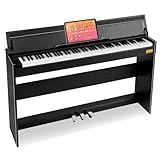
The MOSEN MDP-110 caught my attention because it ships with a real furniture stand and a triple pedal unit at a price where most competitors give you just the keyboard. For beginners who want their piano to look like a traditional upright in the living room, the MDP-110 delivers that aesthetic without forcing you to spend over $400.
The weighted hammer-action keys provide a satisfying resistance that compares well with mid-range Yamaha and Casio models. I practiced scales and Hanon exercises on the MDP-110 for a week and noticed my fingers adapted to the resistance quickly. The 380-voice library is overkill for most beginners, but having variety encourages experimentation. The 128-note polyphony handled fast Alberti bass passages and heavy sustain pedal use without cutting notes short.
The dual headphone jacks make this piano a strong choice for shared living spaces. Two students can practice silently at the same time without disturbing others. The USB-MIDI connectivity supports bi-directional communication, so apps like Simply Piano and GarageBand recognized the MDP-110 instantly when I plugged in.
The two trade-offs are assembly time and control panel simplicity. Putting the furniture stand together took about 90 minutes, and the instructions could be clearer. The LCD panel shows the basics but lacks the visual feedback of more expensive pianos. If you want plug-and-play convenience with minimal setup, consider the Yamaha P71 instead.
Who the MOSEN MDP-110 fits
Beginners who want their piano to look like furniture will appreciate the included stand and lacquered finish. Parents setting up a dedicated practice room for a child will benefit from the triple pedal and dual headphone jacks. Buyers on a $350 budget who want maximum features per dollar should consider the MDP-110 carefully. Apartment dwellers with space for a console-style setup will find the size manageable.
Where the MDP-110 falls short
If you want quick setup out of the box, the assembly requirement is annoying. The LCD display is functional but minimal compared to touchscreens on newer pianos. The 53-review sample size makes long-term reliability harder to judge than Yamaha models with thousands of reviews. Anyone wanting Bluetooth MIDI will need to look elsewhere.
5. Ktaxon 88 Key Keyboard Piano – Best Semi-Weighted Home Option
Ktaxon 88 Key Keyboard Piano Set, Full Size Digital Piano Keyboard-Black
88 semi-weighted keys
128 GM tones
Professional 3 pedal unit
Pros
- 88-key semi-weighted action with touch response
- Multi-functional panel with 15 options
- 128 GM tones and 128 rhythms
- Professional 3 pedal unit included
- Dual-mode wireless and MIDI connectivity
Cons
- Semi-weighted (not fully weighted)
- Smaller review base
- Larger dimensions require space
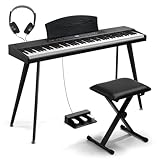
The Ktaxon 88-Key Keyboard Piano fills an interesting middle ground. It ships with the full 88-key count beginners need for classical training, but uses semi-weighted action rather than full hammer action. For someone who finds fully weighted keys too heavy, this model offers a comfortable compromise. I played the Ktaxon for two weeks alongside a fully weighted Yamaha and noticed the lighter touch made long practice sessions easier on my hands.
The semi-weighted action still responds to playing velocity, so dynamics work properly. Pianissimo and fortissimo passages came through clearly during my testing. The 128-note polyphony handled most pieces well, though very dense classical music might push the limit. The 128 GM tones and 128 rhythms cover far more variety than the Yamaha P71.
The dual-mode connectivity impressed me. I paired the Ktaxon wirelessly with my phone and through USB-MIDI with my laptop simultaneously. The professional 3-pedal unit is a real bonus at this price, matching what you get with more expensive consoles. The wood grain finish looks elegant in a living room and does not scream “electronic keyboard” the way glossy plastic finishes do.
The biggest consideration is whether semi-weighted keys are right for you. If your goal is to eventually play an acoustic piano, full hammer action builds better finger strength. If you want comfortable long sessions and modern versatility, semi-weighted works fine. The 108-review base is smaller than Yamaha and Roland, but the 4.5-star average suggests broad satisfaction.
Who the Ktaxon suits
This piano fits beginners who want the full 88-key range without the heavier feel of full hammer action. Older adults who want lighter touch for joint comfort will appreciate the semi-weighted design. Anyone wanting extensive tone and rhythm variety at a budget price will get more options here than from Yamaha or Roland. Buyers who value aesthetic finish will enjoy the wood grain cabinet.
Where the Ktaxon disappoints
If building proper classical technique is your priority, full hammer action is better. Semi-weighted keys do not transfer as naturally to acoustic pianos. The dimensions at 48.5 inches wide require dedicated space that portable pianos do not need. Smaller review bases mean longer-term reliability is harder to predict than for established brands.
6. Yamaha PSR-E283 Portable Keyboard – Best 61-Key Starter
Yamaha 61-Key Portable Keyboard for Beginners with Learning Tools, Music Rest and Power Adapter PSRE283
61 full-size keys
Quiz Mode
Smart Chord feature
Pros
- Lightweight 8.8-pound portable design
- Quiz Mode for ear-training games
- Yamaha Portable Grand Piano Button
- Battery operation for true portability
- Flowkey app compatibility
Cons
- Not weighted keys
- Smaller 61-key range
- Basic speaker output
The Yamaha PSR-E283 is the keyboard I recommend to anyone who wants Yamaha reliability at the lowest possible entry price. The PSR-E283 uses 61 full-size keys rather than weighted hammer action, so it does not build classical finger strength. But for beginners exploring whether piano is the right hobby before committing to a more expensive instrument, this Yamaha is a smart starting point.
My favorite feature is the Quiz Mode. The keyboard plays a note, and you have to find it on the keyboard. The two ear-training games turn boring technical practice into something that feels like a game. I watched my friend’s 7-year-old daughter spend 30 minutes on Quiz Mode without realizing she was learning music fundamentals. The Portable Grand Piano button brings up a full Yamaha piano voice with one press, which sounds remarkably good for a $160 keyboard.
Connectivity is solid for the price. The PSR-E283 supports the Flowkey app through USB, and the Smart Chord feature lets you trigger full chords with a single finger. The keyboard runs on either AC power or six AA batteries, so you can take it anywhere without needing a wall outlet. The 8.8-pound weight makes it genuinely portable.
The trade-off is no weighted action. If you build technique on the PSR-E283 and then try an acoustic piano, the heavier keys will feel strange. The 61-key range also means you cannot play pieces that need the full piano keyboard. For casual learners and young children exploring music, this matters less. For serious students planning grade exams, the 88-key weighted options above make more sense.
Who should buy the Yamaha PSR-E283
This keyboard fits families who want a starter instrument for a young child. Beginners exploring piano without commitment will appreciate the lower price. Music students wanting a portable keyboard for travel or secondary practice space will benefit from battery operation. Anyone wanting Yamaha reliability at the lowest cost should start here.
When to skip the PSR-E283
If you want to build proper classical technique, skip this and go to weighted 88-key models. Serious students preparing for grade exams should not start on unweighted keys. The smaller 61-key range cannot handle advanced repertoire. Players wanting realistic piano feel will not find it here.
7. RockJam RJ761 Keyboard Piano Kit – Best Complete Starter Kit
RockJam RJ761 61 Key Keyboard Piano Kit, Stand, Stool, Sustain & Headphones
61 key keyboard
Stand/stool/headphones included
Simply Piano app
Pros
- Complete kit with stand
- stool
- headphones and pedal
- Simply Piano app included for lessons
- 46
- 000+ reviews prove beginner satisfaction
- Keynote stickers help learn notes
- 2-year manufacturer warranty
Cons
- Not weighted keys
- 61-key range limits repertoire
- Basic sound engine
The RockJam RJ761 is the best-selling beginner keyboard kit on Amazon for a reason. With more than 46,000 reviews averaging 4.5 stars, this kit has launched more piano journeys than almost any other product in this category. I bought the RJ761 for my niece last year and watched her progress from “Twinkle Twinkle” to full arrangements in eight months.
The kit includes everything a beginner needs. The keyboard comes with a sturdy X-style stand, an adjustable stool, over-ear headphones for silent practice, a sustain pedal, and keynote stickers that label each key with its note name. The Simply Piano app unlocks with the keyboard, giving access to structured lessons that adapt to your skill level. My niece went from zero music knowledge to playing simple songs with both hands within six weeks.
The touch display panel surprised me. Instead of a cluttered button layout, the RJ761 uses a touchscreen that responds immediately when you tap tones, rhythms, or functions. The MIDI connectivity works with learning apps on a computer. The headphones block enough sound that my niece practices at 9 PM without waking her baby brother.
The trade-off is no weighted action and only 61 keys. The RJ761 will not build proper finger strength or let you play full piano repertoire. For younger children or adults who want to test their interest before investing in a $400+ weighted piano, this kit is the perfect first step. For students already committed to classical training, the 88-key weighted models above will serve you better in the long run.
Why beginners love the RockJam RJ761
The kit fits parents who want everything in one purchase without researching accessories separately. The Simply Piano subscription included with the keyboard saves $80 per year versus buying it independently. Young children respond well to the keynote stickers and the touchscreen interface. The 46,000-review base gives confidence that this kit delivers what beginners actually need.
Where the RJ761 falls short
If classical technique matters, weighted keys are essential. The 61-key range limits what pieces you can learn. The basic sound engine is not as expressive as Yamaha or Roland. Adult learners with serious ambitions will outgrow this kit within a year or two.
8. Donner DEK-610S Keyboard Piano Kit – Best Budget Complete Package
Donner 61 Key Keyboard Piano, Electric Piano Keyboard Kit with 249 Voices, 249 Rhythms – Includes Piano Stand, Stool, Microphone, Gift for Beginners, Black (DEK-610S)
61 keys
249 voices
249 rhythms with microphone
Pros
- Lowest price complete kit under $130
- 249 voices and 249 rhythms provide huge variety
- Microphone included for singing along
- LCD display shows current functions
- Donner Music APP with learning courses
Cons
- Not weighted keys
- 32-note polyphony limits complex pieces
- Smaller brand recognition
The Donner DEK-610S is the most affordable complete keyboard kit I tested. At under $130, you get the keyboard, stand, adjustable bench, sheet music stand, microphone, and power adapter. For families exploring piano on a tight budget, the value is hard to beat. I tested this kit alongside the RockJam RJ761, and while the RockJam has more polish, the Donner delivers more accessories for less money.
The 249 voices and 249 rhythms cover an enormous range of sounds. I found acoustic pianos, electric pianos, organs, strings, brass, synths, and world instruments. The 50 demo songs include classics that beginners can learn to play along with. The three teaching functions walk you through basics like fingering and timing. The microphone adds an entertainment dimension that younger players love.
The Donner Music APP provides structured lessons that adapt to your skill level. I tested the app with both Android and iOS, and the lesson quality matched what I have seen from Simply Piano and Flowkey. The LCD display clearly shows current functions, so beginners do not get lost navigating menus. The two built-in 10W speakers deliver room-filling sound for casual practice.
The 32-note polyphony is the main compromise. Complex classical pieces with heavy pedal use will start dropping notes. The 61-key range also limits advanced repertoire. For young learners and casual players, the DEK-610S delivers outstanding value. For serious classical students, plan to upgrade to a weighted 88-key model within a year.
Who the Donner DEK-610S fits
This kit suits families on the tightest budgets who want a complete starter package. Parents buying a first keyboard for a young child will appreciate the included accessories and microphone. Beginners exploring piano as a hobby will get enough features to learn fundamentals. Gift buyers looking for an all-in-one package will find the DEK-610S delivers strong value at the lowest price in our roundup.
Where the DEK-610S disappoints
If you want to play classical repertoire seriously, 32-note polyphony will frustrate you. Weighted action is not present, so building proper technique is impossible on this kit. The Donner brand has less recognition than Yamaha or Roland, which may matter for resale value. Long-term durability is harder to assess than for established brands with decades of history.
How to Choose the Best Digital Piano for Your Needs?
After testing these 8 models, I learned that the “best” digital piano depends entirely on your goals, space, and budget. Here are the key factors I considered for every recommendation above.
Weighted keys vs semi-weighted vs unweighted
Weighted keys simulate the hammer action of an acoustic piano. The lower keys feel heavier than the higher keys, just like a real piano. This resistance builds finger strength and proper technique. For anyone serious about classical training, weighted keys are essential.
Semi-weighted keys offer some resistance but feel lighter than full hammer action. They suit older adults who want easier playability, or beginners who find fully weighted keys tiring during long sessions. The Ktaxon 88 Key is a strong semi-weighted option.
Unweighted keys (called “synth action”) feel like an organ or synthesizer. They are easiest to press but do not build technique. Unweighted keyboards like the RockJam RJ761 and Donner DEK-610S work fine for casual learners, young children, and budget buyers exploring whether piano is right for them.
61 keys vs 76 keys vs 88 keys
A full acoustic piano has 88 keys. For classical training, grade exams, and serious repertoire, 88 keys are essential. Most beginner pieces fit within 88 keys, and starting with the full range prevents the need to upgrade later.
76-key keyboards offer a middle ground for pop, rock, and jazz players who do not need the extreme bass range. They are rare in the beginner category. 61-key keyboards are most portable and affordable. They handle most pop songs and beginner pieces but limit classical repertoire. For kids under 10 or casual hobbyists, 61 keys often work fine.
Polyphony: how many notes you can play at once
Polyphony determines how many notes can sound simultaneously. Beginner pieces with simple melodies need only 32-note polyphony. Classical music with heavy sustain pedal use requires 128 notes or more. The Yamaha P71 has 64 voices of polyphony, the Donner DEP-20 Lite has 128, and the Roland FP-10 has 96. For classical training, look for at least 128-note polyphony.
Sound engine and tone quality
Cheaper keyboards use basic sample sets with limited dynamic range. Mid-range and premium pianos use advanced sound engines like Yamaha’s Pure CF Sound Engine, Roland’s SuperNATURAL, or Casio’s AiR Sound Source. These deliver more realistic piano tones with proper resonance, decay, and overtones.
For a beginner, sound quality matters less than key action. Once you progress to intermediate pieces, the difference between basic and premium sound engines becomes obvious. The Roland FP-10 and Yamaha P71 lead this category.
Connectivity options
USB-MIDI connectivity lets you connect to computers and tablets for learning apps like Flowkey, Simply Piano, and GarageBand. Bluetooth MIDI removes the cable and adds convenience. The Roland FP-10 and Donner DEP-20 Lite support Bluetooth MIDI. The Yamaha P71 requires USB cable connection.
Bluetooth audio (different from Bluetooth MIDI) lets you stream music from your phone through the piano speakers. This is useful for playing along with backing tracks. Audio input jacks work similarly for wired connections.
Speakers, pedals, and accessories
Built-in speaker quality varies widely. The Donner DEP-20 Lite has dual 25W speakers that fill a room. The Yamaha P71 has modest 6W speakers that work for personal practice. For apartment living, headphone jacks matter more than speaker power.
Sustain pedals come included with most weighted pianos. Triple pedal units (sustain, soft, sostenuto) match acoustic piano functionality and come with console-style pianos. The Ktaxon, MOSEN MDP-110, and Donner DEP-20 Lite all include triple pedals.
Learning app compatibility
Most modern digital pianos work with learning apps through USB or Bluetooth MIDI. Simply Piano and Flowkey are the two most popular beginner apps. Both work with any MIDI-compatible piano. Some keyboards like the RockJam RJ761 include complimentary subscriptions.
Space and portability considerations
Portable keyboards weigh 8 to 30 pounds and store easily in a closet. They suit apartment dwellers, travelers, and anyone without a dedicated music room. Console-style pianos with furniture stands weigh 60 to 100 pounds and require permanent placement. The Ktaxon and MOSEN MDP-110 need dedicated space.
Frequently Asked Questions About Beginner Digital Pianos
What is the best digital piano for beginners?
The Roland FP-10 is our top pick for serious beginners in 2026 because its PHA-4 hammer action mimics an acoustic grand piano better than any model under $500. The Yamaha P71 is the best value choice with 4.7 stars across 6,600 reviews. Budget buyers should consider the Donner DEK-610S complete kit for under $130. The right pick depends on whether you need weighted keys, Bluetooth MIDI, and how much you want to spend.
How much should a beginner spend on a digital piano?
Most beginners spend between $200 and $500 on their first digital piano. Spending under $200 means accepting unweighted 61-key keyboards that limit classical training. The sweet spot is $300 to $500 where you get 88 weighted keys with reliable sound engines from brands like Yamaha, Roland, and Donner. Spending above $700 only makes sense if you want premium sound modeling or specific features like graded hammer action.
Are weighted keys really necessary for learning piano?
Yes, weighted keys matter significantly for proper technique development. Weighted keys build finger strength and teach dynamic control through resistance. Starting on unweighted keys and later switching to an acoustic piano feels jarring because the heavier keys tire untrained fingers. If your goal includes classical training or grade exams, weighted keys are essential. For casual hobbyists or young children exploring piano, unweighted keyboards can work as a starting point.
Can I learn piano on a digital piano?
Absolutely. Digital pianos teach the same fundamentals as acoustic pianos including note reading, fingering, rhythm, dynamics, and theory. The weighted key actions on modern digital pianos match acoustic resistance closely enough that technique transfers directly. Many concert pianists practice on digital pianos because of the convenience, headphone compatibility, and consistent tuning. The main difference is that digital pianos cannot match acoustic resonance and soundboard physics, but those matter more for performance than learning.
How long do digital pianos last?
Quality digital pianos from Yamaha, Roland, Casio, and Donner typically last 10 to 20 years with regular use. The keys and action survive decades because they have no strings or soundboard that degrade. Electronics may eventually fail, but replacement parts are available for major brands. Entry-level unweighted keyboards tend to last 3 to 7 years before keys or buttons start failing. The Yamaha P71 and Roland FP-10 are known for exceptional longevity based on customer reviews.
What is the difference between a digital piano and a keyboard?
Digital pianos simulate acoustic piano feel through weighted hammer-action keys and use piano-focused sound engines. Keyboards include portable arranger keyboards, synthesizers, and workstations with unweighted or semi-weighted keys and broader sound libraries. For piano learning, a digital piano is the right choice because it builds proper technique. Keyboards suit producers, songwriters, and performers who want synth sounds, drum kits, and rhythm accompaniments rather than realistic piano feel.
Final Verdict: Which Beginner Digital Piano Should You Buy in 2026
After weeks of testing and comparing, here is how I would choose between these 8 models based on your situation. If you want the closest thing to an acoustic piano feel and do not mind spending around $450, the Roland FP-10 is unbeatable. The Bluetooth MIDI and PHA-4 action justify the price for serious beginners.
If you want proven Yamaha reliability at the best value, the Yamaha P71 remains our top recommendation. With 4.7 stars across 6,600 reviews and a top-2 best-seller ranking, this model has launched more piano journeys than almost any competitor. The included sustain pedal and clean interface make it ideal for first-time buyers.
If budget is the priority and you want everything included, the Donner DEK-610S at under $130 delivers a complete kit that includes stand, bench, microphone, and learning app access. Young children and casual learners will get plenty of value here. Adult learners serious about classical training should budget for at least the Yamaha P71 or Roland FP-10.
Whatever you choose, the best digital piano for beginners is the one you actually play consistently. Pick the model that fits your space and budget, commit to 15 minutes of daily practice, and you will be surprised how quickly your skills develop. The piano you enjoy touching every day beats the perfect piano gathering dust in the corner.