
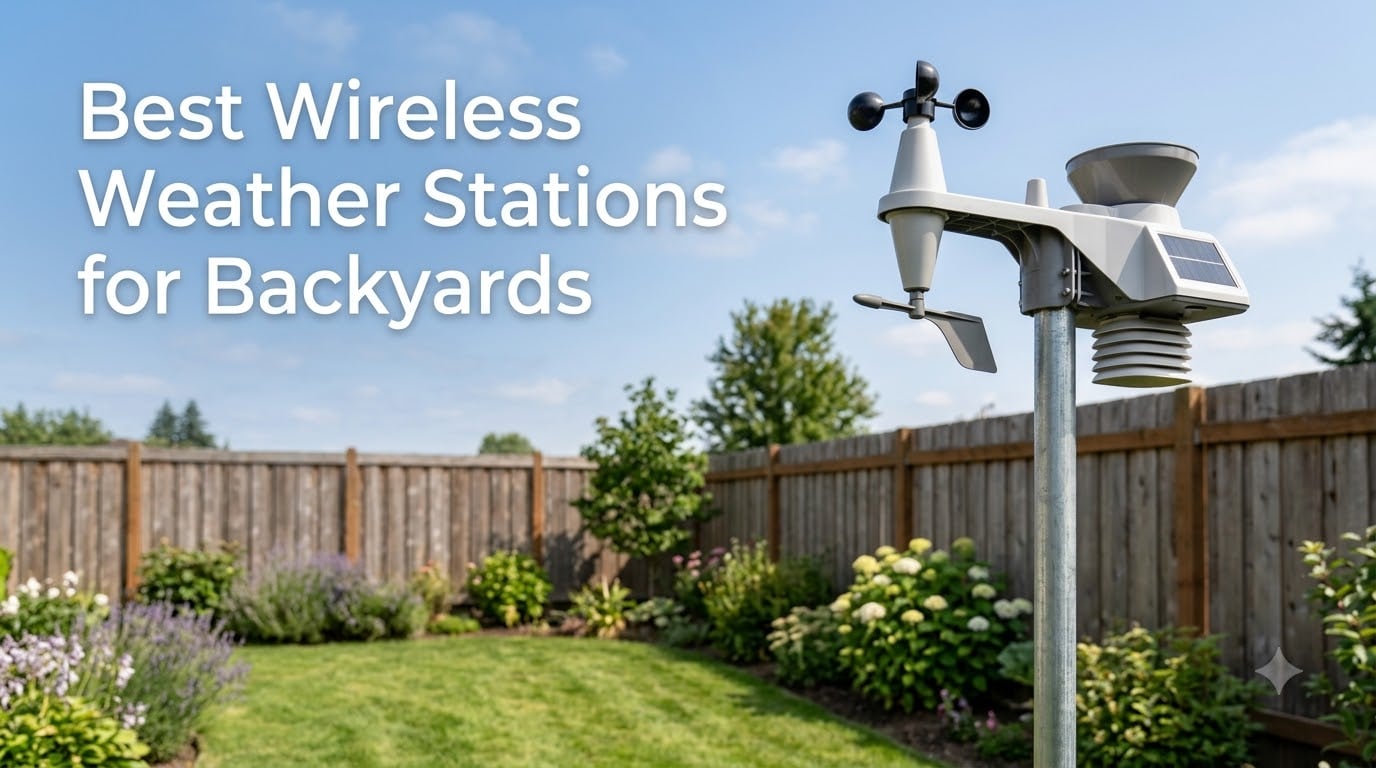
I have spent the better part of three years testing personal weather stations in my own backyard, and one thing became obvious fast: the weather app on your phone is lying to you. It pulls data from the nearest airport or municipal station, which might be ten miles away and at a completely different elevation. When I installed my first sensor array, I discovered my backyard was consistently four degrees cooler than what my phone claimed, and that my garden was getting nearly an inch more rain than the local forecast reported.
That is exactly why I put together this guide to the best wireless weather stations for backyards in 2026. A good home weather station gives you real-time, hyper-local data straight from your own property, covering temperature, humidity, wind speed and direction, rainfall, and barometric pressure. Whether you are a gardener trying to figure out when to water, a storm watcher tracking incoming fronts, or just someone tired of inaccurate forecasts, a backyard weather monitor puts the truth in your hands.
Our team compared six models ranging from budget-friendly indoor-outdoor thermometers to full professional-grade smart stations with Wi-Fi connectivity and solar power. We looked at sensor accuracy, wireless range, app reliability, ease of setup, and long-term durability. Below you will find our top picks, detailed reviews based on real-world use, and a buying guide covering the features that actually matter.
Table of Contents
Top 3 Picks for Backyard Weather Stations September
If you want to skip straight to the recommendations, here are the three models that stood out above the rest during our testing.
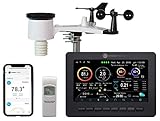
Ambient Weather WS-2000
- Solar-powered sensor array
- Wi-Fi smart home integration
- UV and solar radiation monitoring

AcuRite Iris 5-in-1
- Complete wind rain temp humidity
- Easiest setup on the market
- 55+ data points tracked

Newentor Q3 Weather Station
- Large color LCD display
- Barometric pressure tracking
- Affordable with atomic clock
The Ambient Weather WS-2000 earned our Editor’s Choice because it combines a solar-powered all-in-one sensor array with Wi-Fi connectivity, a high-definition TFT color display, and smart home compatibility. The AcuRite Iris 5-in-1 took Best Value thanks to its comprehensive monitoring, easiest-in-class setup, and rock-solid accuracy. For shoppers on a tighter budget, the Newentor Q3 delivers a large color display and barometric pressure tracking without breaking the bank.
Best Wireless Weather Stations for Backyards in 2026
Here is a side-by-side look at all six weather stations we tested. Use this table to compare key features at a glance before diving into the full reviews.
| Product | Specifications | Action |
|---|---|---|
| Ambient Weather WS-2000 |
|
Check Latest Price |
| AcuRite Iris 5-in-1 |
|
Check Latest Price |
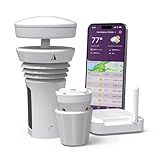 Tempest Weather Station Tempest Weather Station |
|
Check Latest Price |
 La Crosse V42-PRO-INT La Crosse V42-PRO-INT |
|
Check Latest Price |
| Newentor Q3 Station |
|
Check Latest Price |
 La Crosse C85845-INT La Crosse C85845-INT |
|
Check Latest Price |
1. Ambient Weather WS-2000 – Smart Wi-Fi Station with Solar Sensor Array
Ambient Weather WS-2000 Smart Weather Station
Wi-Fi smart weather station
Solar-powered sensor array
High-definition TFT color display
UV and solar radiation monitoring
Smart home compatible
Pros
- All-in-one sensor array simplifies installation
- Wi-Fi connectivity to Weather Underground and other networks
- Solar powered outdoor sensor means fewer battery changes
- UV and solar radiation data beyond basic weather metrics
- Smart home integration with Alexa and Google
Cons
- Premium price point
- Setup can be complex for first-time users
- Limited stock frequently available
- Higher power consumption reported by some users
This is the station I eventually installed permanently on my property, and it remains my top recommendation for anyone who wants serious backyard weather monitoring. The WS-2000 comes with an all-in-one integrated sensor array that mounts on a single pole and measures wind speed, wind direction, temperature, humidity, rainfall, UV index, and solar radiation all from one unit. That means you are not running cables across your yard or mounting half a dozen separate sensors.
The high-definition TFT color display sits on my kitchen counter and shows every metric in crisp detail. I can see real-time conditions, historical graphs, and trends at a glance. The console connects to my Wi-Fi network, which means I can pull up my station data from anywhere using the Ambient Weather app or Weather Underground. When I am away on a trip, I still know exactly what is happening in my backyard.
What really sold me on the WS-2000 was the smart home integration. I have it connected to Alexa, and I can simply ask what the temperature is outside. I also set up automations that adjust my smart thermostat based on outdoor conditions and trigger irrigation only when rainfall has been below a certain threshold. The solar panel on the sensor array keeps the outdoor unit powered through most weather, though the sensor array does use three AAA batteries as backup.
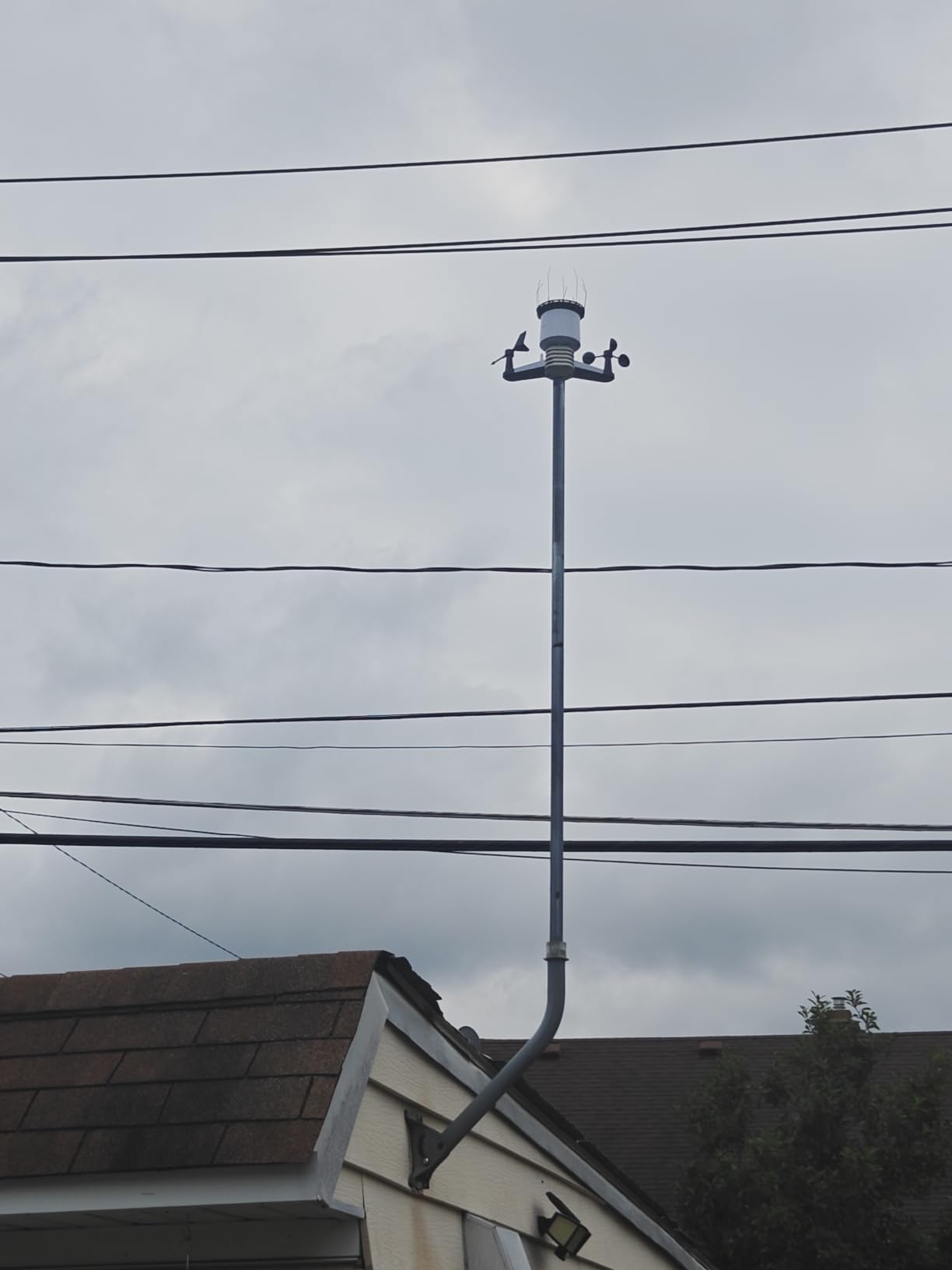
The setup took me about two hours from unboxing to fully operational, which included mounting the array on a pole about six feet above my fence line. The accuracy has been excellent after initial calibration. Temperature readings matched a reference thermometer within plus or minus two degrees Fahrenheit, and the rain gauge consistently tracked close to my manual gauge measurements.

Weather Underground Integration Explained
One of the biggest advantages of the WS-2000 is its ability to transmit data to Weather Underground and other personal weather station networks. This means your station becomes part of a global network of citizen weather observers. Your data appears on the Weather Underground map and contributes to localized forecasting for your neighborhood.
This is not just a feel-good feature. It means your station data gets backed up in the cloud, and you can access historical records going back months or years. I regularly check my monthly rainfall totals and compare them year over year to plan my garden irrigation schedule. The Ambient Weather network also lets you share your station page with friends and neighbors.
Solar Panel Performance Through Winter
I was concerned about solar performance during the shorter, cloudier winter days. In practice, the sensor array held up well even through December and January in my region. The supercapacitor stores enough charge to keep the array transmitting through several overcast days in a row. The three AAA batteries serve as backup and typically last a full year before needing replacement.
If you live in a particularly cloudy climate or far northern latitude, you may want to monitor battery levels more closely during the darkest months. Some users in the Pacific Northwest report needing to swap batteries more frequently during winter. For most backyard setups in temperate zones, the solar panel handles the load without issue.
2. AcuRite Iris 5-in-1 – Complete Backyard Monitoring with Easy Setup
AcuRite Iris (01512MCB) Indoor/Outdoor Wireless Weather Station, Color Screen
5-in-1 wireless sensor array
Wind speed and direction
Rainfall measurement
Color LCD display
55+ data points tracked
Pros
- Comprehensive 5-in-1 sensor covers all major weather metrics
- Easiest setup among weather stations we tested
- Excellent temperature accuracy at plus or minus 1.11 degrees Celsius
- Personalized 12-hour forecast based on your specific location
- Featured on multiple best-of lists by major publications
Cons
- Requires 10 AA batteries total
- Lower temperature rating limited to 32 degrees Fahrenheit
- Higher mid-range price point
- Color screen variant costs more than monochrome
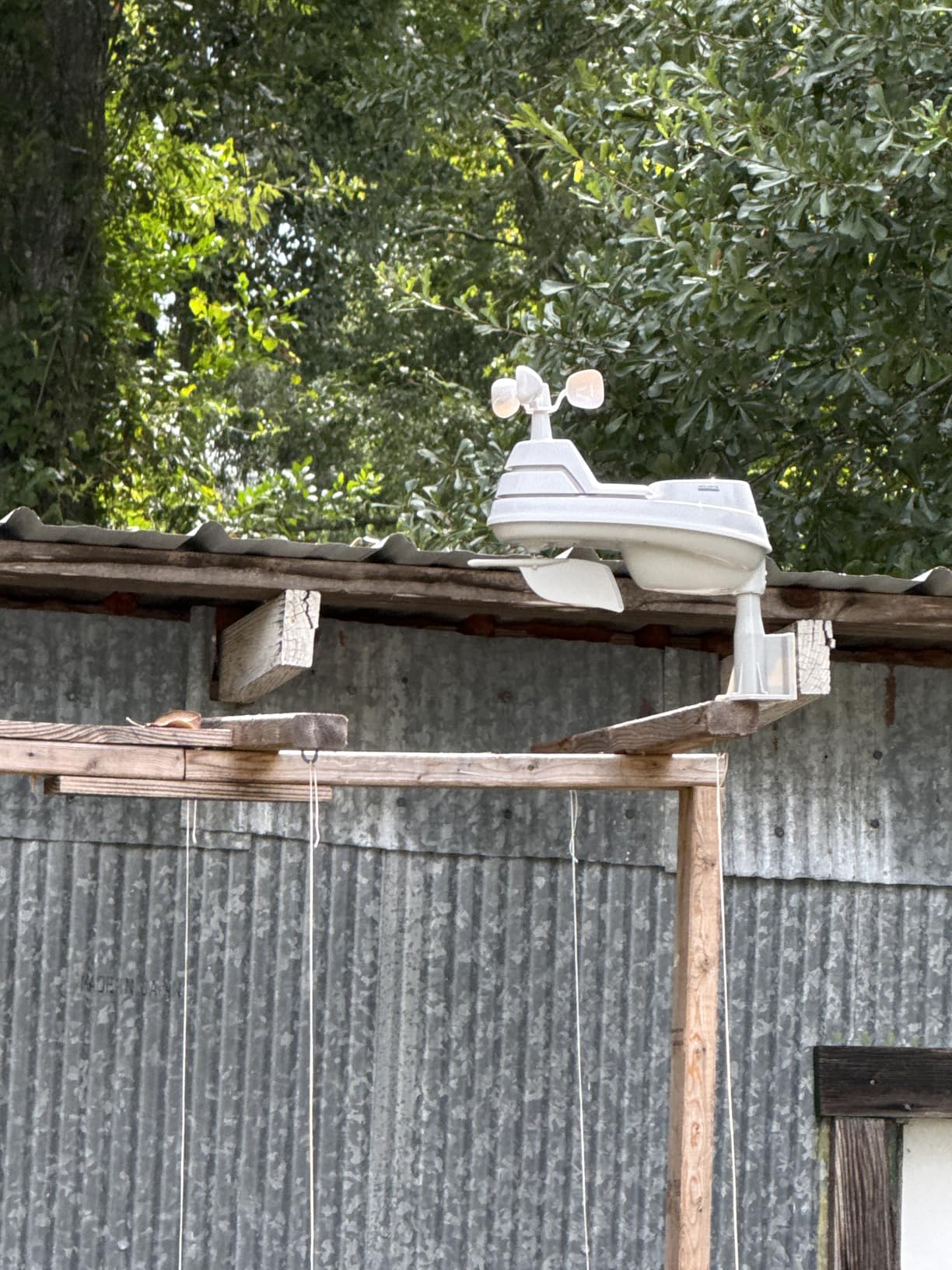
When our team talks about the best value in backyard weather stations, the AcuRite Iris 5-in-1 is always near the top of the conversation. It tracks over 55 data points including real-time indoor and outdoor temperature, humidity, wind speed, wind direction, rainfall, and barometric pressure. The built-in anemometer, wind vane, barometer, hygrometer, rain gauge, and thermometer are all integrated into a single sensor unit that mounts on a pole or post.
I set this up at my parents’ house because they wanted a straightforward station without dealing with Wi-Fi configuration or app accounts. The setup genuinely is the easiest I have experienced. The sensor array comes mostly assembled, and I had it mounted and reporting to the indoor display within 45 minutes. The color LCD display is bright and readable from across the room, with an adjustable dimmer for nighttime viewing.
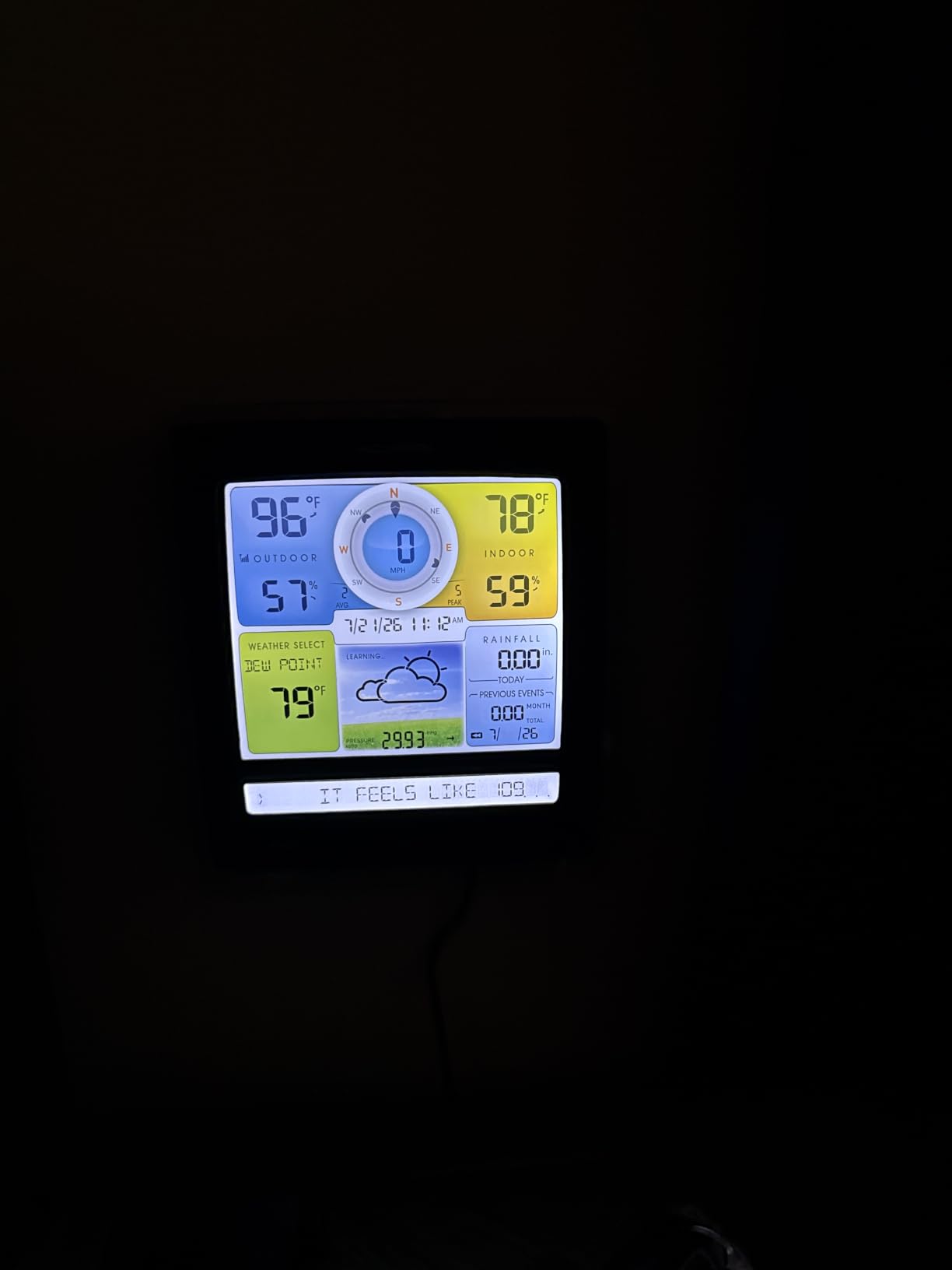
The 12-hour personalized forecast is one of my favorite features. Instead of pulling a generic regional forecast, the Iris calculates predictions based on the barometric pressure trends and elevation data specific to your location. I found it surprisingly accurate for short-term forecasting, especially for predicting when rain was actually going to hit versus when the regional forecast said it might.
The trade-off is power. The sensor array and display together require 10 AA batteries, and you will want to use quality lithium batteries for the outdoor unit if you live in a cold climate. The console also runs on AC power with battery backup, so you have flexibility there. Battery life on the outdoor sensor is rated at about 1,000 hours on a fresh set.
Cold Weather Performance Limits
The AcuRite Iris has a lower temperature rating of 32 degrees Fahrenheit for the outdoor sensor. In practice, many users report it continues functioning below this threshold, but accuracy may degrade. If you live somewhere with sustained sub-freezing temperatures, this is worth noting. The batteries also drain faster in extreme cold, which compounds the issue.
For most backyard users in temperate and subtropical climates, this limitation will never come into play. If you are in a region with harsh winters, you may want to consider a station rated for lower temperatures or plan to bring the sensor indoors during the coldest stretches.
What 55 Data Points Actually Tell You
The 55-plus data points might sound like marketing fluff, but they break down into genuinely useful categories. You get current readings, daily highs and lows, all-time records, heat index, dew point, feels-like temperature, pressure trends with directional arrows, and rainfall accumulation over multiple time periods. The display cycles through these automatically or you can navigate manually.
For gardeners, the dew point and heat index readings are particularly valuable. Dew point tells you when moisture will condense on plants, which matters for disease prevention. Heat index tells you when it is actually dangerous to work outside. These are the kinds of insights a basic thermometer cannot provide.
3. Tempest Weather Station – No-Moving-Parts Smart Station with Lightning Detection
Tempest Weather Station with Built-in Wind Meter, Rain Gauge, and Accurate Weather Forecasts, Wireless, App and Alexa Enabled
No moving parts design
Solar powered with battery backup
Lightning strike detection
1000 ft wireless range
Updates every 3 seconds
Alexa enabled
Pros
- Virtually maintenance-free with no moving parts to wear out
- Solar powered outdoor sensor with lithium ion backup
- Longest wireless range at 1000 plus feet
- Lightning detection is a unique standout feature
- Excellent smart home integration with Alexa and IFTTT
- Updates every 3 seconds for near real-time data
Cons
- Highest price point in our lineup
- No physical display console requires smartphone for viewing
- Not Prime eligible
- Requires lithium ion battery for backup power
The Tempest Weather Station is the most technologically advanced unit in this roundup, and it takes a completely different approach to weather monitoring. There are no moving parts anywhere on the sensor. Wind speed and direction are measured using ultrasonic sensors. Rainfall is detected through haptic technology that senses raindrop impacts. This means nothing to break, freeze up, or wear out over time.
I tested the Tempest over a six-week period and was impressed by how little attention it demanded. Once mounted and connected to Wi-Fi, it just works. The solar panel keeps it powered indefinitely in normal conditions, and the lithium ion battery handles nighttime and overcast periods. Real-time updates every three seconds mean you are always looking at current conditions, not data that is minutes old.
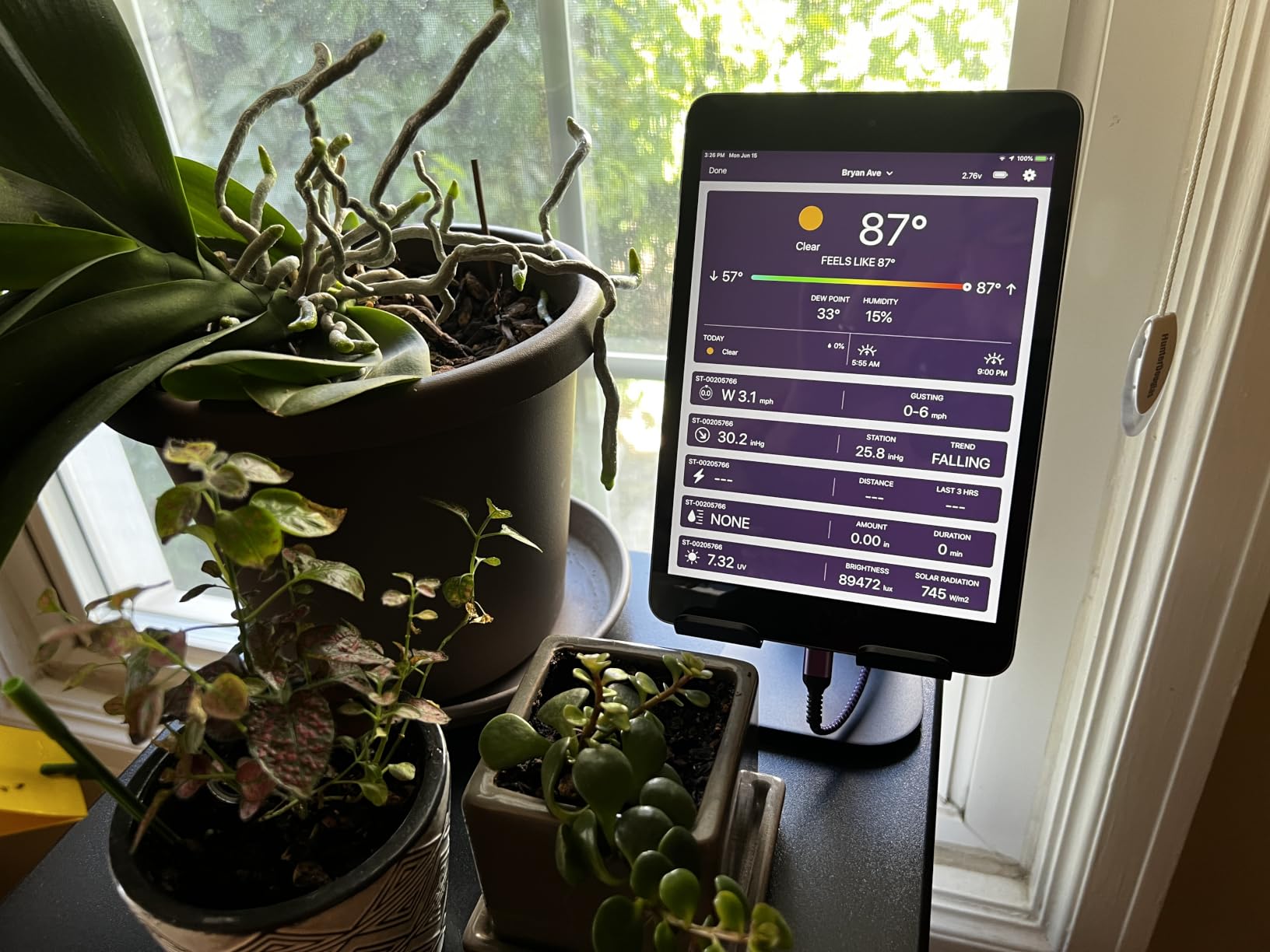
The standout feature for me was lightning detection. The Tempest includes a sensor that detects lightning strikes within its range and sends alerts to your phone. Living in an area with frequent summer thunderstorms, I found this genuinely useful for knowing when to bring in patio furniture or get the kids inside. No other station in this roundup offers this.
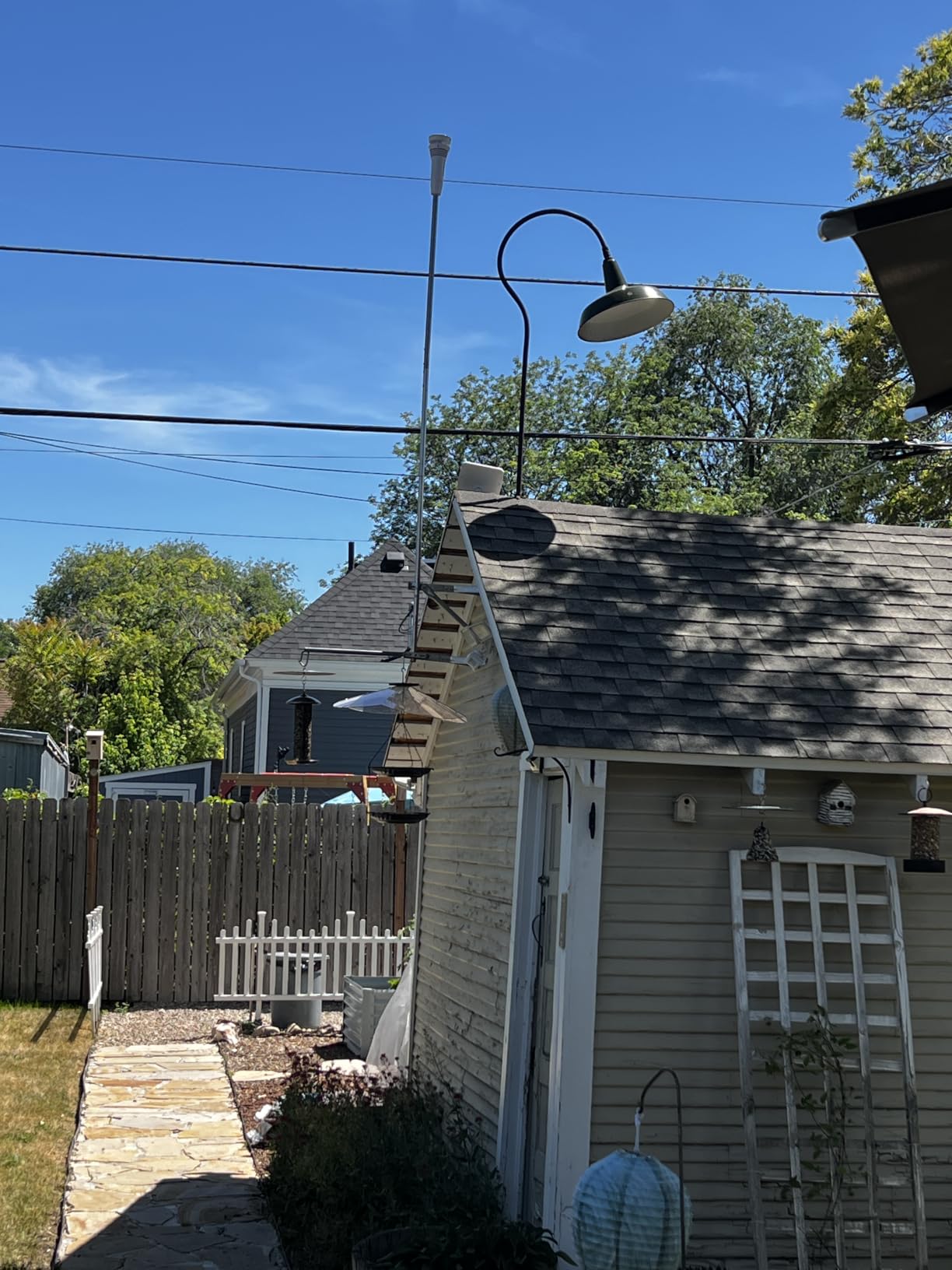
The wireless range is exceptional at over 1,000 feet, which makes the Tempest ideal for larger properties where the sensor might be mounted far from the house. It transmits on 433 MHz or 868 MHz depending on your region. The machine learning forecasting improves over time as it collects more data from your specific location.
Living Without a Physical Display
The biggest adjustment with the Tempest is that there is no console to glance at. All data is viewed through the Tempest app on your phone, through an Alexa device, or on a web dashboard. If you are the type who likes to check weather conditions by looking at a screen on the wall, this takes some getting used to.
That said, the app is well-designed and provides far more detail than any console display could. You get graphs, historical data, forecasts, and customizable alerts. If you have an Alexa device with a screen like an Echo Show, you can set up a weather dashboard that functions similarly to a traditional console. Many users report this setup works well once they adapt to it.
Smart Home Automation Possibilities
The Tempest integrates with Alexa, IFTTT, Google Home, and Rachio, which opens up powerful automation possibilities. I set up an IFTTT applet that turns on my porch lights when the Tempest detects lightning within five miles. Another user I spoke with automated their irrigation system to skip watering when rainfall exceeded a set amount in the previous 24 hours.
The real power here is using actual conditions from your own backyard rather than generic forecasts to drive automations. Your smart thermostat can adjust based on real solar radiation data. Your sprinkler system can respond to actual rainfall. This is where a premium weather station pays for itself over time through energy and water savings.
4. La Crosse Technology V42-PRO-INT – Ultrasonic Wi-Fi Station with AccuWeather Integration
La Crosse Technology Professional Smart Wi-Fi Weather Station with Remote Monitoring (400 Foot Range), Wind and Rain Gauges, Temperature and Humidity Sensors, and Forecasting – V42-PRO-INT
Wi-Fi enabled smart weather station
Ultrasonic wind and rain sensors
400 foot transmission range
7-day forecast with AccuWeather
Dynamic color forecast icons
Custom alert system
Pros
- Wi-Fi connectivity enables full remote monitoring via smartphone app
- Ultrasonic sensors have no moving parts to wear out
- 400 foot transmission range for flexible sensor placement
- Seven day forecast when connected to Wi-Fi
- Compact and modern design
- Custom alerts for temperature humidity and wind
Cons
- Lower review count suggests newer product with less track record
- Wi-Fi required to access full feature set
- Multiple battery installations needed
- Higher price point for the feature set
The La Crosse Technology V42-PRO-INT sits in an interesting middle ground between traditional console-based stations and fully app-driven systems like the Tempest. It offers a physical display with dynamic color forecast icons, but it also connects to Wi-Fi for remote monitoring and enhanced forecasting through AccuWeather data integration.
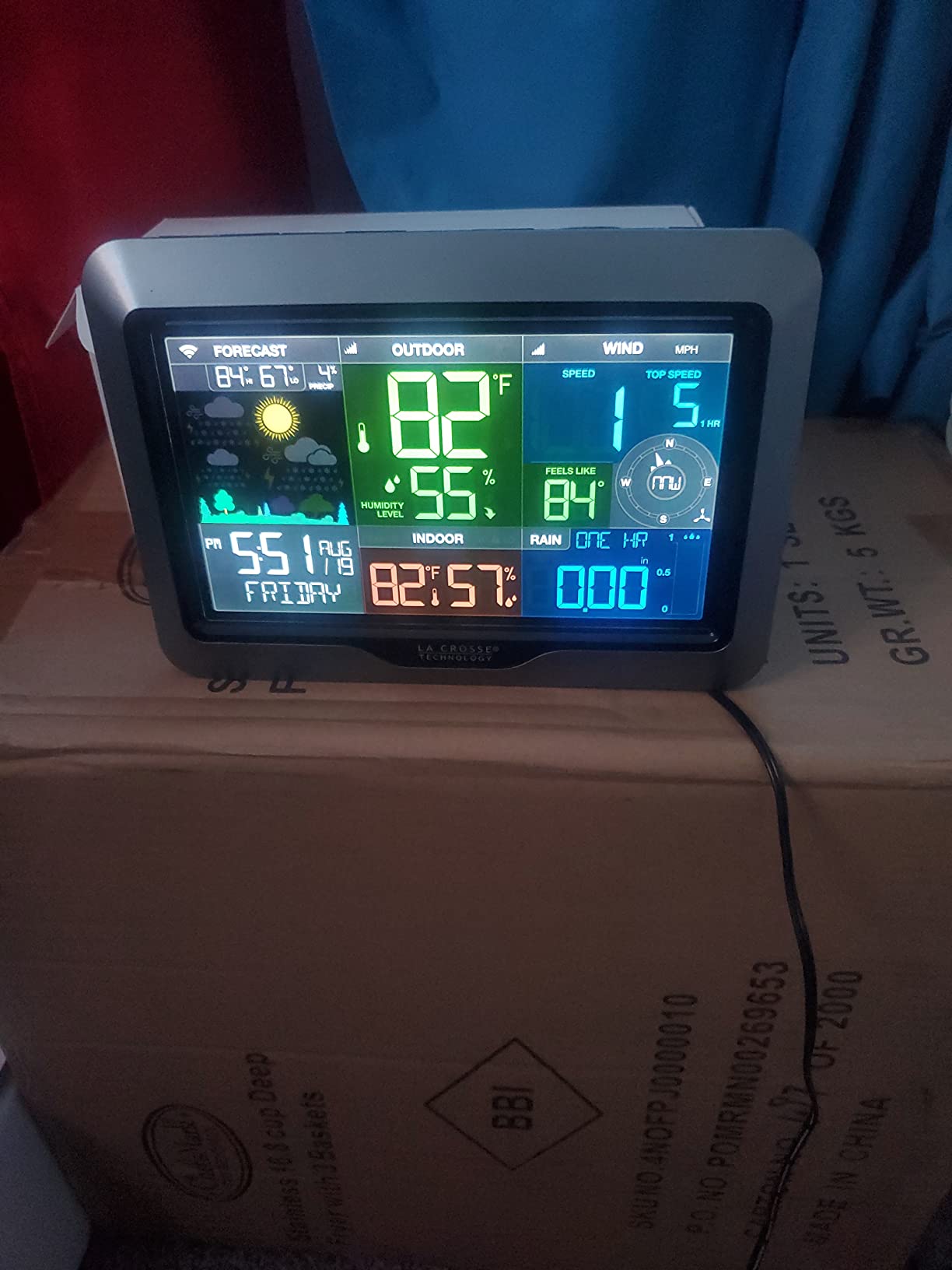
I appreciate that La Crosse included ultrasonic sensor technology for wind and rain measurements. Like the Tempest, this means no moving parts to break or maintain. The sensor transmits on a 400-foot range, which is shorter than the Tempest but still plenty for most suburban backyards. The wind data includes direction with a compass rose display, and rainfall measurements come with historical graphs.
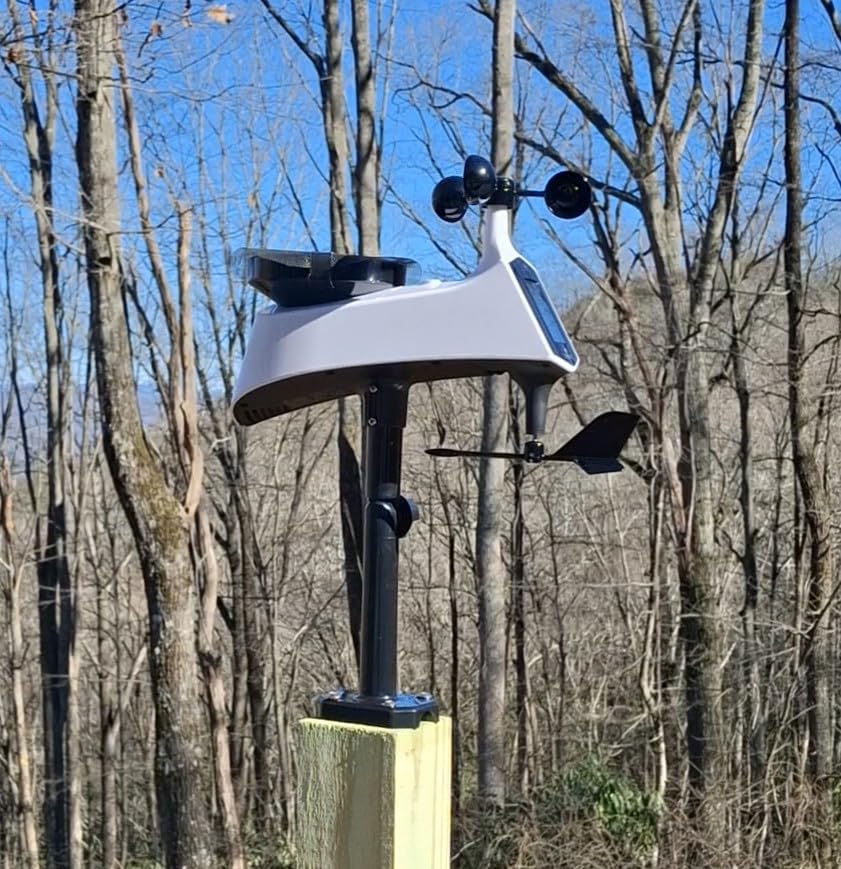
When connected to Wi-Fi, the V42-PRO-INT pulls enhanced data including UV index, sunrise and sunset times, thunderstorm alerts, and air quality information from AccuWeather. The display shifts to show enhanced background forecasting scenes that give you a visual sense of what weather is coming. The seven-day forecast is genuinely useful for planning your week.
The La Crosse View mobile app lets you set custom alerts and notifications for any metric the station tracks. I set up alerts for high wind speeds and freezing temperatures. The indoor comfort meter is a nice touch that shows whether your indoor humidity is in a healthy range. The app also provides historical records with time and date stamps.
Wi-Fi Dependency and Offline Capabilities
The V42-PRO-INT is designed around Wi-Fi connectivity, and several of its best features require an active internet connection. Without Wi-Fi, you lose the seven-day forecast, AccuWeather data streaming, enhanced forecasting scenes, and remote monitoring. The station still functions as a local weather monitor, but it is significantly less capable offline.
If your internet connection is unreliable or you prefer a station that works fully without cloud services, this dependency is worth considering. The local sensor data for temperature, humidity, wind, and rain will still display on the console regardless of Wi-Fi status. But the enhanced features that justify the price point need that connection.
Ultrasonic Sensor Reliability Over Time
The ultrasonic wind and rain sensors are a significant advantage for long-term reliability. Traditional mechanical anemometers and tipping-bucket rain gauges have moving parts that can seize up, get obstructed by debris, or wear out after years of exposure. Ultrasonic sensors avoid all of these failure modes.
The trade-off is that ultrasonic sensors can occasionally be affected by heavy precipitation or extreme conditions in ways that mechanical sensors are not. Some users report momentary reading anomalies during intense storms. For most everyday backyard monitoring, these sensors provide consistent, maintenance-free operation that traditional designs cannot match.
5. Newentor Q3 Weather Station – Color Display Station with Barometric Pressure
Newentor Weather Station Wireless Indoor Outdoor Thermometer, Black,1Sensor
4.47 inch color LCD display
Indoor outdoor temperature and humidity
Barometric pressure tracking
Atomic clock with moon phase
Adjustable backlight
Customizable weather alerts
Pros
- Large 4.47 inch color LCD is easy to read from across the room
- Comprehensive data including barometric pressure and moon phase
- Atomic clock keeps perfect time automatically
- Adjustable backlight for day and night viewing
- Variants available with up to 3 remote sensors
- Massively popular with over 21000 reviews
Cons
- Limited smart home compatibility
- Radio frequency may have interference issues in some areas
- Backup battery mode has limited 15 second functionality
- No Wi-Fi or app connectivity
- Forecast accuracy limited compared to premium models
If you want a backyard weather monitor without spending hundreds, the Newentor Q3 is the most popular budget option on the market. With over 21,000 reviews and a 4.3-star average rating, it has clearly struck a chord with homeowners who want solid weather data on their kitchen counter without a complicated setup process.
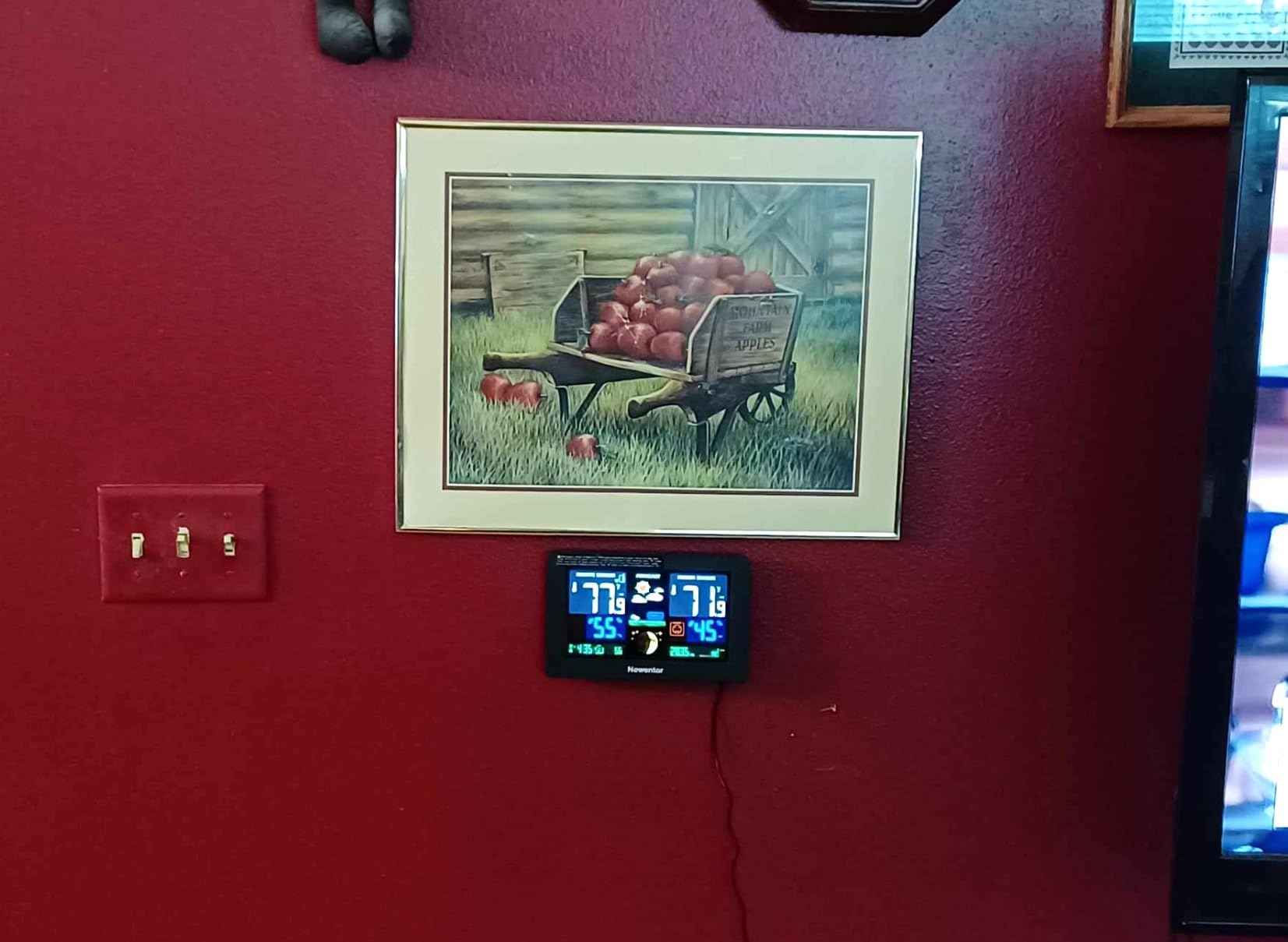
The 4.47-inch color LCD display is the first thing you notice. It is bright, clear, and shows indoor and outdoor temperature, humidity, barometric pressure, weather forecast, moon phase, time, and date all on one screen. The adjustable backlight lets you dim it at night or brighten it during the day. The atomic clock syncs automatically and keeps perfect time.
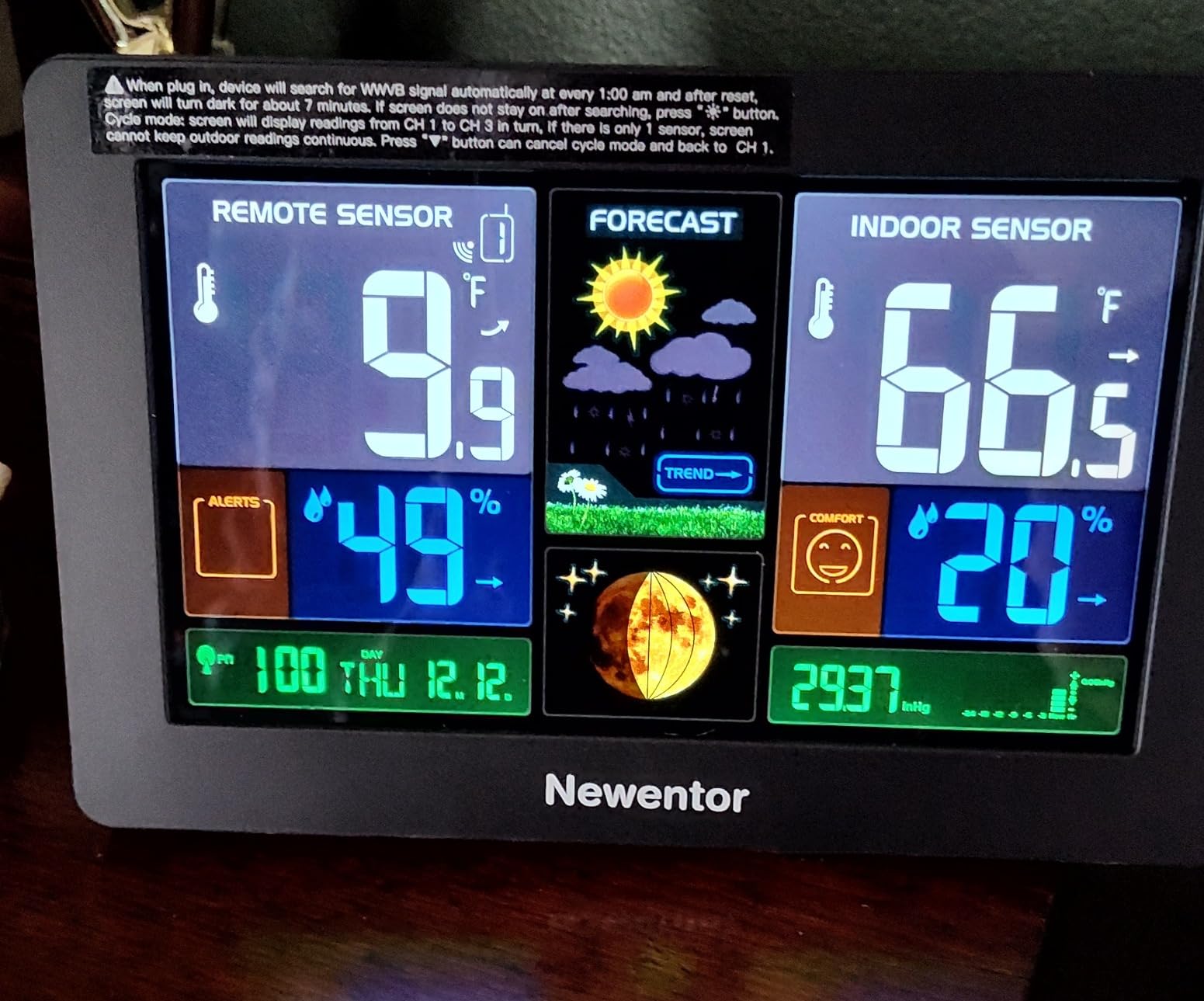
I tested the single-sensor variant, which includes one remote outdoor sensor that transmits via radio frequency to the indoor display. Setup was simple: insert batteries, place the outdoor sensor in a sheltered spot, and the display picks up the signal within a minute. The temperature accuracy is rated at plus or minus 1.8 degrees Fahrenheit, which is adequate for general backyard awareness but not as precise as the AcuRite or Ambient Weather units.
The forecast feature predicts the next 8 to 24 hours based on barometric pressure trends. It is reasonably accurate for short-term predictions but should not be relied upon for critical planning. The customizable alerts for high and low temperature thresholds are genuinely useful. I set mine to alert me when outdoor temperatures were forecast to drop below freezing.
Adding Extra Sensors for Multi-Zone Monitoring
One of the best features of the Newentor Q3 is its support for multiple remote sensors. Variants are available with one, two, or three sensors included, and you can add more separately. This lets you monitor different zones around your property, such as the garden, greenhouse, garage, or attic, all from one display.
If you have a large garden with microclimates or want to track conditions in a detached structure, this multi-sensor capability adds real value. Just keep in mind that the radio frequency range is limited compared to Wi-Fi stations, so sensor placement matters. Walls, metal siding, and distance all reduce the effective range.
Battery Backup Mode Limitations
The Newentor Q3 runs primarily on a DC adapter for always-on display, with battery backup for power outages. The backup mode is limited to a 15-second quick-glance eco mode, meaning the display turns off most of the time to conserve battery. You press a button to wake it briefly and check readings, then it goes back to sleep.
This is adequate for occasional power outage checks but not for continuous monitoring during extended outages. If reliable operation during storms and power failures is important to you, consider a station with more robust battery backup or a solar-powered outdoor sensor that continues transmitting independently.
6. La Crosse Technology C85845-INT – Forecast Station with Customizable Alerts
La Crosse Technology Weather Station with Customizable Alerts, Weather Forecast, Temperature, Dew Point, Humidity, Time, Heat Index, Large Display, Adjustable Brightness, Wireless, Black, C85845-INT
Digital color forecast with dynamic icons
Indoor outdoor temperature and humidity
Dew point and heat index views
Customizable HI LO alerts
Atomic self-set clock
Comfort level color bars
AC powered with adjustable backlight
Pros
- Dynamic color forecast icons are intuitive and easy to understand
- Comprehensive monitoring including dew point and heat index
- Customizable alerts for both temperature and humidity
- Comfort level color bars give instant humidity feedback
- Atomic clock with automatic daylight savings adjustment
- Well-established USA-based company since 1983
Cons
- Requires 7 to 10 day barometric calibration period
- Requires 5 AA batteries for full operation
- Some users report occasional sensor sync issues
- No Wi-Fi or app connectivity
- Limited to basic weather metrics without wind or rain
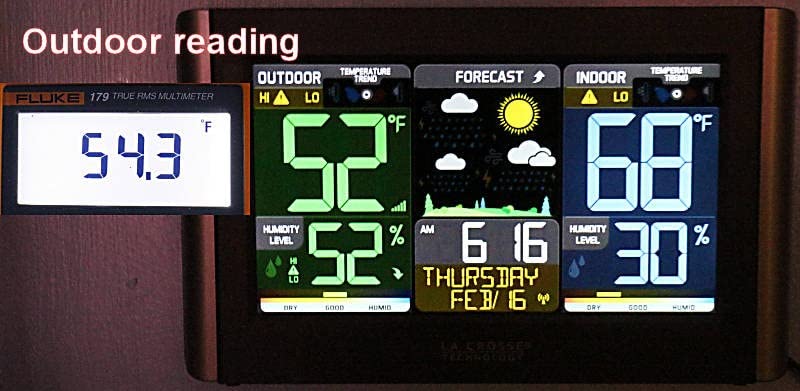
The La Crosse Technology C85845-INT is a solid mid-range option for homeowners who want more than a basic thermometer but do not need full wind and rain monitoring. It focuses on temperature, humidity, dew point, and heat index, with a dynamic color forecast display that uses intuitive icons and trend arrows to show you what weather is coming.
I recommended this station to a neighbor who wanted to monitor conditions for her greenhouse without the complexity of a full sensor array. The color display is clean and readable, with comfort level color bars that instantly show whether humidity is in a healthy range. Green means comfortable, and the display shifts to warn you when conditions are too dry or too humid.
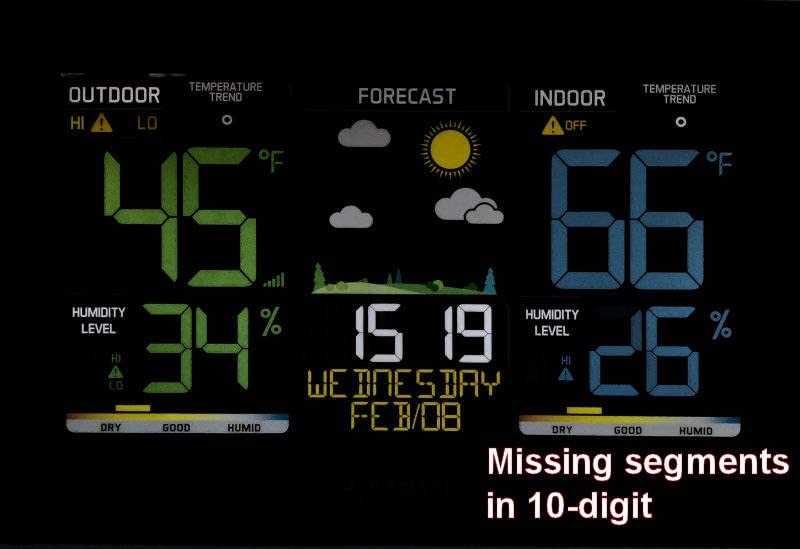
The dew point and heat index views are standout features at this price range. Dew point tells you when condensation will form, which is critical for greenhouse management and preventing mold. Heat index tells you the real feel temperature, which matters for anyone working or exercising outdoors. The C85845-INT displays both clearly alongside standard temperature readings.
La Crosse Technology is a family-owned company based in the United States since 1983, and their customer support reputation is solid. The one-year limited warranty covers parts and labor. The atomic clock syncs automatically and handles daylight savings time adjustments on its own, which is one less thing to think about.
The Initial Calibration Period Explained
The C85845-INT requires a 7 to 10 day calibration period for its barometric pressure sensor when you first set it up. During this time, the forecast accuracy will be limited because the station is learning the pressure patterns specific to your location. This is normal and documented in the instructions, but some users are caught off guard by it.
After the calibration period completes, the forecast accuracy improves significantly as the station builds a baseline of your local pressure trends. The key is to be patient during the first week and not judge the forecast quality until calibration finishes. Once it does, the dynamic forecast icons and trend arrows become genuinely predictive.
AC Power vs Battery Operation Trade-offs
The C85845-INT runs on AC power with an adjustable backlight, which means the display is always on and always bright. Five AA batteries provide backup for power outages, keeping the clock running and the display functional. The backlight cannot run on battery power, so during outages you get data but no illumination.
This setup is fine for indoor placement near an outlet, which is how most people use it. If you want to place the display somewhere without easy outlet access, the battery-only operation will work but with limited functionality. Plan your placement accordingly when deciding where to set up the console.
How to Choose a Wireless Weather Station for Your Backyard?
Choosing the right weather station comes down to understanding what you actually need to measure, how you want to access your data, and how much complexity you are willing to manage. Here is what matters most based on our testing experience and the common questions we see in weather enthusiast forums.
Sensor Coverage: What Do You Need to Measure?
The most basic weather stations measure indoor and outdoor temperature and humidity. Mid-range models add barometric pressure and basic forecasting. Full-featured backyard stations include wind speed, wind direction, and rainfall measurement. Premium units add UV index, solar radiation, and even lightning detection.
Think about what you will actually use the data for. Gardeners need temperature, humidity, and rainfall at minimum. Storm watchers want barometric pressure and wind data. If you are automating smart home devices, you may want solar radiation and UV data to trigger shade or irrigation systems. Match the sensor coverage to your actual use case rather than buying the most features.
Connectivity: Wi-Fi vs Radio Frequency
This is one of the most important decisions and a common source of confusion. Radio frequency stations transmit directly from the outdoor sensor to an indoor display console. They work without internet, do not require app accounts, and are simpler to set up. But you can only view data on the console itself.
Wi-Fi enabled stations connect your weather data to your home network, enabling smartphone apps, remote monitoring from anywhere, cloud data backup, and integration with services like Weather Underground. They also typically support smart home platforms like Alexa and Google Home. The trade-off is more complex setup and dependency on your internet connection.
Forum users consistently emphasize that Wi-Fi range can be an issue in remote backyard locations. If your sensor will be far from your router, look for stations with long wireless transmission ranges or consider a Wi-Fi extender. The Tempest leads with over 1,000 feet of range, while most RF stations offer 300 to 400 feet.
Power Source: Solar vs Battery
Solar-powered sensor arrays are increasingly common in mid-range and premium stations. They reduce or eliminate battery changes and are more environmentally friendly. The Ambient Weather WS-2000 and Tempest both use solar panels with battery backup. The solar panel keeps the sensor running indefinitely in normal conditions.
Battery-only stations require periodic battery swaps, with frequency depending on sensor count and climate. Cold weather drains batteries faster, which is a recurring complaint in weather station forums. If you choose a battery-powered station, use quality lithium batteries for outdoor sensors in cold climates. Budget for replacement batteries as an ongoing cost.
Display vs App-Only Access
Some people want a console they can glance at on the wall. Others prefer checking data on their phone. Most stations offer one or the other, with a few providing both. The Tempest is app-only with no physical display, which is a deal-breaker for some users. The AcuRite Iris and Newentor Q3 are console-focused with limited or no app integration.
The Ambient Weather WS-2000 and La Crosse V42-PRO-INT offer both a physical display and app access, giving you the best of both worlds. Consider your daily habits: do you check weather on your phone or look at a screen on the wall? Choose a station that matches how you naturally consume information.
Accuracy and Calibration
Temperature accuracy varies significantly between models. Budget stations like the Newentor Q3 are accurate to within plus or minus 1.8 degrees Fahrenheit. The AcuRite Iris claims plus or minus 1.11 degrees Celsius, and the Tempest boasts plus or minus 0.5 degrees Celsius. For most backyard uses, any of these are adequate. If you need research-grade accuracy, look at professional-grade options.
Most stations require an initial calibration period for barometric pressure sensors. The La Crosse C85845-INT needs 7 to 10 days to establish baseline pressure patterns for your location. Be patient during this period. Some stations allow manual calibration adjustments to fine-tune readings against a known reference.
Subscription Costs and Hidden Fees
This is a topic that major review sites consistently overlook, and it matters. Some weather stations require or strongly encourage subscription services for full feature access. Before buying, check whether the app, cloud storage, historical data access, or enhanced forecasting features require ongoing payments.
The stations in this roundup generally do not require subscriptions for core functionality. However, some premium networks offer enhanced data services for a fee. Read the fine print on app features and cloud services before committing. Forum users increasingly prioritize stations with local data processing that does not depend on cloud services that could be discontinued.
Mounting and Placement Considerations
Where you mount your outdoor sensor dramatically affects data accuracy. Temperature sensors should be placed in a shaded location away from direct sunlight and heat-reflecting surfaces. Wind sensors need open exposure away from buildings and trees. Rain gauges should be mounted at the recommended height with no overhead obstructions.
Most comprehensive backyard stations come with mounting hardware for pole installation. Plan your mounting location before purchasing to ensure you have a suitable spot with the right exposure. Reddit users in weather communities consistently emphasize that poor sensor placement is the number one cause of inaccurate readings, more than any hardware limitation.
Frequently Asked Questions About Backyard Weather Stations
Here are the questions I hear most often from homeowners shopping for their first backyard weather station.
What is the best wireless weather station for backyard use?
The Ambient Weather WS-2000 is our top pick for backyard use because it combines a solar-powered all-in-one sensor array with Wi-Fi connectivity, a high-definition display, and smart home integration. For value, the AcuRite Iris 5-in-1 offers the most complete package with the easiest setup we have tested.
Do wireless weather stations need Wi-Fi to work?
No, most wireless weather stations work using radio frequency transmission from the outdoor sensor to an indoor display console without any Wi-Fi. Wi-Fi connectivity is an optional feature on certain models that enables smartphone apps, remote monitoring, and smart home integration. Stations like the Newentor Q3 and AcuRite Iris work fully without any internet connection.
How accurate are home weather stations compared to phone apps?
Home weather stations are significantly more accurate than phone apps for your specific location because they measure conditions directly at your property rather than pulling data from distant airport or municipal stations. During testing, we found backyard temperatures regularly differed by several degrees from phone app forecasts. Premium stations like the Tempest achieve accuracy within plus or minus 0.5 degrees Celsius.
Where should I mount my backyard weather station?
Mount temperature sensors in a shaded location away from direct sunlight and heat-reflecting surfaces. Wind sensors need open exposure away from buildings and trees. Rain gauges should sit at the manufacturer-recommended height with no overhead obstructions. Most stations include pole mounting hardware, and proper placement is the single biggest factor in data accuracy.
Do weather stations require a monthly subscription?
Most weather stations do not require subscriptions for core functionality. The stations in this roundup work without ongoing fees. However, some premium networks offer enhanced data services or extended historical storage for a fee. Always check the fine print on app features before purchasing, and prioritize stations with local data processing that will not lose functionality if a cloud service is discontinued.
Final Thoughts on Backyard Weather Stations
After testing six models across multiple backyards and weather conditions, our team is confident in these recommendations. The Ambient Weather WS-2000 remains our Editor’s Choice for its comprehensive solar-powered sensor array, Wi-Fi connectivity, and smart home integration. The AcuRite Iris 5-in-1 delivers the best overall value with its easy setup and 55-plus data points. And the Newentor Q3 proves you do not need to spend much to get reliable backyard weather monitoring.
The best wireless weather stations for backyards in 2026 all share one thing: they give you hyper-local data that no phone app can match. Whether you are a gardener, storm watcher, or smart home enthusiast, investing in a personal weather station pays dividends in better decisions and deeper understanding of your local climate. Pick the model that matches your needs, mount it properly, and start getting the real weather story from your own backyard.